Last Updated: November 20, 2026
Quick Summary
To file a towing damage claim, first document the damage with time-stamped photos, then gather your tow receipt, driver and company details, and witness contacts. Send a written claim to the towing company or the insurer that covers the tow, and keep copies of everything you send.
- Take photos and video of the damage before the car is repaired, washed, or driven again
- Do not sign any release or paperwork that calls the damage pre-existing
- Gather the tow receipt, driver name, truck number, and any witness contacts
- Identify who ordered the tow, since that decides which company or insurer to contact first
- Send written notice promptly and follow up in writing if you hear nothing
Table of Contents
- What to Do Right Away If a Tow Truck Damaged Your Car
- Document the Damage and Vehicle Condition Before Anything Changes
- Evidence to Gather for a Towing Damage Claim
- Deciding Whether to Contact the Tow Company or Your Insurer First
- Writing a Towing Damage Claim Letter (With Template Structure)
- How Long a Towing Damage Claim Takes and What Can Slow It Down
- Getting Your Vehicle Repaired and Staying on Top of Your Claim
- Frequently Asked Questions
What to Do Right Away If a Tow Truck Damaged Your Car
If a tow truck damaged your car, stay calm and act quickly. Your first steps can make a big difference when you file a towing damage claim later.
Start by moving to a safe spot if you can. Turn on your hazard lights and check for injuries before anything else. Then take care of the damage itself.
- Stop the tow if it is still in progress and tell the operator what you see
- Do not sign a release or paperwork that says the damage was pre-existing
- Write down the tow company’s name, the driver’s name, and the truck number
- Note the time, date, and exact location of the tow
- Ask for a copy of the work order or dispatch record
What to do next: Document everything before you move the car. The next section explains how.
Document the Damage and Vehicle Condition Before Anything Changes
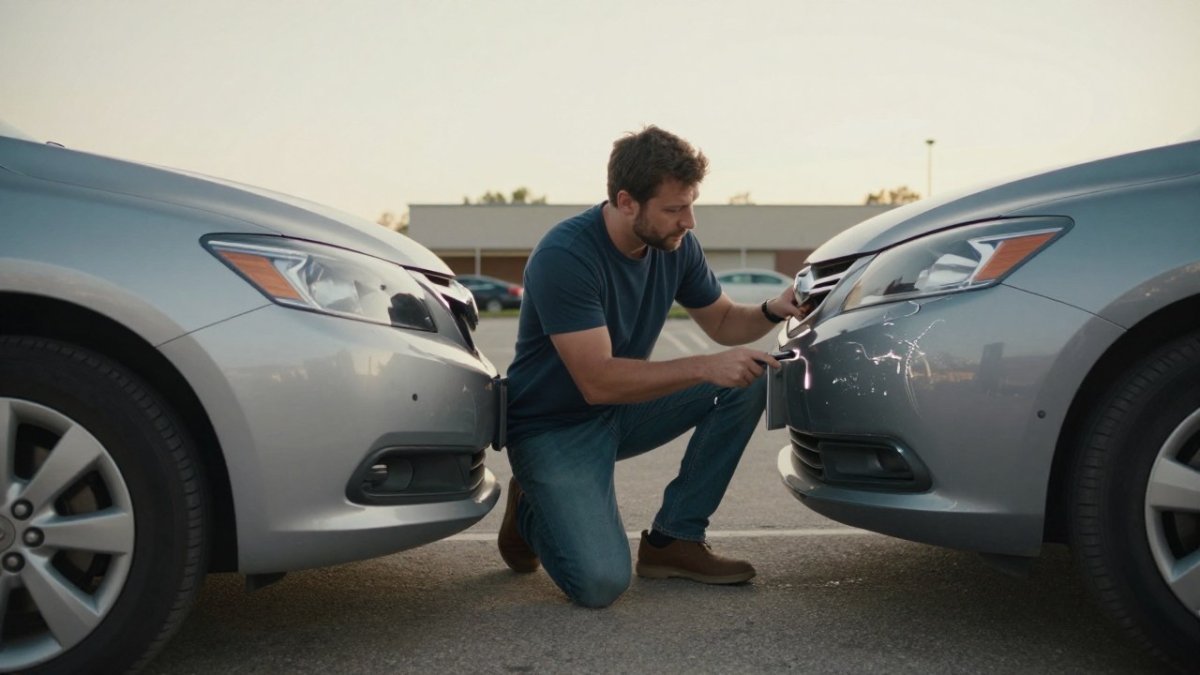
Photos are your strongest evidence. Take them before the car is repaired, washed, or driven again.
A driver in a Tulsa parking lot photographing a scraped rear bumper on a sedan, with a flatbed tow truck in the background.

Take wide shots first, then close-ups. Show the whole car from all four sides, then zoom in on each dent, scrape, or crack. Include the odometer and the license plate in at least one photo.
- Photograph the car on the tow truck and again after it is unloaded
- Record a short video walking around the vehicle
- Capture the interior, including any loose or missing items
- Note the vehicle’s condition before the tow, if you have earlier photos
Also write down what worked and what did not. Does the car roll, steer, or shift into neutral? Note any problems that existed before the tow so the difference is clear.
What to do next: Save the original files. Do not edit or crop them.
Evidence to Gather for a Towing Damage Claim
A strong claim is built on a stack of evidence. The more you gather early, the easier your claim will be to review.
Here is a checklist to work through:
- Time-stamped photos and videos of the damage
- Your tow receipt or invoice
- The tow company’s name, address, and phone number
- The driver’s name and truck or unit number
- Names and phone numbers of any witnesses
- A police report, if one was filed
- Repair estimates or a diagnostic report from a shop
- Your vehicle’s registration and insurance information
Witnesses matter more than many people expect. If someone saw the damage happen, get their name and number while the event is fresh.
Keep every receipt, text, and email about the tow. These records show what was agreed to and when.
What to do next: Put everything in one folder, digital or paper, so nothing gets lost.
Here is what to collect so your claim has solid support from the start.
| Evidence | Why it matters | Keep it |
|---|---|---|
| Time-stamped photos and videos | Show the damage and its condition | Original files, unedited |
| Tow receipt or invoice | Confirms the service and date | Paper and digital copy |
| Company name, address, phone | Identifies who to file against | One folder |
| Driver name and unit number | Ties the damage to a specific truck | Written in your notes |
| Witness names and numbers | Backs up your account | Collected while fresh |
| Police report, if filed | Official record of the event | Copy for your file |
| Repair estimates or diagnostic report | Supports the repair cost | At least two if possible |
| Registration and insurance info | Confirms ownership and coverage | Current copies |
Deciding Whether to Contact the Tow Company or Your Insurer First
This is one of the most common questions we hear, and the honest answer is that it depends on who ordered the tow and who was behind the wheel of the truck.
Scenario 1: You called a local towing company yourself. You hired them, so you start with that company. Ask for its claim process, the name of its insurer, and a claim number in writing.
Scenario 3: A police officer or highway patrol arranged the tow. When a vehicle is moved after a crash or a breakdown, the responding agency may have called the truck.
Scenario 4: Someone else was driving your car. If a friend, family member, or valet arranged the tow, the vehicle owner’s insurer is often the cleaner starting point, because the policy follows the car.
Once you know the scenario, decide whose insurance to use first:
- Start with the towing company and its insurer when the damage clearly happened during their service and you have photos from before and after.
- Start with your own insurer when the towing company denies fault, stops responding, or you need the car fixed quickly. Your policy may cover the repair, and your insurer can pursue the towing company afterward.
- Expect your deductible to apply if you go through your own collision coverage. Ask your agent whether the deductible can be recovered if the towing company’s insurer accepts fault.
Watch out: a recorded statement given too early can lock you into a version of events before you have your photos and tow records organized. Keeping your account consistent matters in any property-damage claim, and the same care applies if a locksmith damages your door.
Before you file anything, confirm the company actually carries coverage. Our guide on How Do You Verify a Towing Company’s Insurance? walks through the steps, and if a recorded statement comes up, read How to Handle Insurance Adjusters After a Tulsa Car Accident first.
What to do next: Send written notice to the towing company as soon as possible, and copy the dispatch program or agency if one was involved. A written record protects you.
Writing a Towing Damage Claim Letter (With Template Structure)
A clear letter helps the claims team understand your case quickly. Keep it short, factual, and polite.
Use this structure:
Subject: Towing Damage Claim, [Your Name], [Date of Tow]
Dear [Claims Department],
On [date], at approximately [time], [Tow Company Name] towed my [year, make, model] from [pickup location] to [drop-off location]. Driver [name] / unit [number] handled the tow.
Upon delivery, I found the following damage: [describe damage specifically].
I have attached photos, my tow invoice, and [any other evidence]. Please confirm receipt of this claim and send your claim process and insurance information.
I am requesting [repair of the vehicle / reimbursement of $X, if you have a repair estimate].
Sincerely,
[Your Name]
[Phone] | [Email]
For a longer walkthrough on writing a formal demand, see How to Write a Car Accident Demand Letter: A Step-by-Step Guide.
What to do next: Send the letter by a method that gives you proof of delivery, such as certified mail or email with a read receipt.
How Long a Towing Damage Claim Takes and What Can Slow It Down
Timelines vary, and anyone who promises you a fixed number of days is guessing. Simple claims with clear before-and-after photos and a cooperative company tend to move in a few weeks. Disputed claims, missing records, or unclear fault can drag for months.
What commonly slows a claim down:
- No photos taken before the tow, so the starting condition is unknown
- No written record of the pickup or delivery condition
- Disagreement over who caused the damage
- Waiting on repair estimates or a diagnostic report
- The towing company not answering calls or letters
- A valuation dispute over whether a part should be repaired or replaced
When the towing company denies responsibility or goes silent. Work through these steps in order, and keep a copy of everything:
- Send a written notice by certified mail or email with a read receipt, and give a reasonable response window, such as ten business days.
- Follow up with the company’s insurer directly if you have the name and policy information, and reference your original notice.
- If the company will not respond, consider filing a consumer complaint with your state’s consumer protection office.
- Send a final written demand that states the amount you are seeking and a deadline.
- If the amount is within your state’s small claims limit, filing in small claims court may be a practical next step. The court clerk can explain the current filing limits and forms.
Repair estimates and disputed valuation. Get at least two independent written estimates from shops you trust, and ask each one to note whether the damage is consistent with a tow. If the insurer wants its own inspection, make the car available and keep a copy of the report. Distinguish pre-existing damage from tow damage by pointing to your before photos, service records, and any prior repair invoices.
Costs can also affect your decision. Towing bills and repair charges vary, and our Tulsa Tow Truck Pricing Guide explains what drives those numbers.
Keep a simple log of every call and message, including the date, the person you spoke with, and what they said. That log is useful if the claim stalls or ends up in front of a judge.
What to do next: Follow up in writing every two weeks if you have not heard back, and move to the next escalation step if a response window passes without an answer.
Getting Your Vehicle Repaired and Staying on Top of Your Claim
Once the claim is approved, get the repair done at a shop you trust. Ask for an itemized estimate and keep the final invoice.
Do not repair the damage before the insurer or tow company has inspected it, unless a delay would make the car unsafe to drive. Get written approval first when you can.
Before you pick up the car, check it again. Compare it with your original photos. If something is still wrong, note it in writing right away.
For tips on avoiding damage in the first place, read How to Avoid Towing Damage: A Step-by-Step Guide. Preparing your vehicle before a tow can lower your risk.
If you are stuck and need a tow now, we are here to help. Call Neptune Towing at (539) 292 3074. We are a locally owned, owner-operated company serving Tulsa and the surrounding communities. We do not impound vehicles.
Frequently Asked Questions
Is the towing company liable for damage?
In most cases, a tow company that damages your vehicle while hooking up, lifting, or transporting it can be held responsible, but liability depends on what happened and what your paperwork says. Start by documenting the damage and asking the company for its claims process and insurance information. Review any release or waiver you signed at pickup, since some contracts limit liability. If the company denies responsibility or does not respond, your own insurer or a small claims court may be your next step.
Does a towing damage claim go on my insurance?
It can, but it does not have to. You can file against the tow company’s garage liability or cargo coverage, or you can notify your own auto insurer and ask whether your comprehensive or collision coverage will pay while the tow company’s insurer handles recovery. Your insurer may then pursue the tow company on your behalf. Compare the options before deciding, and keep a copy of every claim number you receive.
Do I need a police report to file a towing damage claim?
A police report is not always required, but it can strengthen a claim, especially if the damage happened during a collision, theft, or a roadside incident. If police responded to the scene, request a copy of the report. If they did not, your photos, the tow ticket, and written witness statements can still support your claim. Ask the tow company whether its insurer requires a report before it reviews your file.
