
Table of Contents
- Why Luxury Vehicle Transport Requires Special Care
- Understanding Flatbed Towing for Luxury Vehicles in Tulsa
- Enclosed vs. Open Transport: What Your Luxury Car Needs
- Handling Low-Ground Clearance Vehicles During Transport
- Tesla Towing Safety: Protecting Electric Luxury Vehicles
- Best Towing Services in Tulsa for Classic Cars
- Preparing Your Luxury Vehicle for Safe Transport
- Insurance Coverage and Liability Protection
Last Updated: August 22, 2026
Why Luxury Vehicle Transport Requires Special Care
Luxury vehicles aren’t just cars, they’re investments that demand respect during every part of their journey, including transport. A single mistake during loading, securing, or unloading can cost thousands in damage. That’s why understanding how to transport luxury vehicles safely isn’t optional if you own a high-value vehicle, a classic car, or an electric luxury model like a Tesla.
At Neptune Towing, we’ve handled everything from vintage Corvettes to brand-new Teslas, and we’ve learned that luxury vehicle transport requires a completely different approach than standard towing. The equipment matters. The technique matters. The knowledge of your vehicle’s specific vulnerabilities matters most of all.
The stakes are real. According to Real Car Shipping Damage Examples & How Claims Work, less than 5% of vehicle shipments result in a damage claim, and the majority of those involve minor cosmetic issues. But if you’re the one dealing with a damaged luxury vehicle, that statistic doesn’t comfort you. Prevention is infinitely better than filing a claim and waiting weeks for resolution.
What separates safe luxury vehicle transport from the kind that leaves you stressed and out thousands of dollars? It’s the combination of proper equipment, trained handlers, and a clear understanding of what your specific vehicle needs. This guide breaks down exactly what that looks like and how to protect your vehicle every step of the way.
Understanding Flatbed Towing for Luxury Vehicles in Tulsa
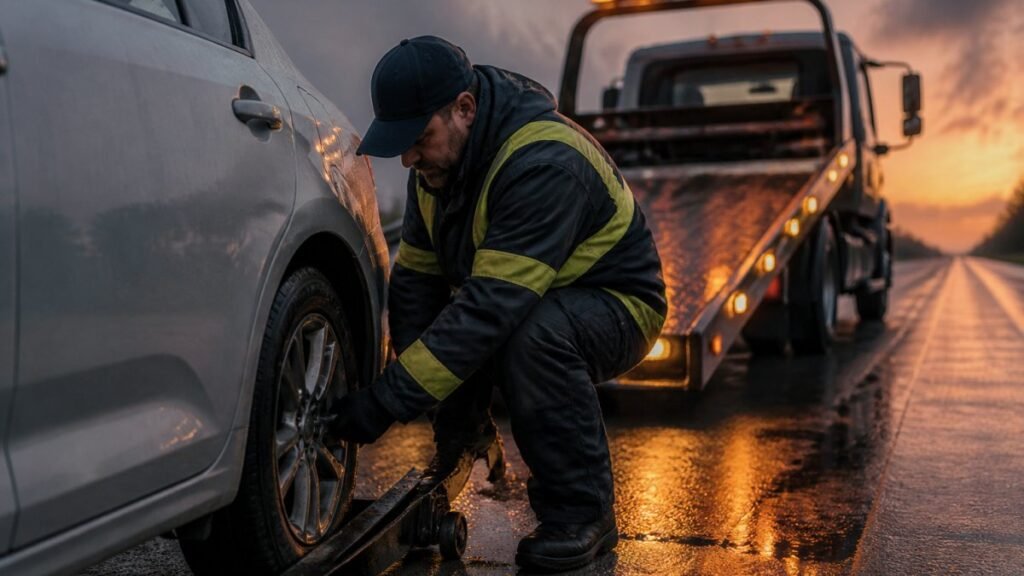
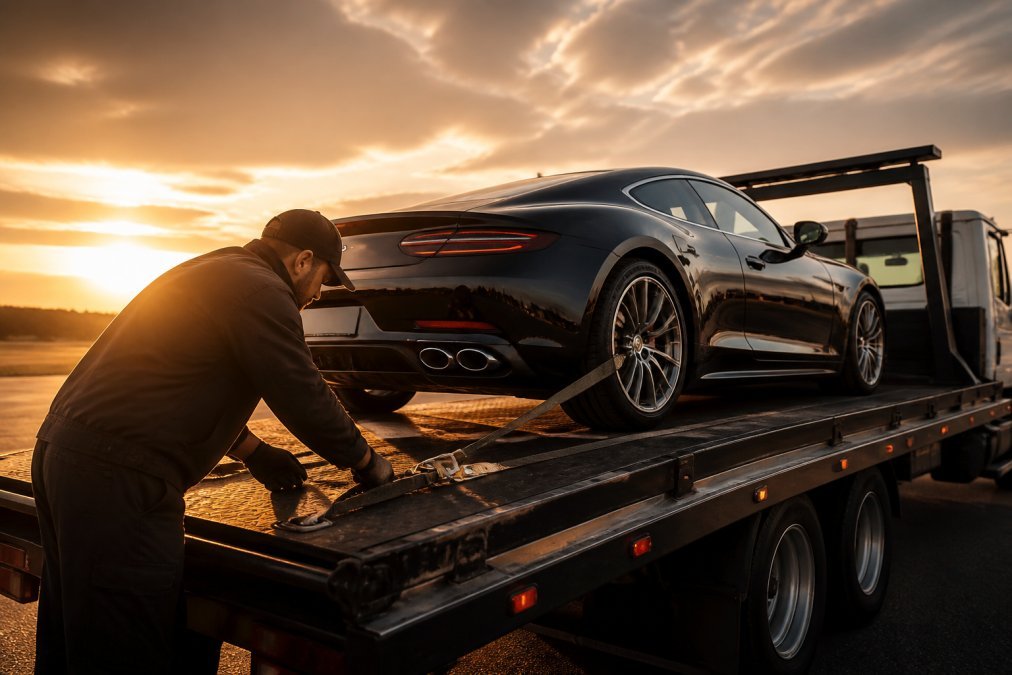
Flatbed towing is the gold standard for luxury vehicle transport, and for good reason. Unlike traditional tow trucks that hook onto your vehicle’s frame or suspension, a flatbed keeps all four wheels completely off the ground during transport. This eliminates the risk of transmission damage, suspension strain, and undercarriage scrapes, the three most common damage points when vehicles are towed incorrectly.
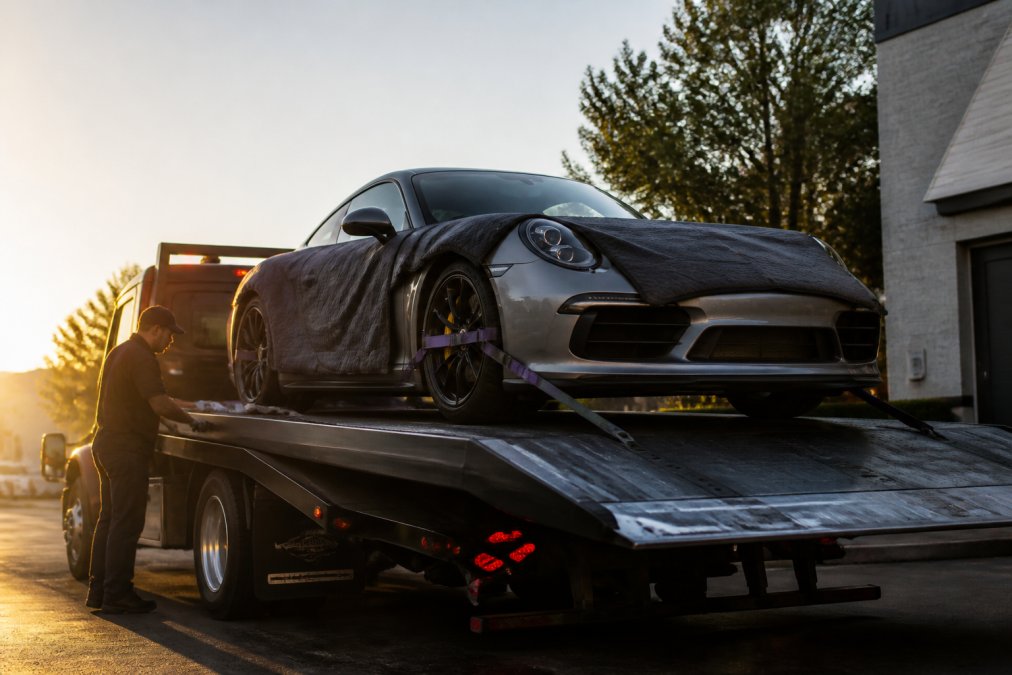
When you call a local towing company in Tulsa for your luxury vehicle, flatbed towing should be your expectation, not your request. The vehicle sits on a completely flat, level surface. Hydraulic lift gates lower slowly and carefully to minimize impact. Soft tie-down straps, never chains or hard hooks, attach only to approved securement points on your vehicle’s frame, protecting paint, suspension components, and delicate underbody parts.
The difference between damage-free towing and costly repairs often comes down to this single choice. A vehicle transported on a flatbed arrives exactly as it left. No suspension compression from being towed at an angle. No transmission stress from wheels dragging. No paint damage from improper hook placement.
Neptune Towing uses flatbed equipment specifically because we understand that your vehicle deserves protection. Whether you’re transporting a classic car to a weekend car show or moving a luxury sedan after a breakdown, the flatbed method keeps your vehicle safe and your mind at ease.
Enclosed vs. Open Transport: What Your Luxury Car Needs
The decision between enclosed and open transport comes down to protection, exposure, and the value of what you’re moving. For luxury vehicles, the answer is almost always enclosed transport.
Benefits of Enclosed Transport
Enclosed transport means your vehicle travels inside a fully enclosed trailer, completely protected from weather, road debris, and the elements. According to Enclosed Auto Transport Statistics: Costs, Market Share & Industry Trends, enclosed transport typically costs 30-60% more than open carrier shipping for comparable routes, with average enclosed transport pricing generally ranging from $1.00 to $2.50 per mile.
That price difference exists because enclosed transport offers something open carriers cannot: complete environmental protection. Your luxury vehicle doesn’t experience exposure to rain, snow, salt spray, or highway debris. For vehicles with custom paint, delicate finishes, or low ground clearance, this protection justifies the investment.
Enclosed trailers also provide climate-controlled environments for high-value vehicles. Temperature and humidity fluctuations can affect paint, leather interiors, and sensitive electronics, especially important for electric luxury vehicles like Teslas. The enclosed environment maintains stability that open transport simply cannot provide.
Real-time tracking and GPS monitoring are standard with enclosed transport services. You know exactly where your vehicle is and when it will arrive. Communication with your transport provider happens throughout the journey, not just at pickup and delivery.
When Open Transport Falls Short
Open transport exposes your vehicle to every element between point A and point B. Road debris kicked up by other vehicles can chip paint and crack windshields. Salt spray in winter months accelerates corrosion. UV exposure fades finishes. Heavy rain, hail, and wind all take their toll on unprotected vehicles.
For luxury vehicles, the risk-to-reward ratio doesn’t make sense. You’re saving a few hundred dollars in transport costs while exposing a vehicle worth tens of thousands to preventable damage. The math doesn’t work.
Open transport also means your vehicle is visible and accessible throughout the journey. Security is a concern for high-value vehicles, especially exotic cars and luxury models that attract attention.
Handling Low-Ground Clearance Vehicles During Transport
Sports cars, luxury sedans, and exotic vehicles often sit lower to the ground than standard vehicles. That low clearance is part of their design appeal, but it creates real challenges during transport. A ramp that works fine for a pickup truck can scrape the front bumper, splitter, or undercarriage of a sports car.
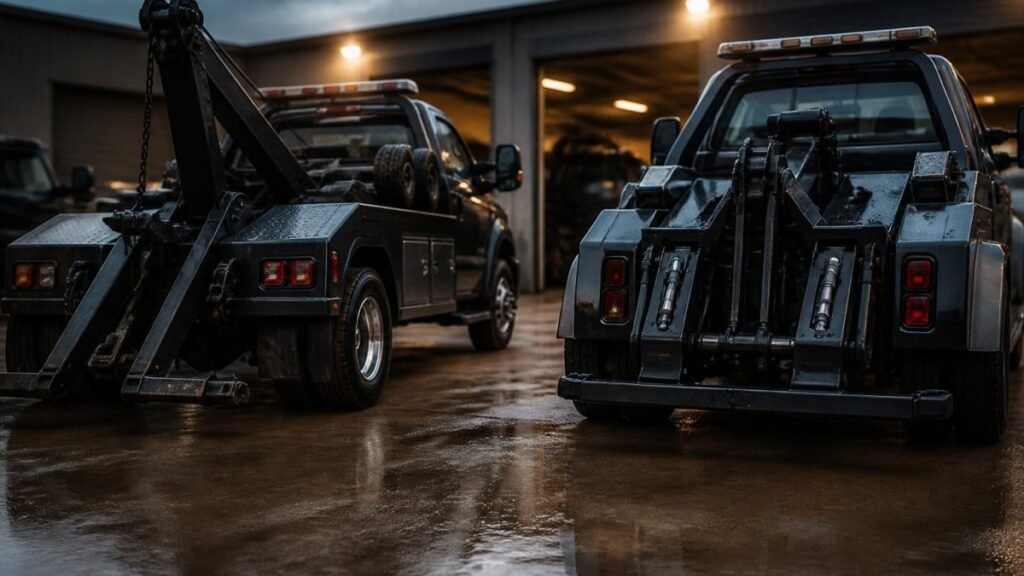
This is where hydraulic lift gates become essential. Instead of driving your vehicle up a ramp, a hydraulic lift gate raises and lowers your car slowly and evenly, keeping it level throughout the loading process. No angles. No scraping. No stress on suspension components.
Soft tie-down systems with wheel nets or soft straps attach only to manufacturer-approved securement points. Hard chains or metal hooks that work for standard vehicles will damage paint and suspension on luxury cars. The tie-down method matters as much as the equipment itself.
When you’re selecting a towing service in Tulsa for a low-clearance vehicle, ask specifically about their loading procedure. How do they load your vehicle? What tie-down system do they use? Do they have hydraulic equipment? The answers tell you whether they understand luxury vehicle transport or if they’re just treating your car like any other tow.
Tesla Towing Safety: Protecting Electric Luxury Vehicles
Tesla and other electric luxury vehicles require specialized handling that many towing companies don’t understand. The battery system, drivetrain configuration, and electronic components are completely different from traditional vehicles, and improper towing can cause thousands in damage.
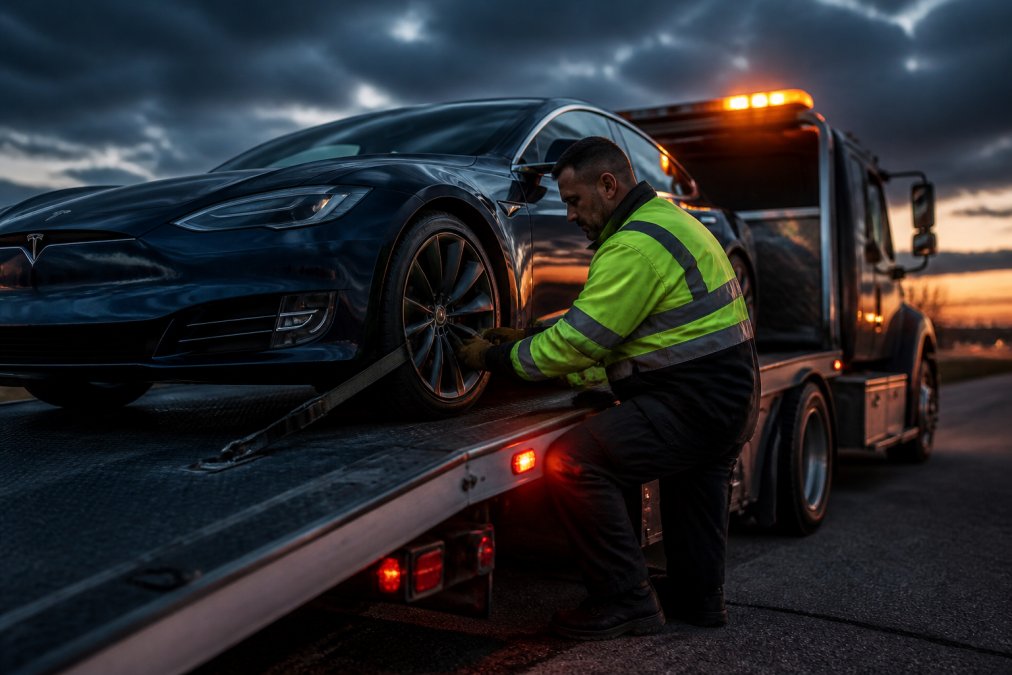
The most critical rule for EV towing: all four wheels must be completely off the ground. Never tow a Tesla with two wheels on the ground. The single-speed transmission and regenerative braking system can be damaged by conventional towing methods. Flatbed towing is the only safe option for electric vehicles. loading a trailer.
Battery management is another consideration. Teslas and other electric vehicles have sophisticated battery management systems. Extended periods of inactivity can affect battery state. Rapid temperature changes during transport can stress the battery. Enclosed, climate-controlled transport protects both the battery and the vehicle’s electronics from environmental stress.
Charging systems and connectors need protection during transport. Damage to charging ports or high-voltage systems creates expensive repair bills. Proper securement and protection of these components is essential.
Neptune Towing has transported Teslas and other electric luxury vehicles throughout the Tulsa area. We understand EV towing safety because we’ve invested in the right equipment and training. When you need Tesla towing in Tulsa, you need a service that knows the specific requirements of electric vehicles.
Best Towing Services in Tulsa for Classic Cars
Classic cars represent history, craftsmanship, and irreplaceable value. A 1987 Corvette, a restored vintage truck, or a classic Mercedes isn’t just transportation, it’s a piece of automotive heritage. Transporting a classic car requires the same level of care and expertise that went into restoring or maintaining it.
Classic cars often have delicate paint finishes, aged suspension components, and original parts that can’t be easily replaced. Improper loading or securing can damage irreplaceable elements. The towing service you choose needs to understand the specific vulnerabilities of your vehicle’s year, make, and model.
Flatbed towing is non-negotiable for classic cars. The vehicle needs to sit level and stable throughout transport. Soft tie-downs protect original paint and chrome. Hydraulic equipment prevents any jarring or impact during loading and unloading.
When selecting a towing service for your classic car, look for companies with experience transporting similar vehicles. Ask about their equipment. Ask about their team’s knowledge of classic vehicles. Ask for references from other classic car owners. The right towing service will be proud to discuss their experience and methods.
Neptune Towing has earned the trust of classic car owners throughout the Tulsa area because we treat every vehicle like it’s our own. Whether you’re moving a classic car to a show, transporting it after a breakdown, or recovering it from a difficult situation, we have the equipment and expertise to keep your vehicle safe.
Preparing Your Luxury Vehicle for Safe Transport
Preparation before transport significantly reduces risk and ensures a smoother experience. Taking time to prepare your vehicle properly protects it and helps your towing service do their job more effectively.
Pre-Shipment Inspection and Documentation
Start with a complete visual inspection of your vehicle. Check for existing damage, dents, scratches, or paint chips. Document everything with photos from multiple angles, front, back, sides, and close-ups of any existing damage. These photos become your baseline for comparison after transport.
Note the current mileage, fuel level, and condition of tires and brakes. If your vehicle has any mechanical issues or warning lights, inform your towing service before transport begins. This information helps them handle your vehicle appropriately and prevents misunderstandings about damage that occurred during transport versus damage that existed beforehand.
Remove personal items from your vehicle. Towing services aren’t responsible for items left inside, and they create distraction and potential liability during transport.
Check tire pressure and ensure your vehicle is mechanically stable for loading. Flat or under-inflated tires can make loading difficult and create stress on suspension components. If your vehicle has been sitting unused, address any mechanical concerns before transport.
Post-Delivery Inspection Checklist
When your vehicle arrives at its destination, conduct a thorough inspection before signing off on delivery. Use this checklist to verify that your vehicle arrived in the condition it left:
- Walk around the entire vehicle and inspect for new scratches, dents, or damage
- Check all four tires for proper inflation and any visible damage
- Verify that all doors, windows, and trunk open and close properly
- Start the engine and listen for any unusual sounds
- Check all lights, headlights, taillights, brake lights, turn signals
- Inspect the interior for any signs of tampering or damage
- Verify the odometer reading matches your pre-transport documentation
- Check for fluid leaks under the vehicle
- Test the air conditioning and heating systems
- Verify that all electronic systems function normally
Take photos of your vehicle in its delivery location, showing its overall condition. If you notice any damage, document it immediately with photos and written notes. Contact your towing service and your transport provider right away. Most damage claims require prompt notification, waiting days or weeks weakens your claim significantly.
Insurance Coverage and Liability Protection
Understanding insurance coverage for your luxury vehicle during transport is essential. Your personal auto insurance typically does not cover transport damage. This is where carrier liability insurance becomes critical.
Enclosed Auto Transport Statistics: Costs, Market Share & Industry Trends notes that all enclosed carriers typically provide active cargo insurance starting at $250,000 and going up to $1 million. Extra rider coverage can be arranged for ultra-high-value vehicles if needed.
Before selecting a towing service or transport provider, verify their insurance coverage. Ask for proof of liability insurance and cargo coverage. Understand the limits of their coverage and what is and isn’t included. Some providers offer additional coverage options for vehicles valued above standard limits, this is especially important for exotic cars, supercars, and collector vehicles.
Bill of lading documentation is critical. This official document outlines the vehicle’s condition, the transport terms, insurance coverage, and liability limits. Review it carefully before signing. This document becomes your legal protection if damage occurs during transport.
Ask your towing service about their damage claim process. How quickly do they respond to damage reports? What documentation do they require? How long does the claim process take? A company that’s transparent about their claims process is one you can trust.
Neptune Towing maintains proper licensing and bonding to protect our customers. We’ve served the Tulsa community since 2019 with a commitment to damage-free towing and transparent service. When you choose a local towing company, verify that they’re properly licensed and insured. This protects you and gives you recourse if something goes wrong.
Protecting your luxury vehicle during transport isn’t complicated, it requires the right equipment, proper technique, and a service provider who understands what’s at stake. Whether you’re moving a classic car, transporting a Tesla, or relocating a luxury sedan, flatbed towing with soft tie-downs and professional handling keeps your vehicle safe. Neptune Towing has the flatbed equipment, damage-free expertise, and local knowledge to transport your luxury vehicle safely throughout the Tulsa area. Call (539) 292-3074 to discuss your transport needs and get the professional service your vehicle deserves.
Frequently Asked Questions
Q: What makes flatbed towing the safest way to transport luxury vehicles?
A: Flatbed towing keeps all four wheels completely off the ground, eliminating transmission damage, undercarriage scrapes, and tire wear. Unlike traditional towing, flatbed transport prevents road debris from hitting your vehicle and protects low-clearance luxury cars that would be damaged by ramps. This method is the gold standard for protecting high-value assets during transport.
Q: How do I protect my Tesla during towing without causing battery or drivetrain damage?
A: Electric vehicles require specialized towing procedures. Use flatbed towing exclusively, never hook up to the front or rear axle, as this risks drivetrain damage. Ensure the tow truck uses soft tie-downs or wheel nets attached only to approved suspension points, not the vehicle frame. Verify the carrier has experience with EV transport and understands lithium battery handling requirements.
Q: What should I check after my luxury car arrives at its destination?
A: Perform a thorough post-delivery inspection before signing off. Compare the vehicle's condition against pre-shipment photos, check for new scratches, dents, or paint damage, verify the odometer reading, inspect tire pressure and condition, and test all lights and electronics. Document any discrepancies with photos and report them immediately to the carrier for damage claims.
Q: How much cargo insurance coverage do I need for a high-value luxury vehicle?
A: Most enclosed carriers provide active cargo insurance starting at $250,000 and extending up to $1 million. For ultra-high-value vehicles exceeding these limits, request additional rider coverage. Less than 5% of vehicle shipments result in damage claims, and the majority involve only minor cosmetic issues, but comprehensive coverage protects your investment during transport.
This article was written using GrandRanker