



Table of Contents
- What to Do Immediately When You Get a Flat Tire on an Electric Car
- Understanding EV Tire Jack Points and Safe Lifting Procedures
- Tire Repair Options: When You Can Fix It and When You Cannot
- Using an Electric Car Tire Mobility Kit: How It Works
- EV Spare Tire Availability and What to Know
- When to Call for Flatbed Towing for Electric Cars
- Step-by-Step Guide to Changing Your EV Tire Safely
- Common Mistakes to Avoid When Changing an EV Tire
- Frequently Asked Questions
Last Updated: October 4, 2026
What to Do Immediately When You Get a Flat Tire on an Electric Car
Getting a flat tire on an electric car can feel more stressful than it does in a gas vehicle. Your EV is heavier. The battery pack sits low. And you might worry about whether it’s safe to change a tire yourself.
First, pull off the road completely. Don’t stop on a shoulder where traffic can clip you. Find a flat, stable spot away from moving vehicles. Turn on your hazard lights.
Turn off the car and engage the parking brake. On most EVs, this is a button or lever. Make sure the vehicle is in Park. The electric motor is off, but the battery is still live, that’s fine for a tire change.
Check your tire. Is it completely flat, or just low? If it’s losing air slowly, you might be able to limp to a repair shop. If it’s completely flat or visibly damaged, you’ll need to change it or call for help.
Here’s the key decision: Can you safely change it yourself, or should you call a professional? If you’re on a busy road, uncomfortable with the process, or unsure about your vehicle’s jack points, calling for roadside assistance or a tow truck is the right call.
Understanding EV Tire Jack Points and Safe Lifting Procedures
This is where electric cars are different from gas vehicles. EVs are significantly heavier because of the battery pack. That extra weight changes how you lift the vehicle safely.
Your owner’s manual shows you exactly where the jack points are. These are reinforced spots on the frame designed to support the vehicle’s weight. On most EVs, they’re located behind the front wheels and in front of the rear wheels.
Before you lift anything, make sure your vehicle is on level ground. Not a slight slope, truly level. Soft ground like gravel or dirt can cause the jack to sink, dropping the vehicle. If you’re on asphalt or concrete, you’re safe.
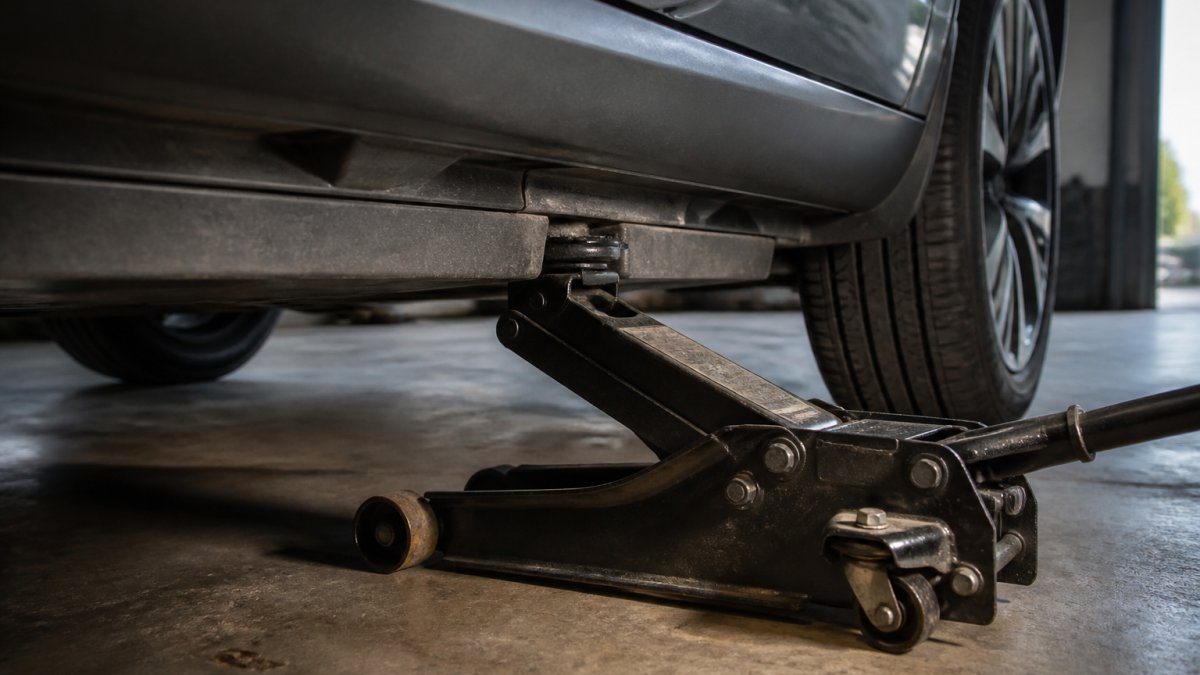
Use a proper jack rated for your vehicle’s weight. A standard scissor jack might not be strong enough for an EV. Check your owner’s manual for the recommended jack capacity. Position the jack directly under the jack point. Pump slowly and steadily.
As you lift, watch the vehicle. It should rise straight up without tilting. If it tilts or shifts, stop immediately. Lower it, reposition the jack, and try again.
Tire Repair Options: When You Can Fix It and When You Cannot
Not every flat tire needs a full replacement. The repair depends on where the damage is and how severe it is.
Sealant and Plug Repairs
Some EVs come with a tire sealant kit instead of a spare tire. This aerosol sealant is injected through the tire valve. It coats the inside of the tire and temporarily seals small punctures.
To use it, remove the valve cap, attach the canister, and spray the sealant into the tire. Then drive slowly to a repair shop. The sealant buys you time and distance, but it’s not permanent.
Sealant has limits. It doesn’t work on sidewall damage. It doesn’t work on large punctures. And it can make the tire harder to repair later because shops have to clean out the dried sealant.
Patch Repairs and Full Replacement
A small puncture in the tread can be patched. A tire shop drills out the hole slightly, applies a rubber plug, and seals it with adhesive.
Sidewall damage cannot be patched. The sidewall flexes too much when you drive. A patch won’t hold. Damage larger than one-quarter inch usually requires replacement.
If your tire is old, has uneven wear, or is already patched, replacement is the safer choice. A new tire costs more upfront, but it’s safer and lasts longer than a patch.
Using an Electric Car Tire Mobility Kit: How It Works
Many newer EVs come with a tire mobility kit instead of a spare tire. This kit includes a small compressor and a cartridge of sealant. It’s designed to get you moving long enough to reach a repair shop.
Here’s how it works. Locate the puncture. Most punctures are in the tread, not the sidewall. If the hole is visible, you can use the kit. If you can’t find the hole, the tire is losing air too fast for the kit to work.
Screw the sealant cartridge onto the compressor. Attach the compressor hose to your tire valve. Press the button. The compressor pushes sealant into the tire while also inflating it. This takes about five to ten minutes.
Once the tire is sealed and inflated, remove the hose and check the tire pressure. Drive slowly to a repair shop. Don’t exceed 50 miles per hour. The sealant is temporary. You need a permanent repair within a few hours.
The mobility kit is convenient. It doesn’t take up trunk space like a spare tire. But it only works on small punctures in the tread. It won’t help with sidewall damage or large holes. And once you use it, you need a tire shop to clean out the sealant before they can patch or replace the tire.
EV Spare Tire Availability and What to Know
Not all electric cars come with a spare tire. Many manufacturers skip the spare to save weight and improve range.
If your EV doesn’t have a spare, you have options. You can buy an aftermarket spare tire and carrier. Some owners keep a compact spare in the trunk for emergencies. Others rely on roadside assistance and towing.
Check your owner’s manual to see what your vehicle came with. If it came with a spare, make sure it’s properly inflated. A flat spare is useless in an emergency. Check it every few months.
If your vehicle didn’t come with a spare and you want one, talk to a tire shop. They can help you find a compatible spare and the right way to mount it. Just remember that adding weight reduces your range slightly.
When to Call for Flatbed Towing for Electric Cars
Sometimes changing a tire yourself isn’t the right choice. If you’re on a busy highway, uncomfortable with the process, or unsure about your vehicle’s jack points, call for help.
Flatbed towing is the safest way to transport an EV. Unlike traditional tow trucks that hook to the frame, a flatbed truck lowers its deck, and your vehicle drives or is winched onto it. Your car sits flat and secure, with no stress on the drivetrain or battery.
At Neptune Towing, we specialize in damage-free transport for electric vehicles. We understand that Teslas, Hyundai Ioniq models, and other EVs need careful handling. Our flatbed equipment protects your vehicle during transport. We serve Tulsa, Jenks, Bixby, Broken Arrow, Glenpool, and surrounding communities with 24/7 emergency towing.
If you’re stranded with a flat tire and need help, call us. We’ll get you and your vehicle to a repair shop safely. No impound fees. No storage charges. Just honest, professional service.
Step-by-Step Guide to Changing Your EV Tire Safely
If you decide to change the tire yourself, follow these steps carefully.
Step 1: Position Your Vehicle Safely
Pull completely off the road. Turn on hazard lights. Engage the parking brake.
Make sure the ground is level and stable. Not gravel. Not soft dirt.
Get your tools ready.
Step 2: Locate the Correct Jack Points
Open your owner’s manual and find the jack point diagram.
Look at the underside of your vehicle.
Never jack anywhere else. Not at the battery pack.
Step 3: Loosen the Lug Nuts and Lift the Vehicle
Before you lift, loosen the lug nuts. They’re tight.
Position the jack directly under the jack point. Pump slowly and steadily.
Place jack stands under the frame for safety. Lower the jack onto the stands.
Now remove the lug nuts completely.
Step 4: Remove the Damaged Tire and Install the Replacement
Grip the tire with both hands. Pull straight toward you.
Lift the replacement tire and align the holes with the wheel bolts.
Install the lug nuts by hand first. Tighten them by hand until snug.
Step 5: Lower the Vehicle and Secure the Lug Nuts
Raise the jack slightly to take pressure off the jack stands. Remove the stands.
Remove the jack. Now use the lug nut wrench to tighten the lug nuts.
Tighten firmly, but don’t overtighten.
Check the tire pressure with a gauge.
Common Mistakes to Avoid When Changing an EV Tire
People make predictable errors when changing EV tires. Here’s what to watch for.
Using the wrong jack point. This is the biggest mistake. The battery pack is heavy and sits low. Jacking in the wrong spot can damage it or collapse the frame.
Jacking on soft or uneven ground. The jack sinks. The vehicle tilts. This is dangerous. Always jack on level, solid ground.
Not loosening lug nuts before lifting. Lug nuts are tight. Once the wheel is off the ground, you can’t get enough use. Loosen them while the vehicle is still on the ground.
Skipping the jack stands. A jack can fail. Jack stands are your safety net. Always use them. Never work under a vehicle supported only by a jack.
Forgetting to tighten lug nuts properly. Loose lug nuts cause the wheel to wobble or fall off while driving. Tighten them in a star pattern. Check them again after driving a few miles.
Driving too fast on the replacement tire. If you used a temporary sealant or a compact spare, drive slowly to a repair shop. Don’t exceed 50 miles per hour.
Not checking tire pressure. A tire that’s underinflated wastes energy and reduces range. Overinflated tires wear unevenly. Check the pressure and adjust to the recommended level.
Changing a flat tire on an electric car is manageable if you follow the right steps and stay safe. But if you’re uncomfortable with the process, on a busy highway, or unsure about your vehicle’s jack points, don’t hesitate to call for help.
Frequently Asked Questions
Can I change a flat tire on an electric car myself?
Yes, you can change a flat tire on an electric car yourself if you have the right tools and know the correct jack points for your specific EV model. However, electric vehicles are heavier than gas-powered cars due to battery weight, which makes safe lifting more critical. Always consult your owner’s manual for the exact jack point locations before attempting a tire change. If you’re uncomfortable with the process or your vehicle is in an unsafe location, calling roadside assistance is the smarter choice.
Where should you place a jack on an electric car?
Electric vehicles have reinforced jack points specifically designed to handle the vehicle’s weight safely. These points are typically located on the frame rails beneath the doors, away from the battery pack. Your owner’s manual shows the exact locations for your model. Never place a jack under the battery housing or on areas not marked as lifting points. The weight distribution of an EV differs from conventional cars, so using the correct jack points is essential to prevent damage and injury.
Do electric cars come with a spare tire?
Many modern electric vehicles do not include a full spare tire. Instead, they come equipped with a tire mobility kit (also called a tire repair kit or tire sealant system) that allows temporary repairs for minor punctures. Some EV owners choose to carry a portable air compressor or repair kit as backup. Check your vehicle’s documentation to confirm what’s included and whether you should keep additional equipment in your car for remote travel.
When should you call roadside assistance for an EV flat tire?
Call roadside assistance immediately if your tire is damaged beyond repair (sidewall puncture, large tear, or multiple punctures), if you’re on a busy highway or in an unsafe location, if your vehicle is too heavy for you to safely lift, or if you lack the proper tools. For electric vehicles, roadside assistance providers need to understand EV-specific requirements like proper jack points and towing precautions. Neptune Towing specializes in EV roadside assistance and flatbed towing, ensuring your electric car is handled safely without drivetrain damage.