
Table of Contents
- Why Electric Vehicles Require Specialized Flatbed Towing
- The Risks of Wheel-Lift Towing for Electric Vehicles
- Tesla Towing Requirements and Manufacturer Guidelines
- Damage-Free EV Towing: What You Need to Know
- Electric Vehicle Battery Damage During Towing
- Electric Car Roadside Assistance in Tulsa and Surrounding Areas
- How to Identify If Your EV Can Be Flat-Towed Safely
- Conclusion
Why Electric Vehicles Require Specialized Flatbed Towing
Last Updated: July 27, 2026
When your Tesla breaks down on I-44 near Tulsa, or your Chevy Bolt leaves you stranded in Bixby, the tow truck that shows up matters more than you might think. Not all towing methods work for electric vehicles, and understanding why electric vehicles require specialized flatbed towing could save you thousands in drivetrain damage. At Neptune Towing, we’ve handled dozens of EV recoveries across the Tulsa area, and we’ve seen firsthand what happens when the wrong equipment pulls an electric vehicle.
How EV Powertrains Differ from Traditional Engines
Electric vehicles operate on fundamentally different mechanical principles than traditional engines. Instead of a transmission connected to wheels through a mechanical drivetrain, an EV uses an electric motor, inverter, and reduction gears to convert electrical energy into motion. The motor is directly coupled to the wheels in most EV designs, meaning the wheels are mechanically connected to the motor at all times, even when parked.
When a gasoline vehicle sits in neutral, the wheels spin freely without engaging the engine. An electric vehicle doesn’t have that separation. The electric motor remains connected to the wheels through the reduction gears and drivetrain. If those wheels turn while being transported, the motor turns with them, the root of the motor overspeed problem that makes flatbed towing the only safe choice.
Most EV owners don’t realize their vehicle’s electric motor is always mechanically coupled to the wheels. This single fact explains why wheel-[lift towing](/flatbed-vs-wheel-lift-towing/) is dangerous, it forces the motor to spin at speeds it was never designed to handle during transport.
The Risks of Wheel-Lift Towing for Electric Vehicles
Wheel-lift towing lifts two wheels off the ground while the other two wheels roll. For a conventional car, this is standard practice. For an electric vehicle, it’s catastrophic.
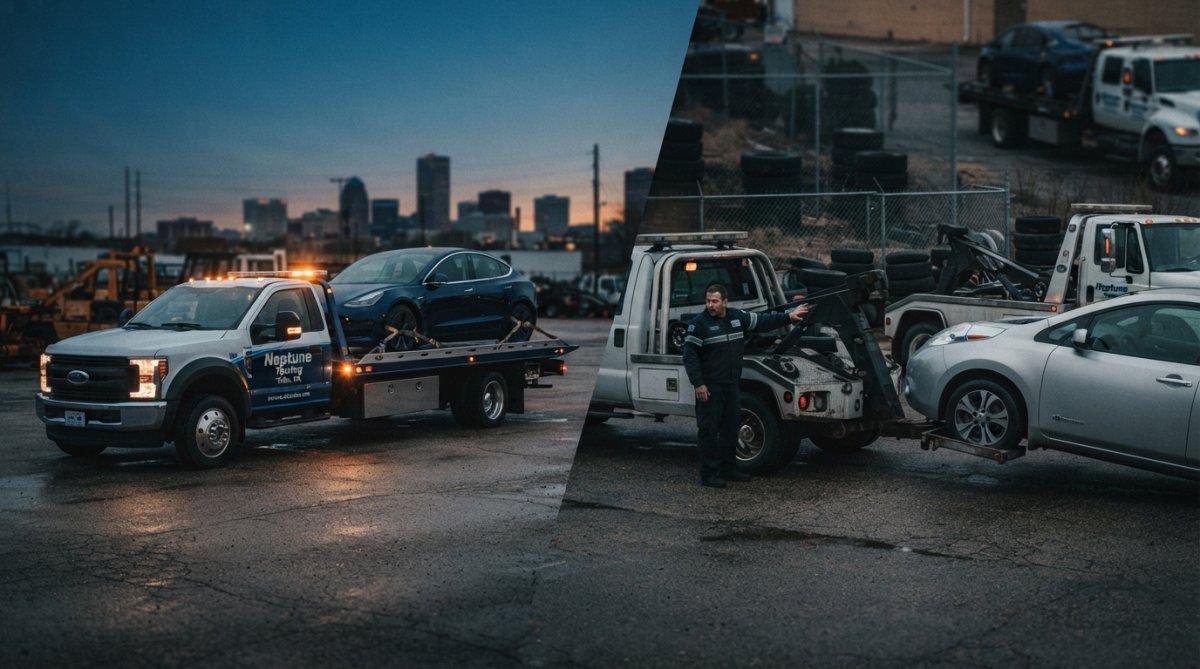
When a tow truck using wheel-lift equipment raises the rear wheels of a Tesla, the front wheels remain on the road. As the tow truck moves forward, those front wheels roll. Since the electric motor is mechanically connected to the wheels, the motor is forced to spin as the vehicle is dragged. A 30-mile-per-hour tow can force the motor to spin far beyond its design limits. This motor overspeed can destroy the motor’s internal windings, damage the inverter, and cause permanent drivetrain failure. Replacement costs typically exceed $10,000, and some owners have faced bills exceeding their insurance claims.
Drivetrain and Motor Damage Prevention
The only way to prevent motor damage during towing is to ensure the wheels never turn while in motion. Flatbed towing accomplishes this by lifting all four wheels completely off the ground. Since the wheels aren’t turning, the motor doesn’t spin, and the drivetrain remains protected.
Some EV owners ask whether shifting into neutral prevents motor engagement. Neutral mode in an EV doesn’t disconnect the motor from the wheels the way it does in a traditional transmission. The mechanical connection remains, and the motor will still spin if the wheels turn.
Regenerative Braking and Unintended Energy Generation
Modern electric vehicles use regenerative braking to capture energy when slowing down and feed it back into the battery. During towing, this system can create unexpected problems. If a wheel-lift tow truck is dragging an EV and the operator brakes suddenly, the wheels slow but the motor may continue spinning due to inertia. This creates uncontrolled energy being fed back into the battery at unpredictable rates, stressing the battery management system and potentially damaging the high-voltage battery pack.
Flatbed towing eliminates this risk entirely because the wheels never turn.
Never allow a tow operator to use wheel-lift equipment on an electric vehicle. Motor overspeed damage can occur at any speed above zero, and the damage is often permanent and expensive.
Tesla Towing Requirements and Manufacturer Guidelines
Tesla’s documentation is explicit: Tesla owners should never allow wheel-lift or dolly towing. Tesla specifies that all four wheels must be off the ground during transport, meaning flatbed towing is the only approved method.
Transport Mode and Neutral Mode Explained
Tesla’s Transport Mode is designed for short-distance movement within a parking lot when the vehicle has no power. It’s not designed for highway towing. When a Tesla is in Transport Mode, the parking brake releases and the vehicle can be manually pushed, but the motor is still coupled to the drivetrain.
Neutral Mode disengages the transmission from the motor but doesn’t disconnect the motor from the wheels. The mechanical linkage still exists, and the motor will spin if the wheels turn. Neutral Mode is useful for coasting or moving the vehicle short distances, but it’s not a safe towing condition.
High-Voltage Systems and Safety Protocols
Electric vehicles contain high-voltage battery systems operating at 400 volts or higher. These systems require specialized safety protocols during towing and recovery. Professional EV towing requires operators trained in high-voltage safety who understand how to identify the main disconnect switch, safely ground the vehicle, and recognize signs of battery damage or thermal issues.
(/blog/damage-free-towing-for-classic-cars-complete-guide/) Electric Vehicles]
Damage-Free EV Towing: What You Need to Know
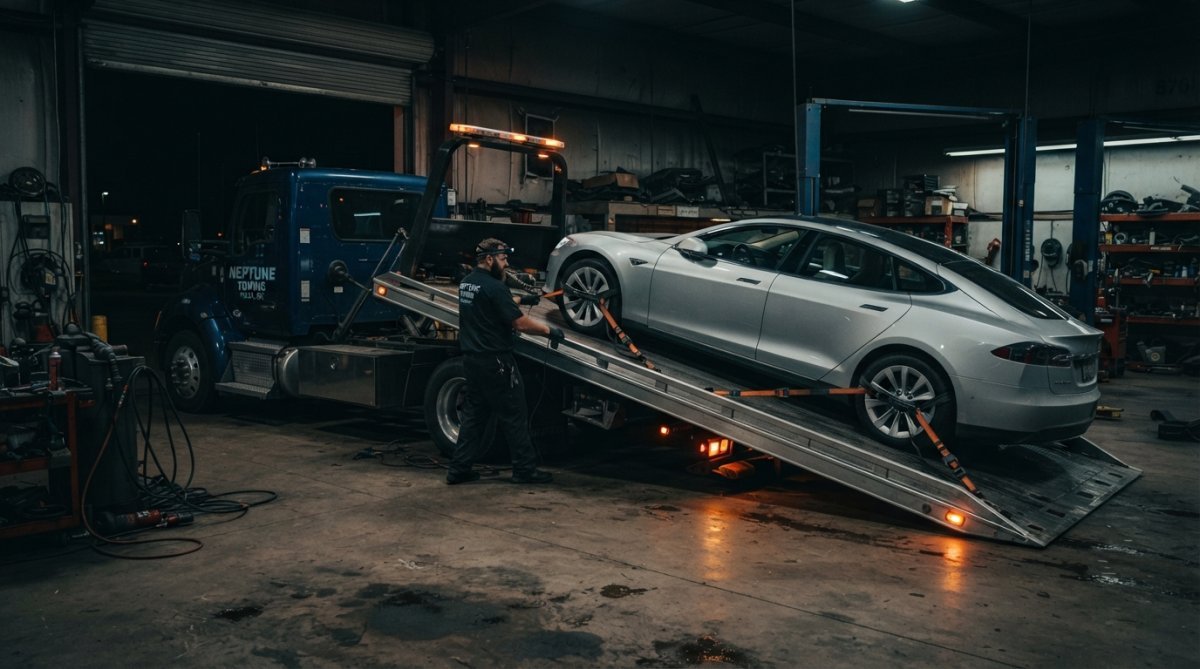
At Neptune Towing, damage-free towing isn’t just a marketing phrase, it’s how we operate. Every vehicle that comes onto one of our flatbeds, whether it’s a Tesla in Broken Arrow or a Chevy Bolt in Tulsa, gets careful treatment. We use proper loading ramps, wheel chocks, and tie-down straps rated for the vehicle’s weight.
Proper Flatbed Securement and Immobilization
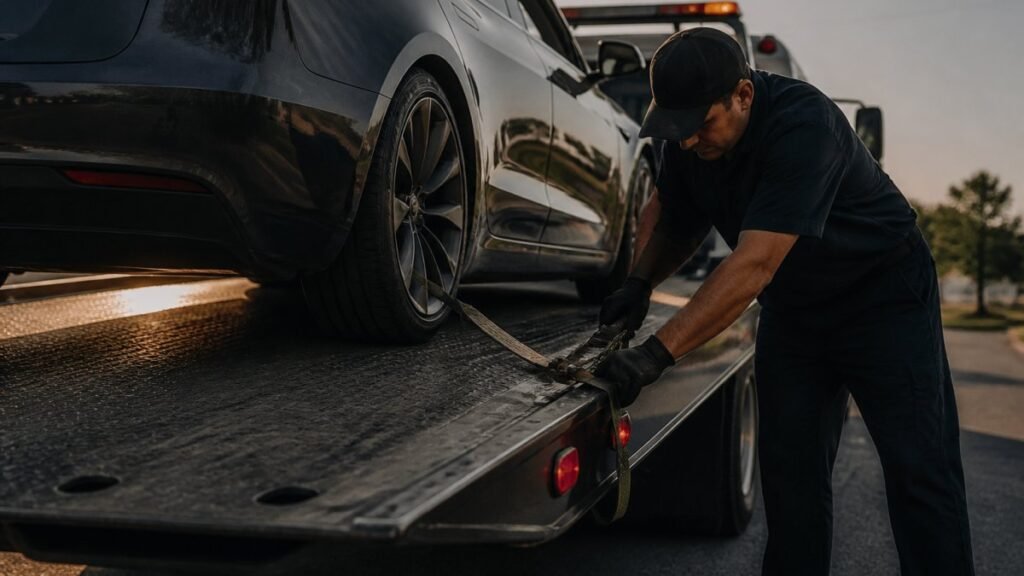
Securing an electric vehicle on a flatbed requires attention to specific frame points. We locate these reinforced areas before attaching straps and use only the appropriate attachment hardware specified for that vehicle model. The vehicle must be immobilized so thoroughly that it cannot shift, rock, or slide during transport. We use a minimum of four tie-down points with straps routed to prevent any movement, and wheel chocks are placed in front of and behind each wheel.
Why Professional Recovery Matters for Your Warranty
Many EV owners don’t realize that improper towing can void their vehicle’s warranty. Manufacturer warranties specifically exclude damage caused by improper transport methods. Professional flatbed towing from a licensed operator like Neptune Towing creates documentation that protects your warranty. We provide detailed photos of the vehicle before and after transport and maintain records of our towing procedures.
Electric Vehicle Battery Damage During Towing
The battery pack in an electric vehicle is the most expensive component. Protecting that battery during towing is as important as protecting the motor.
Battery Cooling Systems and Thermal Management Risks
Electric vehicle batteries generate heat during charging and discharging. Active cooling systems with pumps, radiators, and coolant lines manage this heat. During towing, if the vehicle is powered on, the battery management system continues monitoring temperature. If powered off, the cooling system shuts down.
Wheel-lift towing creates battery risk because spinning wheels force the motor to turn, generating heat that transfers to the battery pack. On a hot day in Tulsa, this could push the battery into thermal protection mode where it reduces power until cooling down.
Turn off your EV completely before towing, and never allow wheel-lift equipment to be used. These two steps protect your battery from thermal stress and damage.
Inverter and Reduction Gears Under Stress
The inverter converts direct current from the battery into alternating current that the motor can use. It’s sensitive to electrical stress and thermal conditions. When a motor is forced to spin at high speeds during wheel-lift towing, the inverter can be damaged by unexpected electrical feedback.
The reduction gears are mechanical components that step down the motor’s rotation speed to match the wheels. Motor overspeed creates stresses these gears weren’t designed to handle, potentially causing internal damage that may not be immediately obvious.
Electric Car Roadside Assistance in Tulsa and Surrounding Areas
When you’re stranded with an electric vehicle in Tulsa, Jenks, Broken Arrow, or surrounding areas, you need roadside assistance that understands your vehicle. Neptune Towing provides 24/7 emergency towing and roadside assistance specifically trained for electric vehicles.
When to Call for Professional Help vs. DIY Recovery
If your EV won’t start, has a flat tire, or is stuck in a ditch, you need professional help. Don’t attempt to use a standard tow service that doesn’t understand EV-specific requirements. Even if it seems cheaper or closer, the risk of damage makes professional EV towing the only sensible choice.
If your vehicle has run out of charge, flatbed towing is the safest option. We can tow you to a charging station or repair facility without risking damage to your drivetrain. If your vehicle is stuck in mud, snow, or a ditch, professional recovery using proper equipment is essential. Winch-outs and recovery operations require specialized knowledge to avoid damaging the vehicle’s undercarriage, battery pack, or suspension.
Available in Jenks, Bixby, Broken Arrow, and Beyond
Neptune Towing operates throughout the greater Tulsa area, including Jenks, Bixby, Broken Arrow, Glenpool, Owasso, and Sapulpa. We’re available 24 hours a day, 7 days a week for emergency towing and roadside assistance. When you call, you reach a local owner-operator who understands the Tulsa area and can dispatch a truck quickly. We don’t impound vehicles or charge storage fees. Our goal is to get your EV to safety and help you solve the problem.
How to Identify If Your EV Can Be Flat-Towed Safely
Not every electric vehicle can be towed the same way. Before you ever need towing, check your vehicle’s documentation.
Checking Manufacturer Documentation and Tow Hooks
Your vehicle’s owner manual contains specific towing instructions. Search for "towing" or "transport." Most EV manufacturers explicitly state that only flatbed towing is approved. Some manufacturers provide additional instructions about preparing the vehicle for flatbed transport, such as turning off the vehicle completely, locating the emergency manual release, and identifying proper attachment points for recovery equipment.
Look for tow hooks on your vehicle, reinforced attachment points designed to handle recovery equipment. They’re typically located at the front and rear. Never attach towing equipment to frame rails, suspension components, or other non-reinforced areas.
All-Wheel Drive vs. Single-Motor Considerations
All-wheel drive electric vehicles have motors on both front and rear axles, creating additional complexity during towing because both motors are mechanically connected to their respective wheels. Wheel-lift towing on an all-wheel drive EV is even more dangerous than on a single-motor vehicle.
Single-motor EVs typically have the motor connected to either front or rear wheels. The non-driven wheels can spin freely in neutral, but the driven wheels will cause motor overspeed if they rotate during wheel-lift towing.
The safest approach for any EV, regardless of drive configuration, is flatbed towing.
| Towing Scenario | EV Safety Risk | Recommended Action |
|---|---|---|
| Wheel-lift towing | Motor overspeed, inverter damage, drivetrain failure | Never allow; insist on flatbed |
| Dolly towing (partial) | Motor overspeed on lifted wheels, battery thermal stress | Never allow; use flatbed only |
| Flatbed towing with proper securement | No mechanical risk to motor, battery, or drivetrain | Standard safe method for all EVs |
| Short-distance manual movement | Acceptable only in parking lot at walking speed | Use only when vehicle has no power |
| Neutral mode towing | Still creates motor overspeed risk | Does not eliminate towing dangers |
When your electric vehicle needs towing in the Tulsa area, the choice of tow service determines whether you’ll face expensive repairs or safe transport to the repair shop. Neptune Towing specializes in damage-free flatbed towing for electric vehicles, including Teslas and all other EV models. We understand high-voltage systems, we use proper securement procedures, and we treat your vehicle with the care it deserves. If you’re stranded in Tulsa, Broken Arrow, Bixby, or surrounding communities, call Neptune Towing for professional EV towing that protects your investment.
Frequently Asked Questions
Why can't you tow an electric vehicle with a regular wheel-lift tow truck?
When wheels are lifted and the EV is towed with its drive wheels on the ground, the electric motor continues to spin as the vehicle moves. Without the engine running to manage this motion, the motor can overspeed and suffer severe damage to the drivetrain, inverter, and reduction gears. This is why electric vehicles require specialized flatbed towing that keeps all wheels off the ground, eliminating the risk of motor overspeed and drivetrain damage.
What happens if you tow an electric vehicle incorrectly?
Improper towing of an EV can cause thousands of dollars in damage. Motor overspeed, damaged inverters, failed reduction gears, and battery cooling system failures are common results of wheel-lift or dolly towing. Additionally, regenerative braking systems may activate unexpectedly during transport, creating unintended energy generation that stresses the powertrain. Manufacturer warranties often do not cover damage caused by improper towing methods, leaving you responsible for repairs.
Do all electric vehicles need flatbed towing?
Most electric vehicles require flatbed towing to prevent drivetrain damage, but some newer EV models with specific transport modes may have limited exceptions. Always check your manufacturer's guidelines, Tesla, Lucid, Rivian, and other brands have specific towing procedures. When in doubt, flatbed towing is the safest choice. Neptune Towing serves Tulsa, Jenks, Bixby, Broken Arrow, and surrounding areas with damage-free EV towing services that follow manufacturer requirements for your specific vehicle.
What is Transport Mode and why is it important for EV towing?
Transport Mode is a manufacturer-specific setting that disables the electric motor and places the vehicle in a neutral-like state, allowing it to be towed safely without motor overspeed risk. Not all EVs have this feature. Tesla vehicles, for example, have specific towing procedures that differ from other brands. Even with Transport Mode, flatbed towing remains the safest method because it eliminates all stress on the drivetrain and high-voltage systems. Always consult your vehicle's manual or contact the manufacturer before towing.
References and Further Reading:
[EXTERNAL_LINK: Tesla Official Towing and Recovery Guide | tesla.com]
[EXTERNAL_LINK: EV Safety and Transport Standards from the Society of Automotive Engineers | sae.org]
[EXTERNAL_LINK: National Highway Traffic Safety Administration Electric Vehicle Safety Guidelines | nhtsa.gov]
This article was written using GrandRanker