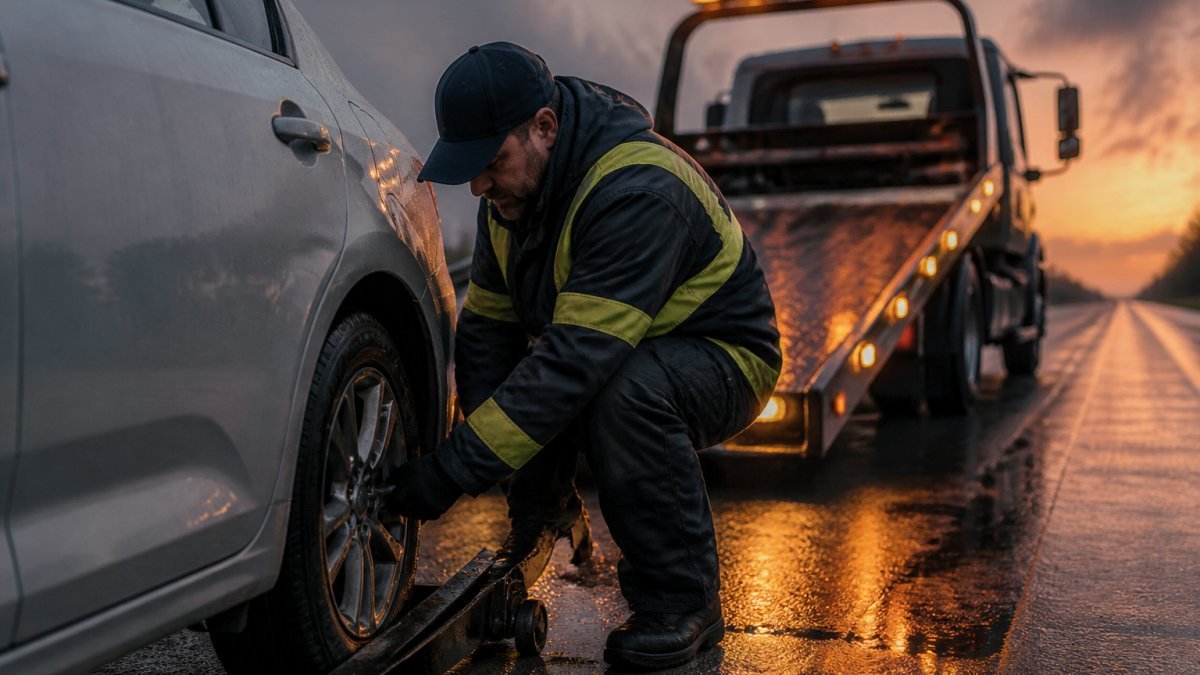

Table of Contents
- When You Need Immediate Assistance for Stranded Drivers
- How to Get Immediate Roadside Assistance
- Finding a Winch-Out Service Near Me
- Vehicle Recovery Service Options
- Stuck Car Recovery: Safety and What to Expect
- Choosing the Right Service for Your Situation
- Why Local, Owner-Operated Service Matters
- Frequently Asked Questions
Last Updated: October 16, 2026
When You Need Immediate Assistance for Stranded Drivers
You’re stuck on the side of I-44 with a dead battery. Your car won’t turn over. Or maybe you hydroplaned in the rain and ended up in a ditch near Broken Arrow.
Being stranded is stressful. You’re thinking about work, about how you’ll get home, about whether this is going to cost you a fortune.
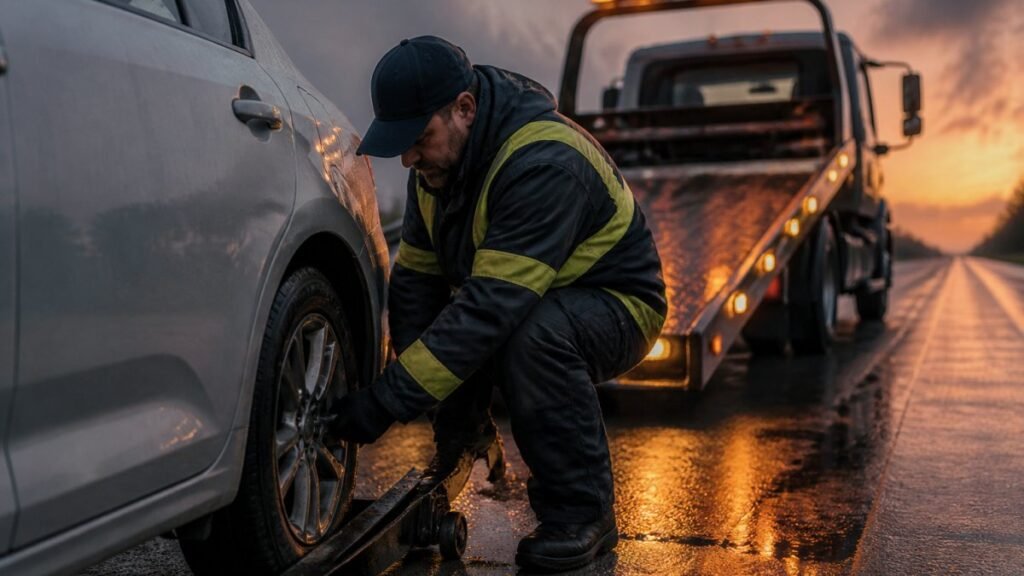
At Neptune Towing, we understand that feeling. We’ve been helping drivers across the Tulsa area, and we know what it takes to get you moving again safely.
This guide covers what to do when you’re stranded, how to get immediate roadside assistance, and how to choose the right service for your situation. We’ll walk you through the process step by step so you know exactly what to expect.
How to Get Immediate Roadside Assistance
When you need immediate assistance for stranded drivers, the first step is to call for help. But knowing what to say and what information to have ready can make a huge difference in how quickly help arrives.
Call for Help Immediately
Don’t wait. Call your roadside assistance provider, your insurance company’s roadside service, or a local towing company as soon as you realize you’re stranded. The sooner you make that call, the sooner a recovery truck can be dispatched to your location.
If you’re in a dangerous position, on a busy highway, in heavy traffic, or in an unsafe area, call 911 first. Law enforcement can help manage traffic and keep you safe while you wait for roadside assistance to arrive.
What Information to Give Dispatch
When you call, have this information ready. It speeds up the dispatch process and helps the driver find you faster.
- Your exact location (highway, mile marker, cross street, or landmark)
- Your vehicle description (color, make, model, year)
- What’s wrong with your vehicle (won’t start, flat tire, accident, stuck in ditch)
- Whether you’re in a safe location or need emergency assistance
- Your phone number so the driver can call you when they’re close
If you’re not sure of your exact location, use your phone’s GPS or look for mile markers on the highway. Telling dispatch “I’m on I-44 westbound near the 101st Street exit” is much more helpful than “I’m somewhere on I-44.”
What to Do While You Wait
Waiting for help can feel endless, especially if traffic is heavy or the weather is bad.
Stay in Your Vehicle (Usually)
If you’re on a highway or in an unsafe area, stay in your vehicle with the doors locked. It’s safer than standing on the roadside where traffic could hit you.
Turn on Your Hazard Lights
Make your vehicle as visible as possible. Turn on your hazard lights so other drivers can see you. If it’s dark, turn on your headlights too.
Stay Calm and Don’t Attempt Risky Fixes
Don’t try to push your vehicle out of a ditch or difficult position yourself. Don’t attempt to hook up towing equipment or move your vehicle without professional help.
Keep Your Phone Charged
Make sure your phone stays charged so you can communicate with dispatch and the driver.
Document the Scene (If Safe)
If you’re in a safe location and it’s safe to do so, take photos of your vehicle’s position and any damage.
Finding a Winch-Out Service Near Me
When your vehicle is stuck in a ditch, off the road, or in a difficult position that a standard tow truck can’t handle, you need a winch-out service.
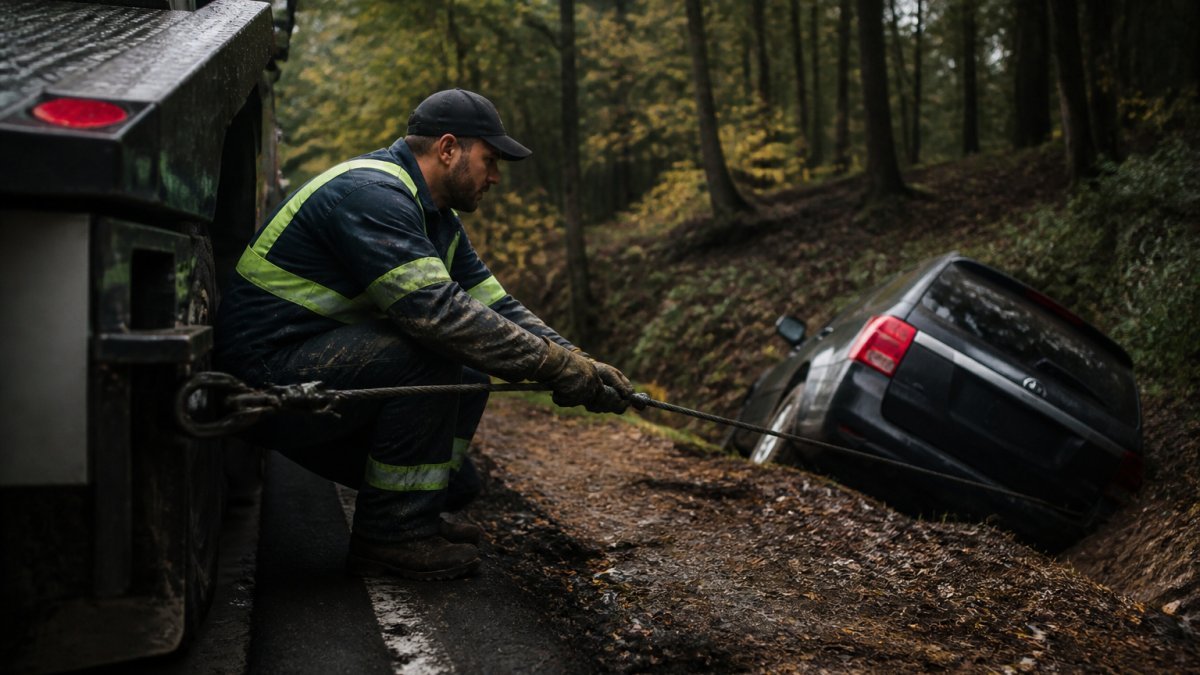
A winch-out service is different from standard towing. Instead of hooking up to your vehicle and pulling it away, a winch operator uses a motorized winch to carefully extract your vehicle from a stuck or difficult position.
Local towing companies that specialize in vehicle recovery are your best option. Look for services that advertise winch-out assistance, vehicle extraction, or accident recovery.
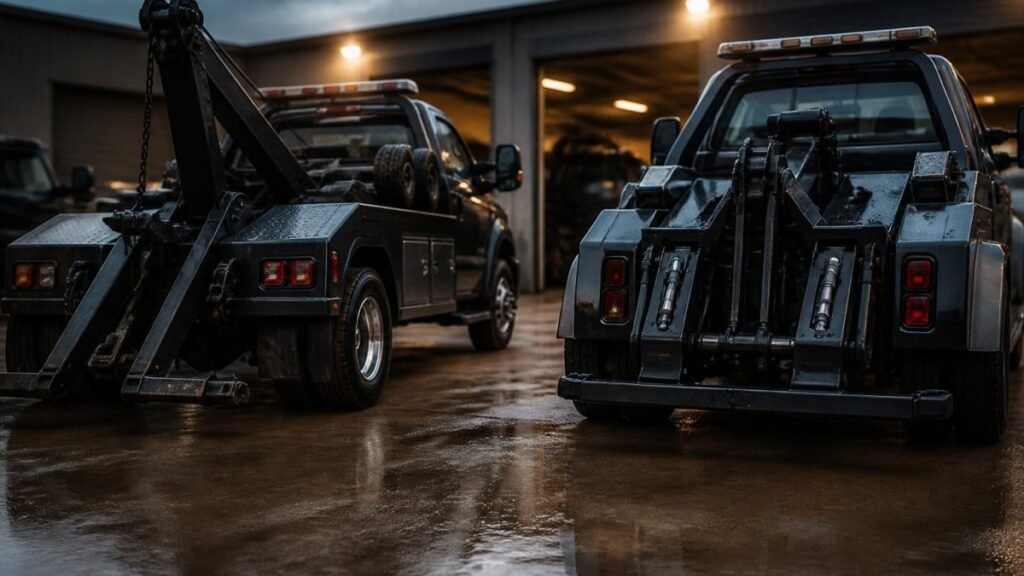
Neptune Towing provides winch-out recovery for vehicles stuck in difficult positions across the Tulsa area. We have the equipment and experience to handle stuck cars, SUVs, and trucks safely.
Vehicle Recovery Service Options
When you’re stranded, you have several options for getting help. Understanding the differences between them helps you choose the right service for your situation.
Roadside Assistance Programs
Roadside assistance programs are membership or insurance-based services that cover towing, jump starts, lockouts, and fuel delivery. Many insurance policies include roadside assistance. Some membership programs like AAA roadside assistance offer coverage for members.
Local Towing Companies
Local towing companies provide immediate assistance stranded drivers need in your area. Local companies often provide more personalized service and can handle specialized situations like EV towing or flatbed recovery for luxury vehicles.
Highway Patrol and Emergency Services
If you’re in immediate danger or involved in an accident, law enforcement and emergency services can help manage the scene and coordinate roadside assistance. They’re not towing services, but they can help keep you safe while you wait for recovery help to arrive.
Winch-Out Recovery vs. Traditional Towing
Understanding the difference between winch-out recovery and traditional towing helps you know what to expect and what to request when you call for help.
Winch-Out Recovery uses motorized winch equipment to extract vehicles from stuck positions. The winch operator carefully controls the extraction to prevent additional damage. This method is used for vehicles in ditches, off-road positions, or situations where the vehicle can’t be moved with a standard tow hook.
Traditional Towing uses a tow truck with a hook or flatbed to transport your vehicle from one location to another.
For many situations, you need winch-out recovery first to extract the vehicle from a stuck position, and then traditional towing to transport it to a repair shop.
Stuck Car Recovery: Safety and What to Expect
When your vehicle is stuck, in a ditch, off-road, or in another difficult position, recovery involves careful planning and proper equipment.
How Winch-Out Recovery Works
The recovery operator arrives and assesses your vehicle’s position. They determine the safest angle and method to extract the vehicle without causing additional damage.
The operator is controlling the winch with precision to avoid jerking your vehicle or causing strain on the frame. This careful approach takes time, but it prevents thousands of dollars in additional damage.
What to Expect During Recovery
You’ll hear the winch motor running. Your vehicle will move slowly and deliberately. The operator may reposition the recovery truck or adjust the winch angle several times. This is normal and necessary for safe recovery.
The operator may ask you to stay away from the vehicle during recovery. This is for your safety, in case equipment fails or something unexpected happens.
Recovery Limits and When to Call 911
Not every stuck vehicle can be recovered with a standard winch-out service. Some situations require additional help or are too dangerous for private recovery operators.
When a Standard Winch-Out Won’t Work
If your vehicle is in a location that’s unstable (cliff edge, steep embankment, water), recovery may be too dangerous for a private operator. If your vehicle is involved in an active accident scene with other vehicles, emergency services need to manage the scene first.
When to Call 911
Call 911 if anyone is injured. Call 911 if your vehicle is in immediate danger of rolling or falling. Call 911 if you’re in an active traffic situation that’s unsafe. Call 911 if your vehicle is in water or another hazardous situation. Emergency services have the training, equipment, and authority to handle these situations safely.
Once the scene is safe and emergency services have cleared it, a recovery company can come in and extract your vehicle.
Choosing the Right Service for Your Situation
Not every roadside assistance service is the same. Choosing the right one for your situation matters.
If You’re Stranded on a Highway
You need fast response and professional service. A local towing company that specializes in highway recovery is your best choice. They have the equipment for quick extraction and can handle the traffic safety issues that come with roadside breakdowns.
If Your Vehicle Is in a Ditch or Off-Road
You need winch-out recovery specifically. Call a local towing company that advertises vehicle extraction or winch-out services. Ask whether they have experience with your type of vehicle and the terrain you’re in.
If You Have an Electric Vehicle or Luxury Car
You need a service that understands damage-free towing. EVs require special handling to protect the battery and drivetrain. Luxury vehicles need flatbed transport to prevent damage.
If You’re Concerned About Cost
Ask about pricing upfront before you authorize recovery. Some services charge by distance, some by time, and some have flat rates. Understand what you’re being charged for before the work starts.
Why Local, Owner-Operated Service Matters
When you’re stranded, you want to call someone you can trust. That’s where local, owner-operated towing services make a real difference.
A local owner-operator is invested in their reputation. They’re not a call center taking your information and passing it to a contractor.
Owner-operated services also understand your community. We know the roads, the neighborhoods, the traffic patterns.
We also don’t profit from impounds or storage fees. Our business focuses on helping people get their vehicles to safety and to repair shops. We solve problems instead of creating them.
When you need immediate assistance for stranded drivers, choosing a local, owner-operated service means choosing reliability, honesty, and genuine customer care.
When you’re stranded, you need help fast, and you need to trust the service that shows up.
| Service Type | Best For | Response | Equipment |
|---|---|---|---|
| Winch-Out Recovery | Vehicles stuck in ditches or off-road | 15-45 minutes | Motorized winch, recovery truck |
| Traditional Towing | Vehicle transport to repair shop | 20-60 minutes | Flatbed or hook truck |
| Jump Start Service | Dead battery | 15-30 minutes | Battery jumper cables |
| Lockout Service | Keys locked in vehicle | 20-40 minutes | Lockout tools |
| Fuel Delivery | Empty fuel tank | 15-30 minutes | Fuel container, pump |
Frequently Asked Questions
How do I know if I need a winch-out or just a regular tow truck?
A winch-out service is best when your vehicle is stuck in a ditch, off a roadway, or in a position that prevents a standard tow truck from safely connecting. If your car is on the road and can be towed normally, a regular tow is usually faster and simpler. If your vehicle is truly stuck, wheels in mud, embedded in a ditch, or at an angle, a winch-out service with proper recovery equipment is the right choice. When you call, describe exactly where your vehicle is stuck so dispatch can send the right equipment.
What should I tell the dispatcher when calling for immediate assistance?
Give your exact location first: the highway, mile marker, or nearest intersection, plus which direction you’re facing. Describe your vehicle briefly: make, model, and color. Explain the situation clearly: stuck in a ditch, off the road, accident, mechanical breakdown, or other issue. Mention if anyone is injured and whether the vehicle is in a travel lane or off the roadway. If you have roadside assistance coverage, mention that too. Clear, specific information helps dispatch send the right truck and get you help faster.
Is it safe to stay in my vehicle while waiting for a winch-out service?
If your vehicle is off the roadway and away from traffic, staying inside with the doors locked is generally safer than standing outside. Keep your hazard lights on and stay alert. If your vehicle is partially in a travel lane or on a busy highway, exit safely away from traffic and wait a distance away. Never stand between your vehicle and oncoming traffic. If weather is severe, stay inside with the engine off unless you need heat. Once the recovery operator arrives, follow their instructions about where to stand during the winch-out process.
How long does it usually take for a winch-out service to arrive?
Response time depends on your location and current demand. A local towing company with nearby units can often arrive quickly, but during peak times or if you’re in a remote area, it may take longer. When you call, ask for an estimated arrival time. Many professional services provide real-time updates so you’re not left guessing. Having your exact location and staying reachable by phone helps dispatch track you down quickly.
Can a winch-out service damage my vehicle during recovery?
Professional winch-out operators use proper techniques and equipment to minimize damage: securing the vehicle at reinforced points, using appropriate cable and rigging, and controlling the pull slowly and steadily. Damage risk is much lower with a trained operator than with improper DIY attempts. However, some vehicles, especially low-clearance cars, electric vehicles, and luxury models, need extra care. When you call, mention if you have a Tesla, classic car, or low-clearance vehicle so the operator can plan the safest recovery method. Reputable local services prioritize damage-free recovery.