
Last Updated: November 7, 2026
Quick Summary
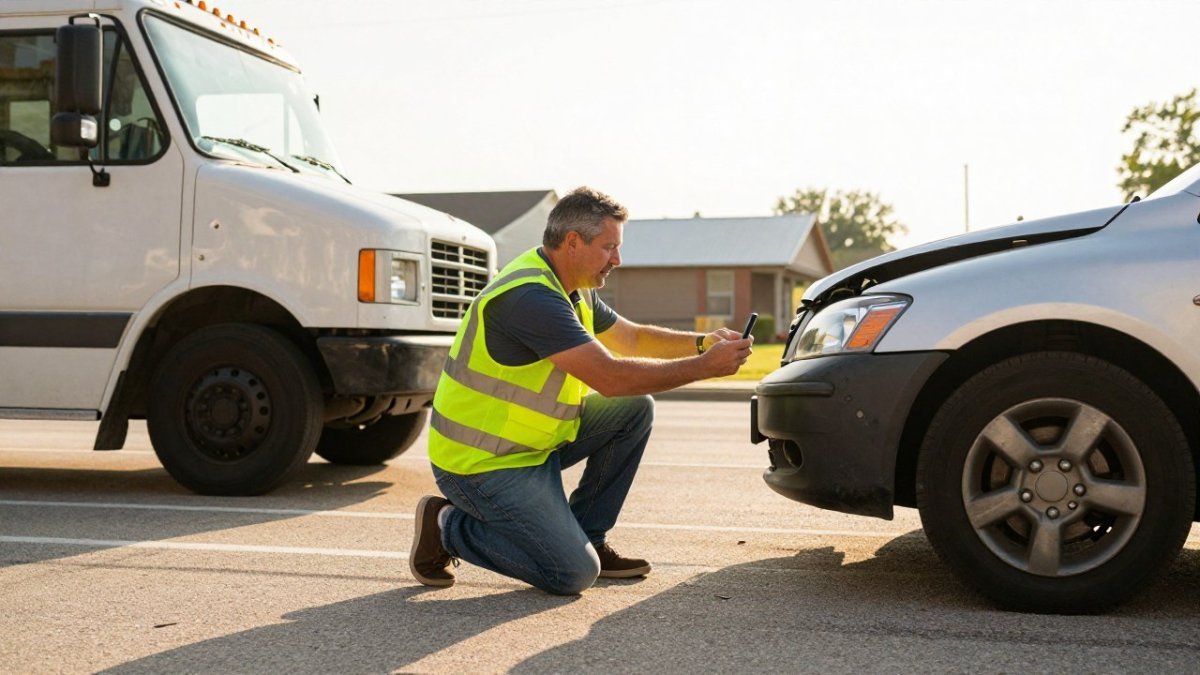
To prove fault in a car accident, document the scene right away with photos, witness names, and insurance details, then build your case with a police report, damage evidence, and dashcam or surveillance footage. Strong evidence that is collected quickly is hard for an insurer to dispute.
- Take photos of both cars, the damage, the road, and traffic signs before anything changes.
- Get names, phone numbers, and insurance details from every driver and any witnesses.
- Request the police report and check its diagram, contributing factors, and driver statements for errors.
- Ask nearby businesses for surveillance footage before it is overwritten, since many systems keep it only a few days.
- Challenge an unfair fault decision in writing with your evidence and request a supervisor review.
Table of Contents
- Start With Safety and the Scene Before You Argue About Fault
- How to Read a Car Accident Police Report
- Car Accident Fault Based on Damage Location
- Evidence to Prove Fault Without Witnesses
- Left-Turn Accident Fault: Who Usually Pays
- How to Challenge an Insurer’s Fault Decision
- Your Next Step After a Tulsa-Area Collision
- Frequently Asked Questions
Start With Safety and the Scene Before You Argue About Fault
If you have just been in a crash in Tulsa, your first job is safety. Move to a safe spot if you can, turn on your hazard lights, and call 911 if anyone is hurt.
Proving fault is easier when the scene is still fresh. Many drivers wait too long to document anything, and by then the details have faded. Start capturing evidence right away, and do it calmly.
Here is what to do at the scene:
- Check for injuries and call 911 if anyone needs help.
- Move vehicles out of traffic if they are safe to move and the road is clear.
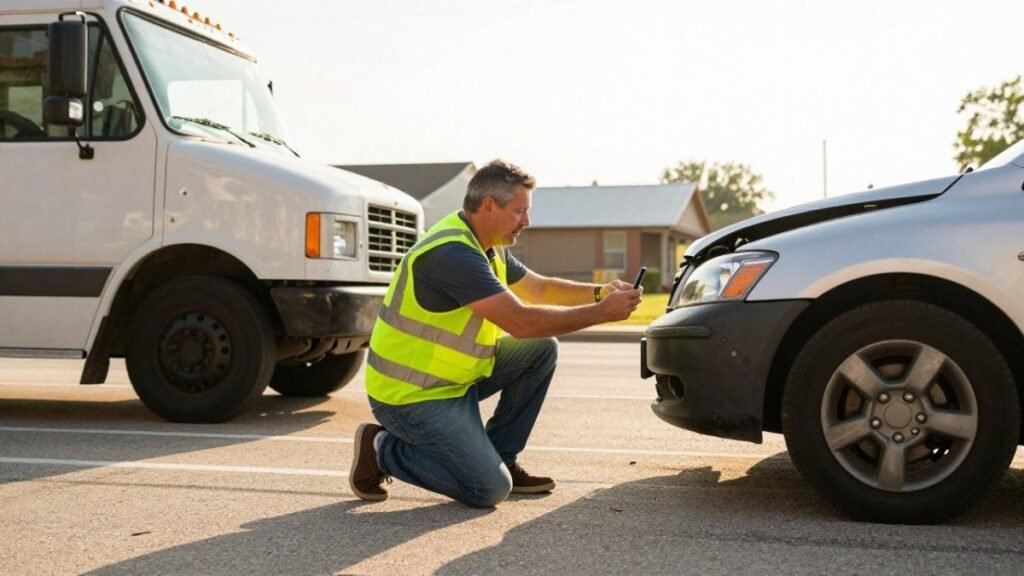
- Take photos of both cars, the damage, the road, traffic signs, and the position of the vehicles.
- Get names, phone numbers, and insurance details from every driver involved.
If you are stranded on a busy road like I-44 or the Broken Arrow Expressway, stay in your vehicle with your seatbelt on unless it is unsafe to do so. You can learn more about our roadside assistance services.
Your safety comes first, but the details you record now will matter later. For a closer look at what to do when your car is stopped in a live lane, read What Happens If Your Car Breaks Down in a Traffic Lane.
How to Read a Car Accident Police Report
A police report is one of the most important documents you can use to prove fault, but it is not self-explanatory. Officers typically record the facts, the drivers’ statements, the damage, and any citations. Insurers often rely on it first, so you need to know how to get it, how to read it, and what to do when it is wrong.
How to get the report
If an officer responded to your crash, ask for the report number and the name of the agency before you leave the scene. The responding agency is usually the local police department, a state highway patrol, or the county sheriff’s office. You can request a copy through the records division of the responding agency, often online or by mail, and there is usually a short wait before the report is finalized.
What to look for
- Diagram of the crash: Check that the vehicle positions, lanes, and direction of travel are drawn correctly. A diagram that puts your car in the wrong lane can undercut your account.
- Contributing factors: Note any codes or notes about speed, following distance, failure to yield, or distraction. These codes carry weight with adjusters.
- Driver statements: Compare each driver’s account with what you remember and with what you told the officer. If the other driver’s statement contradicts the physical evidence, flag it.
- Citations issued: A ticket to the other driver can support your claim, though it does not decide fault on its own.
- Witness information: Confirm that independent witnesses are listed with contact details. If they are missing, tell the officer.
When the report has mistakes
Errors happen. A wrong lane, a misspelled name, or a contributing factor attributed to the wrong driver can weaken your claim. Contact the officer or the records office and ask about the agency’s correction or supplement process. Be specific about what is wrong and why, and put the request in writing if you can. A supplement does not guarantee the report will change, but it creates a record that you raised the issue early.
How insurers use the report
Adjusters treat the report as a starting point, not a verdict. They compare it against photos, damage patterns, and statements. If the report favors you, make sure the adjuster has a copy.
Watch out: do not assume the report is final the day you pick it up. Reports are sometimes amended after additional interviews or footage review, so check back before you rely on it in a demand letter.
Car Accident Fault Based on Damage Location
Where the damage sits on each vehicle tells a story, but it is a story with limits. Adjusters look at the point of impact to figure out how the crash happened, and you should understand both what damage patterns suggest and what they cannot prove on their own.
What common damage patterns suggest
- Rear damage often suggests the car behind did not stop in time, which points toward the trailing driver.
- Front damage on one car and side damage on the other can show an angle collision, such as a car that pulled out in front of traffic.
- Damage to the driver’s side may show a lane change or a car drifting into your path.
- Matching damage on both sides can point to a sideswipe where both drivers were moving.
- Damage height and shape matter too. A low bumper strike reads differently from a high panel hit, and crush depth can hint at speed.
What damage evidence cannot prove
Damage location shows where the vehicles met, not why. A rear-end pattern does not tell you whether the front car brake-checked, whether a third vehicle cut off the trailing driver, or whether a light was red. A side-impact pattern does not tell you who had the right of way. Treat damage as one clue that supports or contradicts the other evidence, never as the whole case.
How to photograph damage so an adjuster can use it
Take photos from several angles: close-ups of each damaged panel, wider shots that show both vehicles together, and at least one photo that includes the license plates so the vehicles are clearly identified. Capture the damage height relative to the ground and any paint transfer or debris. If your car is towed, photograph it before it leaves the scene and again when it arrives at the shop, so no one can argue the damage happened in transit.
When damage and statements conflict
A common pattern is a driver whose statement does not match the damage on their own car. If the other driver says they were stopped when you hit them, but their front bumper shows fresh crush and yours shows side damage, the physical evidence undercuts the statement.
Watch out: do not let a repair shop start work before the damage is documented. Once panels are replaced, the evidence is gone, and an adjuster who wanted to inspect the car will have nothing to look at.
Evidence to Prove Fault Without Witnesses
Many crashes happen with no independent witness. You can still build a strong case if you gather the right evidence quickly.
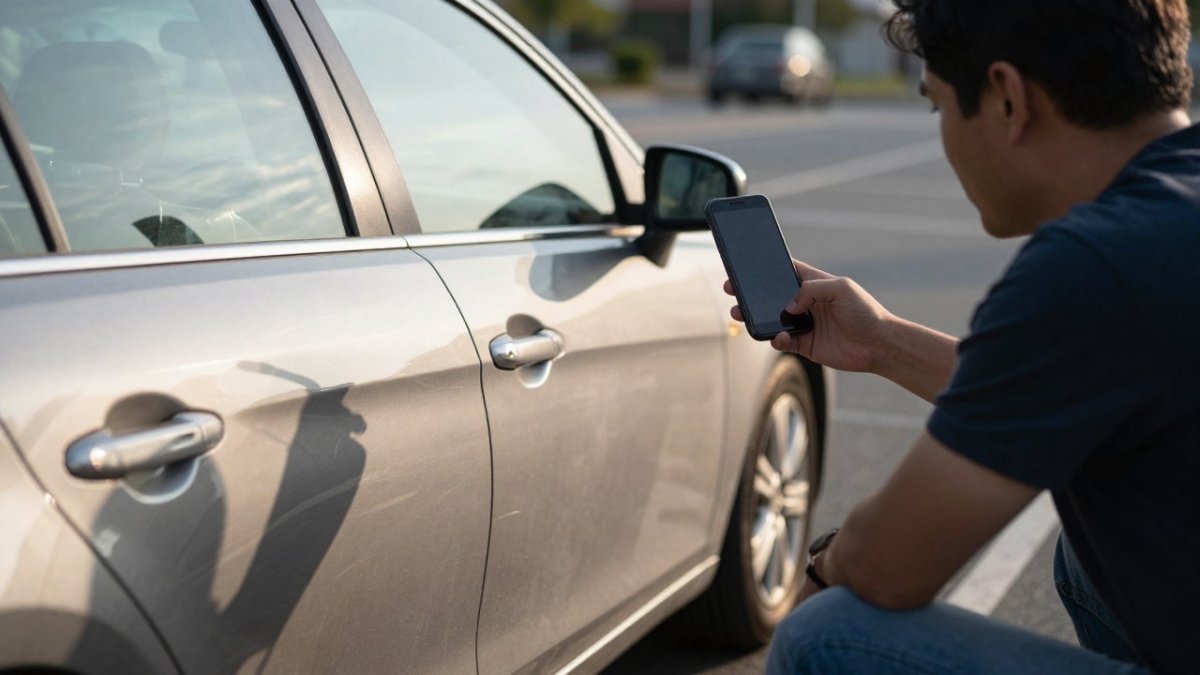
Focus on evidence that cannot easily be disputed later:
- Photos and video of vehicle damage, skid marks, debris, and the scene.
- Dashcam footage from your vehicle or a nearby business.
- Traffic signal timing and the position of stop signs or yield signs.
- Weather and road conditions at the time of the crash.
- Your own written account made soon after the crash, while the details are fresh.
Ask nearby businesses about surveillance cameras before the footage is overwritten. Many systems only keep footage for a few days.
The article lists the kinds of evidence that are hardest to dispute later, so here is a quick scan of them.
| Evidence | Why it helps | Act quickly? |
|---|---|---|
| Photos and video of damage | Shows damage and scene before it changes | Yes |
| Dashcam footage | Records the crash as it happened | Yes |
| Traffic signal timing and signs | Shows who had the right of way | Yes |
| Weather and road conditions | Explains visibility and traction | Yes |
| Your written account | Captures details while fresh | Yes |
| Texts or call logs | Shows when the crash happened | Yes |
Left-Turn Accident Fault: Who Usually Pays
Left-turn crashes are some of the most disputed collisions on Tulsa roads. The driver turning left must usually yield to oncoming traffic, but the details matter. A driver going straight may still have been speeding, distracted, or running a yellow light.
Ask these questions to sort out fault:
- Did the turning driver have a green arrow or a clear gap in oncoming traffic?
- Was the other driver approaching at a reasonable speed?
- Was there a traffic signal, and what color was it?
- Was either driver distracted or impaired?
Many insurers start by assuming the left-turning driver is at fault. That assumption can change with strong evidence. Dashcam footage, signal timing, and witness accounts often decide these cases.
How to Challenge an Insurer’s Fault Decision
Sometimes an insurer assigns fault in a way you do not agree with.
Follow these steps:
- Ask for the adjuster’s report and the reasons behind the fault decision.
- Send a written response that lists your evidence and explains why the decision is wrong.
- Attach photos, the police report, and any video you collected.
- Request a supervisor review if the adjuster will not reconsider.
- Keep copies of everything, including emails, letters, and call notes with dates and names.
A common mistake is giving a recorded statement without thinking it through. You can politely ask to answer questions in writing, or to wait until you have reviewed your evidence.
If the disagreement continues, you may want to speak with an attorney who handles auto claims. They can explain how fault rules apply to your case.
Your Next Step After a Tulsa-Area Collision
Once you are safe and the scene is handled, the next step is getting your vehicle somewhere it can be checked and repaired.
At Neptune Towing, we are a locally owned, owner-operated towing company serving Tulsa, Jenks, Bixby, Broken Arrow, Glenpool, Owasso, Sapulpa, and nearby communities. We do not impound vehicles, so you will not face impound or storage fees from us. Reach out to our team for reliable towing service any time you need it.
Keep your photos, your police report, and your insurance claim numbers in one place. Those documents will help you prove fault and move your claim forward.
Remember, a clear record from the start makes the rest of the claim easier.
Frequently Asked Questions
How do police determine fault in a car accident?
Police do not always assign fault at the scene. Officers document where vehicles came to rest, the damage pattern, driver statements, road and weather conditions, and any traffic violations they observe. A citation for a traffic violation is strong evidence of fault, but a report that does not list a violation does not mean no one is responsible. Fault is often decided later by insurance adjusters or, if the dispute continues, a court. If you disagree with how the report describes the crash, you can request a copy and ask the reporting agency about a supplement or correction.
Can the location of vehicle damage prove who caused a crash?
Damage location is one of the most useful pieces of physical evidence. Matching points of impact, such as a front bumper against a rear quarter panel, help show how vehicles were positioned at the moment of contact. Damage that is inconsistent with the other driver’s account can weaken their version of events. Damage alone rarely settles a case, though, so it works best alongside photographs, the police report, and driver statements.
What evidence can prove fault when there are no eyewitnesses?
Without witnesses, build the case from physical and digital evidence. Photos of both vehicles, the scene, skid marks, traffic signals, and lane markings are valuable. Dashcam footage, nearby business or traffic-camera video, and phone records showing distraction can be decisive. Keep your own written account made soon after the crash, and save texts or messages where the other driver admits anything. Ask for preservation of video early, because many recordings are overwritten within days.
Who is at fault when a driver turns left and another car is coming?
In most left-turn collisions, the driver turning left is expected to yield to oncoming traffic, so that driver often bears the greater share of fault. The oncoming driver can still share fault if they were speeding, driving distracted, or ignoring a signal. Evidence such as the turn signal use, the traffic light phase, and the point of impact helps sort out the split. Oklahoma follows fault-based rules, so the allocation of fault directly affects how compensation is calculated.