
Table of Contents
- What to Do Right After a Crash With an Uninsured Driver
- Check for Injuries and Call 911
- Get a Police Report and Document the Scene
- Using Uninsured Motorist Coverage After an Accident
- Getting Your Car Fixed Without Insurance From the Other Driver
- Towing a Damaged Car After an Accident in the Tulsa Area
- Your Next Step: Getting Your Claim and Your Car Moving
- Frequently Asked Questions
Last Updated: November 8, 2026
What to Do Right After a Crash With an Uninsured Driver
Getting hit by a driver with no insurance is stressful, but you do have options. The first few minutes matter most, and these steps will help you protect yourself, your passengers, and your car.
If the other driver has no insurance, start with safety. Move your vehicle out of traffic if you can do so safely, turn on your hazards, and stay calm.
- Check yourself and your passengers for injuries
- Move to a safe spot, such as the shoulder or a parking lot
- Turn on your hazards and set out flares or triangles if you have them
- Call 911 if anyone is hurt or the vehicles block traffic
- Do not admit fault or argue with the other driver
Keep your phone handy and stay on the scene until help arrives. Leaving the scene can create legal trouble for you, even if you were not at fault.
Check for Injuries and Call 911
Your health comes first. Some injuries, like whiplash or internal bleeding, do not show up right away. Even if you feel fine, see a doctor soon after the crash.
Call 911 right away if:
- Anyone has visible injuries or says they are in pain
- A driver seems confused, dizzy, or unable to speak clearly
- The crash blocks a lane on I-44, Highway 75, or another busy road
- A car is leaking fuel or smoke is coming from the engine
When you talk to the dispatcher, give your exact location, including the nearest cross street or exit number, so responders reach you faster.
A personal injury attorney can also help if you are hurt. If you are unsure whether you need one, Consumer guidance on handling a car accident claim offers general background on injury claims.
Get a Police Report and Document the Scene
Always ask the police to file a report, even for a minor crash. It lists the parties, the facts as the officer saw them, and any citations issued, making it one of the most important records you will have.
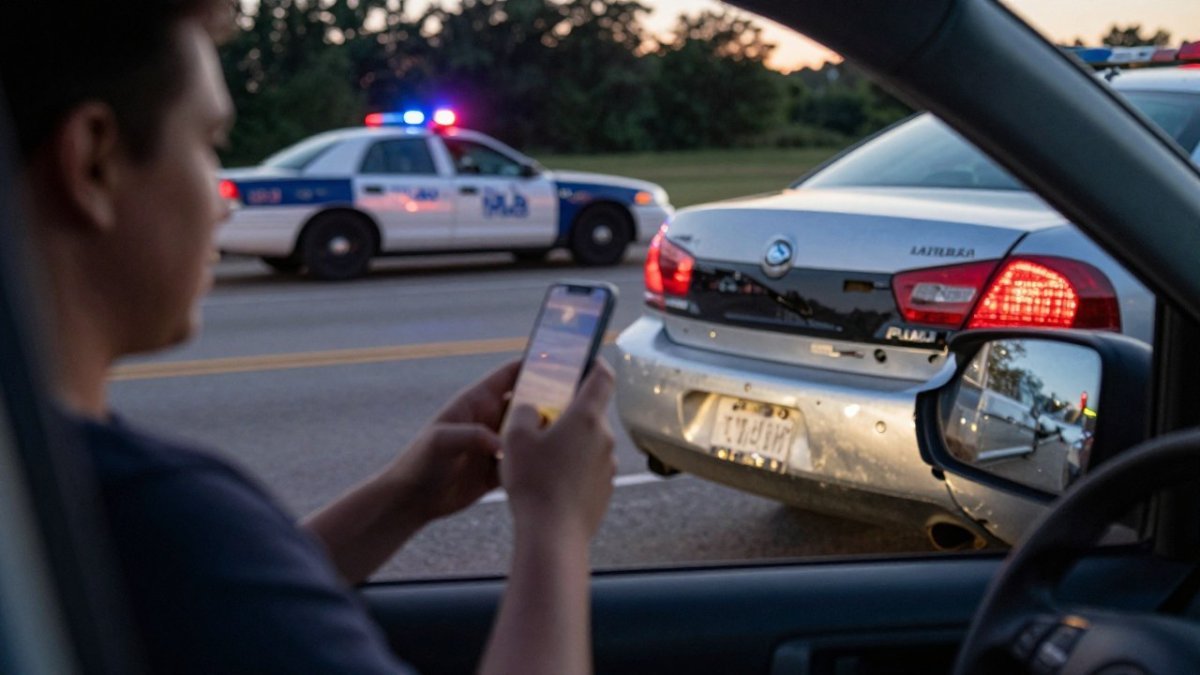
Gather as much proof as you can while you are still at the scene:
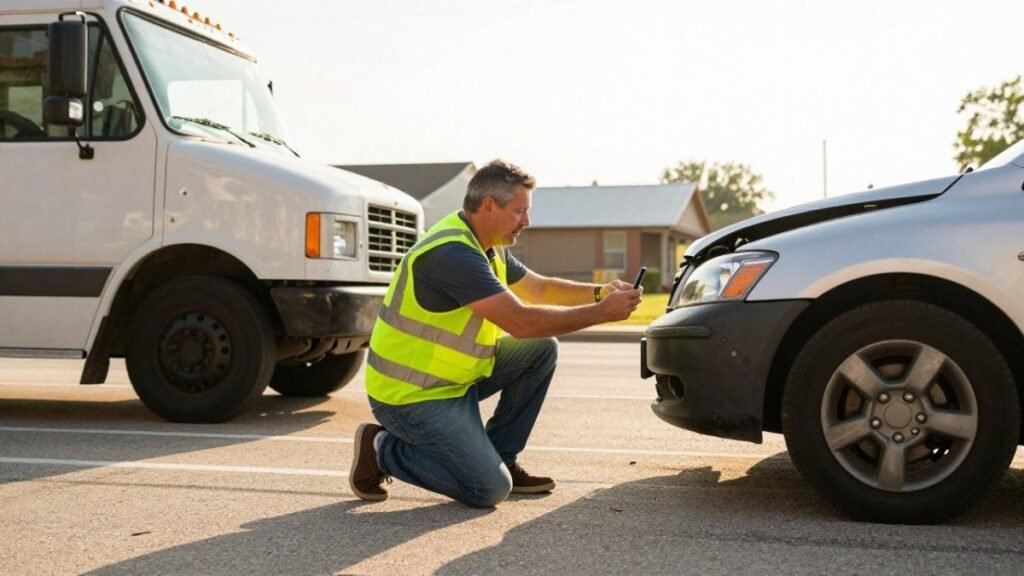
- Photos of both vehicles, including damage, license plates, and the road layout
- The other driver’s name, address, and license number, if they will share it
- Names and phone numbers of any witnesses
- Notes on the time, weather, and what you remember happening
Take more photos than you think you need, and record the uninsured driver’s license plate and vehicle make and model. This information matters later if you pursue a claim against them.
A common mistake is waiting until you get home to start documenting. Details fade fast, so do it on the spot whenever you can.
Using Uninsured Motorist Coverage After an Accident
Uninsured motorist coverage, usually shortened to UM, is a coverage on your own auto policy that responds when the at-fault driver has no liability insurance. It is the policy you bought for yourself, and it is the main reason a no-insurance crash does not leave you with nothing.
The first thing to understand is that UM is not one thing. Most Oklahoma policies split it into two parts, and they pay for different losses:
- Uninsured motorist bodily injury (UMBI), pays for medical bills, lost wages, and pain and suffering for you and your passengers when the at-fault driver has no liability coverage.
- Uninsured motorist property damage (UMPD), pays for damage to your car in some policies. Not every Oklahoma policy includes UMPD, and some insurers only offer it when you do not carry collision coverage. Check your declarations page before you assume you have it.
There is a second coverage that matters just as much here: underinsured motorist coverage (UIM). A driver can have insurance and still be “uninsured” in practical terms, for example, they carry the state minimum liability limits, you have significant injuries, and their policy runs out long before your bills are covered.
A few mechanics are worth knowing before you call your insurer:
- Limits. Your UM/UIM limit is the ceiling on what the coverage will pay, per person and per accident. If your UM limit is lower than your injuries, the difference comes out of your own pocket or from a claim against the other driver.
- Stacking. If you insure more than one vehicle on the same policy, some policies let you “stack” the UM limits across vehicles, which raises the total available. Some policies allow stacking, but it depends on the language of your specific policy, ask your agent directly whether your policy stacks.
- Deductibles. UMBI typically has no deductible. UMPD often carries a deductible, and some policies waive it when the other driver is identified and confirmed uninsured. Ask which applies to you.
- Hit-and-run and phantom vehicles. UM coverage is also what responds when the at-fault driver leaves the scene and is never identified, which is common in Tulsa crashes on I-44, the Broken Arrow Expressway, and Highway 75.
When you open the UM claim, treat it like any other claim. Give your adjuster the police report number, the other driver’s name and plate if you have them, your photos, and your medical records. Keep a written log of every call, the date, the person you spoke with, and what they told you, since that log and the police report are what your UM adjuster will rely on if coverage is disputed.
Watch out: a UM claim is still a claim against your own insurer, and the adjuster’s job is to value it. Do not sign a release or accept a settlement before you know the full extent of your injuries and repair costs, because a signed release usually ends your ability to come back for more.
If your UM and UIM limits are modest and your injuries are serious, the gap between your coverage and your losses is exactly where a personal injury attorney earns their keep. Many offer a free consultation and can tell you in one conversation whether your policy limits are enough.
Your own policy’s coverage limits and the main types of UM protection can be compared at a glance:
| Coverage | What it pays for | Key point |
|---|---|---|
| Uninsured motorist bodily injury (UMBI) | Medical bills, lost wages, pain and suffering | Usually no deductible |
| Uninsured motorist property damage (UMPD) | Damage to your car | Not every Oklahoma policy includes it |
| Underinsured motorist (UIM) | Gap between at-fault driver’s limits and your losses | Up to your UIM limit |
| Collision coverage | Car repairs regardless of fault | You pay the deductible |
| Stacking | Combines UM limits across vehicles | Depends on your specific policy wording |
Getting Your Car Fixed Without Insurance From the Other Driver
If the other driver is uninsured, your repair options come down to three paths: your own collision coverage, a direct claim against the other driver, or paying out of pocket and pursuing reimbursement. Most drivers end up combining the first and second.
Path one: your collision coverage. Collision pays for damage to your car regardless of who caused the crash.
Path two: a direct claim against the uninsured driver. You can demand payment from the at-fault driver personally. Before you do, verify their insurance status yourself rather than taking their word for it.
Send a written demand, a letter or email, stating the date of the crash, the amount you are owed, what it covers (repairs, rental, towing, medical), and a deadline to respond. Keep a copy.
Path three: small claims court. If the driver will not pay, small claims is the realistic route for most people.
Before you file, be honest with yourself about collectability. A judgment is a piece of paper; collecting on it is a separate step.
Injuries and lost wages. Repair costs are only part of the loss in many crashes. Medical bills, physical therapy, time off work, and pain and suffering may also be recoverable damages.
If you have no collision coverage and no UM property damage coverage, the repair bill may fall to you up front.
Watch out: do not sign anything from the other driver or their family that releases them from responsibility until you understand exactly what you are giving up. A quick settlement for a repair estimate can wipe out a much larger injury claim later.
Towing a Damaged Car After an Accident in the Tulsa Area
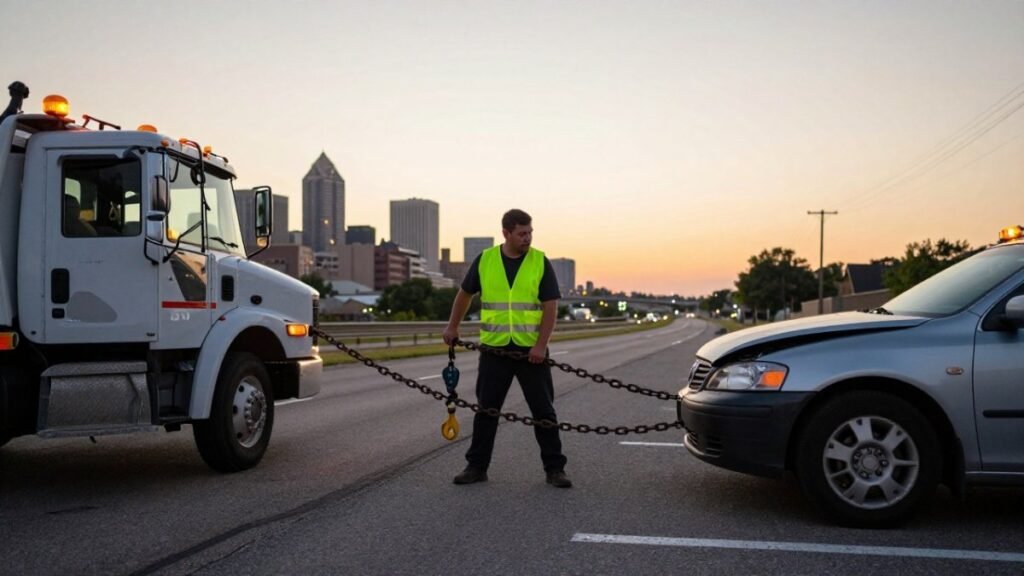
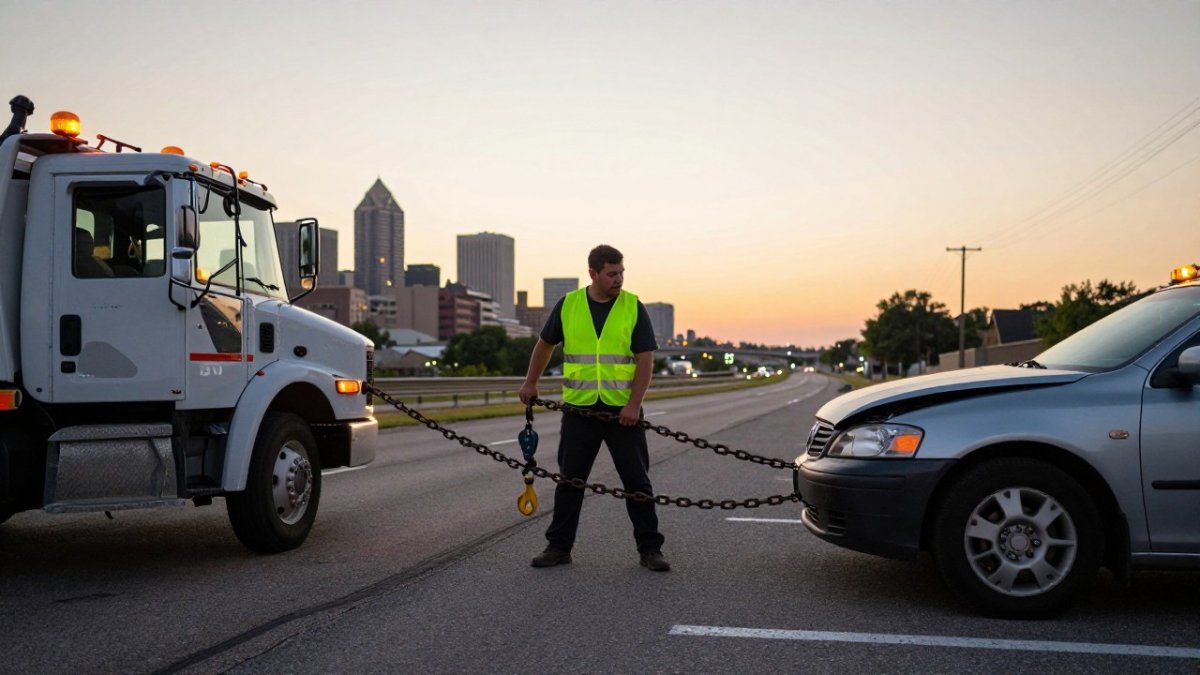
If your car cannot be driven after a crash, do not try to limp it home. Moving a damaged vehicle can cause more harm and make your repair bill bigger. A flatbed tow lifts the whole car off the road, which protects the frame, wheels, and drivetrain.
At Neptune Towing, we are a locally owned, owner-operated towing company serving Tulsa, Jenks, Bixby, Broken Arrow, and nearby Oklahoma communities. We provide damage-free towing and do not impound vehicles. When your car needs to move after an accident, you can [book a Tulsa towing service that responds around the clock | page:5] and get your vehicle to a repair shop safely. Securing your vehicle is only the beginning of the necessary steps to take after a car accident to protect your legal and financial interests.
If the car has been hit and needs careful handling, our [luxury vehicle towing service in Tulsa | page:4] is built for damage-free transport.
Ask the tow driver where your car is going. Confirm the destination and keep a copy of the tow invoice for your claim file.
Your Next Step: Getting Your Claim and Your Car Moving
Once you have the police report, photos, and your insurance information, you are ready to move forward. Start your claim with your insurer, set up repair estimates, and keep copies of everything.
If you run into trouble with adjusters or the claim stalls, a local attorney can explain your options. You can also learn [how to handle insurance adjusters after a Tulsa car accident | page:3] to protect your claim.
If you need a tow right now, call Neptune Towing at (539) 292 3074. We are here around the clock to help you and your car get to safety.
Frequently Asked Questions
What if the other driver has no insurance in Oklahoma?
Your own uninsured motorist coverage may pay for your injuries, and collision coverage can pay for car repairs. Report the accident to your insurer right away and keep the police report.
Should I still call the police if the other driver has no insurance?
Yes. A police report documents the crash, which you will need for any claim against the other driver or your own insurer.
Can I get my car fixed if the other driver is uninsured?
Often, yes. Your collision coverage can pay for repairs minus your deductible. Without collision coverage, you may need to pay for repairs and pursue the other driver for reimbursement.
Do I need a lawyer after an accident with an uninsured driver?
Not always, but a lawyer can help if you have serious injuries, a large repair bill, or a dispute with your insurer. Many personal injury attorneys offer a free consultation.
Frequently Asked Questions
What happens if one person has insurance and the other doesn’t?
The insured driver still files a claim with their own company. If you carry uninsured motorist coverage, that policy can pay for your medical bills and, in many policies, some vehicle damage after a crash with an uninsured driver. If you do not have that coverage, you may need to pursue the other driver directly. Read your policy or call your agent to confirm what applies to you before you assume anything.
Should I call the police if the other driver has no insurance?
Yes. Call 911 if anyone is hurt or the crash blocks traffic, and ask for an officer to write a report even for smaller collisions. A police report gives your insurer an official record of the crash and the other driver’s lack of insurance. Get the report number before you leave the scene, since you will need it when you file your claim.
Can I use my own insurance if the at-fault driver is uninsured?
Often, yes. Uninsured motorist coverage is designed for this situation and typically covers injuries to you and your passengers. Collision coverage, if you carry it, can pay to repair your own vehicle minus your deductible. Your insurer will ask for the police report, photos, and the other driver’s information, so keep everything organized from the start.
Do I need a tow truck if my car is damaged in an accident?
If your vehicle cannot be driven safely, call a towing company rather than driving it home. Neptune Towing provides flatbed towing for damaged vehicles in Tulsa, Jenks, Bixby, and Broken Arrow, and we focus on damage-free towing. We do not impound vehicles.