
Last Updated: November 21, 2026
Quick Summary
Luxury car transport contracts should clearly name the carrier, the vehicle’s details, the transport type, and the insurance limits before you sign. Check pricing, cancellation fees, and the damage-claim process line by line, and ask for written answers to anything vague.
- Confirm the carrier’s legal name, USDOT number, and insurance details appear in the contract.
- Make sure the contract says enclosed if you booked enclosed service, not just auto transport.
- Compare the carrier’s cargo insurance limit to your vehicle’s actual value.
- Document your car with photos and a signed condition report at both pickup and delivery.
- Do not sign a clean delivery receipt before inspecting the vehicle for damage.
Table of Contents
- What a Luxury Car Transport Contract Covers and Who Signs It
- Essential Clauses to Check in Every Luxury Car Transport Contract
- Enclosed Auto Transport Versus Open Carrier: What the Contract Should Say
- Verifying Auto Transport Insurance Coverage and Liability Limits
- Documenting Your Vehicle with a Vehicle Condition Report
- Reading the Car Transport Cancellation Policy and Payment Terms
- Booking Your Next Luxury Vehicle Move With Confidence
- Frequently Asked Questions
What a Luxury Car Transport Contract Covers and Who Signs It
Before you hand over your keys, a luxury car transport contracts agreement should make clear who is moving your vehicle, what it is, and where it is going. Knowing who is on the paperwork protects you.
Most contracts involve up to three parties: the vehicle owner, the broker who sells the job, and the carrier that physically moves the car. The owner signs for the vehicle and agrees to the terms. The broker arranges the job. The carrier is the business that physically handles your car.
A solid contract also spells out the vehicle’s year, make, and model, its VIN, and its condition before pickup. It should list the pickup and delivery addresses, the service scope (door-to-door or terminal-to-terminal), and the expected pickup window.
Essential Clauses to Check in Every Luxury Car Transport Contract
Read the contract line by line before signing, and treat vague language as a question to resolve, not a detail to skip. Here is a clause-by-clause review that translates common contract terms into plain English and flags the red flags that matter most for a luxury or high-value vehicle:
- Carrier identity: The legal name, USDOT number, and insurance details of the company that will actually transport the car. Red flag: a contract that names only a broker or a generic “carrier” without identifying the company and its authority.
- Vehicle details: Year, make, model, VIN, mileage, and any modifications. Red flag: blank fields or a description that does not match your car exactly.
- Transport type: Whether the job is enclosed or open, and whether the service is door-to-door. Red flag: “auto transport” without the word “enclosed” when you booked enclosed service.
- Liability and insurance: The carrier’s cargo insurance limit and any deductible you may owe. Red flag: a limit below your vehicle’s value, or a clause that shifts responsibility to you for “mechanical failure” without definition.
- Pricing: The total quote, what it includes, and any fees that can change the final price. Red flag: unexplained accessorial charges, fuel surcharges, or tolls that appear only at delivery.
- Deposit and payment terms: How much you pay up front, when the balance is due, and accepted payment methods. Red flag: a demand for full payment before a carrier has committed to your job.
- Pickup and delivery windows: Expected dates, and what happens if the carrier misses them. Red flag: windows described as guarantees when the carrier later calls them estimates.
- Cancellation and rescheduling: Any fees, notice periods, and refund rules. Red flag: a cancellation fee that applies even before dispatch, or a policy that changes without written notice.
- Damage claims process: How to report damage, the deadline for filing, and what documentation is required. Red flag: a reporting window so short it is unrealistic, or a requirement to sign a clean delivery receipt before inspecting the car.
Pay special attention to the liability and damage sections of luxury car transport contracts. A carrier’s insurance limit may be far below the actual value of a luxury vehicle, so you may need supplemental coverage. Also watch for clauses that shift the carrier’s responsibility to you, such as broad exclusions for “mechanical failure” or wording that requires you to report damage within an unrealistically short window.
Watch out: Blank fields and unilateral change clauses are easy to miss. If the contract allows the carrier to change terms after signing, ask for that language to be removed or clarified in writing before you commit.
Enclosed Auto Transport Versus Open Carrier: What the Contract Should Say
Most high-value owners choose between enclosed and open transport. Open carriers are usually less expensive, but your car is exposed to road debris, weather, and dust. For a deeper walkthrough, read our luxury vehicle transport best practices guide.
Whichever you choose, the contract should name the transport type explicitly.
Ask which transport method your contract covers and whether any changes require a written amendment.
The table below sums up the main differences between open and enclosed transport, and what each should look like in your contract.
| Transport type | Best for | Key difference |
|---|---|---|
| Open carrier | Budget-conscious owners | Less expensive, but exposed to road debris and weather |
| Enclosed carrier | Collectors and luxury or classic cars | Costs more, shields the vehicle fully |
| Dedicated enclosed trailer | Owners wanting a single-vehicle load | Ask whether your car is consolidated with others |
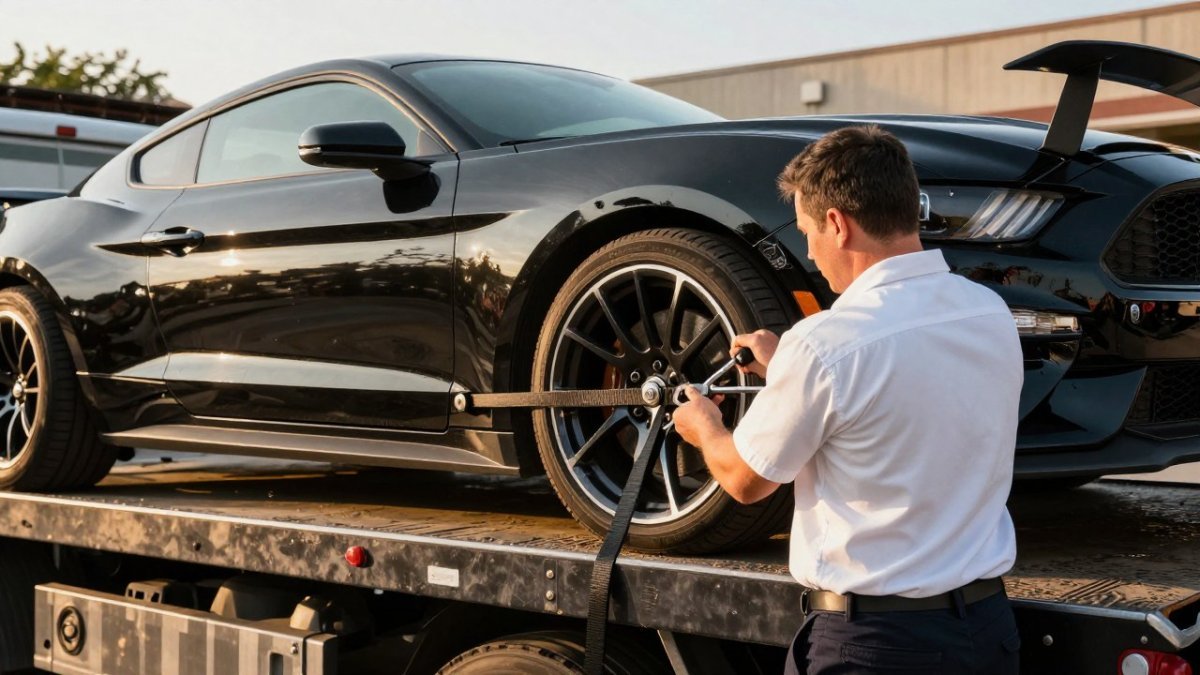
| Flatbed or enclosed trailer | Secured loading | Requires proper tie-downs and wheel straps |
Verifying Auto Transport Insurance Coverage and Liability Limits
Insurance is where luxury owners get caught off guard most often.
Here is a practical checklist for confirming coverage:
- Cargo limit versus vehicle value: Ask for the policy’s cargo coverage limit and compare it to your car’s actual cash value or agreed value. If the limit is lower, ask how the carrier handles the difference and whether supplemental coverage is available.
- Named insured and policy period: Confirm the legal name on the policy matches the carrier’s legal name on the contract, and that the policy is active for your pickup and delivery dates.
- Coverage in transit, loading, and unloading: Ask whether coverage applies during all three phases. Loading and unloading are common exclusions or sub-limits, and luxury vehicles with low clearance are especially vulnerable during those steps.
- Deductibles and valuation basis: Find out whether a deductible applies and whether claims are paid on actual cash value, agreed value, or another basis. A deductible that seems small on paper can matter on a high-value claim.
- Exclusions: Look for exclusions for personal items left in the car, pre-existing damage, mechanical failure, acts of God, and damage caused by improper loading. Ask the carrier to explain each exclusion in plain language.
- Subcontracting: If the carrier can hand your car to another company, confirm that the subcontractor’s insurance also covers your vehicle and that the original carrier remains responsible.
Check your own auto policy as well. Many personal policies provide limited protection for a vehicle in someone else’s custody, and some exclude commercial transport entirely.
Watch out: A certificate of insurance is not the same as a guarantee that your specific vehicle is covered. Ask the carrier to confirm in writing that your VIN is covered for the shipment dates, and keep that confirmation with your contract.
For a deeper look at how transport coverage works, see our guide on Classic Car Transport Insurance Coverage Explained, and learn how to verify a towing company’s insurance before you commit.
Documenting Your Vehicle with a Vehicle Condition Report
A vehicle condition report is your strongest evidence if something goes wrong. Before the carrier loads your car, walk around it with the driver and note every scratch, dent, chip, and stone mark.

Make sure the report is signed by both you and the driver at pickup, and keep a copy. Repeat the same process at delivery, comparing the car to the pickup report before you sign the delivery receipt.
If you are preparing a classic or collector car, you may also want to read How to Prepare Classic Car for Transport before the pickup day.
Reading the Car Transport Cancellation Policy and Payment Terms
Cancellation and payment terms can cost real money if you misread them. Find the cancellation policy and note whether you forfeit a deposit, pay a fee, or face any charges if you cancel before or after the carrier is dispatched.
Check the payment schedule carefully. A deposit is common, but it should be clearly labeled and tied to a specific event, such as carrier assignment.
Delays also deserve attention. Contracts often describe pickup windows as estimates rather than guarantees. If your schedule is tight, ask what remedy applies when the carrier runs late and whether rescheduling carries a fee.
Booking Your Next Luxury Vehicle Move With Confidence
A careful contract protects both you and your car. Before you sign, confirm the carrier’s identity, insurance limits, damage-claim process, and cancellation terms, and keep copies of everything. If you have questions about a specific clause, ask for a written explanation before you commit.
If you are in the Tulsa area and need a luxury or low-clearance vehicle moved, Neptune Towing offers luxury car towing in Tulsa on secured flatbed equipment, with service available 24/7. Call (539) 292-3074 for a quote and to talk through the details before you sign anything.
Frequently Asked Questions
What should a luxury car transport contract include?
A solid luxury car transport contract should name the carrier and any broker involved, identify the vehicle by year, make, and model, and list pickup and delivery locations and the expected date window. It should describe whether the service is open or enclosed, state the total price and what it covers, and explain the deposit and payment schedule. Look for clear terms on insurance, liability limits, how damage is reported, and what happens if the schedule changes. If a clause is vague about any of these, ask for it to be written out before you sign.
Does enclosed auto transport provide better protection for a luxury car?
Enclosed auto transport keeps your vehicle inside a covered trailer, which shields it from road debris, weather, and exposure to other vehicles. Many owners of high-value or collector cars choose it for that reason. The contract should state that the service is enclosed, name the carrier operating the trailer, and confirm how the vehicle is secured during the trip. Enclosed service usually costs more than open transport, so compare the difference against the value of your vehicle.
How does insurance work when a luxury car is being transported?
Carrier insurance is the coverage that applies while your vehicle is in the carrier’s care, and it is separate from your personal auto policy. Ask for the certificate of insurance and check the coverage limits, the deductible, and any exclusions. Confirm whether the policy covers your specific vehicle type and value, since some carriers cap liability well below the value of a luxury or classic car. Your own insurer may also have something to say about coverage during transit, so check with them too.
What should I check on a vehicle inspection report before transport?
Before the vehicle is loaded, the inspection report should note existing scratches, dents, chips, glass damage, and tire condition, with photos from several angles. Check that the odometer reading, fuel level, and any aftermarket parts are recorded accurately. Make sure you sign or initial the report at pickup and get a copy. This document is your main evidence if damage is reported later, so do not sign a blank or partly completed form.
Who is responsible for damage during luxury car shipping?
Responsibility depends on what the contract and the carrier’s insurance say. Generally, the carrier is liable for damage that occurs while the vehicle is in its custody, up to the coverage limit listed in the agreement. Damage should be documented at delivery against the pickup condition report, and you should note any new damage on the delivery paperwork before signing. Claims usually have filing deadlines, so report problems promptly and keep your photos and records.
Can I cancel a luxury car transport contract after booking?
Most contracts allow cancellation, but the terms vary, and a deposit may be non-refundable. Read the car transport cancellation policy to see whether fees apply, how much notice you must give, and whether the deposit is returned. Cancelling before a carrier has been assigned generally costs less than cancelling after pickup has been scheduled. Get the cancellation terms in writing and keep a record of when and how you notified the company.
What details should I confirm before signing an auto transport agreement?
Confirm the vehicle details, the pickup and delivery addresses, and the expected transport window. Ask whether the carrier is the company that will actually move your car or a broker arranging the trip, since the responsibilities differ. Verify the insurance certificate, the payment method and schedule, and the cancellation and rescheduling terms. Also ask how delays are handled and whether storage fees may apply if delivery is delayed. Getting clear answers on these points before signing prevents most disputes.
