

Table of Contents
- Why Best Practices Matter for Luxury Vehicle Transport
- Enclosed Auto Transport vs. Open Carrier Shipping
- Vehicle Preparation for Shipping Your Luxury Car
- Selecting Luxury Car Shipping Companies You Can Trust
- Car Transport Insurance and Liability Protection
- Real-Time Tracking and Post-Transport Verification
- Factors That Affect Luxury Vehicle Transport Costs and Timeline
- White-Glove Service Standards for High-Value Vehicles
Luxury Vehicle Transport: Best Practices Guide
Last Updated: July 19, 2026
When moving a high-value vehicle across the country, the stakes differ dramatically from shipping a standard sedan. A single mistake during transport can cost thousands in damage. This guide breaks down best practices for luxury vehicle transport so you can protect your investment and move your vehicle with confidence.
Why Best Practices Matter for Luxury Vehicle Transport
High-value vehicles require a completely different approach to handling, equipment, and liability protection than standard auto transport. Road debris, weather exposure, and basic handling don’t cause catastrophic damage to trucks or family cars, but luxury vehicles, whether low-clearance sports cars, Teslas with expensive undercarriage components, or classic cars with irreplaceable paint, operate under different rules. According to Reliable Carriers’ luxury transport standards, high-value vehicles require specialized equipment, vetted carriers, and insurance coverage exceeding typical industry limits.
The real cost of a transport mistake extends beyond repair bills to depreciation when a vehicle’s history includes transport damage, time spent on insurance claims, and stress from improper loading.
Luxury vehicles need specialized transport because damage costs are exponentially higher and standard carrier liability won’t cover it. Proper preparation and carrier selection prevent costly mistakes.
Enclosed Auto Transport vs. Open Carrier Shipping
The transport method you choose determines your vehicle’s exposure to risk and influences every subsequent decision.
When Enclosed Transport Is Essential
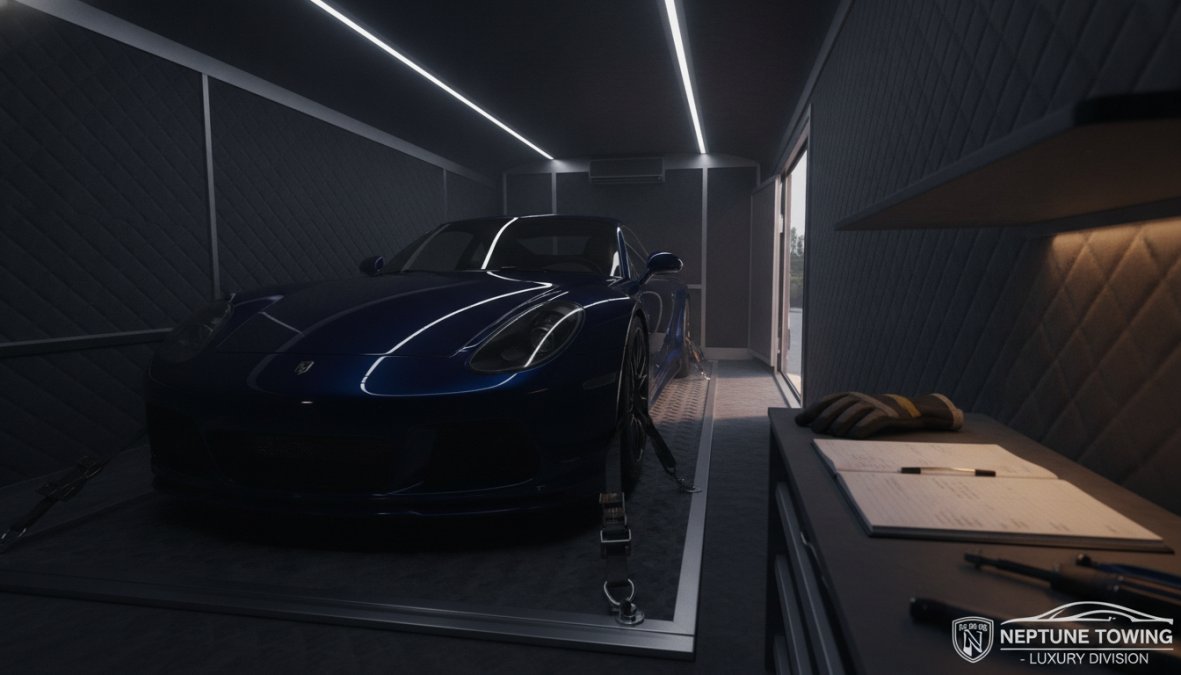
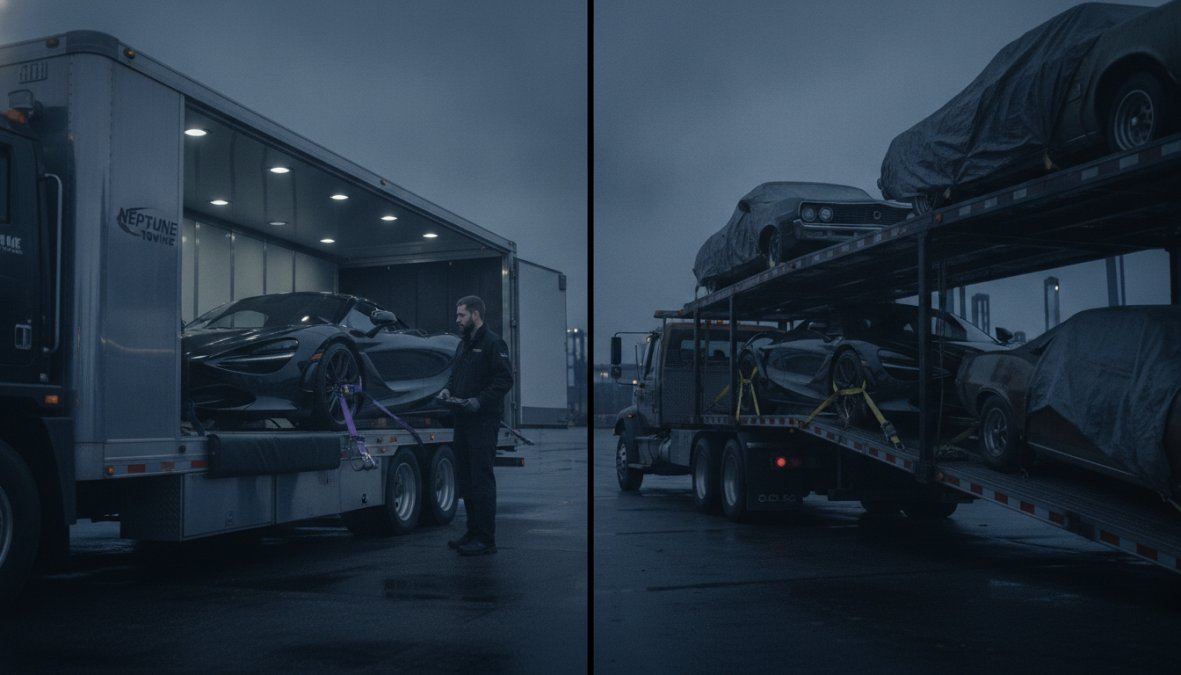
Enclosed auto transport means your vehicle travels inside a fully enclosed trailer, protected from weather, road debris, and visibility. For luxury vehicles, this is often the only responsible choice.
Enclosed transport is essential if your vehicle has custom paint, low ground clearance (under 5 inches), expensive undercarriage components, or collector status. A low-profile sports car sitting 3 inches off the ground will scrape on standard carrier ramps; enclosed carriers use hydraulic liftgates designed to load these vehicles without contact. Research from ACERTUS luxury transport data shows enclosed transport reduces damage claims by over 95% compared to open carrier methods.
The trade-off is availability and timeline. Enclosed carriers have fewer trucks on the road, requiring 2-3 weeks lead time. Plan accordingly if you need transport urgently.
Enclosed transport provides privacy and security, your vehicle isn’t visible to traffic, other drivers, or potential thieves. For high-value vehicles, that invisibility justifies the premium.
Open Carrier Considerations
Open carrier transport works only if your vehicle meets ALL criteria: standard ride height (5+ inches clearance), durable factory finish, no custom modifications, and comprehensive cargo insurance. You’re accepting weather exposure and must document everything with photos before loading and request a detailed bill of lading.
The hidden risk is that carrier liability typically caps at $2,000-$5,000, barely covering paint correction on a luxury vehicle. Purchase additional cargo insurance to close this gap.
Vehicle Preparation for Shipping Your Luxury Car
How you prepare your vehicle directly impacts its condition upon arrival.
Removing Personal Items and Transponders
Never ship a luxury vehicle with personal items inside. Remove everything from the cabin, trunk, and glove compartment. The carrier isn’t responsible for lost items, and loose cargo creates shifting risk during transport.
For vehicles with modern electronics, disable or remove transponders and tracking devices. These can malfunction during transport due to vibration or power fluctuations. Tesla owners should disable Sentry Mode before transport, as it drains the battery rapidly and creates electrical stress.
Pre-Shipment Cleaning and Mechanical Checks
Transport reveals existing mechanical issues. Perform a pre-transport inspection:
- Check all tire pressure to manufacturer specification
- Verify all lights function
- Confirm adequate battery charge
- Test all door locks
- Check fluid levels (oil, coolant, brake fluid)
- Verify parking brake functionality
For classic or collector vehicles, have a mechanic check suspension geometry and confirm the vehicle can be towed safely without fluid leakage. Clean the vehicle thoroughly to remove contaminants and establish a baseline for condition upon arrival.
Don’t assume your vehicle is transport-ready just because it runs. Have a pre-transport mechanical inspection performed by a qualified mechanic, it costs $150-300 and prevents thousands in damage.
Selecting Luxury Car Shipping Companies You Can Trust
Not all towing companies have the equipment, insurance, and expertise to handle luxury vehicles safely.
Carrier Vetting and Safety Ratings
Verify that any carrier has proper licensing and insurance. Check their DOT number with the Federal Motor Carrier Safety Administration to review their safety record and complaint history.
Ask for proof of cargo insurance coverage. Legitimate luxury transport carriers carry $1-5 million in cargo insurance per load. Request references from previous customers who shipped similar vehicles and ask specific questions about timeliness, condition documentation, and damage claim handling.
For luxury vehicles, look for carriers with enclosed-transport experience and expertise handling low-clearance vehicles, exotic materials, or specialty vehicles like Teslas.
Damage Documentation and Inspection Reports
The most important document in any luxury vehicle transport is the pre-transport inspection report, which creates a legal record of the vehicle’s condition before the carrier takes possession.
Require a professional pre-transport inspection with photo documentation covering exterior condition, interior condition, mechanical condition, and electronics functionality. Detailed photos from multiple angles taken in daylight become your evidence if damage occurs during transport.
Similarly, require a post-transport inspection before accepting delivery. The carrier should provide a detailed condition report showing the vehicle arrived in the same condition documented in the pre-transport report. Document any discrepancies immediately and file a damage claim before accepting the vehicle.
Car Transport Insurance and Liability Protection
Standard carrier liability doesn’t protect luxury vehicles. You need to understand the gap between what carriers are required to cover and what you actually need.
Understanding Cargo Insurance Coverage
Carrier liability is capped at $0.05 per pound of cargo, roughly $2,000 for a 40,000-pound vehicle. For a $100,000 luxury car, that’s catastrophically inadequate.
Cargo insurance is separate coverage you purchase to fill this gap. A proper cargo insurance policy covers the full declared value of your vehicle during transport. Declare the actual value of your vehicle, if it’s worth $150,000, insure it for $150,000. Underinsuring creates problems if damage occurs.
Review the cargo insurance policy carefully to understand what’s covered (transport damage, theft, weather) and what’s excluded (pre-existing damage, mechanical breakdown, wear and tear).
Carrier Liability vs. Additional Protection
Carrier liability covers damage caused through negligence or improper handling. But it doesn’t cover everything. Additional cargo insurance covers scenarios where carrier liability is unclear or insufficient.
For vehicles over $75,000, purchase cargo insurance with a declared value equal to the vehicle’s actual value. For vehicles under $75,000, confirm the carrier’s liability coverage is adequate, then purchase cargo insurance to cover the gap.
Real-Time Tracking and Post-Transport Verification
Modern luxury transport includes technology that provides visibility into your vehicle’s journey.
GPS Tracking Technology and Delivery Confirmation
Legitimate luxury transport carriers use GPS tracking to monitor vehicle location throughout transport. You should have access to real-time or near-real-time tracking information so you know where your vehicle is at any point during the haul.
GPS tracking confirms the carrier is following the planned route and provides documentation if delays occur. Request a tracking system that provides regular updates, at least daily for multi-day transport.
Delivery confirmation should include a timestamp, photos of the vehicle at delivery, and a condition report. Require written documentation showing the vehicle arrived at the specified location on the agreed date.
Post-Delivery Detailing and Mechanical Inspection
After your vehicle arrives, schedule a post-delivery inspection within 24 hours. Have a professional mechanic or detailer compare the vehicle to the pre-transport condition report, checking for paint damage, trim damage, glass condition, tire condition, mechanical systems, fluid leaks, and undercarriage damage.
Take detailed photos during this inspection. If you find damage, document it immediately and notify the carrier and your insurance company before attempting repairs.
Post-transport detailing removes road contaminants and documents the vehicle’s condition. Schedule this within a week of delivery while any transport-related issues are fresh.
Factors That Affect Luxury Vehicle Transport Costs and Timeline
Understanding what drives cost and timeline helps you make informed decisions.
Distance, Vehicle Type, and Seasonal Demand
Distance is the primary cost driver. Vehicle type affects cost because some vehicles require specialized equipment, a low-clearance sports car requires an enclosed carrier with a hydraulic liftgate, more expensive than a standard open carrier. A Tesla requires a carrier experienced with electric vehicles.
Seasonal demand creates pricing fluctuations. Summer months (May-September) are peak moving season with higher costs and limited availability. Winter months offer lower prices and faster scheduling, but weather delays are more likely.
Specialized vehicles command premium pricing justified by carrier expertise in handling specific requirements.
Door-to-Door vs. Terminal-to-Terminal Delivery
Door-to-door delivery means the carrier picks up at your location and delivers to your destination. Terminal-to-terminal means you deliver to a carrier facility and pick up at a destination facility.
Door-to-door costs more but offers convenience and reduces handling. Your vehicle is loaded once and unloaded once. For luxury vehicles, door-to-door delivery is generally preferable because it reduces handling and minimizes exposure to other cargo.
| Transport Method | Cost Level | Timeline | Risk Level | Best For |
|---|---|---|---|---|
| Enclosed Door-to-Door | Premium | 7-14 days | Lowest | High-value luxury vehicles, low-clearance cars |
| Enclosed Terminal-to-Terminal | Moderate | 5-10 days | Low | Luxury vehicles, budget-conscious owners |
| Open Door-to-Door | Moderate | 5-10 days | Moderate | Standard luxury vehicles, good condition |
| Open Terminal-to-Terminal | Budget | 4-8 days | Moderate-High | Standard vehicles, less valuable cars |
White-Glove Service Standards for High-Value Vehicles
True luxury vehicle transport goes beyond basic handling. White-glove service means every touchpoint is optimized for care, communication, and documentation.
A white-glove carrier will provide advance pickup notice, assign a dedicated point of contact, conduct detailed pre-transport inspection with photos, use soft-tie straps and padding, provide real-time tracking updates, deliver with post-transport condition reports, and offer support for damage claims.
This level of service costs more than standard transport, but for vehicles over $100,000, it’s the only responsible choice. You’re paying for expertise, accountability, and peace of mind.
Neptune Towing specializes in damage-free towing and vehicle recovery throughout the Tulsa area, including flatbed towing for luxury vehicles, classic cars, and electric vehicles. Our owner-operated approach means you deal directly with experienced professionals who understand the value of your vehicle. Call (539) 292-3074 for immediate assistance.
Luxury vehicle transport requires a completely different approach than standard auto shipping. Start with enclosed transport for high-value vehicles, prepare your vehicle thoroughly, vet your carrier carefully, secure adequate insurance coverage, and document everything with photos and detailed condition reports. The time and money you invest in these best practices upfront will protect your investment and ensure your vehicle arrives in the same condition it left.
Frequently Asked Questions
What is the safest way to transport a luxury car?
Enclosed auto transport is the safest method for high-value vehicles. An enclosed carrier protects your luxury car from road debris, weather, and UV damage during transit. Professional carriers use soft-tie straps and proper loading procedures to prevent shifting or contact with the trailer walls. Always verify the carrier's DOT number, FMCSA safety rating, and insurance coverage before booking.
What should I do to prepare my luxury vehicle for transport?
Before shipping, remove all personal items and highway toll transponders from your vehicle. Document the current condition with photos and note any existing damage. Check that fluid levels are adequate and the battery is charged. Have a pre-shipment inspection performed to establish a baseline. Clean the exterior so any new damage is immediately visible. Disable any security systems that might trigger during loading or transit.
How do I choose a reputable luxury car shipping company?
Research carriers thoroughly by checking their DOT number, FMCSA safety ratings, and customer reviews. Request a detailed bill of lading that outlines pickup and delivery terms, insurance limits, and liability. Ask about their vehicle inspection process, reputable companies provide damage documentation before and after transport. Verify they offer cargo insurance and understand their claims process. Get quotes from multiple carriers and compare their white-glove service standards, not just price.
What kind of insurance do I need for luxury car transport?
Most professional carriers provide baseline cargo insurance, but it may not fully cover the value of a high-end vehicle. Review the carrier's liability limits, many offer $1-5 million in coverage per load. Consider purchasing additional cargo insurance if your vehicle's value exceeds the carrier's standard protection. Understand the difference between carrier liability (what they cover) and cargo insurance (what you purchase separately). Document your vehicle's condition and value before transport to support any claim.
This article was written using GrandRanker