
Last Updated: November 2, 2026
Quick Summary
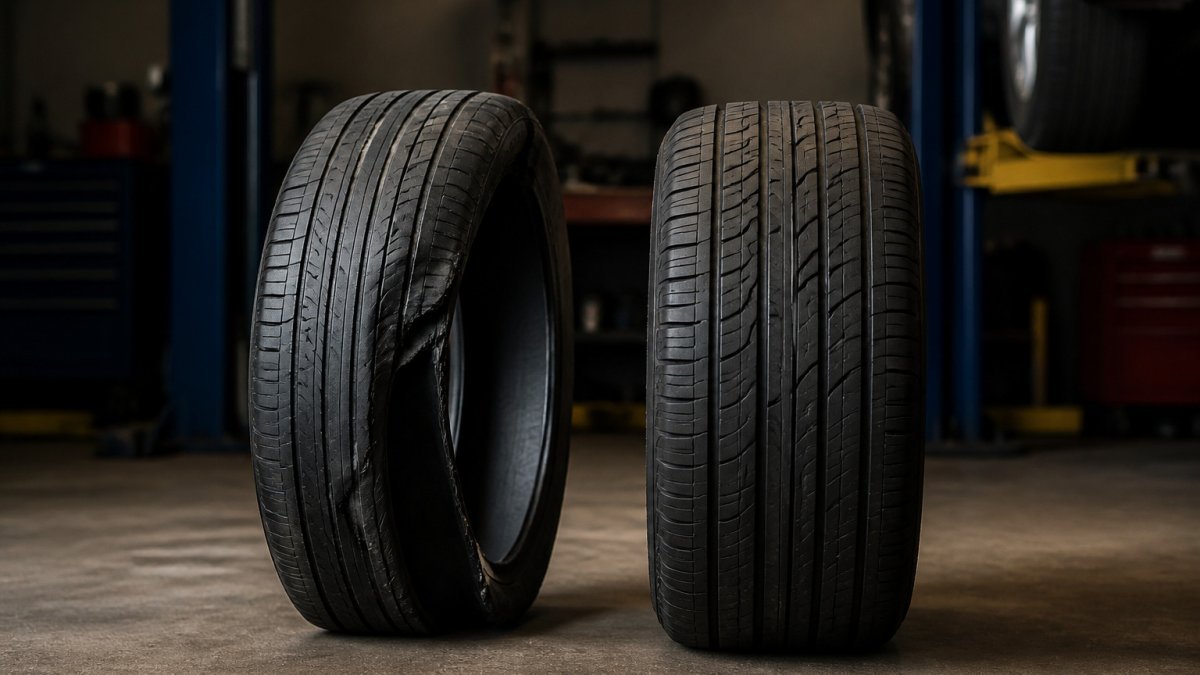
Run flat tires have reinforced sidewalls that let a vehicle keep driving after a puncture, usually for a limited distance at reduced speed. Standard tires need air pressure to hold, so a flat usually means stopping for a tire change. The main benefit of run flat tires is avoiding a risky roadside change, while standard tires offer a softer ride and lower cost.
- Run flat tires let you drive a limited distance at reduced speed after losing air.
- Avoiding a roadside tire change on a busy road is the main practical benefit.
- Standard tires usually ride softer and cost less to buy.
- A run flat driven while deflated may need replacement, since repair is often not possible.
- Run flat range shrinks with heavy loads, summer heat, and highway speeds.
Table of Contents
- Run Flat Tires vs Standard Tires: What Sets Them Apart
- The Main Benefits of Run Flat Tires
- Where Standard Tires Come Out Ahead
- Run Flat Tire Repairability and Post-Puncture Inspection
- Total Cost of Ownership: Price, Replacement, and Spare Tires
- Real-World Limits and Switching From Run Flats to Standard Tires
- Booking Help for a Flat Tire in the Tulsa Area
- Frequently Asked Questions
Run Flat Tires vs Standard Tires: What Sets Them Apart
Run flat tires have reinforced sidewalls that let a vehicle keep rolling after a puncture, usually for a limited distance at reduced speed. Standard tires rely on air pressure alone, so a flat usually means stopping and changing the tire. That single difference drives almost every benefit and trade-off discussed below.

For Tulsa drivers, the choice comes down to how you use your car. A daily commuter on the Broken Arrow Expressway, a family hauling kids to Jenks, and a weekend driver with a classic car each face different risks. Run flats and standard tires each serve a different driver well.
The Main Benefits of Run Flat Tires
Run flat tires shine in situations where stopping to change a tire is risky or inconvenient. The main advantages are staying mobile after air loss and avoiding a roadside change on a busy road.
Driving Distance and Speed After a Puncture
Most run flat tires are designed to keep a car moving for a limited distance after the tire loses air. Run flat tires are designed to keep a car moving for a limited distance after the tire loses air, and the exact range depends on the tire model and conditions.
Ratings like these are set under specific conditions, so treat them as a ceiling, not a promise. Speed, load, and temperature all affect how far a tire will actually carry you.
Skipping the Roadside Tire Change
The practical payoff is avoiding a tire change on the shoulder of I-44 or a busy surface street. Standing next to traffic while jacking up a car is one of the riskier things a driver can do. A run flat lets you keep moving toward a shop or a safer spot.
If you are stuck with a standard tire, you have two choices: change it yourself or call for roadside help. Our tire change service in Tulsa covers flat tire help when you would rather not do the work at the roadside. For guidance on handling a standard change safely, see our step-by-step guide to changing a flat tire safely. Some drivers also keep a portable tire inflator for roadside emergencies in the trunk for slow leaks.
Where Standard Tires Come Out Ahead
Run flats are not the better choice for everyone. Standard tires win on ride comfort, cost, and simplicity.
The stiff sidewalls that let run flats carry weight can transmit more bumps and vibration into the cabin. If you value a soft ride, a standard tire will likely feel better on rough pavement.
Run flats also generally cost more, and replacement is usually more expensive when you need a new one. Standard tires are cheaper to buy and easier to find at any local shop.
Run Flat Tire Repairability and Post-Puncture Inspection
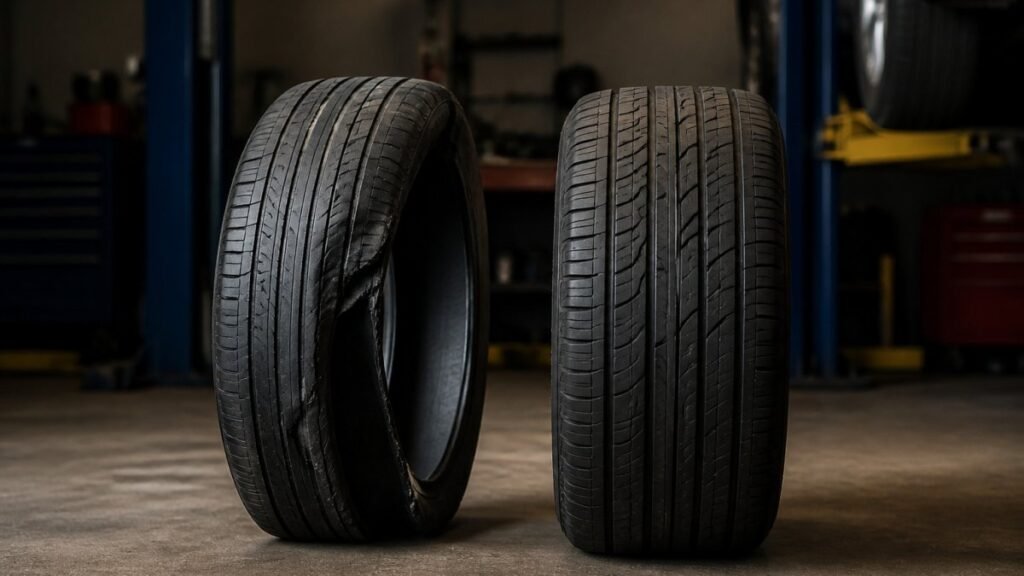
Repairability is where many drivers get caught off guard. A run flat that has been driven on while flat may be damaged inside, even if it looks fine from the outside. The sidewall supports the car’s weight when air is gone, and that stress can break down the internal structure.
After any puncture, have the tire inspected before you drive on it normally. Many shops will not repair a run flat that has been run deflated, so plan for replacement in that case. Standard tires with a small puncture in the tread area are often repairable, which is a real cost advantage.
Ask your tire shop specifically whether a punctured run flat can be repaired at all. The answer depends on where the puncture is and how far the tire was driven.
Total Cost of Ownership: Price, Replacement, and Spare Tires
The sticker price is only part of the picture, and comparing run flats to standard tires on price per tire alone will mislead you.
Purchase price. Run flats generally cost more than conventional tires, and actual prices vary by size, speed rating, and retailer. For current pricing on a specific size, check with your local tire shop or dealer.
Replacement frequency and repairability. This is where the math can flip. A standard tire with a small puncture in the tread area is often repairable, so you pay for a patch rather than a new tire.
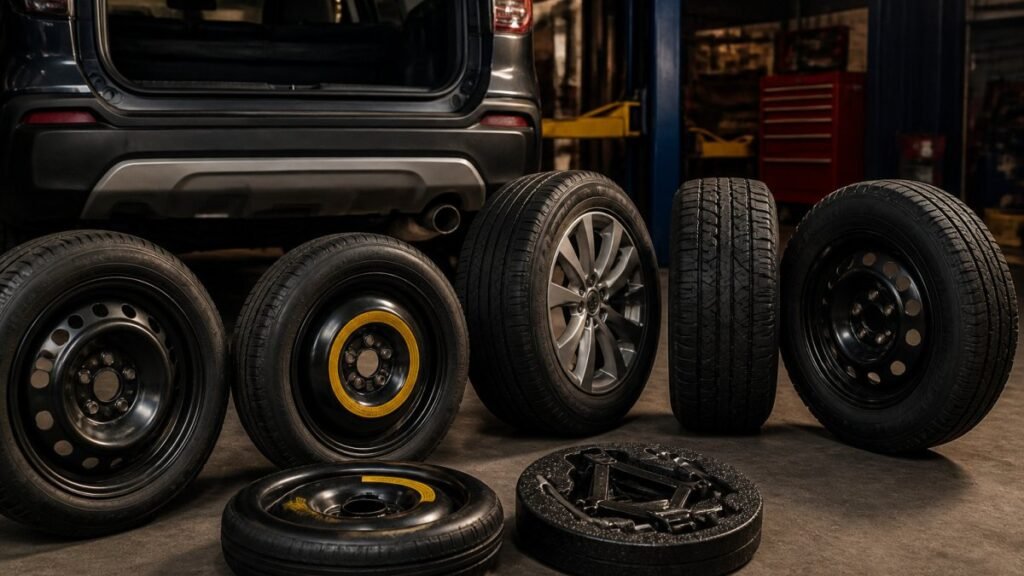
Spare-tire equipment. A run flat usually removes the need for a spare, which frees up trunk space and reduces weight. That matters for smaller cars and for drivers who want more cargo room.
Roadside assistance. With standard tires, a flat often means either changing the tire yourself or calling for help. Our roadside assistance in Tulsa and emergency towing are there for either tire type, and we do not impound vehicles, so you are not paying storage fees on top of the service.
The bottom line. Run flats cost more up front and more per replacement, but they can save you a roadside tire change and may reduce how often you need help.
Real-World Limits and Switching From Run Flats to Standard Tires
Run flats do not make a flat tire harmless. The distance and speed figures you see quoted are ratings under specific conditions, and they vary by tire model and by vehicle. A common pattern is that the usable range shrinks when the car is loaded with passengers and cargo, when outside temperatures climb, when the road surface is rough, or when the driver keeps highway speed instead of dropping to the reduced limit. Potholes, hard braking, and a puncture on a hot afternoon all work against you. Plan on driving to a shop or a safe stopping point, not across the metro.
A few practical limits worth knowing before you rely on run flats:
- The clock starts at air loss, not at the puncture. If a tire sat deflated overnight, the sidewall has already been flexing under load, and the remaining distance is shorter than the rating suggests.
- Load matters. A fully loaded SUV or a truck bed full of tools puts more stress on the reinforced sidewall than a solo commuter does.
- Heat is the enemy. Summer pavement on the Broken Arrow Expressway or a long climb on the Turner Turnpike raises internal tire temperature, and heat is what ultimately ends a run-flat’s useful range.
- Handling changes. With no air pressure, the car will feel different in steering and braking. Reduce speed, increase following distance, and avoid sudden inputs.
Switching From Run Flats to Standard Tires: A Practical Checklist
Some drivers decide to switch after a few years. Common reasons include a firmer ride than expected, higher replacement costs, and wanting a spare again. Switching is a reasonable choice if the run-flat trade-offs stop making sense for how you drive, but it is not just a matter of buying four different tires. Work through this checklist first:
- Check the owner’s manual and the tire placard. The placard on the driver’s door jamb lists the original tire size and recommended pressures. Confirm the standard tire you want matches the size, load index, and speed rating the vehicle was designed for.
- Confirm TPMS compatibility. Most vehicles with run flats use a tire-pressure monitoring system that expects a specific sensor setup. A shop can confirm whether your existing sensors work with the new tires or need to be replaced or reprogrammed.
- Decide how you will handle a flat. Without run flats, you need either a spare tire and jack or a mobility kit (a sealant and inflator). Some vehicles have a spare well that was deleted at the factory to save weight, so check before you assume a spare will fit.
- Budget for the spare equipment. A spare wheel, jack, and lug wrench are extra purchases if the car did not come with them. A mobility kit is lighter and cheaper but only handles small tread punctures, not sidewall damage.
- Expect a handling difference. Standard tires usually ride softer and steer with a little more sidewall flex. Most drivers prefer the comfort, but it is a real change from a stiff run-flat sidewall.
- Ask about manufacturer guidance. Some vehicles are engineered around run flats, and the manufacturer may have specific recommendations about switching. A dealer or a trusted tire shop can tell you whether your model has any caveats.
Watch out: if you switch to standard tires and skip the spare or mobility kit, a simple puncture can leave you stranded on the shoulder of I-44 or a busy surface street with no way to get moving. If that happens, our tire change service in Tulsa and flat tire assistance are built for exactly that situation, and our step-by-step guide to changing a flat tire safely covers the roadside basics if you decide to handle it yourself.
Here is a quick reference for the key limits and trade-offs covered above, so you can scan them before deciding.
| Factor | What to expect | Note |
|---|---|---|
| Usable range | Limited distance at reduced speed | Ratings are ceilings, not promises |
| Load | Heavier loads shorten the range | Passengers and cargo add stress |
| Heat | Summer heat cuts useful range | Hot pavement raises tire temperature |
| Puncture repair | Often needs replacement after running flat | Check with your shop |
| Spare tire | Usually not needed with run flats | Standard tires need a spare or mobility kit |
| Ride | Stiffer sidewalls transmit more bumps | Standard tires usually ride softer |
Booking Help for a Flat Tire in the Tulsa Area
If you are stranded with a flat, whether a standard tire or a run flat you cannot drive on, Neptune Towing can help. We are a locally owned, owner-operated company serving Tulsa, Jenks, Bixby, Broken Arrow, and nearby communities, and we do not impound vehicles. Our flat tire assistance service is built for drivers who need help now, and you can also learn more on our tire change page.
Call (539) 292 3074 to reach us directly. Tell us where you are and what happened, and we will tell you what to expect.
Frequently Asked Questions
What is the downside of run-flat tires?
The most common downsides are a firmer ride, higher purchase prices, and fewer repair options. Run-flat sidewalls are stiffer than standard sidewalls, so bumps and road vibration reach the cabin more easily. Run-flats also usually cost more than comparable conventional tires. Some run-flats are harder to repair after a puncture, so check the tire’s repair guidance before you buy. If ride comfort matters most to you, a standard tire may be the better fit.
Is it better to have run-flat tires or regular tires?
It depends on how you drive and what you value. Run-flat tires let you keep going after a puncture, usually for a limited distance at reduced speed, which helps if you want to avoid changing a tire on a busy highway. Standard tires typically cost less, ride more comfortably, and are easier to repair. Commuters who worry about breakdowns on roads like I-44 may prefer run-flats, while drivers focused on comfort and budget often choose standard tires.
Do run-flat tires cost more to replace than standard tires?
Yes, run-flat tires generally cost more. Run-flats generally carry a higher price than conventional tires, though exact prices depend on the brand, size, and retailer. Because you cannot always repair a run-flat after damage, replacement can happen sooner than expected. Check current pricing with your local dealer or tire shop before deciding, and ask for a written quote.
Can I switch from run-flat tires to standard tires on my vehicle?
Many drivers do switch, but you should confirm with your vehicle’s owner’s manual or a tire professional first. Some vehicles are designed around run-flat tires, and changing to standard tires can affect the tire pressure monitoring system, ride height, or the spare tire setup. If you switch, use the correct wheel size and make sure the new tires are properly matched and balanced. A Tulsa tire shop can help you check compatibility before you make the change.