
Table of Contents
- Why Peace of Mind Matters When Your Vehicle Breaks Down
- What to Do During a Roadside Emergency
- What to Say When Calling Roadside Assistance
- What Information to Give a Tow Truck Dispatcher
- Roadside Assistance Response Time: What to Expect
- Building Your Emergency Roadside Assistance Plan
- Staying Safe While You Wait for Help
- Frequently Asked Questions
Last Updated: October 18, 2026
Why Peace of Mind Matters When Your Vehicle Breaks Down
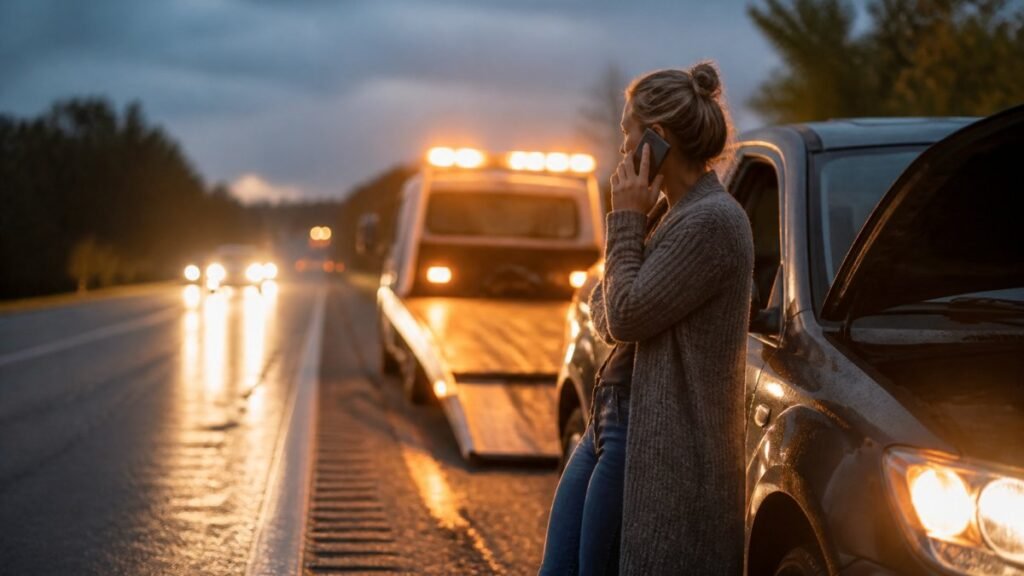
Your car dies on I-44. It’s dark, traffic is moving fast, and your phone battery is low. That’s when peace of mind roadside assistance matters most.
At Neptune Towing, we know that moment. A breakdown is stressful and often happens far from home.
According to Agero’s roadside assistance research, more than 55% of drivers experience at least one roadside emergency in a single year. Flat tires, dead batteries, lockouts, and mechanical failures happen to everyone.
Peace of mind roadside assistance means more than a tow truck showing up. It means knowing what to expect, what information to provide, and that your vehicle will be handled with care.
What to Do During a Roadside Emergency
Your first instinct when your vehicle breaks down is to panic. Don’t. The next few minutes determine how safe you are and how quickly help arrives. Here’s the universal safety layer first, then the scenario playbook we walk Tulsa drivers through every week.
The universal safety layer (do this first, every time)
The moment you realize your vehicle is in trouble, your priority is safety, yours and everyone else’s.
Pull off the road as far as safely possible. According to UC Berkeley SafeTREC’s 2026 Traffic Safety Facts, 94.3% of roadside assistance provider fatalities occurred outside a vehicle on the shoulder or in a travel lane.
Turn on your hazard lights immediately, before you even think about calling for help. It’s your first signal to other drivers that something is wrong.
Here’s what happens next:
- Stay calm and assess the situation
- Keep your doors locked if you’re in an unsafe location
- Have your phone and GPS ready to share your location
Scenario playbook: what to do for each common breakdown
Once you’re as safe as you can get, the next steps change based on what failed.
Dead battery. A jump start is usually a 10-minute fix if the battery is simply drained.
Overheating. Pull over, shut the engine off, and let it cool.
Collision. If anyone is injured, call 911 first.
Out of fuel. Pull as far off the road as possible, turn on hazards, and call for fuel delivery.
Stuck or in a ditch. In mud, sand, or a ditch, don’t spin the tires; you’ll dig in deeper.
If you’re not sure which scenario applies, just describe what you see and hear. “It cranks but won’t start,” “there’s steam,” or “the tire is shredded” is enough for us to send the right truck.
Assessing your situation
Before you call, take a moment to understand what’s happening. Is your engine running or dead? Any unusual sounds? Fluid under the car? Is anyone injured?
You don’t need to be a mechanic. Just describe what you’re experiencing: “My car won’t start,” “I have a flat tire,” or “I’m locked out.” Simple, honest descriptions help us understand what you need.
If you’re in an unsafe location, don’t spend time diagnosing. Call for help right away and let the professionals assess once you’re safe.
What to Say When Calling Roadside Assistance
When you call Neptune Towing, you’re talking to someone who can actually help, not a call center passing you through a system. Keep it simple: start with your location, describe your situation, then tell us what you need.
Example: “I’m on I-44 eastbound near the 21st Street exit with a flat tire. I need a tow truck.”
Another example: “I’m in the parking lot at the Philbrook Museum in Tulsa and I’m locked out of my car. Can you help me get back in?”
One more: “My Tesla won’t start and I’m stuck in Bixby. I need someone who knows how to tow electric vehicles safely.”
That’s all you need to say. We’ll ask follow-up questions if needed, confirm your location, make sure you’re safe, and tell you when to expect us.
What Information to Give a Tow Truck Dispatcher
When you call, have this information ready to speed things up and make sure we send the right equipment:
- Your exact location (street address, highway mile marker, landmark, or GPS coordinates)
- Your vehicle make, model, and color
- Whether anyone is injured
- Whether your vehicle is blocking traffic or safely off the road
- Your phone number so we can reach you if we get delayed
If you have a Tesla or other electric vehicle, or you’re stuck in mud or a ditch, tell us. These details help us bring the right tow truck and equipment. You don’t need to describe every detail of what’s wrong; just focus on where you are and what you need.
Roadside Assistance Response Time: What to Expect
This is the question everyone asks: How long until someone gets here?
The honest answer depends on where you are, what you need, and how busy we are. A jump start or lockout in central Tulsa on a quiet Tuesday afternoon can be quick; Sapulpa during Friday rush hour, or a major accident on I-44, will take longer. What we promise is the truth about wait time when you call, a realistic estimate based on where you are and what’s happening right now.
What happens after you call
Most guides stop at “call for help.” Here’s the actual sequence so you know what to expect.
- Dispatch confirms your location. We read it back, including the nearest cross street, exit, or landmark. On a highway, the mile marker or exit number matters more than a street address.
- We match the truck to the job. A jump start, lockout, tire change, and flatbed tow each need different equipment, so telling us the make, model, and what’s wrong up front means we send the right truck the first time.
- We give you an ETA and a callback number. You’ll know roughly when to expect us and how to reach us if your situation changes.
- The driver calls or texts when en route. Expect a heads-up as the truck gets close so you can watch for it.
- The driver assesses on arrival. Before hooking up, the driver looks at the vehicle, the angle, and the surroundings, then explains what they’re going to do. If it’s a Tesla, an EV, a luxury car, or a classic, ask how it will be loaded; we use flatbed towing for vehicles that shouldn’t be towed on their drive wheels.
- You get service options. Sometimes a jump start or tire change gets you moving; sometimes a tow is the safer call. We’ll tell you which and why, not just default to the most expensive option.
What affects how fast we get there
- Distance and road type. A side street in Owasso is a different drive than the shoulder of I-44 at rush hour.
- Traffic and incidents. A crash on the Broken Arrow Expressway or US-169 can slow every truck in the area.
- Weather. Ice, heavy rain, and Oklahoma wind storms slow response and increase call volume at the same time.
- Equipment needed. A flatbed tow takes longer to set up than a jump start, and that’s normal.
- How precise your location is. A clear landmark, exit number, or GPS pin saves real minutes. “Somewhere on I-44” is much harder to find than “I-44 eastbound just past the 21st Street exit.”
What to do while you wait
While you wait, stay in your vehicle if you’re in an unsafe location and keep your hazard lights on. If it’s cold, run the engine and heat; if it’s hot, crack your windows. Stay off the shoulder and away from traffic, and keep your phone charged with the ringer on so you don’t miss the driver’s call. In a safe spot like a parking lot, you can step out and stretch, but stay with the vehicle.
Peace of mind during a wait comes from three things: a realistic ETA, a callback number, and knowing the next step. If you don’t have all three, ask when you call.
Neptune Towing operates 24/7, every day of the year. That’s our commitment to drivers throughout Tulsa, Broken Arrow, Bixby, and the surrounding communities.
Building Your Emergency Roadside Assistance Plan
Peace of mind roadside assistance isn’t something you find in a crisis. It’s something you build before one happens.
Preparing your emergency kit
Keep an emergency kit in your vehicle at all times. You don’t need much, but these items make a huge difference:
- Phone charger (car charger or portable battery pack)
- Flashlight with extra batteries
- Reflective triangles or flares
- Basic tools (screwdriver, pliers, adjustable wrench)
- Jumper cables
- Blanket or emergency blanket
- Water and non-perishable snacks
- First aid kit
- Paper and pen for writing down information
The most important item is your phone charger. A dead phone during a roadside emergency is a real problem, so make sure you can keep it charged.
Knowing your coverage and limits
Before you need roadside assistance, understand what you have. Is it through your auto insurance, a membership like AAA, your vehicle manufacturer, or nothing at all?
This matters because it affects who you call and what to expect. If you don’t have coverage, that’s okay; you can still call a local towing company like Neptune Towing, and we’ll help you regardless.
If you do have coverage, keep the phone number easily accessible in your vehicle; your insurance card should have the roadside assistance number on the back.
Staying Safe While You Wait for Help
The time between calling for help and the tow truck arriving can feel long. Stay smart during this window.
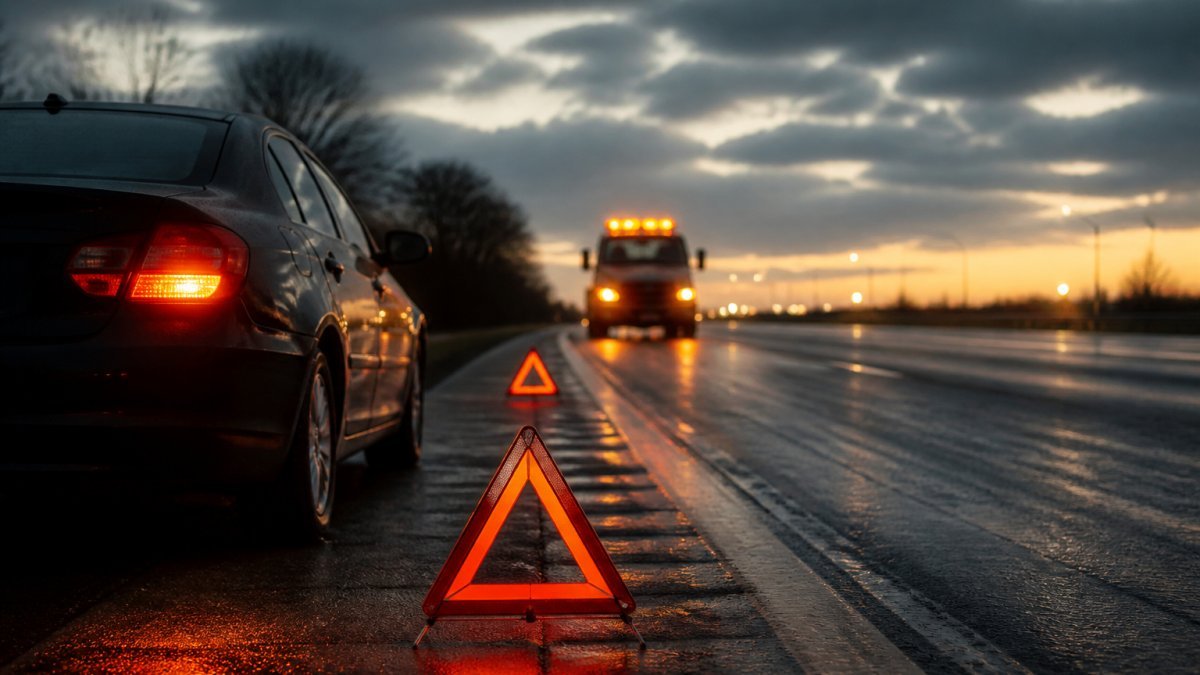
On a highway, stay in your vehicle with doors locked and seatbelt on. Don’t stand outside, flag down passing drivers, or attempt repairs in traffic.
Keep your hazard lights on the entire time and make your vehicle as visible as possible.
When the tow truck arrives, the driver will explain what they’re doing. If you have questions about how your vehicle will be transported, especially a Tesla, luxury car, or classic, ask.
Frequently Asked Questions
What should I do first during a roadside emergency?
First, stay calm and assess your safety. Turn on your hazard lights immediately to increase visibility to passing traffic. If you’re on a busy highway, move your vehicle to the shoulder or a safe location away from traffic if possible. Turn off the engine and stay inside the vehicle with your seatbelt fastened. Once you’re in a safe position, call for roadside assistance and provide your exact location. According to the AAA Foundation, 94.3% of roadside assistance provider fatalities occur outside vehicles on roadways, so staying inside your vehicle is critical to your safety.
What information should I have ready when requesting a tow?
When you call for roadside assistance, have your vehicle’s location, make, model, and year ready. Describe your problem clearly: is it a flat tire, dead battery, engine trouble, or lockout? Tell the dispatcher if you’re on a highway, side road, or in a parking lot. Provide your phone number and let them know if you have passengers or pets in the vehicle. If you’re on I-44 or a major road in the Tulsa area, mention nearby landmarks or mile markers. This information helps dispatchers send the right equipment and get help to you faster.
How long does roadside assistance usually take to arrive?
Response time depends on your location, current demand, and traffic conditions. In the Tulsa area, a local towing service can often arrive faster than national chains because they’re based nearby and familiar with local roads. When you call, ask the dispatcher for an estimated arrival time and request updates if there’s a delay. Having a realistic expectation helps you stay calm while you wait. Always keep your phone charged and stay in contact with the dispatcher, don’t hang up unless they tell you to.
Can I call a towing company directly if I’m not a roadside assistance member?
Yes, you can. You don’t need to be a member of a roadside assistance program to call a local towing company for help. Many drivers in the Tulsa area call independent, locally owned towing services directly when they experience a breakdown. When you call, be ready to discuss pricing and what services you need. A professional dispatcher will ask the right questions to understand your situation and send appropriate help. Being owner-operated, local towing companies often provide more direct communication and faster response than larger chains.
Breakdowns happen. The difference between a crisis and a manageable situation is preparation and knowing who to call. Neptune Towing is available 24/7 to help drivers throughout Tulsa, Broken Arrow, Bixby, and surrounding communities. When you’re stranded, we respond quickly with damage-free towing and honest service. We don’t impound vehicles or add surprise fees. We solve the problem and get you back on the road. Call (539) 292-3074 for roadside assistance you can trust.