


Table of Contents
- Why Dead Car Batteries Happen More Often Than Drivers Expect
- The Most Common Causes of a Dead Battery
- How Weather, Short Trips, and Battery Age Drain Your Battery
- Signs of a Bad Car Battery You Should Never Ignore
- How to Jump Start a Dead Battery Safely
- When to Call Roadside Assistance in Tulsa Instead
- How to Prevent Dead Car Batteries Before They Strand You
- Frequently Asked Questions
Last Updated: September 30, 2026
Why Dead Car Batteries Happen More Often Than Drivers Expect
A dead battery rarely gives you a warning anymore. According to ProGradeList’s 2026 analysis of battery failure causes, more than 70% of premature car battery failures trace back to preventable conditions like inconsistent charging and overlooked maintenance. Not old age. Not bad luck.
The Most Common Causes of a Dead Battery
Most dead batteries come down to one of four things: something stayed on, something is quietly draining power, the connections are dirty, or the charging system quit. Here’s how to tell them apart.
Lights and Accessories Left On
This is the simplest cause and the easiest to fix. An interior light, headlights, or a phone charger left plugged in can drain a battery in a few hours.
Parasitic Draw and Modern Data Modules
Parasitic draw is the current your car pulls while it’s parked and everything is off. A little is normal. Too much kills a battery overnight.
Loose or Corroded Battery Terminals
Corrosion on the terminals blocks current. You’ll see white or blue-green crust around the posts.
A Failing Alternator or Charging System
Here’s the part most people get wrong. A battery that seems to die suddenly isn’t always a bad battery. According to RJ Batteries’ explanation of sudden battery death, it’s often an alternator failure instead. The charging system stops refilling the battery while you drive, so you’re running on stored power until it’s gone.
If your battery dies again right after a jump start, don’t buy a new battery yet. A failed alternator will kill a brand-new battery too. Get the charging system tested first.
How Weather, Short Trips, and Battery Age Drain Your Battery
Oklahoma is hard on batteries. So is the way a lot of us drive.
Oklahoma Heat, Cold Snaps, and Short Commutes
Heat is the bigger killer here. Summer highs bake a battery and shorten its life, then the first real cold snap exposes the damage. Cold slows the chemical reaction inside the battery and cuts its cold cranking amps, so a weak battery that started fine in October won’t turn over in January.
Old Age, Sulfation, and Deep Discharge
Sulfation is the buildup that forms on the plates inside a lead-acid battery when it sits in a low state of charge. It’s the slow decline most drivers never notice until the car won’t start.
A battery that’s been fully drained more than once is on borrowed time. No amount of charging brings it all the way back.
Signs of a Bad Car Battery You Should Never Ignore
The old rules don’t apply the way they used to. Modern batteries increasingly fail suddenly instead of giving you the slow-crank warning that older cars showed, according to driver reports compiled on Quora.
Watch for these signs:
- Slow cranking, especially on cold mornings
- A clicking sound when you turn the key
- Dim headlights or interior lights at idle
- Dashboard electronics resetting on their own
- A battery warning light
- Swollen case or a rotten-egg smell
How to Jump Start a Dead Battery Safely
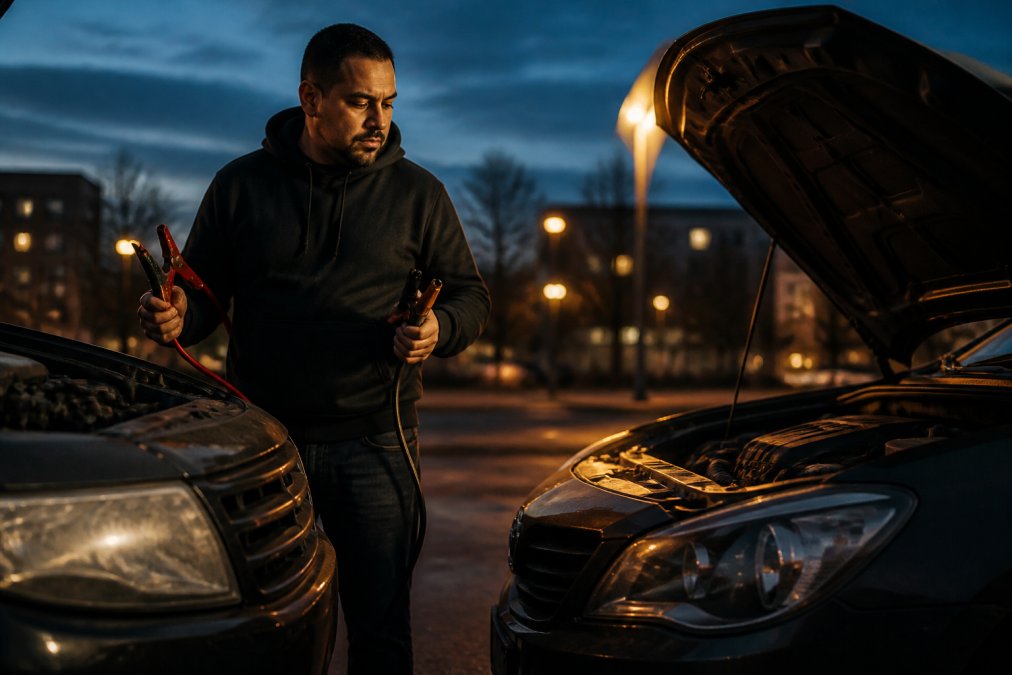
A jump start gets you moving, but the order you connect the cables matters. Get it wrong and you can damage electronics or cause a spark near battery gas.
What You’ll Need Before You Start
- A set of jumper cables, thick gauge if you have them
- A second vehicle with a charged battery
- Safety glasses if you have them handy
- Both cars in park or neutral, engines off, parking brakes set
Step-by-Step Jump Start Order
- Park the cars close, but don’t let them touch.
- Connect the red clamp to the positive terminal on the dead battery.
- Connect the other red clamp to the positive terminal on the good battery.
- Connect the black clamp to the negative terminal on the good battery.
- Connect the last black clamp to bare metal on the dead car, away from the battery.
- Start the good car and let it run a couple of minutes.
- Start the dead car. If it won’t start, wait and try again.
- Remove the clamps in reverse order.
Mistakes That Damage Cars and Electronics
Never connect the final black clamp to the dead battery’s negative post. That’s the one that can spark.
If the dead car starts but dies again the second you disconnect the cables, you’re looking at a charging system problem, not a battery problem. Stop jumping it and get it tested.
When to Call Roadside Assistance in Tulsa Instead
Some situations aren’t worth a DIY jump. Call for help when:
- You’re on I-44, the IDL, or the shoulder of US-169
- The battery is cracked, leaking, or smells like sulfur
- You drive an EV or a Tesla
- Your car has push-button start and won’t recognize the fob
- You’re not comfortable working near a battery
How to Prevent Dead Car Batteries Before They Strand You
Prevention comes down to two things: keeping the battery at a healthy state of charge, and catching a failing charging system before it kills the battery. Everything below serves one of those two goals.
Match the Battery to the Car
This is the step most drivers get wrong, and it’s the one that matters most on newer vehicles. If your car has auto start-stop, or came from the factory with an AGM battery, you need to replace it with the same type. A standard flooded battery in a start-stop car will fail early because it can’t handle the cycling.
Keep It Charged
- Drive it, don’t just start it. A five-minute trip to the store doesn’t give the alternator time to replace what the starter used. Aim for at least 20 minutes at highway speed once a week, or take the long way home now and then.
- Use a trickle charger or battery maintainer if the car sits. A vehicle that sits for weeks at a time will slowly self-discharge and sulfation will start. A maintainer keeps it topped off and is far cheaper than a new battery.
- Don’t ignore a low battery. If you’ve had to jump it once, find out why before it happens again. A single jump is a warning, not a fix.
Keep the Connections Clean and Tight
Corrosion and loose terminals cause the same symptoms as a weak battery: slow cranking, clicking, dim lights. Check the terminals at every oil change. If you see white or blue-green crust, clean it with a wire brush and a baking soda and water mix, then make sure the clamps are snug. A little dielectric grease on the posts slows corrosion down.
Watch the Charging System, Not Just the Battery
A failing alternator will kill a brand-new battery, so testing the battery alone isn’t enough. Ask your shop to check charging voltage at your next service. If you have an OBD-II scanner, you can watch voltage yourself: with the engine running, you should see 13.5 to 14.5 volts at the battery. Anything lower means the charging system needs attention.
Test on a Schedule, Not After a Failure
- Test the battery twice a year, before summer and before winter. Heat is what actually shortens battery life here, and cold is what exposes the damage.
- If your battery is four years old or older, start planning for a replacement. Most batteries last three to five years, and the ones in hot climates tend to land on the shorter end.
- If you drive a newer car with lots of electronics, ask your shop to check for excessive parasitic load at your next service. It’s a quick test and it catches a drain before it strands you.
Fix the Root Cause, Not the Symptom
This is the mistake we see most often. A battery dies, the driver buys a new one, and three months later it dies too, because the real problem was a parasitic draw, a weak alternator, or a start-stop system paired with the wrong battery type. Replacing a battery without finding the cause just resets the clock on the same failure.
If your new battery dies within a few months, stop replacing batteries and start diagnosing. The battery was never the problem.
If you’re not sure whether your battery is on its way out, most auto parts stores will test it for free. It takes a few minutes and it tells you whether you’re looking at a recharge, a replacement, or a charging system issue. If the test says the battery is fine but the car still won’t start, that’s when you call a pro.
Frequently Asked Questions
Do car batteries just die without warning?
Modern batteries often fail suddenly because vehicles built after 2016 rely on complex power management, so the old slow-crank warning may never appear. Research from ProGradeList in 2026 found that more than 70% of premature battery failures trace back to preventable issues like inconsistent charging, heat stress, and skipped maintenance. A battery can test fine one morning and leave you stranded by afternoon. If your battery is past three years old, have it load-tested before a long drive.
What drains a car battery when the car is off?
Parasitic draw is the usual culprit. Modules that stay awake, such as data communication systems, keep pulling small amounts of current overnight. Owners of some 2026 Toyota models found that opting out of data sharing stopped repeated 12V drain because the Data Communication Module no longer stayed active while parked. Other common draws include trunk lights, phone chargers left plugged in, and aftermarket alarms. A shop can measure parasitic load with a multimeter and isolate the circuit.
How long should a car battery last in Oklahoma weather?
Most batteries last three to five years, but Oklahoma’s temperature swings shorten that window. Summer heat above 100 degrees speeds up corrosion and electrolyte loss, while winter cold reduces cold cranking amps exactly when the engine needs them most. Interstate Batteries notes that extreme cold, heat, vibration, and corrosion all weaken a battery’s ability to crank the engine. If your battery is over three years old and cranks slower on cold mornings, get it tested.
Can a car still run with a dead battery?
Sometimes, but not for long. Once a running engine is jump-started, the alternator takes over and supplies voltage to the ignition and electrical system. If the battery is deeply discharged or sulfated, it may not hold that charge, and the car can stall again within minutes. A failing alternator can also mimic a dead battery, which is why RJ Batteries advises testing the charging system, not just the battery, before assuming a replacement will fix it.