Last Updated: November 17, 2026
Quick Summary
Insurance coverage for luxury vehicle towing usually requires a separate towing and labor add-on, since full coverage typically means only collision plus comprehensive. Read your declarations page and endorsements to confirm the per-tow limit, whether it is measured in miles or dollars, and whether the plan dispatches a provider or reimburses you.
- Full coverage is a sales phrase, not a policy line item, so towing is often a separate add-on.
- Confirm whether your limit is measured in miles or in dollars before you rely on it.
- Reimbursement plans let you choose a trusted flatbed operator but require you to pay up front.
- Ask whether EVs, AWD, and lowered vehicles are excluded or handled differently.
- Insurance, roadside plans, warranties, and credit card benefits can overlap without coordinating.
Table of Contents
- Why Standard Towing Coverage Often Falls Short for High-Value Vehicles
- Does Full Coverage Car Insurance Cover Towing? What the Label Really Means
- Insurance Coverage for Towing After an Accident: What Changes and What Doesn’t
- Roadside Assistance Towing Mileage Limits and Out-of-Network Reimbursement
- Flatbed Towing for Luxury Cars: Equipment, Handling, and Damage Liability
- Comparing Coverage Types: Insurance Towing vs. Roadside Plans vs. Specialist Carriers
- What to Do During a Luxury Vehicle Breakdown
- Choosing a Local Towing Provider for Your High-Value Vehicle
- Frequently Asked Questions
Why Standard Towing Coverage Often Falls Short for High-Value Vehicles
Insurance coverage for luxury vehicle towing is rarely as simple as the label on your policy suggests. At Neptune Towing, we have loaded enough low-clearance cars onto a flatbed to know that the gap between “towing included” and “towing done safely” is where expensive mistakes happen.
The U.S. automobile towing market is a $12.0 billion industry in 2026, according to IBISWorld’s market size data. That scale explains why so many policies offer a tow benefit. It also explains why so many of those benefits are built around the cheapest possible hook, not the safest one.
The Difference Between a Tow and a Damage-Free Transport
A tow gets your car from point A to point B. A damage-free transport treats the vehicle as a high-value asset from the moment the operator arrives.
Here is what most guides miss. A flatbed alone does not make a tow safe. Loading angle, winching points, ground clearance, and securement still decide whether your car arrives clean. A locked-wheel vehicle may need skates or dollies. A lowered or modified car may need ramps and a spotter. An EV or AWD model needs procedures that follow the manufacturer’s guidance for that exact model.
If you want the deeper walkthrough, our guide on how to transport luxury vehicles safely covers flatbed loading and damage prevention in detail.
Does Full Coverage Car Insurance Cover Towing? What the Label Really Means
Usually, no. “Full coverage” is a sales phrase, not a policy line item. It typically means collision plus comprehensive, and towing is often a separate add-on.
GEICO’s explanation of towing coverage states plainly that standard car insurance does not cover towing and points drivers to Emergency Roadside Service as an option. That is the honest answer most people never hear until they are already on the shoulder.
So when you ask does full coverage car insurance cover towing, read your declarations page. Look for “towing and labor coverage” or a roadside endorsement. If it is not listed, it is not there.
Insurance Coverage for Towing After an Accident: What Changes and What Doesn’t
After a collision, your towing coverage may work differently. Liability coverage pays for damage you cause to others (Auto Insurance Basics). Collision coverage handles your own vehicle. Towing may ride along with collision or be a separate benefit with its own limit.
What does not change is the physical job. A wrecked car with a bent suspension or a wheel pushed inward is harder to load than a healthy one. Tell dispatch the vehicle will not roll, will not steer, or is leaking fluid. That single call helps the operator arrive with the right equipment instead of improvising.
Roadside Assistance Towing Mileage Limits and Out-of-Network Reimbursement
Mileage limits and network rules are where roadside plans can shift cost back to you. Here is how these terms generally work, and how to verify them before you need them.
Direct dispatch versus reimbursement. Most plans work one of two ways. With direct dispatch, the plan sends its own contracted provider and pays that provider directly up to the plan’s limit; you owe anything above it. With reimbursement, you choose the provider, pay the full bill, and submit the invoice for a set amount back.
How mileage caps are measured. A plan may cover the hook plus a set number of miles, then charge you for every mile beyond it, or it may cap the total dollar payout regardless of distance. Those are different limits.
Out-of-network rules. Many plans reimburse a set amount when you use a provider of your choice rather than their dispatch. You pay the difference between that amount and the actual bill.
Repair-shop choice and destination restrictions. You are generally not required to accept a shop the plan prefers, but the plan may only deliver to certain facilities or may limit reimbursement if you choose your own.
A verification checklist for your own policy. Before you rely on any towing benefit, pull the declarations page and the endorsements and confirm each of these:
- Is towing and labor coverage listed as a line item, or is it absent?
- What is the per-tow limit, and is there an annual or per-incident cap?
- Is the limit measured in miles or in dollars?
- Does it cover non-accident breakdowns, or only tows after a covered claim?
- Does the plan dispatch its own provider, or reimburse you?
- Can you choose the destination and the repair shop?
- Are EVs, AWD, and lowered vehicles excluded or handled differently?
- Does a warranty, credit card benefit, or dealer plan overlap with this coverage, and which one pays first?
That last point matters more than most owners realize. Auto insurance towing add-ons, roadside membership plans, manufacturer warranties, and credit card benefits can overlap, and none of them automatically coordinates with the others.
Watch out: a plan that advertises “free towing” may still cap the payout well below what a flatbed transport for a low-clearance or non-running luxury vehicle actually requires. Read the cap, not the headline.
If you would rather deal directly with a local operator who will quote the job and explain the loading plan before dispatch, our roadside assistance in Tulsa team can walk you through it.
Flatbed Towing for Luxury Cars: Equipment, Handling, and Damage Liability
Flatbed towing is a common choice for low-clearance, classic, and exotic vehicles. The car rides on the deck, so the drivetrain is not under load while it moves.
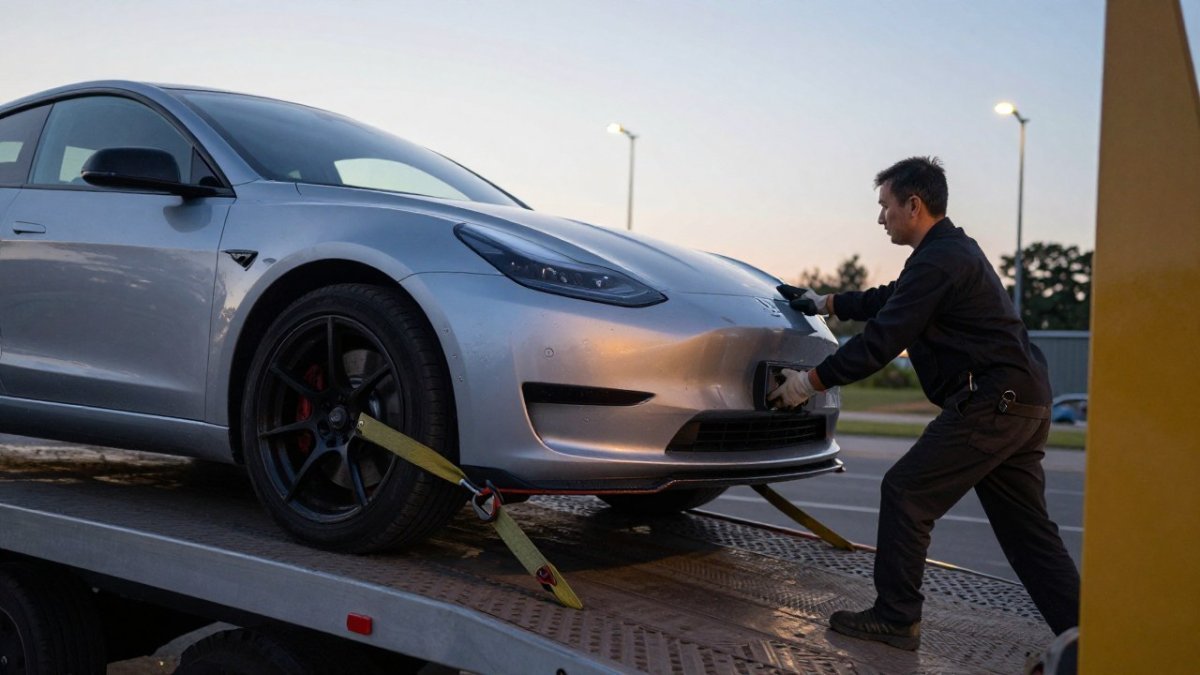
Damage liability is the part owners worry about most. Ask whether the company’s insurance covers your vehicle during loading, transport, and unloading, and ask for its Oklahoma DPS wrecker license number. A licensed, insured operator answers both without hesitation.
For local luxury and classic transport, you can arrange luxury car towing in Tulsa on a flatbed secured by the wheels.
Questions to Ask a Towing Provider Before Dispatch
- Are you licensed and insured, and what is your DPS license number?
- Does your insurance cover my vehicle during loading and unloading?
- Do you follow the manufacturer’s towing procedure for my model?
- What does the quote include, and what could change the price?
- When will the truck realistically arrive?
Before you call, it also helps to know how to verify a towing company’s insurance.
Comparing Coverage Types: Insurance Towing vs. Roadside Plans vs. Specialist Carriers
| Coverage Type | Typical Scope | Best For | Main Limitation |
|---|---|---|---|
| Insurance towing add-on | Tow after a covered claim, set limit | Drivers already filing a claim | May exclude non-accident breakdowns |
| Roadside membership plan | Hook-up plus limited mileage | Everyday commuters | Mileage caps and network dispatch |
| Credit card or warranty benefit | Reimbursement up to a cap | Occasional use | You pay first, then claim |
| Specialist carrier | Flatbed, model-specific handling | Luxury, exotic, classic, EV | Paid directly, not a policy benefit |
For a full breakdown of how these differ, read towing service vs. roadside assistance.
What to Do During a Luxury Vehicle Breakdown
A breakdown in a high-value car is a documentation exercise as much as a towing job.
1. Secure the scene first. Move as far off the travel lane as the car will allow, turn on hazards, and set out a warning triangle if you have one.
2. Photograph the vehicle before anyone touches it. Walk a full circle and shoot each panel, the wheels, the front and rear bumper covers, the roof line, and the odometer.
3. Write down the exact location. Note the nearest exit, mile marker, cross street, or landmark.
4. Give dispatch the full vehicle profile. Year, make, model, drivetrain, ride height, wheel type, and whether the car is electric, AWD, lowered, or has a locked wheel or stuck parking brake.
**5.
**6.
7. Stay with the car through loading if it is safe to do so. Watch the approach angle, the ramp contact, and the tie-down points.
8. Inspect on arrival and keep the paperwork. Walk the car again at the destination, compare it to your pre-tow photos, and note any new marks on the delivery receipt before you sign.
It is worth walking the car before you sign a delivery receipt, since that is when any transport damage is easiest to note.
If the car will not roll, will not steer, or is leaking fluid, tell dispatch that up front. For local help across the metro, our emergency towing in Tulsa line is staffed day and night.
Choosing a Local Towing Provider for Your High-Value Vehicle
The right provider is licensed, insured, and willing to explain the loading plan before touching your car. Ask what the quote includes and whether skates or dollies are needed. A locked-wheel car, a stuck parking brake, or a driveway with tight access can all change the job, and you deserve to know that upfront.
At Neptune Towing, we have been towing since 2010 and founded this company in 2019. We are licensed and bonded, and we run flatbeds, a 4×4 recovery truck, skates, and dollies. We do not impound vehicles. We are the company you call when you need help, not a storage bill.
Check current availability and book a local tow anywhere in the Tulsa metro, day or night.
Your policy is only half the plan. The other half is the operator who shows up, and that is where we come in. Neptune Towing provides damage-free flatbed towing, model-specific handling for EVs and AWD vehicles, and honest quotes before the truck moves, with 24/7 emergency service and transparent pricing. Get started with Neptune Towing and get your vehicle home or to the shop safely.
Frequently Asked Questions
Does car insurance cover towing a luxury vehicle?
Standard auto policies usually exclude towing unless you add roadside assistance or towing and labor coverage. Standard car insurance often excludes towing, and roadside service is frequently offered as a separate option. For a high-value car, check your declarations page for a towing benefit, its dollar limit, and its mileage cap. Luxury-car policies from specialist carriers may include broader benefits, but you should confirm the terms in writing rather than assume.
How many miles does insurance cover for towing?
Mileage limits vary by policy and plan. Many roadside benefits cap the tow at a set distance from the breakdown point and charge per mile beyond it, while others reimburse a flat dollar amount. Ask your insurer for the exact mileage limit, the per-mile overage rate, and whether the limit applies per tow or per year. If you drive a classic or exotic car, confirm the benefit covers flatbed transport, since some plans default to wheel-lift towing.
Will roadside assistance cover flatbed towing for an exotic car?
Some plans cover flatbed transport, but many default to the nearest available truck, which may be a wheel-lift. For low-clearance, all-wheel-drive, or exotic vehicles, request a flatbed explicitly and confirm the dispatcher will send one. At Neptune Towing, we use flatbeds, skates, and dollies and follow manufacturer procedures for EVs and AWD models. If your plan cannot guarantee a flatbed, you may need to pay out of pocket and seek reimbursement.
What should I ask my insurer before arranging a tow?
Ask four things: whether towing is included or an add-on, the dollar and mileage limits, whether flatbed transport is covered, and how reimbursement works if you use an out-of-network provider. Also confirm coverage for damage during loading, transport, and unloading, and whether you can choose your own repair shop. Get the answers in writing or note the representative’s name and date. That record matters if a claim is disputed later.
