
Table of Contents
- What Is Roadside Assistance?
- What Is Towing Service?
- Key Differences Between Towing Service and Roadside Assistance Coverage
- Emergency Tow Truck Near Me: Local Response vs. National Plans
- Flatbed Towing Tulsa: When You Need Specialized Transport
- Roadside Assistance Tulsa: Coverage Types and What They Include
- Does Insurance Cover Towing, and Should You Add Roadside Assistance?
- Conclusion
Last Updated: August 24, 2026
What Is Roadside Assistance?
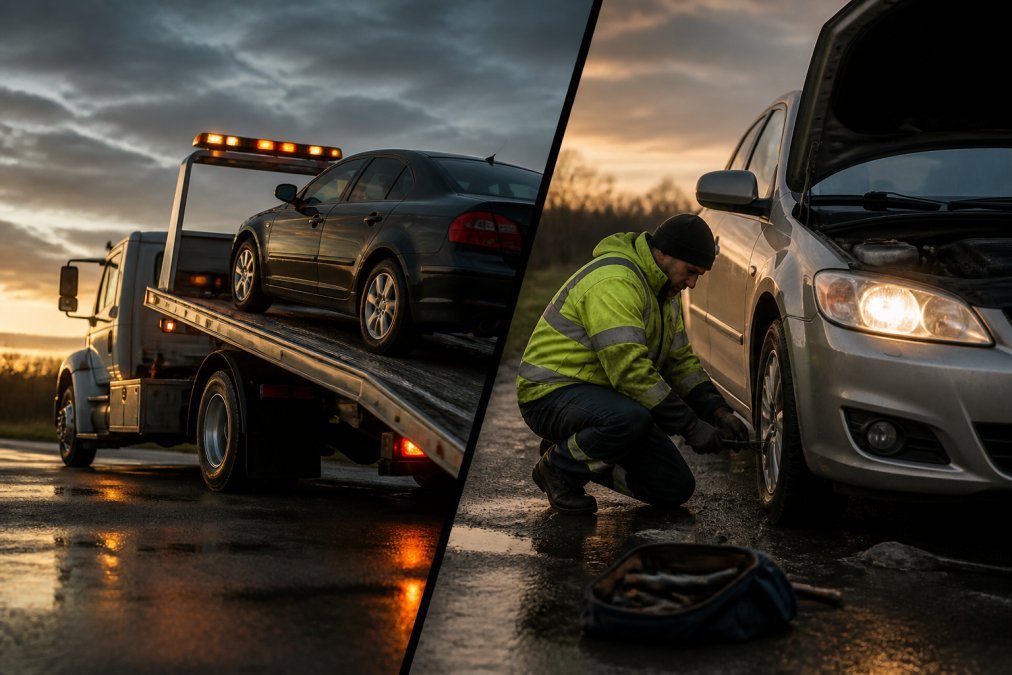
Roadside assistance is a service that sends help directly to your vehicle when you’re stranded. Instead of towing your car away immediately, a technician dispatches to fix the problem on the spot or get you moving again.
Common services include battery jump-starts, flat tire changes, fuel delivery, lockout services, and winching. The goal is simple: solve the problem where your vehicle sits, without a tow truck involved. If the issue can’t be fixed roadside, then a tow to a nearby repair shop follows.
According to the Vehicle Roadside Assistance Market analysis, the roadside assistance industry has grown significantly as drivers recognize the value of immediate on-site help. In Oklahoma, mechanical failures and lockouts account for most roadside assistance requests, which means many drivers calling for help may not actually require a tow at all.
Roadside assistance typically comes in two forms: membership plans (like AAA) that you pay for annually, or add-ons to your auto insurance policy that activate when you need them.
What Is Towing Service?
Towing service is transport for your vehicle when it cannot be driven safely. A tow truck arrives, loads your car, and hauls it to a repair facility or storage location.
A towing service doesn’t fix your vehicle at the roadside. It removes the disabled vehicle from the scene and delivers it somewhere else. This is what you need when your engine is completely dead, your transmission has failed, you’ve been in a collision, or your vehicle is stuck in a ditch and needs professional recovery.
The towing segment dominates the vehicle roadside assistance market, according to Fortune Business Insights 2026 analysis, because breakdown towing is a fundamental service required during vehicle emergencies.
Local towing companies in the Tulsa area often respond faster than national membership plans because calls go directly to drivers who know the area, not through regional dispatch centers. This speed matters when you’re stranded on I-44 or stuck on a side road in Bixby.
Key Differences Between Towing Service and Roadside Assistance Coverage
The confusion between these two services is real, and it costs drivers money when they don’t understand what they actually have.
Roadside assistance solves problems on the spot; towing service moves your vehicle. Roadside assistance sends a technician to your location to fix the issue where your vehicle sits. Towing service loads your vehicle and transports it somewhere else. If you have a dead battery, flat tire, empty fuel tank, or locked keys, roadside assistance is what you need. If your engine is completely dead, your transmission has failed, you’ve been in a collision, or your vehicle is stuck in a ditch and can’t be driven safely, towing service is what you need.
Coverage scope differs based on who you are versus what you drive. Insurance-based towing coverage is tied to the vehicle. You’re covered only when driving the insured car. Roadside assistance membership plans (like AAA) follow the driver. You’re covered in any vehicle you’re driving or riding in, your own car, a rental, a borrowed vehicle. This matters if you frequently drive different vehicles.
Mileage limits and cost structure work differently. Roadside assistance plans typically include a set towing distance (often 5-100 miles depending on membership level), with additional mileage billed at a per-mile rate if you exceed the limit. On-site services like jump-starts, lockouts, and tire changes are usually unlimited. Towing coverage tied to your insurance policy often comes with a dollar limit rather than a distance limit.
Response time and service quality vary significantly. National roadside assistance plans route your call through regional dispatch centers, adding time before a truck arrives. Local towing companies operate differently. When you call Neptune Towing in Tulsa, your call goes directly to a driver who knows the area. A local operator knows which repair shops are reliable, understands local road conditions, and handles your vehicle with care because they’re building a reputation in your community.
Damage-free towing requires the right equipment and training. Proper towing, especially for luxury cars, electric vehicles, and classics, requires flatbed transport, professional securing equipment, and the knowledge to do it right. Local towing companies that specialize in damage-free service invest in flatbed equipment and training because they’re accountable to the community they serve. When you call Neptune Towing, your vehicle is secured with proper straps, not chains.
Real-world scenario: You’re driving on I-44 near Jenks and your battery dies. Roadside assistance sends a technician to your location with jumper cables. Problem solved in 10 minutes. You’re back on the road. Now imagine your transmission fails on the same stretch of highway. Your vehicle can’t be driven safely. Roadside assistance can’t fix this on the spot. You need a tow truck to transport your car to a repair shop.
Check your current auto insurance policy before buying additional coverage. Many drivers don’t realize they already have some towing coverage included. Adding roadside assistance as an endorsement often costs less than a separate membership plan.
Emergency Tow Truck Near Me: Local Response vs. National Plans
When you’re stranded, "near me" becomes the only thing that matters.
National roadside assistance plans route your call through regional dispatch centers. Local towing companies operate differently. When you call Neptune Towing in Tulsa, you’re calling a locally owned business with drivers positioned across the service area. Your call goes directly to someone who knows Tulsa’s streets, understands which repair shops are reliable, and can often arrive quickly. No regional dispatch center. No contractor shuffle. Just a local business owner and their team ready to help.
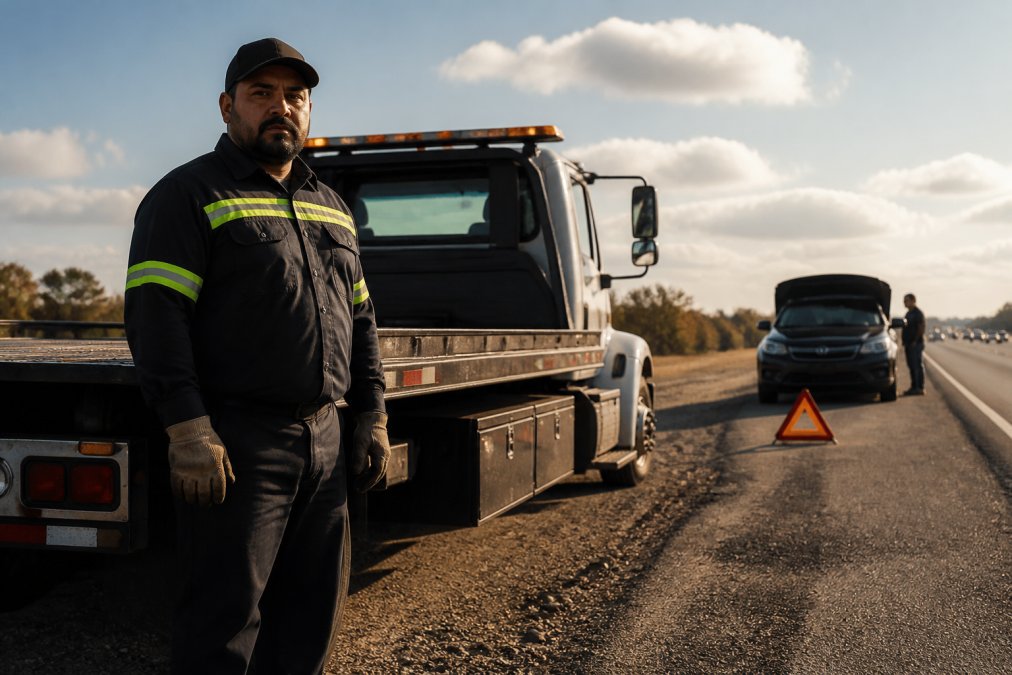
The trade-off is service area. National plans cover you anywhere in the country. Local towing companies serve their region, in Neptune Towing’s case, Tulsa, Jenks, Bixby, Broken Arrow, Glenpool, and surrounding communities. If you’re a frequent road-trip traveler, national coverage makes sense. If you’re a daily commuter in the Tulsa area, local response speed often matters more.
National plans sometimes partner with towing companies that prioritize volume over care. Your vehicle gets loaded fast, not necessarily safely. Damage-free towing requires training, proper equipment, and the time to do it right.
Flatbed Towing Tulsa: When You Need Specialized Transport
Not every vehicle should be towed the same way.
Flatbed towing means your vehicle is loaded onto a flat platform and secured in place, rather than being hooked up by the frame or wheels and dragged behind a tow truck. All four wheels leave the ground.
This matters for specific vehicles. Luxury cars, sports cars, low-clearance vehicles, and electric vehicles (especially Teslas) should always be transported on a flatbed. Hook-and-chain towing or wheel-lift towing can damage the undercarriage, suspension, drivetrain, and alignment. For a Tesla, improper towing can cause thousands in repair costs because the electric drivetrain is sensitive to how the vehicle is positioned during transport.
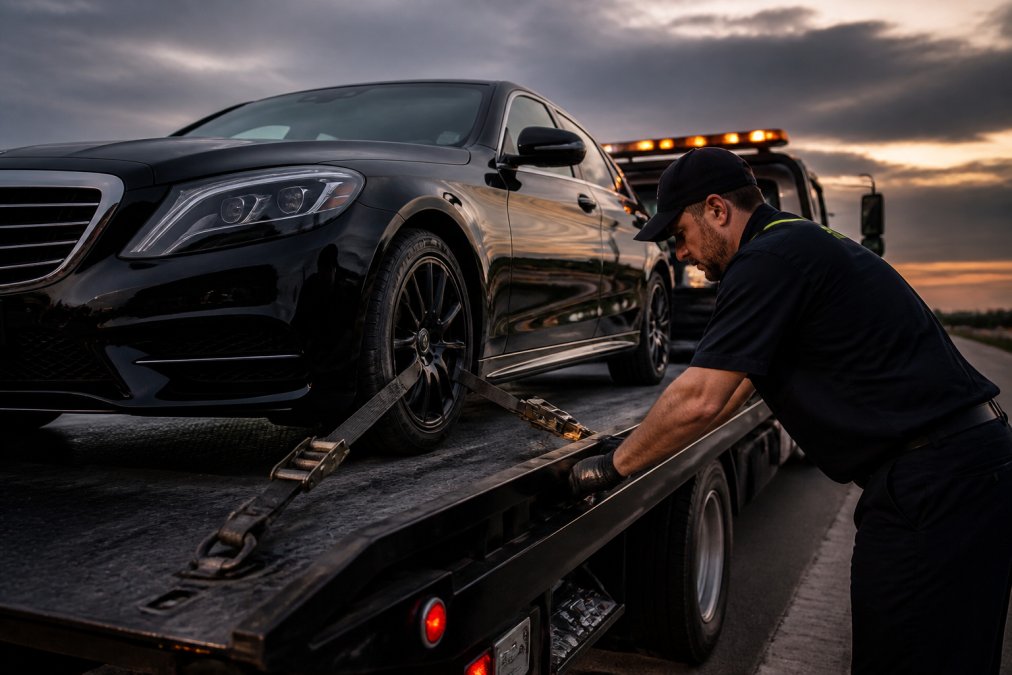
Classic cars, collectibles, and high-value vehicles also benefit from flatbed towing. Neptune Towing specializes in flatbed towing for exactly this reason. Damage-free towing requires the right equipment and the knowledge to use it. When your vehicle is loaded, it’s secured with proper straps, not chains. The loading process is deliberate, not rushed. This approach protects your vehicle.
Roadside Assistance Tulsa: Coverage Types and What They Include
Roadside assistance plans vary significantly in what they actually cover.
The most common coverage includes battery jump-starts, flat tire changes, fuel delivery, and lockout services. Some plans add winching for vehicles stuck in ditches or off-road situations. Coverage limits and exclusions vary by provider and plan level.
Here’s what matters: read the fine print. Many roadside assistance plans exclude electric vehicles or charge extra for EV service. Some plans cap fuel delivery at a certain amount. Lockout services sometimes have a dollar limit on what the provider will reimburse for a locksmith call.
| Service Type | Typical Coverage | Common Limits |
|---|---|---|
| Battery jump-start | Yes | Usually unlimited |
| Flat tire change | Yes | Spare tire must be available |
| Fuel delivery | Yes | 5-10 gallons; fuel cost not included |
| Lockout service | Yes | Reimbursement cap varies |
| Towing distance | Yes | 5-200 miles depending on plan |
| EV/Tesla service | Sometimes | May require premium plan |
| Winch-out service | Sometimes | Additional fee or premium plan |
Neptune Towing offers comprehensive roadside assistance in the Tulsa area, including jump starts, lockout services, tire changes, fuel delivery, and vehicle recovery. Because we’re locally based, we understand what drivers in Tulsa actually need.
The cheapest roadside assistance plan isn’t always the best. A plan with lower coverage limits or more exclusions might leave you paying out of pocket when you need help. Compare what you actually need versus what each plan covers.
Does Insurance Cover Towing, and Should You Add Roadside Assistance?
Most auto insurance policies do not include towing coverage automatically. It’s an optional add-on, sometimes called "towing and labor" coverage or "roadside assistance endorsement." When you add it to your policy, you get a set amount of coverage, typically up to a certain dollar amount or distance limit.
Here’s what matters: roadside assistance claims do not raise your insurance rates. This is the question most drivers are afraid to ask. Unlike collision or comprehensive claims, roadside assistance is considered a "no-fault" service. You’re not filing a claim because of an accident or negligence, you’re using a service you paid for. Insurance companies treat roadside assistance claims separately from your driving record and claims history.
The real decision comes down to coverage scope and cost-benefit:
Insurance-based towing coverage ties to the vehicle, not the driver. You’re covered only when driving the insured vehicle. Coverage limits vary by policy, typically ranging from a set dollar amount to a distance limit. If your tow exceeds that limit, you pay the overage.
Membership-based roadside assistance (like AAA) follows the driver. You’re covered in any vehicle you’re driving or riding in, your own car, a rental, a borrowed vehicle. Coverage typically includes towing, jump-starts, lockouts, fuel delivery, and tire changes.
If you drive an older, less reliable vehicle, adding roadside assistance makes financial sense. If you drive a newer vehicle with a manufacturer warranty, check whether roadside assistance is already included. If you’re a frequent road-trip traveler, membership-based coverage is worth the investment because it protects you across state lines and in any vehicle.
For drivers in Tulsa and the surrounding area who stay local, the math shifts. A local towing company like Neptune Towing provides transparent, per-call pricing without membership fees or annual commitments. You pay only when you need help. If you’re stranded on I-44 near Broken Arrow or stuck on a side road in Sapulpa, calling a local tow truck means faster response and damage-free service from someone who knows the area.
Roadside assistance claims do not raise your insurance rates ([iii.org](https://www.iii.org/fact-statistic/facts-statistics-auto-insurance)). The decision to add coverage should be based on your vehicle’s reliability, how often you drive, and whether you travel outside your home area.
=== FAQ ANSWERS (audit these too, same rules) ===
[1] Q: Is towing the same as roadside assistance?
A: No. Roadside assistance is a broader service package that covers on-the-spot help like battery jump-starts, flat tire changes, fuel delivery, and lockout services. Towing is one specific service within roadside assistance that transports your vehicle to a repair facility. Roadside assistance can solve many problems without requiring a tow, while towing coverage primarily pays to move your vehicle after a breakdown or accident.
[2] Q: Do I have to pay for towing if I have roadside assistance?
A: It depends on your roadside assistance plan. Most plans include towing, but coverage comes with limits. Many plans include towing within a certain mileage radius, with additional charges for longer distances. Some plans have distance limits (like 20 miles), while others offer unlimited towing to the nearest service center. Always check your specific plan’s terms to understand what towing distance is covered and what you might pay out-of-pocket.
[3] Q: What does roadside assistance not cover?
A: Roadside assistance typically does not cover mechanical repairs, parts, labor at a repair shop, or towing beyond your plan’s mileage limit. Most plans exclude services for vehicles that are illegally parked, damaged intentionally, or involved in racing. Coverage may not extend to commercial vehicles or vehicles being used for business purposes. Additionally, some plans exclude electric vehicles or have limited EV coverage, so verify your plan includes your vehicle type.
[4] Q: Is it worth paying for roadside assistance?
A: Yes, for most drivers. The global roadside assistance market is projected to grow significantly because breakdowns happen frequently, mechanical failures and lockouts account for most roadside assistance requests. A single towing call without coverage can cost hundreds of dollars, while annual roadside assistance plans cost as little as $14 to $65 per year. For drivers who travel regularly, own multiple vehicles, or drive older cars prone to breakdowns, roadside assistance provides valuable peace of mind and financial protection.
Frequently Asked Questions
Is towing the same as roadside assistance?
No. Roadside assistance is a broader service package that covers on-the-spot help like battery jump-starts, flat tire changes, fuel delivery, and lockout services. Towing is one specific service within roadside assistance that transports your vehicle to a repair facility. Roadside assistance can solve many problems without requiring a tow, while towing coverage primarily pays to move your vehicle after a breakdown or accident.
Do I have to pay for towing if I have roadside assistance?
It depends on your roadside assistance plan. Most plans include towing, but coverage comes with limits. Many plans include towing within a certain mileage radius, with additional charges for longer distances. Some plans have distance limits (like 20 miles), while others offer unlimited towing to the nearest service center. Always check your specific plan's terms to understand what towing distance is covered and what you might pay out-of-pocket.
What does roadside assistance not cover?
Roadside assistance typically does not cover mechanical repairs, parts, labor at a repair shop, or towing beyond your plan's mileage limit. Most plans exclude services for vehicles that are illegally parked, damaged intentionally, or involved in racing. Coverage may not extend to commercial vehicles or vehicles being used for business purposes. Additionally, some plans exclude electric vehicles or have limited EV coverage, so verify your plan includes your vehicle type.
Is it worth paying for roadside assistance?
Yes, for most drivers. The global roadside assistance market is projected to grow significantly because breakdowns happen frequently, mechanical failures and lockouts account for most roadside assistance requests. A single towing call without coverage can cost hundreds of dollars, while annual roadside assistance plans cost as little as $14 to $65 per year. For drivers who travel regularly, own multiple vehicles, or drive older cars prone to breakdowns, roadside assistance provides valuable peace of mind and financial protection.
When your vehicle breaks down or you need help on the road, the choice between roadside assistance and towing service isn’t really a choice, you need both, but at different times. The real decision is how you’ll access them: through a national membership plan, insurance coverage, or a local towing company you can trust. In the Tulsa area, Neptune Towing offers damage-free towing, fast response times, and honest service. Call (539) 292 3074 when you need help getting your vehicle to safety.
This article was written using GrandRanker