
Table of Contents
- How Towing Service Pricing Works: Hook-Up Fees, Mileage Rates, and Base Charges
- Factors That Change Your Tow Cost: Vehicle Weight, Distance, and Time of Day
- Hidden Fees to Watch For and How to Get a Price Estimate Before the Truck Arrives
- Emergency Towing Tulsa: Why Unscheduled Calls Cost More Than Scheduled Transport
- Flatbed Towing Tulsa: What You Pay For and Why It Protects Your Vehicle
- Roadside Assistance Tulsa: Jump Starts, Lockouts, and Fuel Delivery Pricing
- EV Towing and Tesla Transport: Why Specialized Equipment Affects the Price
- Insurance Reimbursement and Roadside Assistance Coverage: What Gets Paid Back
- Frequently Asked Questions
Last Updated: October 2, 2026
How Towing Service Pricing Works: Hook-Up Fees, Mileage Rates, and Base Charges
Towing service pricing explained clearly comes down to one idea: you pay for a truck to show up, then you pay for how far it drives. That is the whole structure. Everything else is a modifier stacked on top.
The industry is not small. According to IBISWorld’s Automobile Towing in the US Industry Analysis, towing revenue is projected to reach $12.0 billion in 2026, up 2.1% for the year. At Neptune Towing, we have run calls across Tulsa, Jenks, Bixby, Broken Arrow, and Glenpool since 2019, and the pricing questions we get are almost always the same: what is the base, what is the mileage, and what else is about to appear on the invoice.
Below, we break down each line item so you can predict your bill before the truck rolls.
The Two-Part Structure: Base Charge Plus Mileage
The base charge is a flat fee covering the truck, the driver, and the first few miles. The mileage rate is what you pay per mile beyond that.
According to The Zebra’s consumer guide on towing costs, the average cost per mile for towing is $4.75, with a range of $2.50 to $7.00. Local tows typically land between $75 and $250 depending on location and provider, per Sherpa Auto Transport’s cost-to-tow guide.
A common mistake is assuming the quoted number covers the whole trip. It usually covers the hook-up and a short distance. The rest is metered.
What a Dispatch Fee Actually Covers
A dispatch fee pays for getting a truck moving toward you: the call handling, the driver assignment, and the fuel burned before you are even hooked up.
Not every company separates this out. Some fold it into the base charge, which is cleaner for the customer. Ask one question on the phone: “Is dispatch included in the quote, or is it a separate line?” That single question prevents most billing surprises.
Ask for the total out-the-door number, not the base rate. A dispatcher who quotes a base rate and a dispatcher who quotes a base rate plus mileage and a dispatch fee are describing the same tow. Only one of them is telling you what you will pay.
Factors That Change Your Tow Cost: Vehicle Weight, Distance, and Time of Day
Three variables move your price more than anything else: how heavy the vehicle is, how far it travels, and when you call.
Vehicle Weight Class and Towing Capacity
A compact sedan and a loaded pickup do not cost the same to move. Weight determines which truck is dispatched, and a heavier truck costs more to run. Light-duty equipment handles passenger cars and small SUVs.
Tell the dispatcher your make, model, and whether the vehicle is loaded with tools or cargo. Understating weight is how a truck arrives that cannot safely lift your vehicle.
After-Hours, Weekend, and Holiday Surcharges
Emergency calls at 2 a.m. on New Year’s Day cost more than a Tuesday morning tow. That is not gouging; it is the cost of keeping a driver on standby through every holiday of the year.
Expect an after-hours surcharge on nights, weekends, and holidays. Reputable operators disclose it before dispatch. If a company will not confirm the surcharge on the phone, that is your signal to call someone else.
| Pricing Component | What It Covers | When It Applies |
|---|---|---|
| Base charge | Truck, driver, first few miles | Every call |
| Mileage rate | Each mile past the base | Distance-dependent |
| Dispatch fee | Getting the truck en route | Varies by company |
| After-hours surcharge | Night, weekend, holiday staffing | Outside business hours |
| Winch-out fee | Off-road or ditch recovery | Vehicle not on pavement |
| Specialized equipment | Flatbed, EV handling, low-clearance | Vehicle type dependent |
Hidden Fees to Watch For and How to Get a Price Estimate Before the Truck Arrives
The fees that surprise people are rarely the big ones. They are the small add-ons nobody mentioned.
Watch for these:
- Winch-out charges when your vehicle is in a ditch, on soft ground, or off the roadway
- Standby time if you are not ready when the driver arrives
- Second vehicle or additional axle fees on multi-vehicle calls
- Storage fees if the vehicle goes to a lot instead of your chosen shop
That last one is worth dwelling on. Neptune Towing does not impound vehicles and does not operate a storage lot.
To get an accurate estimate before dispatch, have four things ready: your exact location, the vehicle’s make and model, whether it rolls or steers, and your destination.
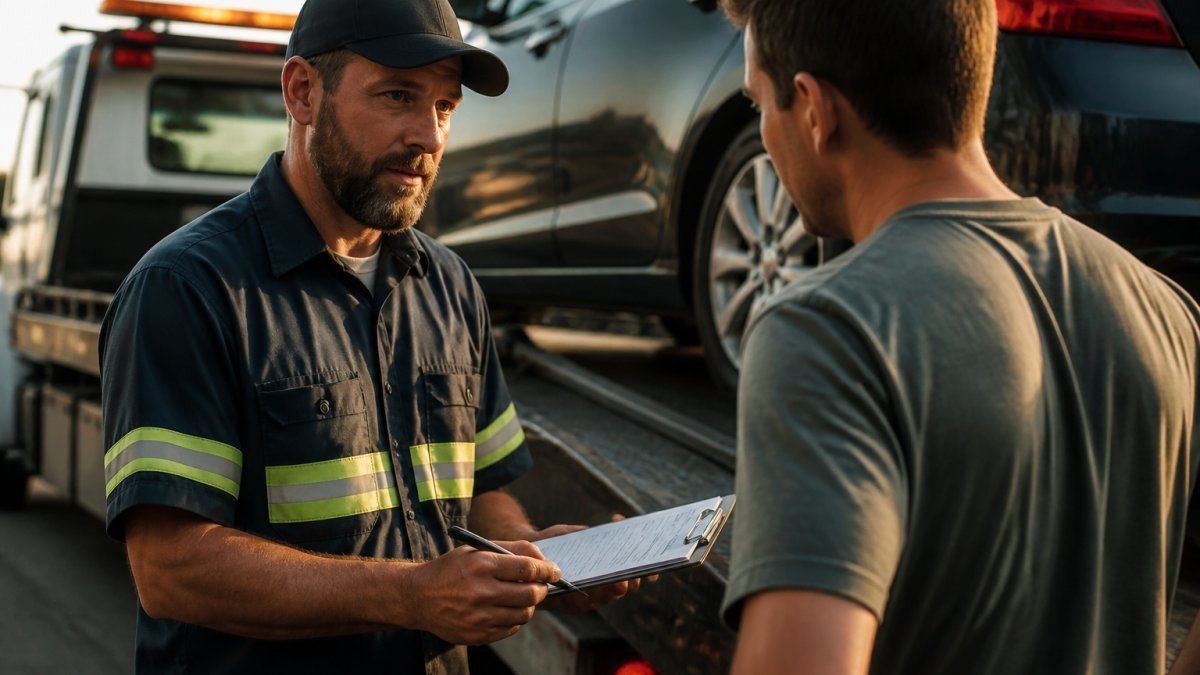
Never authorize a tow without a stated total. If a driver arrives and the price has changed from the quote, you are allowed to ask why before signing. Signing first and disputing later almost never works in your favor.
Emergency Towing Tulsa: Why Unscheduled Calls Cost More Than Scheduled Transport
Emergency towing costs more because it is unpredictable work performed under time pressure, often in traffic, often at night.
A scheduled transport is planned. You book it, the truck arrives at an agreed time, and the driver works without a clock running against them.
Here is where the two diverge in practice:
- Scheduled transport: lower rate, flexible timing, best for project cars, dealer transfers, and non-running vehicles sitting safely in a driveway
- Emergency towing: higher rate, immediate response, necessary when you are stranded on I-44, the Broken Arrow Expressway, or a shoulder on US-169
If your car is safe where it sits and you are not in danger, waiting until morning can genuinely save money. If you are on a live roadway, call now. No discount is worth standing next to moving traffic.
Flatbed Towing Tulsa: What You Pay For and Why It Protects Your Vehicle
Flatbed towing Tulsa drivers pay a little more for one reason: the vehicle rides on a platform instead of being lifted by its wheels.
All-wheel-drive systems, low-clearance sports cars, and vehicles that do not roll or steer need a flatbed. So do most EVs. A wheel-lift truck drags two wheels along the pavement, which is fine for many cars and genuinely damaging for others.
The price difference reflects equipment, not markup. A flatbed carries a hydraulic bed, a winch, and securement gear, and it takes longer to load properly.
If your vehicle is all-wheel drive, electric, lowered, or has any drivetrain damage, request a flatbed. The cost difference is small. The cost of doing it wrong is not.
Roadside Assistance Tulsa: Jump Starts, Lockouts, and Fuel Delivery Pricing
Roadside assistance Tulsa calls usually cost less than a tow because the vehicle does not move. A jump start, lockout service, or fuel delivery is a service call, not a transport.
These are the calls where pricing is most often quoted as a flat rate. That makes sense: the work is predictable and the time on scene is short.
Fuel delivery is the one to think about carefully.
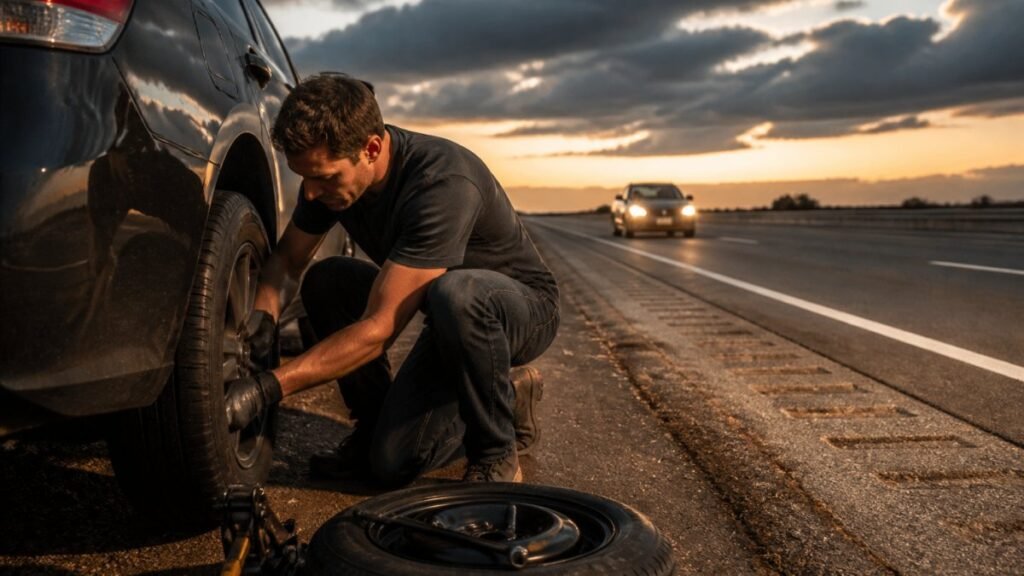
Tire changes sit in between. If you have a usable spare and the tools, it is a quick call. If the spare is missing or the wheel is seized, it becomes a recovery job.
EV Towing and Tesla Transport: Why Specialized Equipment Affects the Price
EV towing and Tesla towing cost more because the equipment and the training cost more. That is the honest answer.
Electric vehicles cannot be towed on a wheel-lift with the drive wheels on the ground.
The market reflects that. According to Market Research Future’s analysis of EV tow truck equipment, demand for tow truck equipment designed specifically for EV handling is growing as electric vehicle adoption climbs. Operators are investing in that equipment because the calls are increasing.
There is a second cost driver most drivers never see: weight. EV battery packs make even compact electric cars heavier than their gas equivalents, which pushes some models into a higher weight class.
When you call for EV towing, say the words “electric vehicle” first. A dispatcher who knows to send a flatbed saves everyone a wasted trip.
Insurance Reimbursement and Roadside Assistance Coverage: What Gets Paid Back
Insurance reimbursement for towing depends entirely on your policy, and most drivers do not know what theirs covers until they are standing on a shoulder.
What you should do at the scene:
- Pay the operator directly and get an itemized receipt
- Confirm the receipt shows the date, the pickup and drop-off locations, and the mileage
- Submit the claim with that receipt, not a handwritten note
- Ask your insurer whether the reimbursement is a flat cap or a per-mile figure
Membership programs work differently. They dispatch their own network at pre-negotiated rates, which removes the negotiation but also removes your choice of operator. If you drive a vehicle that needs specific handling, that trade-off matters.
Keep a photo of your insurance card and your roadside membership number in your phone. Digging through a glovebox on the shoulder of a highway at night is the last thing you want to be doing.
Frequently Asked Questions
What is considered a reasonable towing fee?
A reasonable quote breaks the total into a base hook-up fee plus a per-mile rate, not one vague lump sum. Ask the dispatcher to itemize before you agree, and confirm whether the mileage is measured from the truck’s location or the pickup point.
How does emergency towing pricing differ from scheduled service?
Emergency towing Tulsa calls usually cost more because they happen outside normal hours, in bad weather, or on busy roads like I-44 or the IDL. After-hours and holiday surcharges are standard across the industry, and they reflect the cost of keeping a truck and driver available around the clock. Scheduled transport, such as moving a classic car to a shop, avoids those surcharges and often lets you lock in the rate in advance.
Is there a price difference between flatbed towing and wheel-lift towing?
Flatbed towing Tulsa jobs often cost more than wheel-lift because the equipment is more expensive to buy and maintain, and loading takes longer. That extra cost buys protection: the whole vehicle rides on the deck with no wheels turning, which matters for low-clearance cars, all-wheel-drive vehicles, and EVs. Wheel-lift is fine for many standard breakdowns, but ask which method the dispatcher plans to use before you commit.
Does my insurance cover the cost of roadside assistance?
Many auto policies include roadside assistance or let you add it, and insurers typically reimburse towing up to a set dollar amount or mileage limit per incident. Keep your receipt and the service invoice, since reimbursement usually requires proof of what you paid and where the vehicle was taken. Call your insurer before the tow when possible to confirm your limit, or ask the tow operator for an itemized invoice you can submit afterward.
What should I expect to pay for a jump start or lockout service?
Roadside assistance Tulsa calls like jump starts, lockouts, and fuel delivery are usually billed as a flat standard service call rather than a mileage-based tow, so they generally cost less than a full tow. Pricing depends on the time of day, your location, and whether the driver has to travel outside the normal service radius. Ask for the total before the truck rolls, and confirm there is no separate dispatch fee stacked on top.
Why do towing rates vary based on the time of day or weather conditions?
Overnight calls, weekends, holidays, and storms all raise operating costs because drivers are on standby and roads are more dangerous. That is why after-hours surcharges exist and why quotes during an ice storm in Tulsa can run higher than a Tuesday afternoon call. If your situation is not urgent, waiting until morning for a scheduled transport can reduce the total. If you are stranded on a highway shoulder, safety comes first and the surcharge is worth it.