
Table of Contents
- Why Towing an Electric Vehicle Is Different
- Flatbed Towing for Electric Vehicles: The Only Safe Method
- Understanding Regenerative Braking and Drive Wheels
- Tesla Towing and Manufacturer-Specific Procedures
- High-Voltage Battery Safety and Emergency Protocols
- When to Call Professional Roadside Assistance in Tulsa
- DIY vs. Professional Towing for Electric Vehicles
- Conclusion
Last Updated: August 25, 2026
Why Towing an Electric Vehicle Is Different
Electric vehicles don’t have a true neutral gear that fully disconnects the wheels from the drivetrain. Wheels remain mechanically connected to the electric motor and battery system even when powered down. With a gas car, the engine isn’t running and wheels spin freely during towing. With an EV, that connection stays active, creating real danger.
The problem intensifies because of regenerative braking. When wheels turn on an EV, they trigger the regenerative braking system, which converts wheel rotation into electrical energy and feeds it back into the battery (kbb.com). During a tow, this uncontrolled charging causes excessive heat buildup in the motor, inverter, and battery system. Heat damages circuits, warps connections, and in worst-case scenarios, creates fire hazards.
According to research on EV towing incidents, there have been documented cases where improper towing resulted in fires or vehicle damage severe enough to total the car. At Neptune Towing, we’ve seen firsthand how many drivers assume any tow truck operator can handle an EV the same way they’d handle a sedan. That assumption has cost people thousands in repair bills.
The good news: when you follow proper procedures, towing an EV is safe and straightforward.
Flatbed Towing for Electric Vehicles: The Only Safe Method
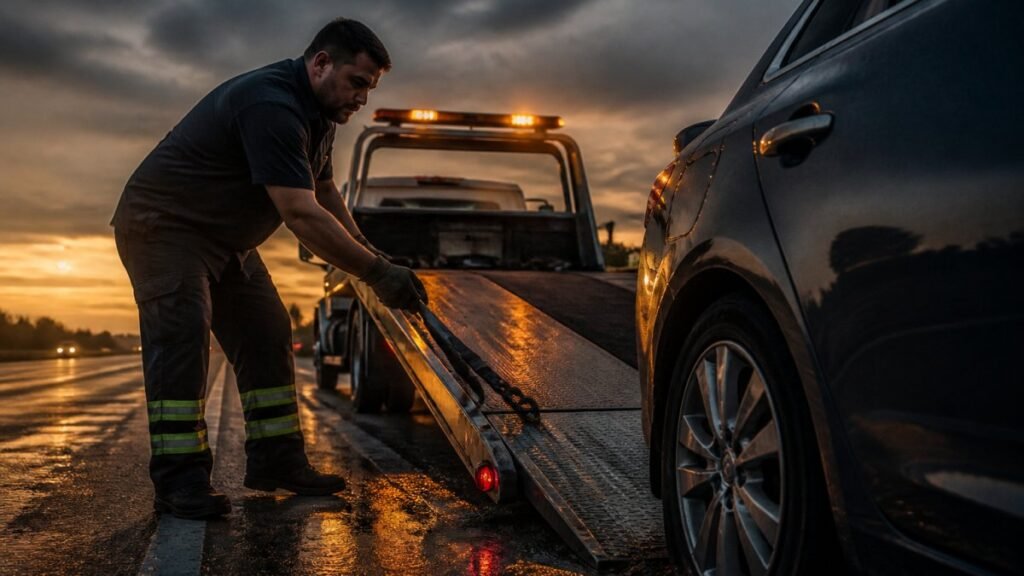
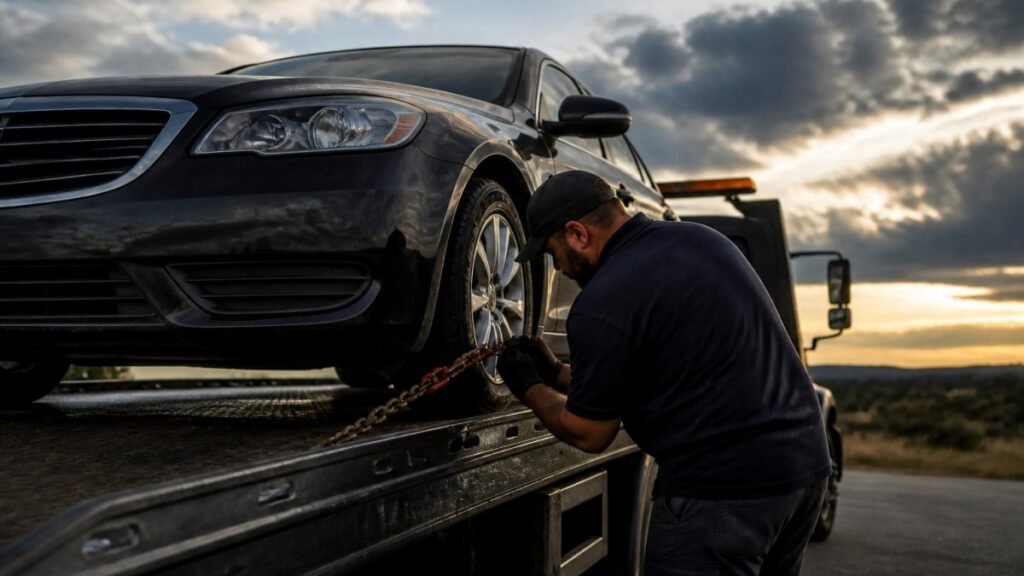
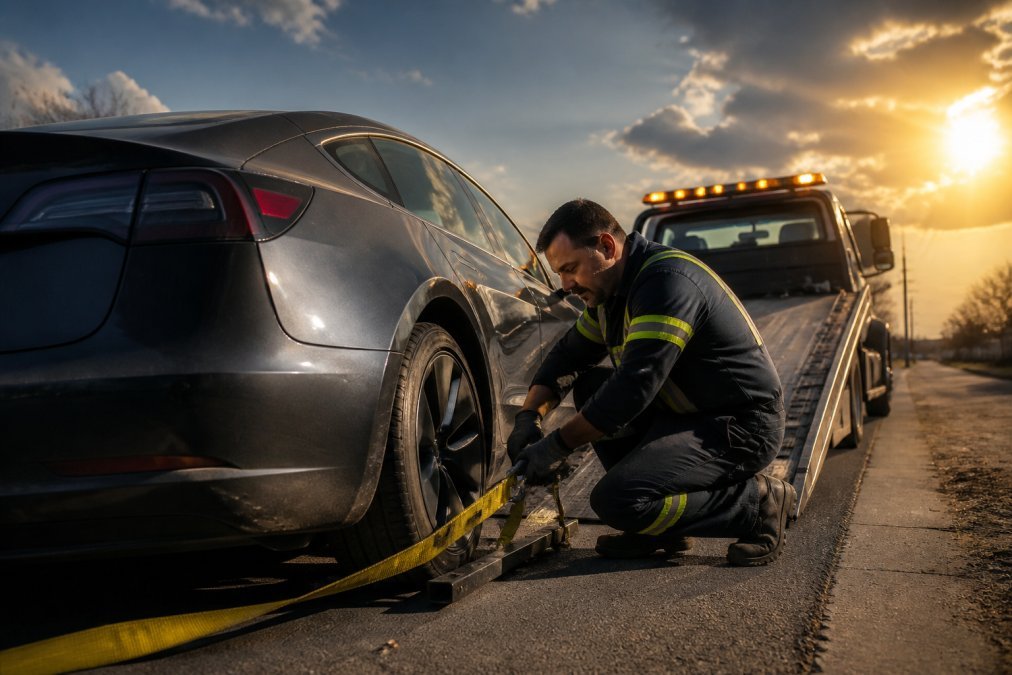
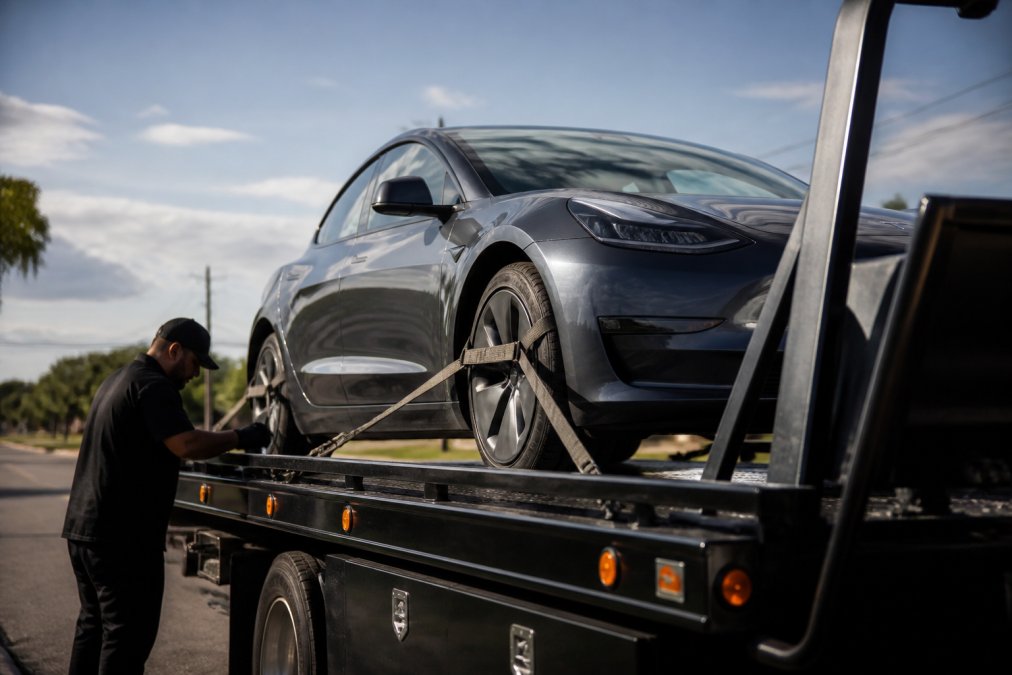
Flatbed towing is the universally accepted method for transporting electric vehicles. This method keeps all four wheels off the ground, preventing damage to the electric motor, battery, and transmission while eliminating the risk of uncontrolled regenerative charging.
A flatbed truck has a large, flat platform where your entire vehicle sits. The car is secured using tie-downs and immobilization equipment, meaning zero wheels are spinning, zero drivetrain engagement, and zero risk of regenerative braking activation.
Wheel lift towing and tow dolly methods are dangerous for EVs. With a wheel lift, one set of wheels comes off the ground while the other rolls on pavement. With a tow dolly, two wheels sit on a trailer while the other two roll freely. In both cases, rolling wheels trigger drivetrain engagement and regenerative braking, exactly what you’re trying to prevent.
When you call Neptune Towing for EV transport, we use flatbed equipment specifically designed for damage-free towing. Our flatbed tow trucks have hydraulic platforms that lower and raise smoothly, preventing jolting that could damage your vehicle’s suspension or frame. We secure your EV using proper tie-down procedures that distribute pressure evenly across the vehicle’s structure. The flatbed approach also protects your EV’s undercarriage from road hazards, keeping your battery pack, cooling systems, and electrical components safe.
Not every tow truck you see is equipped for flatbed towing. Some operators have wheel lifts or dollies but claim they can handle EVs. They can’t. Flatbed is the only method that’s truly safe, and it’s worth calling around to find a company with the right equipment. When you call Neptune Towing, that’s what you get: flatbed capability and operators who understand why it matters.
Never allow a tow truck operator to tow your EV using a wheel lift or dolly method, even if they insist they’ve done it before. The risk of drivetrain damage, battery damage, or fire is not worth saving money. Improper towing can cost thousands in repairs or create a dangerous situation on the road.
Understanding Regenerative Braking and Drive Wheels
Why Drive Wheels on the Ground Are Dangerous
When any of your EV’s wheels roll during transport, the electric motor interprets that rotation as a signal to engage. The motor and inverter become active, even though your vehicle is powered down. As wheels rotate, they send signals through the drivetrain to the motor controller, which activates the regenerative braking system to capture energy and push it back into the battery. But during a tow, this energy has nowhere to go safely. It builds up as heat in the inverter, motor windings, and battery management systems.
This heat buildup is cumulative. A short tow with wheels rolling might cause minor stress, but a 50-mile tow on the interstate with drive wheels on the ground can generate enough heat to damage components permanently. In extreme cases, particularly if the vehicle has been in an accident or the battery is compromised, that heat can trigger thermal runaway, a cascade failure that leads to fire.
The danger is invisible. Your vehicle looks fine, the tow operator says everything is normal, and then days or weeks later, your EV won’t start or you get a warning light indicating battery or motor damage.
The core principle: keep your EV’s wheels off the ground during transport. Any contact between wheels and pavement during towing creates potential for drivetrain engagement and regenerative braking activation. Flatbed towing eliminates this risk entirely.
Drivetrain Damage and the Electric Motor
The electric motor in your EV is a precision component designed to operate under controlled conditions. When wheels roll during a tow, the motor receives uncontrolled input it’s not designed to handle. The inverter, which converts battery power into electrical signals for the motor, wasn’t designed to handle backwards power flow and can overheat or fail completely.
The transmission in an EV is also vulnerable. Most EVs have a single-speed reduction gearbox designed to handle power flowing one direction: from battery through motor to wheels. When wheels push power backwards, the gearbox experiences forces it wasn’t engineered to resist. Bearings can fail, gears can strip, and the entire drivetrain can become inoperable.
Tesla Towing and Manufacturer-Specific Procedures
Activating Tow Mode Before Transport
Tesla vehicles have a built-in "Tow Mode" feature designed specifically to address EV towing challenges. If your Tesla needs transport, activate Tow Mode before the tow truck arrives. This feature disables regenerative braking and adjusts vehicle systems to make towing safer.
To activate Tow Mode on a Tesla:
- Put the vehicle in Neutral
- Go to Controls > Service > Tow Mode
- Toggle Tow Mode on
When Tow Mode is active, Tesla’s regenerative braking system is disabled, preventing backwards power flow. Even with Tow Mode activated, you still need flatbed towing. Tow Mode is a safety feature, not permission to tow with wheels rolling. The safest approach is always flatbed towing combined with Tow Mode activation.
When you call Neptune Towing for a Tesla or other EV, we’ll ask if Tow Mode is already activated. If it’s not, we can walk you through the process over the phone while en route. If your Tesla is completely powered down or unresponsive, we’ll use flatbed towing regardless, which is why flatbed capability is non-negotiable for EV transport.
:::pro tip
If you own a Tesla, take 5 minutes right now to locate the Tow Mode setting in your vehicle’s menu. Familiarize yourself with where it is so that if you ever need a tow, you can activate it immediately.
::: car lockout assistance.
Type-Approved Towing Capacity and Vehicle Manual
Not all electric vehicles are type-approved for towing. Manufacturers test braking systems, suspension, and electrical components separately for towing use. They verify that cooling systems can handle extra load, that the battery management system won’t overheat, and that the braking system has enough capacity for combined weight.
Your vehicle’s owner’s manual contains the definitive answer about towing capacity. If your EV’s manual doesn’t list a towing capacity, that vehicle is not approved for towing. Attempting to tow with an unapproved vehicle voids your warranty and creates serious safety risks.
For vehicles approved for towing, the manual specifies maximum trailer weight, hitch type, braking system specifications, and any special procedures. Following these specifications exactly is how the manufacturer ensures safe towing.
When you call Neptune Towing, providing your vehicle’s year, make, and model helps us verify towing capacity and any special procedures. We cross-reference manufacturer guidelines to ensure we’re using correct equipment and procedures for your specific vehicle.
High-Voltage Battery Safety and Emergency Protocols
The high-voltage battery in an EV is the most critical component and demands respect during towing. These batteries operate at hundreds of volts and contain enormous amounts of stored energy. If the battery is damaged or compromised, risks escalate dramatically.
If your EV has been in an accident, the battery may have internal damage that’s not visible from outside. A cracked cell, ruptured cooling line, or internal short can create conditions for thermal runaway. During transport, vibration and movement can aggravate these hidden problems. This is why flatbed towing is especially critical for accident recovery, smooth, stable transport minimizes stress on a potentially compromised battery.
Some EV batteries have emergency disconnect switches that completely isolate the battery from the rest of the electrical system. If your vehicle has been damaged, activating this switch before towing can reduce risks. Your vehicle’s manual explains where this switch is located and how to activate it.
When you call for roadside assistance after an accident, be clear about any visible damage to the battery area, burning smells, or warning lights related to the battery or high-voltage system. This information helps the operator prepare and take necessary safety measures.
If your EV has been in an accident or shows signs of battery damage (burning smell, visible damage to the undercarriage, warning lights), inform the tow operator immediately. Do not attempt to charge the vehicle or leave it plugged in. These situations require professional handling and, in some cases, specialized equipment or procedures.
When to Call Professional Roadside Assistance in Tulsa
Call for professional roadside assistance immediately if your EV won’t start or is completely unresponsive, you’re stranded on a highway or in heavy traffic, your vehicle is in an unsafe location, you need transport to a specific repair facility, you’re unsure about towing procedures or your vehicle’s towing capacity, your vehicle has been in an accident, or you see any signs of battery damage or thermal issues.
The cost of a professional tow is always less than the cost of improper towing damage. If you’re on the side of I-44 in rush hour traffic with an EV that won’t start, you need someone who knows how to handle your vehicle safely.
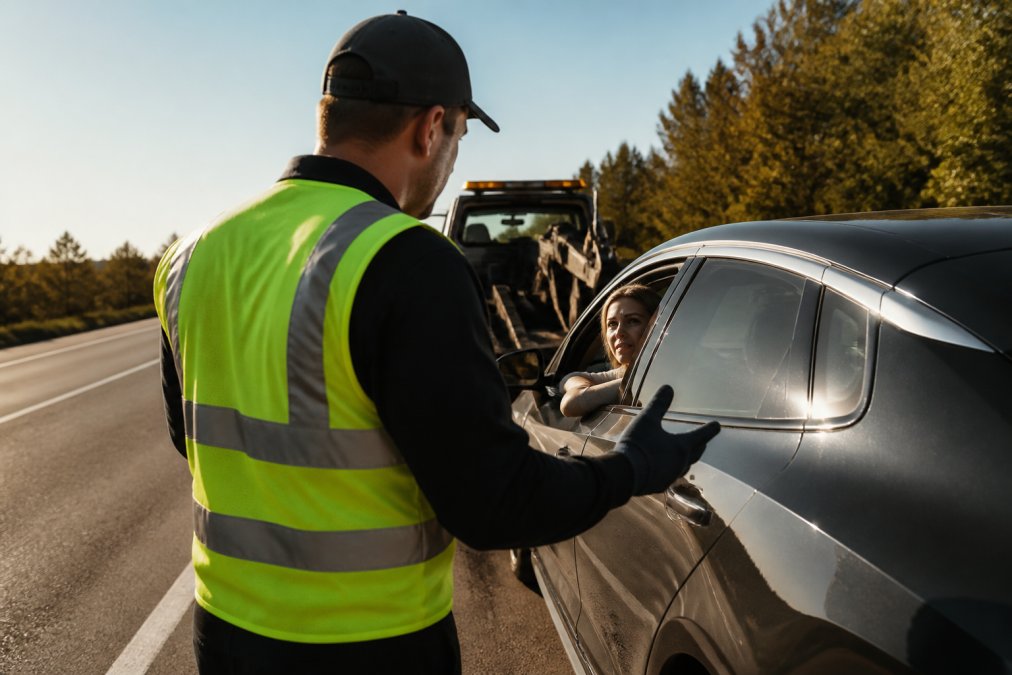
Neptune Towing operates 24/7 throughout the Tulsa area, including Bixby, Broken Arrow, Glenpool, Owasso, Sapulpa, and surrounding communities. When you call, you’re reaching a local, owner-operated company that specializes in damage-free towing for all vehicle types, including EVs and Teslas. We dispatch quickly, communicate clearly about arrival time, and arrive with the right equipment: flatbed towing trucks specifically equipped for EV transport.
One of the biggest frustrations drivers face is uncertainty. At Neptune Towing, we prioritize transparency. When you call, you speak with someone who can answer your questions directly, explain what to expect, and give you a realistic arrival time.
DIY vs. Professional Towing for Electric Vehicles
Some drivers consider towing their own EV using a personal vehicle and trailer. This is almost never a good idea for electric vehicles.
EVs are heavier than comparable gas cars because of the battery pack. A Tesla Model Y, for example, weighs around 4,400-4,700 pounds depending on the variant (kbb.com). Towing a vehicle that heavy puts enormous stress on your towing vehicle’s suspension, brakes, and transmission. If your vehicle isn’t rated for that weight, you’re risking damage to your own car while creating safety hazards for other drivers.
More importantly, DIY towing introduces the exact risks we’ve discussed. Unless you have flatbed equipment and understand EV-specific procedures, you’re likely to tow with wheels rolling, triggering regenerative braking and creating potential for drivetrain damage. You’d need to activate Tow Mode, verify towing capacity in the manual, understand immobilization procedures, and have the right equipment, all beyond what most DIY operators have.
There’s also the question of liability. If something goes wrong during DIY towing, you’re fully responsible. A professional towing company carries insurance and assumes liability for the transport.
The practical reality: professional towing for an EV costs less than potential repair bills from improper DIY towing. Neptune Towing has the equipment, training, and insurance to handle your vehicle safely. That’s worth the service call every time.
Frequently Asked Questions
Why is flatbed towing recommended for electric vehicles?
Flatbed towing keeps all four wheels off the ground, preventing uncontrolled regenerative braking and drivetrain damage. When an EV's wheels touch the ground during towing, the regenerative braking system can engage, causing excessive heat buildup in the electric motor and inverter. This can result in thousands of dollars in damage. Flatbed towing eliminates this risk entirely by fully immobilizing the vehicle and disconnecting the wheels from the drivetrain during transport.
Can you put an electric car in neutral and tow it normally?
No. Unlike traditional vehicles with a true neutral gear, electric vehicles do not have a neutral that fully disconnects the wheels from the drivetrain. Even in neutral, the wheels remain mechanically connected to the electric motor through the transmission. Towing with drive wheels on the ground will trigger regenerative braking, potentially causing motor damage, inverter failure, or electrical system malfunction. Flatbed towing is the only safe method.
How much does towing reduce an electric vehicle's range?
Towing a heavy load can reduce an EV's range by 23-31% under real-world conditions, and up to 50% with heavier trailers. The reduction depends on trailer weight, aerodynamic shape, driving speed, terrain, and weather. Boxier trailers cause greater range loss than streamlined ones. If you're towing with an EV, plan for more frequent charging stops and maintain speeds around 60 mph for optimal efficiency.
What should I do if my Tesla breaks down and needs towing?
Call a professional towing service that specializes in flatbed towing for electric vehicles. Before the tow truck arrives, activate Tow Mode on your Tesla if possible, this adjusts the vehicle's systems for safe transport. Provide the tow operator with your vehicle's manual or towing specifications. Always request flatbed towing, never wheel-lift or dolly towing. Professional operators understand EV-specific safety protocols and have the proper equipment to prevent damage to your high-voltage battery and drivetrain.
If your EV breaks down or needs transport in the Tulsa area, call Neptune Towing at (539) 292-3074. We specialize in flatbed towing for electric vehicles, including Teslas, and understand the specific procedures required to keep your vehicle safe during transport. As a locally owned, owner-operated company, we prioritize damage-free towing and honest communication, no surprise fees, no impound storage, just professional service when you need it.
This article was written using GrandRanker