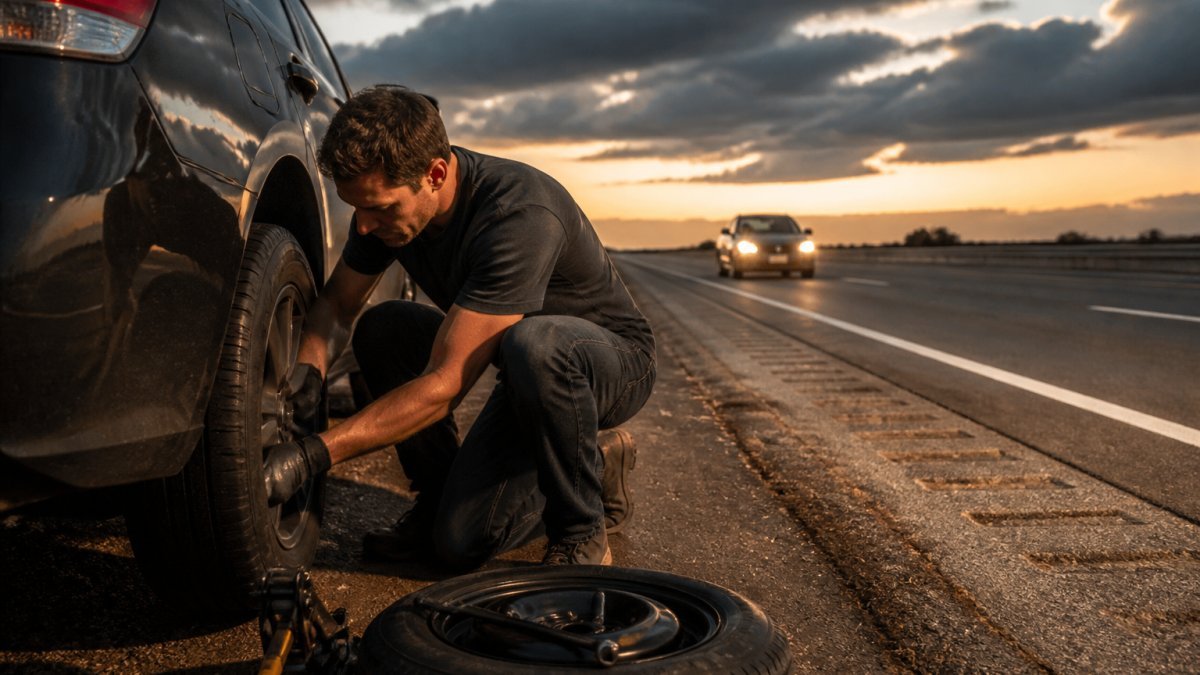
Table of Contents
- The First Decision: Change It Yourself or Call for Help?
- Step 1: Get Off the Road and Make Your Vehicle Visible
- How to Use a Car Jack Safely on a Highway Shoulder
- Step-by-Step: Removing the Flat and Mounting the Spare
- Night, Bad Weather, and Low-Visibility Conditions
- After the Change: Spare Tire Limits and Next Steps
- When to Skip the Wrench and Call Roadside Assistance Tulsa Drivers Trust
- Frequently Asked Questions
Last Updated: October 21, 2026
The First Decision: Change It Yourself or Call for Help?
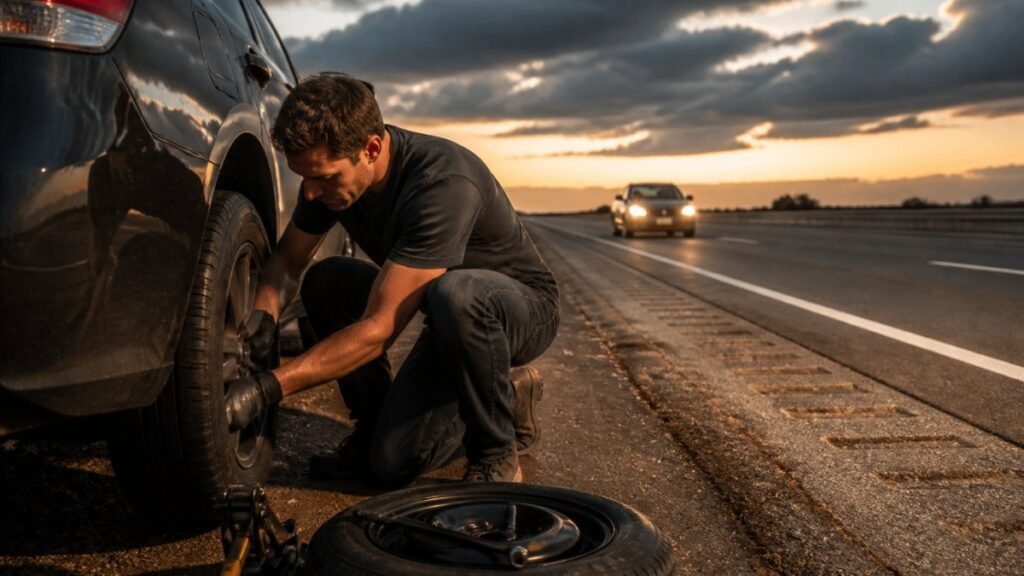
Knowing how to handle a flat tire highway shoulder situation starts with one honest question: should you even try? Decide first whether the shoulder gives you room to work without stepping into a travel lane.
Our rule: if your body or your jack would sit inside a traffic lane, stop.
The Stop-and-Call Decision Tree
Work through these questions in order. The first “no” is your answer.
- Can you pull completely off the travel lane? If any part of the car still hangs into the lane, you cannot safely work beside it.
- Is the flat on the side away from traffic? A driver-side flat on a right-hand shoulder puts you between the car and passing vehicles.
- Is the shoulder wide, firm, and level? Soft gravel, grass, a drainage slope, or a shoulder pinched by a guardrail will not hold a jack.
- Can you see and be seen for a long distance? Bridges, tunnels, blind curves, and crests of hills hide you until it is too late.
- Is the weather and light working with you? Daylight and dry pavement are the baseline. Rain, snow, fog, or darkness push this to a call.
- Do you have a usable spare, a working jack, and a lug wrench that fits? No spare means no change, no matter how safe the shoulder looks.
- Are you physically able to break lug nuts loose and lift a wheel? A seized lug nut or a heavy wheel can turn a safe stop into a strain injury.
If every answer is yes, you can consider changing it yourself. If any answer is no, stay in a safe spot and call for roadside assistance Tulsa drivers rely on.
When Calling for Help Is the Only Safe Option
Call for a tow instead of reaching for the wrench when:
- The flat is on the traffic-facing side of the car
- The shoulder is narrow, soft, or partly blocked
- You are on a bridge, in a tunnel, or around a blind curve
NHTSA guidance on highway breakdown safety is blunt about this: get as far off the road as you can and stay away from traffic. A wheel is replaceable. You are not.
Where Passengers Should Wait
Passengers who stay in the car, stand behind the trunk, or wander toward the traffic side are in the strike zone if a driver drifts onto the shoulder.
- Get everyone out on the side away from traffic, using the doors that face the barrier or embankment.
- Walk to a spot well behind the barrier, up the embankment, or beyond the guardrail, and stay there until the work is done.
- Never let anyone stand between the car and oncoming traffic, and never let anyone sit in a disabled vehicle on a live shoulder.
What If You Have No Usable Spare?
Many newer vehicles leave the factory without a full-size spare, some carry a temporary spare, some a sealant kit, some run-flats. Check your trunk before you assume you have one.
- Sealant and inflator kit: works only on small tread punctures, not sidewall damage or a blowout. Follow the kit instructions and the speed limit on the label.
- Run-flat tires: designed for a limited distance at reduced speed after a loss of pressure. Check your owner’s manual for the limit.
- No spare and no kit: this is a call-for-help situation. Do not improvise with a plug kit on the shoulder.
If you are not sure what your vehicle carries, that uncertainty is your signal to call a local towing company.
Never stand between your car and oncoming traffic, and never sit inside a disabled vehicle on a live shoulder. A rear-end strike is the most common way stranded drivers get hurt.
Step 1: Get Off the Road and Make Your Vehicle Visible
Safety comes before the spare tire. Pull as far onto the shoulder as the surface allows, then make your vehicle impossible to miss.
- Turn on your hazard lights right away.
- Set the parking brake and put the vehicle in park.
- Turn the wheels away from the road if you are on a slope.
- Get everyone out on the side away from traffic.
- Have passengers stand well behind the barrier or up the embankment, never behind the car.
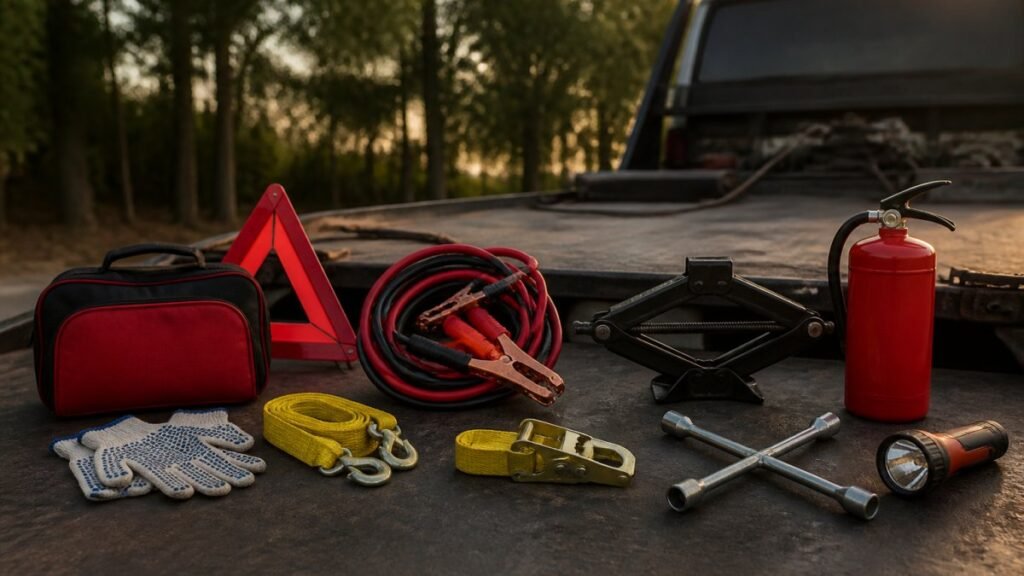
- Set warning triangles or flares if you have them, starting behind the vehicle.
The Oklahoma Department of Transportation reminds drivers that move-over laws protect roadside workers and stranded motorists alike. Give yourself the same courtesy: space and visibility.
How to Use a Car Jack Safely on a Highway Shoulder
A jack only works on firm, level ground at the correct lift point during a flat tire highway shoulder change.
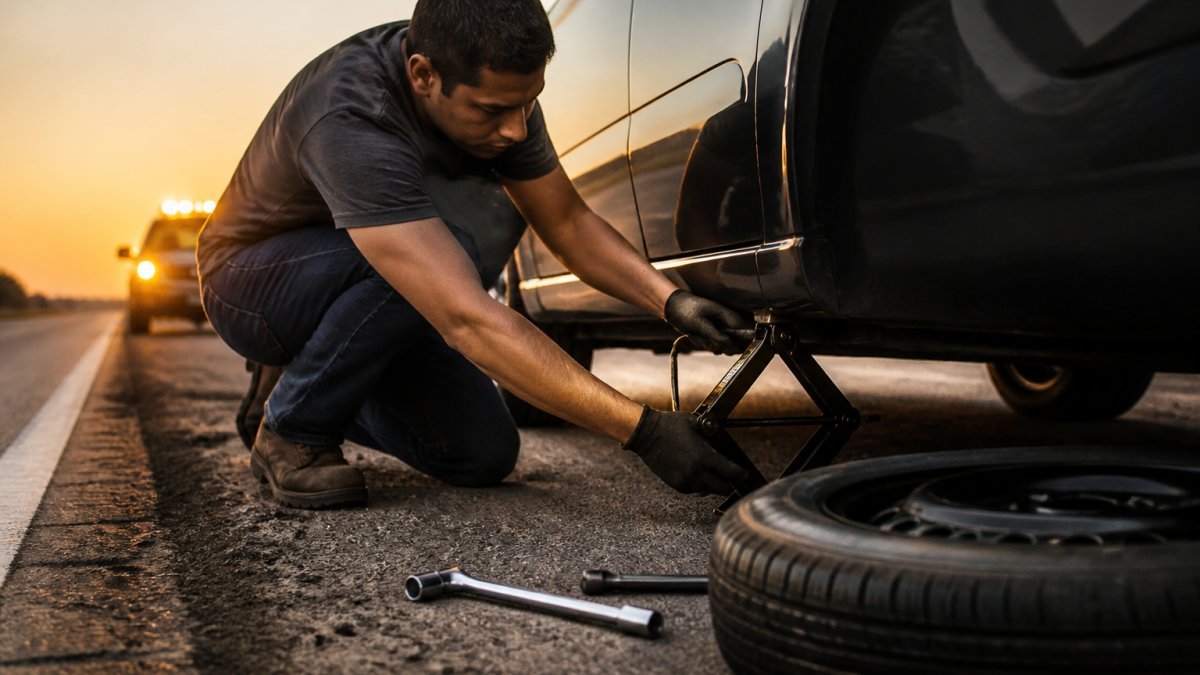
Before you lift anything, loosen the lug nuts a quarter turn while the tire still holds the weight. Then raise the vehicle only until the flat clears the ground.
Finding the Right Jack Point
Your owner’s manual shows the exact lifting point, and it varies by vehicle. Look for the reinforced seam or notch along the rocker panel, usually a few inches behind the front wheel or ahead of the rear wheel. Pinch welds, plastic trim, and EV battery trays are not jack points, lift wrong and you can crush a rocker panel or damage a battery pack.
On a Tesla or most EVs, the jack point sits behind a small round cover near each wheel. Use a rubber jack pad and never lift from the battery tray. If you are unsure, that is your signal to call for a flatbed.
Step-by-Step: Removing the Flat and Mounting the Spare
Once the vehicle is up and stable, work in order and keep your body out from under it.
- Finish loosening the lug nuts. With the tire still on the ground, break each nut loose a quarter turn. Once the car is in the air, spin them the rest of the way off by hand.
- Set the nuts aside where they will not roll. A hubcap, a magnetic tray, or a pocket works. A lug nut that rolls into a storm drain ends the job.
- Pull the wheel straight off. Grip both sides and pull toward you. If it is seized to the hub, a rubber mallet on the tire sidewall can break it loose, never pry on the wheel face.
- Lay the flat under the frame as a backup. If the jack slips, the wheel gives the car something to land on. This is a real safety step, not a formality.
- Lift the spare into place. Line up the holes with the studs and push it flush against the hub. On a heavy truck or SUV wheel, get the spare started on the studs before you take its full weight.
- Hand-tighten the lug nuts in a star pattern. Snug them by hand first so the wheel seats evenly. Do not fully torque anything yet.
- Lower the vehicle until the tire touches the ground. You want the tire carrying weight again before final tightening.
- Tighten firmly in a star pattern. Work across the wheel, not around it in a circle. A star pattern seats the wheel flat against the hub and prevents a wobble.
- Lower it fully and check the spare’s pressure. A temporary spare is often low from sitting in the trunk. Check it at the next stop if you have a gauge.
If you have no usable spare, do not improvise. Stay in a safe spot and call for a tow.
Temporary Spares, Run-Flats, and Sealant Kits
Not every spare is a full-size tire. A temporary spare, a donut, is smaller, lighter, and built for a short trip to a shop. Run-flats and sealant kits are limited-distance solutions, not spares.
- Temporary spare: follow the speed and distance limits printed on the sidewall and in your owner’s manual. Most are not meant for highway speeds or long distances.
- Run-flat tire: designed to be driven a limited distance at reduced speed after a pressure loss. Check your manual for the limit, and do not treat it as a permanent fix.
- Sealant and inflator kit: works on small tread punctures only. It will not seal a sidewall cut or a blowout, and it can complicate a proper repair later.
If your vehicle is a Tesla, an EV, a classic, or a low-clearance car, skip the spare entirely and call for flatbed towing Tulsa drivers trust. Improper lifting on these vehicles can cause real damage.
Post-Change Checks Before You Pull Back Into Traffic
Before you merge back onto the highway, take two minutes to confirm the job is right.
- Re-check each lug nut in the star pattern. A nut that felt tight on the ground can loosen once the wheel seats.
- Confirm the spare’s pressure if you have a gauge, and note the sidewall limit.
- Look for the jack, lug wrench, and any tools you set down. Leaving a wrench on the shoulder is a hazard.
A temporary spare is a short-term fix, not a replacement tire. Most are smaller and lighter, and they carry speed and distance limits printed on the sidewall. Check your owner’s manual and follow it closely.
| Situation | Best Move | Why |
|---|---|---|
| Flat on traffic side, narrow shoulder | Call for a tow | No safe room to work |
| Dark, raining, or foggy | Call for a tow | Low visibility, slick surface |
| No usable spare | Call for a tow | Nothing to mount |
| Safe shoulder, daylight, spare ready | Change it yourself | Controlled, low-risk conditions |
| Tesla, EV, classic, or low-clearance car | Call for a flatbed | Protects the underbody |
Night, Bad Weather, and Low-Visibility Conditions
Darkness and bad weather turn a manageable tire change into a gamble. Visibility drops, drivers see hazards later, and the shoulder gets slick. If you cannot see your hands clearly, call for help.
When you must wait for a tow at night:
- Keep hazard lights on and interior lights off to save the battery
- Stay behind the barrier, not beside the car
- Wear something light-colored or reflective
Rain, snow, and fog make a highway shoulder one of the worst places to kneel beside a car. This is when roadside assistance Tulsa drivers rely on earns its keep.
After the Change: Spare Tire Limits and Next Steps
A temporary spare is a short-term fix, not a replacement tire. Most are smaller and lighter, and they carry speed and distance limits printed on the sidewall.
- Drive slower than normal and avoid hard braking
- Head straight to a tire shop for a proper replacement
- Check the spare’s pressure again once you stop
If your vehicle is a Tesla, an EV, a classic, or a low-clearance car, skip the spare entirely and call for flatbed towing Tulsa drivers trust. Improper lifting on these vehicles can cause real damage.
| Situation | Best Move | Why |
|---|---|---|
| Flat on traffic side, narrow shoulder | Call for a tow | No safe room to work |
| Dark, raining, or foggy | Call for a tow | Low visibility, slick surface |
| No usable spare | Call for a tow | Nothing to mount |
| Safe shoulder, daylight, spare ready | Change it yourself | Controlled, low-risk conditions |
| Tesla, EV, classic, or low-clearance car | Call for a flatbed | Protects the underbody |
When to Skip the Wrench and Call Roadside Assistance Tulsa Drivers Trust
Some flats are not a do-it-yourself job, and calling early beats calling after a close call. We handle tire changes and flatbed towing for family cars, trucks, Teslas, and classics, with damage-free loading every time.
If you are stuck on the shoulder of I-44, the Broken Arrow Expressway, or a back road in Bixby or Jenks, call (539) 292 3074.
Frequently Asked Questions
Is it safe to change a tire on a busy highway shoulder?
Only if you can pull completely off the travel lane and the flat is on the side away from traffic. If your vehicle is partly in a lane, or the flat is on the traffic-facing side of a narrow shoulder, changing it yourself puts you inches from moving vehicles. In those cases, stay buckled in with your hazard lights on and call for professional help. A flat tire highway shoulder situation is one of the most dangerous places to work on a car, so when in doubt, wait for a tow.
What should I do if I don’t have a spare tire?
Many newer vehicles, especially EVs and performance models, ship without a spare and rely on a tire inflator kit or run-flat tires. If you have no usable spare, do not attempt a repair on the shoulder. Turn on your hazard lights, set out a warning triangle if you have one, and call roadside assistance Tulsa drivers rely on to get a flatbed or tire service out to you. Driving on a flat, even a short distance, can destroy the wheel and damage suspension components.
When should I call for professional roadside assistance instead of changing the tire myself?
Call for help if your vehicle is not fully off the road, if you are on a bridge or in a construction zone with no shoulder, if it is dark or raining hard, if you have passengers including children or pets, or if you are not physically able to loosen lug nuts. A professional can also handle situations where the lug nuts are seized or the spare is missing. Roadside assistance Tulsa services like Neptune Towing handle tire changes, jump starts, and lockouts so you are not exposed to traffic.
How long can I drive on a temporary spare tire?
Temporary spares, often called donuts, are designed for short distances at reduced speeds, typically no more than 50 mph and roughly 50 to 70 miles. Check your owner’s manual for the exact limit on your vehicle. They have less tread and are not meant for highway cruising. Drive directly to a tire shop or repair facility, avoid potholes and rough pavement, and do not use a temporary spare on snow or ice if you can avoid it.
A flat tire on a highway shoulder is stressful, but the right call keeps it from becoming dangerous. When the shoulder is tight, the weather is bad, or your vehicle needs special handling, do not push your luck with a jack. Neptune Towing offers 24/7 emergency service, damage-free towing equipment, and transparent pricing with no surprise charges. Call (539) 292 3074 and get you and your vehicle to safety.