

Table of Contents
- What Roadside Assistance Actually Covers
- Jump Start Service When Your Battery Dies
- Flat Tire Roadside Assistance and Tire Changes
- Roadside Assistance Arrival Time and What to Expect
- Can I Call Roadside Assistance If I’m Not a Member?
- How to Stay Safe While Waiting for Help
- Finding Reliable Roadside Assistance in Your Area
- Frequently Asked Questions
Last Updated: October 8, 2026
What Roadside Assistance Actually Covers
Roadside assistance is emergency help when your vehicle breaks down or you can’t solve a problem alone on the road. It covers jump starts, tire changes, fuel delivery, lockout service, and more. When you need roadside assistance near me, you want a local provider who can reach you fast.
Most drivers think roadside assistance only means towing, but that’s just one part of it. The real value is having someone available 24/7 when something goes wrong, a dead battery, a flat on the highway, or being locked out in a parking lot.
The market for roadside assistance in the United States has grown significantly. According to Grand View Research’s 2025 U.S. Vehicle Roadside Assistance Market analysis, the roadside assistance market generated $6,184.7 million in revenue in 2025 and is expected to reach $9,298.7 million by 2033.
When you call for roadside assistance near me, you get trained professionals who understand vehicle problems and solve them safely. Some issues they fix on the spot; others require towing to a repair facility. Either way, the goal is to get you back on the road fast.
Jump Start Service When Your Battery Dies
A jump start is when a technician uses jumper cables and another power source to restart your engine after the battery has died. It’s one of the most common roadside assistance calls, especially in cold months when batteries lose power faster.
You’ll know you need a jump start if the engine won’t turn over, the dashboard lights are dim or dead, or you hear clicking when you try to start. A jump start gets you moving in minutes, but drive straight to a repair shop or auto parts store to have the battery tested.
The process is simple: a technician connects cables from a jump pack or another vehicle to your battery terminals and starts your car. Drive at least 15-20 minutes so the alternator can recharge the battery. If it dies again soon, you likely need a replacement.
Jump start service is available 24/7 from a local roadside assistance provider, you don’t have to wait on a friend with cables. When you’re stranded with a dead battery, calling for roadside assistance near me gets professional help to you quickly, which matters most on a busy highway or in an unfamiliar area.
Flat Tire Roadside Assistance and Tire Changes
A flat tire happens when your tire loses air pressure from a puncture, a valve stem leak, or sidewall damage. Roadside assistance for flat tires means inspecting the tire, removing it, and either patching a small puncture or installing your spare so you can reach a repair shop.
Not every flat can be fixed on the spot. If the puncture is in the sidewall or the tire is too damaged, a technician installs your spare instead. A spare is temporary, meant to get you to a repair facility safely, not for long-term driving.
Flat tires happen at the worst times: rush hour on a busy highway, bad weather, or an unsafe location. Changing one yourself with traffic passing is dangerous. That’s why flat tire roadside assistance exists, a trained technician handles the work while you stay safely away from traffic.
When you need roadside assistance near me for a flat tire, response time matters. Being stranded on I-44 or stuck in a parking lot is stressful, especially if you’re late for work or have passengers depending on you. Local providers like Neptune Towing dispatch a technician quickly and get you moving again.
Roadside Assistance Arrival Time and What to Expect
When you call for roadside assistance, the first question is always: how long until someone gets here? Response times vary by location, provider workload, and road conditions.
After you call, the dispatcher takes your location, vehicle information, and description of the problem, then assigns an available technician and gives you an estimated arrival time. A professional provider keeps you updated if delays occur, you shouldn’t be left wondering where your help is.
When the technician arrives, they assess the situation, explain what they can do, and ask permission before starting. A jump start or tire change gets handled right there. If your vehicle needs towing, they explain where it’s going and answer your questions. Honesty and transparency matter, you deserve to know what’s happening with your vehicle.
The technician’s job is to solve the immediate problem safely and professionally. They’re trained to work roadside in all weather, manage traffic safety, and handle different vehicle types. If your vehicle is too damaged to drive or the problem is beyond roadside repair, they’ll arrange towing to a repair facility of your choice.
Can I Call Roadside Assistance If I’m Not a Member?
Yes. You never need a membership to get help. Call a local provider directly and pay for the service you receive, no annual fee, no card, no waiting period.
Most drivers don’t realize how many coverage sources they may already have. Before paying out of pocket, check these:
- Auto insurance. Many insurers offer roadside assistance as an optional add-on. If you added it, your insurer typically arranges and pays for the dispatch, often through a contracted network. Call the number on your insurance card and ask whether roadside is on your policy and what it covers.
- Auto clubs. Membership organizations charge an annual fee and cover a set number of service calls per year. The trade-off: you pay whether or not you use it, and there are usually per-call limits on mileage or number of tows.
- Credit card benefits. Some premium credit cards include roadside dispatch as a cardholder benefit. The card issuer usually arranges the provider and bills the card, sometimes at a discounted rate rather than free. Check your card’s benefits guide or call the number on the back.
- New-vehicle warranty. Many new-car warranties include roadside assistance for a set period, often tied to the bumper-to-bumper term. If your vehicle is still under factory warranty, call the manufacturer’s roadside line first. It’s frequently free.
- Tire and battery retailers. Some tire shops and battery sellers include roadside help with a purchase. If you bought tires recently, it’s worth asking.
Here’s the part that matters most: avoid paying twice. If your insurer, auto club, or warranty covers the call, let them dispatch. If you call a local provider directly and pay out of pocket, you generally can’t also bill your insurer for the same call.
A few practical questions to ask whoever holds your coverage:
- Is roadside assistance active on my account right now?
- What’s the per-call limit, mileage, number of tows, dollar cap?
- Do you dispatch your own provider, or do I call one and get reimbursed?
- How long is the wait for dispatch through your network?
That last question is where local providers often win. National networks route calls through a dispatch center that then finds an available truck.
When you call a local towing company for roadside assistance near me, you get the same professional service whether you’re a member of anything or not. We respond to anyone who needs help and handle payment directly with you. No membership required, no surprise fees, just honest service.
The advantage of a local provider is knowing who you’re calling. You’re not dealing with a national call center that farms your call out to whoever’s available, you’re calling a local business owner who cares about your experience. That matters when you’re stranded and stressed.
How to Stay Safe While Waiting for Help
The moment your vehicle breaks down, your safety is the priority. Turn on your hazard lights and move your vehicle out of traffic if it’s safe to do so.

If you must get out, wear a reflective vest or bright clothing so traffic can see you. Stay well away from the roadway and never stand between your car and oncoming traffic.
According to AAA Foundation for Traffic Safety research on roadside worker fatalities, 123 roadside assistance providers were struck and killed by vehicles while working at the roadside between 2015 and 2021.
Keep your phone charged and your location ready to share with the dispatcher. If you don’t know exactly where you are, look for mile markers or nearby street signs, it helps the technician find you faster.
While you wait, stay calm and don’t try to fix the problem yourself if you’re not trained.
Finding Reliable Roadside Assistance in Your Area
The best time to find a roadside assistance provider is before you need one. Don’t wait until you’re stranded on the shoulder of I-44 to start searching.
When you’re looking for roadside assistance near me, here’s how to vet a provider before you commit:
1. Confirm who’s actually coming. Ask the dispatcher for the company name, driver’s name, and truck number or description. A legitimate local provider gives this without hesitation, and the driver should confirm the same details on arrival. If anything doesn’t match, don’t let them touch your vehicle, call the company back and verify.
2. Get the total price before work starts. Ask what the call-out covers, whether mileage is included or charged separately, and whether after-hours or weekend rates apply.
**3.
4. Know what they can and can’t do. A provider handles jump starts, tire changes, lockouts, fuel delivery, and towing; some companies only do one or two.
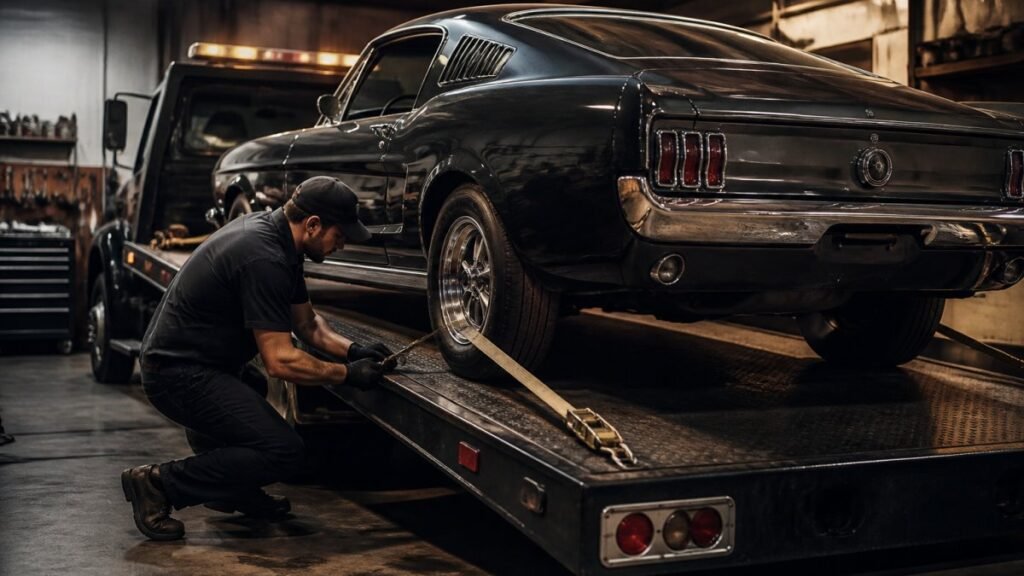
5. Ask about damage-free practices. For newer vehicles, EVs, and anything with low ground clearance, ask whether they use flatbed towing and wheel straps rather than chains.
**6.
7. Read reviews for patterns, not perfection. One bad review doesn’t mean a company is unreliable, things go wrong despite best efforts. Look for patterns. Do most customers mention quick response and fair treatment?
8. Save the number and share it. Once you find a provider you trust, save their number and share it with family members who drive your vehicle.
When you call, have three things ready: your exact location (mile marker, cross street, or GPS coordinates), your vehicle’s make and model, and a one-sentence description of the problem. That’s everything a dispatcher needs to send the right truck the first time.
If you’re not sure where you are, look for mile markers, a nearby business sign, or a street sign at the closest intersection. Sharing your phone’s GPS location with the dispatcher is even faster, the sooner they know where you are, the sooner help is on the way.
A local, owner-operated company like Neptune Towing answers the phone directly, knows the area, and treats every call like it matters, because it does.
Frequently Asked Questions
How long does roadside assistance usually take to arrive?
Response time depends on your location, local traffic, and the provider’s current call volume. Remote locations or peak times can extend that window. When you call, ask for an estimated time and request updates if delays occur. Knowing what to expect helps you stay calm while waiting.
Can I call for roadside assistance if I’m not a member of an auto club?
Yes. You don’t need a membership to call a local towing company or roadside assistance provider directly. Many drivers call independent tow truck services without any membership. Your auto insurance may also include roadside assistance coverage even if you don’t have a separate auto club membership. Check your policy or call your insurer to confirm what’s included before you need help.
What should I do while waiting for roadside assistance to arrive?
Stay inside your vehicle with doors locked if you’re on a busy highway. Turn on hazard lights and move as far from traffic as safely possible. If you must exit the vehicle, wear bright clothing or a reflective vest and stand away from the road. Keep your phone charged and stay in a well-lit area if it’s dark. Avoid accepting help from strangers, and verify the tow truck driver’s credentials before opening your door.
Does roadside assistance cover jump starts and tire changes?
Most roadside assistance plans and independent towing companies do offer jump start service and flat tire assistance. However, coverage varies depending on your specific plan or provider. Some services charge a fee for these calls, while others include them. Always confirm what’s covered before you need help. If you’re calling a local towing company directly, ask upfront what services they provide and what you can expect.
When your vehicle breaks down, you need help you can trust. Neptune Towing is owner-operated and available 24/7 to handle roadside assistance near me, from jump starts and tire changes to towing and vehicle recovery. We serve Tulsa and the surrounding areas with damage-free towing, transparent service, and honest communication. Call (539) 292-3074 when you need roadside assistance, we’re here to help.