


Table of Contents
- Why Professional EV Tire Change Service Matters More Than You Think
- How Electric Vehicle Tire Wear Differs from Gas Cars
- The Right Tires: Weight Ratings, Load Index, and EV-Specific Compounds
- Safe EV Lifting Points: Why Jacking an Electric Car Wrong Is Costly
- TPMS Calibration and Sensor Recalibration After Installation
- Acoustic Foam, Noise Control, and the Risk of Damage During Mounting
- What to Do With a Flat EV Tire: EV Towing Tulsa Drivers Can Rely On
- Conclusion: Protect Your Battery, Your Range, and Your Safety
- Frequently Asked Questions
Last Updated: September 9, 2026
Why Professional EV Tire Change Service Matters More Than You Think
Electric vehicles place demands on tires that gas-powered cars simply don’t. Between the instant torque delivery, heavier curb weight, and the constant push for driving efficiency, a standard tire change isn’t enough for most EVs. The benefits of professional tire change service for electric vehicles go far beyond convenience, touching everything from your battery range to your safety on the road.
According to the Bureau of Labor Statistics vehicle maintenance comparison (2023), EVs yield roughly $8,000 to $12,000 in maintenance savings over their lifetime. But those savings disappear quickly if tires wear unevenly or get damaged during installation. This guide breaks down why an EV tire change done right protects your investment, your range, and your safety.
The global market for EV-specific tires reflects this growing complexity. Industry projections from [Strategic Market Research Electric Vehicle(/blog/how-to-safely-tow-an-electric-vehicle/) Tires Market Report | strategicmarketresearch.com] (2026) show the sector growing from USD 18.9 billion in 2025 to an estimated USD 43.7 billion by 2032, driven by tires engineered for range, wear life, and safety. Understanding the benefits of professional tire change service for electric vehicles starts with recognizing that EV tires aren’t optional extras. They’re engineered components.
How Electric Vehicle Tire Wear Differs from Gas Cars
The physics of an EV changes everything about how tires wear. Electric vehicle tire wear patterns look nothing like what you’d see on a conventional car, and knowing why helps you plan proactive maintenance instead of emergency replacements.
Fleet data from Frotcom’s analysis of EV fleet operations (2023) confirms that electric vehicles demonstrate increased tire wear in fleet operations, requiring proactive maintenance measures for smooth transitions. This isn’t a minor difference. It’s a fundamental shift in how often you’ll need rotations, alignments, and eventually, replacements.
Instant Torque and Heavier Curb Weight
The instant torque delivery of an electric motor puts immediate stress on tire tread with every acceleration. Combined with a curb weight that’s often 20-30% heavier than a comparable gas vehicle, your tires work harder from the moment you pull away from a stoplight. This combination accelerates tread wear, especially if you’re running tires not designed for EV-specific loads.
The Regenerative Braking Wear Pattern Most Owners Miss
Regenerative braking creates a unique wear profile that most generalist articles overlook. While it reduces brake pad wear, it shifts stopping forces onto the tires themselves, particularly the fronts. But the story is more specific than that.
Here’s the mechanism most drivers don’t realize: when you lift off the accelerator in an EV, the regenerative braking system engages and applies resistance through the drive wheels, typically the front wheels in most passenger EVs. This constant, subtle braking force during every deceleration event scrubs the tread surface differently than conventional friction braking. Instead of the smooth, even wear you might expect, many EV owners see a characteristic pattern of accelerated wear on the outer edges of the front tires, especially if they drive with one-pedal mode engaged most of the time.
Research from Sage Journals on the evolving EV service landscape (2024) notes that optimizing vehicle systems, including thermal management and maintenance, is critical as the repair landscape evolves. In practice, this means EV tires often wear faster in specific patterns, making regular rotation intervals more important than ever.
Why Rotation Intervals Are Shorter Than You Think
Most manufacturers recommend rotating EV tires every 5,000 to 7,500 miles, similar to gas cars. But the consequences of skipping this are more severe. Uneven wear on an EV compounds quickly, shortening tire life and reducing driving efficiency.
:::warning The takeaway for Tulsa EV drivers
If you drive an EV with aggressive regenerative braking settings, especially in stop-and-go traffic on the Broken Arrow Expressway or Riverside Drive, plan on rotating your tires closer to the 5,000-mile mark than the 7,500-mile mark. Your tread life depends on it.
The Right Tires: Weight Ratings, Load Index, and EV-Specific Compounds
Choosing the right tire for your EV isn’t about picking a familiar brand. It’s about matching the load index, weight rating, and tire compound to your vehicle’s specific requirements.
EV-specific tires use reinforced sidewalls and specialized compounds to handle the extra weight and torque. Standard tires on an EV can wear out in half the expected time, and they may not support the vehicle’s weight safely. The load index matters because it tells you how much weight each tire can carry. An EV’s battery pack adds significant mass, and your tires need to handle that load without compromising sidewall integrity or vehicle handling.
Tire rotation and service intervals also differ for EVs. Most manufacturers recommend rotating EV tires every 5,000 to 7,500 miles, similar to gas cars, but the consequences of skipping this are more severe. Uneven wear on an EV compounds quickly, shortening tire life and reducing driving efficiency.
Safe EV Lifting Points: Why Jacking an Electric Car Wrong Is Costly
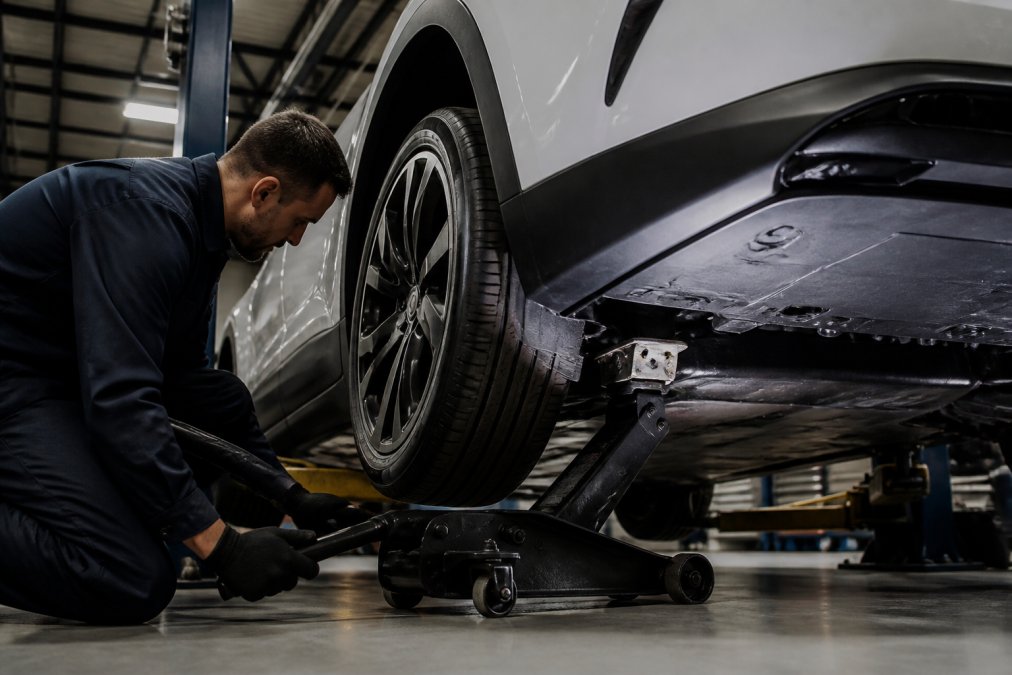
Jacking an electric vehicle at the wrong spot can damage the battery pack, and that’s not a minor repair. EV battery packs sit across the entire underside of the vehicle, protected only by a thin shield. Lifting at an incorrect point can puncture the pack, void your warranty, and create a serious safety hazard.
Safe EV lifting points are specific, reinforced locations designed to handle the vehicle’s weight. Shops need specialized equipment to handle heavier EV assemblies and protect wheels during service, as documented by Coats Company’s guidance on EV tire service equipment (2024). Without proper lift pads and knowledge of where to place them, even a routine tire change becomes risky.
The tire pressure monitoring system also needs attention. TPMS calibration and sensor recalibration after installation ensures your system reads accurate pressures. Many EV owners don’t realize that a tire change can disrupt these sensors, leading to false warnings or missed pressure drops that affect range and safety.
TPMS Calibration and Sensor Recalibration After Installation
Your EV’s tire pressure monitoring system does more than warn you about low tires. It actively protects your battery range. Under-inflated tires increase rolling resistance, which directly reduces how far you can drive on a single charge. EV charger installation.
Professional tire technicians understand this connection. After mounting new tires, they recalibrate the TPMS sensors so your system provides accurate readings. They also verify proper tire balancing, which prevents vibration and uneven wear at highway speeds.
The industry is shifting toward specialized tire services as EV adoption grows, creating new revenue opportunities in thermal management and tire care, according to Brady Ware & Company’s automotive industry analysis (2024). This specialization exists because EVs demand it. A professional who understands TPMS calibration, torque delivery, and weight distribution will catch issues that a general service technician might miss.
Acoustic Foam, Noise Control, and the Risk of Damage During Mounting
Many EV tires contain acoustic foam bonded to the inside of the tire to reduce road noise. Without it, the silent EV cabin amplifies tire hum, making highway driving noticeably louder.
This foam creates a hidden risk during installation. If a technician uses improper mounting techniques or tools, they can tear or dislodge the foam, ruining the tire’s noise-reducing properties. Worse, damaged foam can shift inside the tire, causing vibration at speed.
Professional tire changers use specific mounting machines and techniques designed for foam-lined tires. They understand how to handle the tire without damaging the acoustic foam or the wheel itself. This is one of the clearest examples of why the benefits of professional tire change service for electric vehicles matter. A DIY attempt or an inexperienced shop can turn a $300 tire into a $300 paperweight.
What to Do With a Flat EV Tire: EV Towing Tulsa Drivers Can Rely On
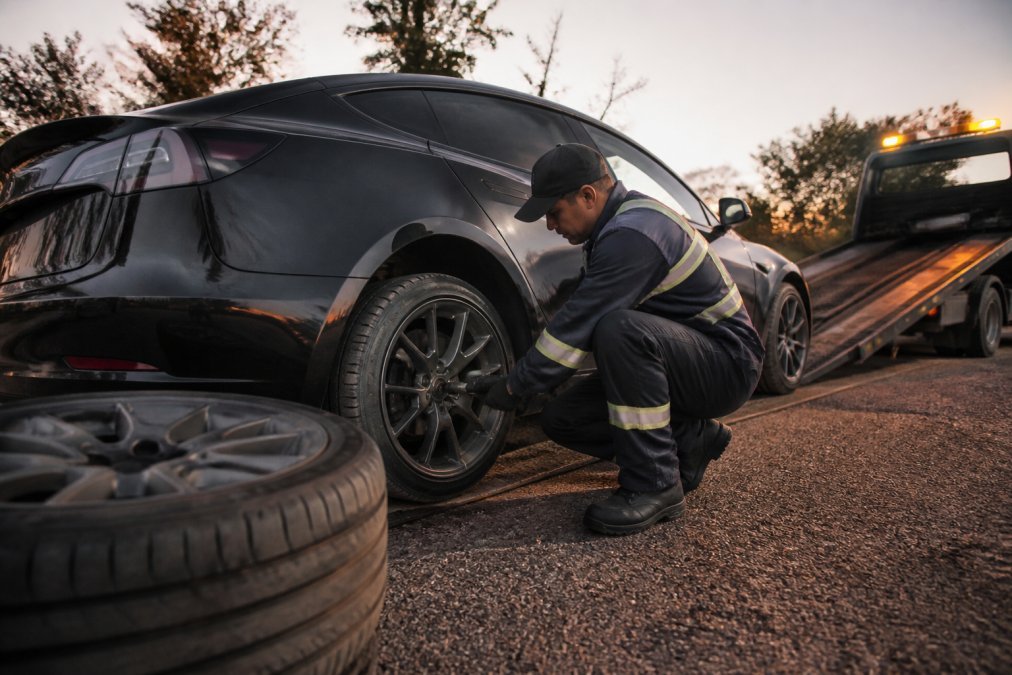
Sometimes, despite all the preventive care, you end up with a flat on the side of I-44 or in a parking lot near Utica Square. What happens next matters, because towing an EV incorrectly can cause thousands of dollars in damage.
Step One: Assess Whether a Roadside Change Is Safe
A flat tire on an EV isn’t always a tow situation. If you have a safe, level spot away from traffic and the flat is on a non-drive wheel, a roadside tire change may be possible. But here’s where EV ownership changes the equation.
Most EVs don’t come with a spare tire. Instead, they include a tire repair kit with sealant and an air compressor. That kit works for a slow leak or a small puncture in the tread area, but it won’t help with a sidewall blowout or a large tear. If you’re unsure, don’t risk it. A failed DIY attempt on the shoulder of the highway puts you in more danger, not less.
Step Two: Know the Lifting Rules Before You Jack
If you do attempt a roadside change, you need to know where to place the jack. EV battery packs sit across the entire underside of the vehicle, protected only by a thin shield. Lifting at an incorrect point can puncture the pack, void your warranty, and create a serious safety hazard.
Safe EV lifting points are specific, reinforced locations designed to handle the vehicle’s weight. They’re typically marked on the chassis near each wheel, but they’re not always obvious. If you’re driving a Tesla, a Rivian, or another EV you’re not familiar with, take a moment to check the owner’s manual before you position the jack. Guessing is how battery packs get damaged.
Step Three: Call for Professional EV Towing When in Doubt
EV towing Tulsa drivers can trust requires flatbed equipment and proper procedures. A standard hook-and-chain tow can damage the drivetrain, and even a wheel-lift tow can be problematic for all-wheel-drive EVs. The safe approach is flatbed transport, where the vehicle rides with all four wheels off the ground.
At Neptune Towing, we handle Teslas and other EVs every day. We understand safe EV lifting points, we use damage-free flatbed equipment, and we never take shortcuts with your vehicle. Whether you need emergency towing Tulsa drivers count on for a dead battery on the Broken Arrow Expressway or help with a tire change service after a blowout near Jenks, we’re the local towing company that treats your EV like our own.
What Professional EV Towing Includes
When you call a professional for EV towing, here’s what the process should look like:
- A damage assessment before the truck arrives, so the driver knows what they’re dealing with.
- Flatbed equipment with the capacity to handle your EV’s weight, many EVs weigh 5,000 pounds or more.
- Proper tie-down points that secure the vehicle without stressing the battery pack or suspension.
- Careful loading using ramps or a winch, with attention to ground clearance and approach angles.
As an owner-operated business, we don’t impound vehicles or profit from storage fees. We’re the company you call when you need help, not when you’re in trouble. Our goal is to get you back on the road safely, and that starts with understanding the unique needs of electric vehicles.
Conclusion: Protect Your Battery, Your Range, and Your Safety
The benefits of professional tire change service for electric vehicles come down to three things: protecting your battery pack from costly damage, preserving your driving range through proper tire maintenance, and keeping you safe with correctly installed, correctly rated tires.
EVs represent a different way of driving, and they require a different standard of care. From understanding electric vehicle tire wear patterns to using safe EV lifting points, professional service protects the investment you’ve made in your vehicle.
When you need help on the road, whether it’s a flat tire, a dead battery, or a breakdown, Neptune Towing is ready. We provide damage-free flatbed towing, professional roadside assistance, and the kind of honest, transparent service that comes from an owner-operated business. Call (539) 292 3074 and get the help you need, when you need it.
Frequently Asked Questions
How often should you change tires on an EV?
Most manufacturers recommend rotating EV tires every 5,000 to 7,500 miles, similar to gas vehicles. However, the actual replacement interval depends on tread wear. Because EVs deliver instant torque and carry more weight, their tires can wear faster than those on conventional cars. Have a technician measure tread depth during each rotation. If tread reaches 2/32 of an inch, replacement is needed. Professional inspection also catches uneven wear patterns early, saving you from premature replacement costs.
Do EVs really need special tires?
Yes. EV-specific tires are engineered for the unique demands of electric vehicles: heavier curb weight from the battery pack, instant torque delivery, and the need for low rolling resistance to maximize range. They use reinforced sidewalls, specialized tread compounds, and often acoustic foam to reduce cabin noise. Using standard tires on an EV can lead to faster wear, reduced efficiency, and compromised handling. A professional tire service ensures you get the correct weight-rated, EV-compatible tires for your vehicle.
What are the risks of improper tire installation on an electric vehicle?
Improper installation on an EV carries serious risks. Using the wrong lift points can puncture the battery pack, creating a safety hazard and potentially voiding your warranty. Failing to torque lug nuts to spec can cause wheel separation. Damaging TPMS sensors during mounting leads to warning lights and inaccurate pressure readings. Additionally, mounting EV tires incorrectly can damage acoustic foam, increasing road noise. Professional technicians with EV training and proper equipment avoid these costly mistakes.
Do I need a flatbed tow if my EV has a flat tire?
In most cases, yes. Flatbed towing is the safest method for transporting an electric vehicle with a flat tire. Towing an EV with only two wheels on the ground can spin the drive motor and generate electricity with no place to go, potentially causing severe damage to the electrical system. A professional towing service like Neptune Towing uses flatbed equipment designed for EV weight distribution and securement, ensuring your vehicle arrives at the shop without additional damage.
Professional EV tire care protects your range, your battery, and your safety. When roadside trouble strikes, trust Neptune Towing for damage-free flatbed towing and honest, owner-operated service across Tulsa and surrounding communities. Get started with a call to (539) 292 3074.