
Table of Contents
- Why Low-Clearance Vehicles Need Special Towing Care
- Flatbed Towing for Low-Clearance Vehicles: The Right Choice
- Damage-Free Towing: What to Look for in a Towing Operator
- Preparing Your Low-Clearance Vehicle for Safe Transport
- EV Towing: Special Considerations for Electric Vehicles
- What to Tell Your Tow Truck Driver: Communication Checklist
- Common Towing Mistakes to Avoid
- Insurance and Liability: Protecting Yourself During Transport
- Frequently Asked Questions
Last Updated: September 26, 2026
When your car sits low to the ground, whether it’s a custom lowered vehicle, a sports car, or a luxury sedan, improper low-clearance vehicle towing can cost thousands in damage. A tow truck operator who doesn’t understand low-clearance vehicle towing might hook up your bumper, drag your undercarriage across the pavement, or worse. This guide covers how to ensure your car isn’t damaged during a tow if you have a low-clearance vehicle, from choosing the right towing method to communicating with your operator.
At Neptune Towing, we specialize in damage-free towing for lowered cars, sports cars, and custom builds. We understand the importance of the right approach to protect your investment.
Why Low-Clearance Vehicles Need Special Towing Care
Your car sits lower than stock vehicles for a reason: performance, handling, or style. But that same modification creates a real problem for towing. A standard tow truck using a wheel lift or hook-and-chain method can catch your bumper, scrape your chassis, or damage your suspension.
A lowered vehicle has less clearance between the frame and the road. When a tow operator approaches at the wrong angle or uses the wrong equipment, bumper scraping, undercarriage damage, and suspension harm happen fast.
The biggest mistake is calling the first tow truck that answers and hoping they know how to handle your car. Many operators default to wheel lifts or chain methods because that’s what they know. By the time you realize they’re using the wrong approach, your car is already being lifted.
Flatbed Towing for Low-Clearance Vehicles: The Right Choice
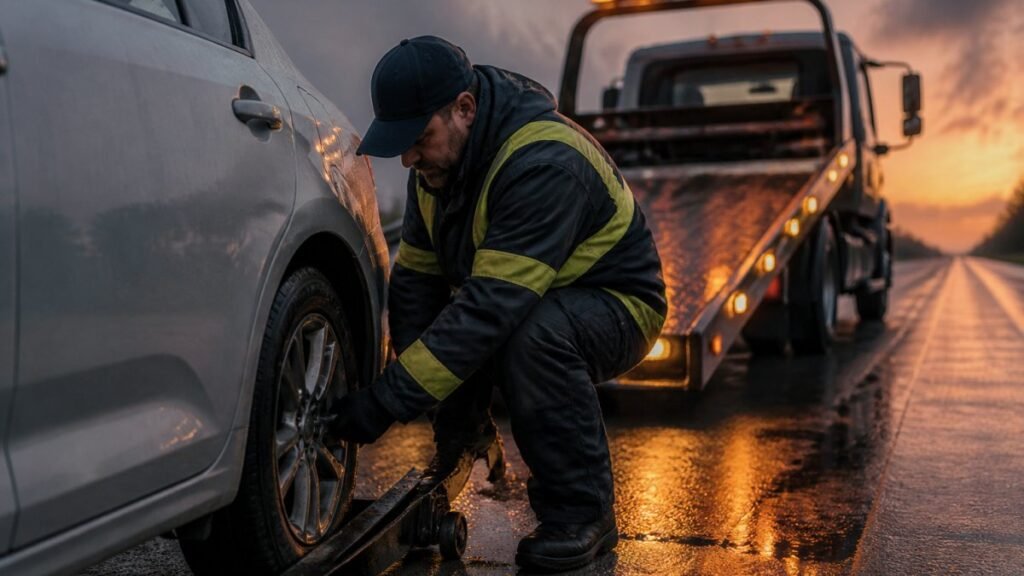
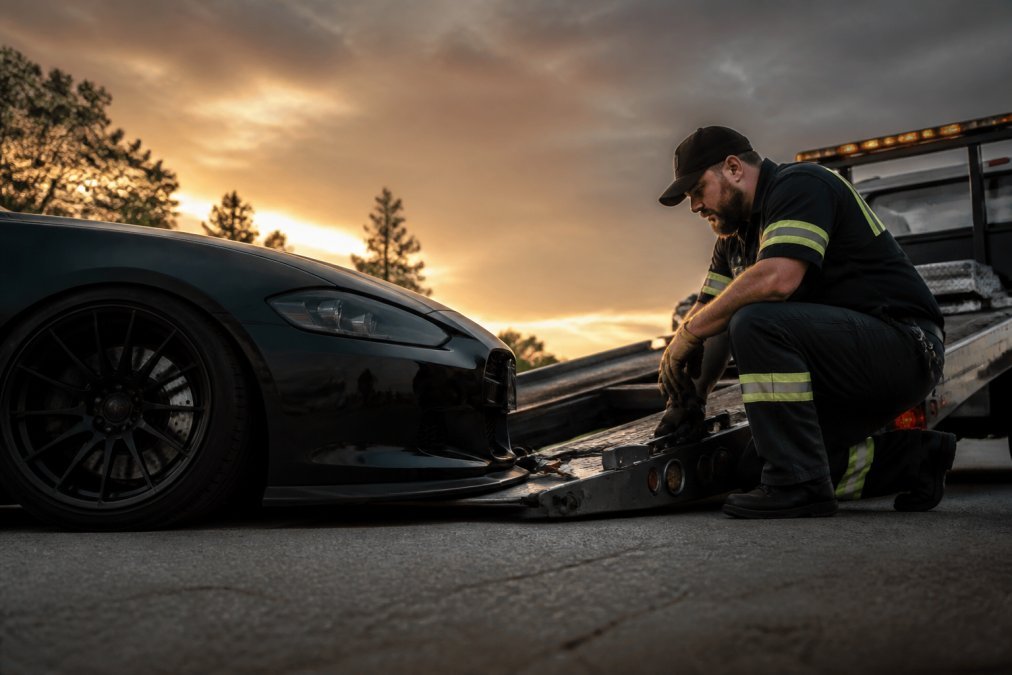
Flatbed towing is the safest method for low-clearance vehicles. A flatbed truck lowers a hydraulic bed to the ground, and your vehicle is driven or winched onto the flat surface. Your car sits completely level and secure during transport, no lifting, no dragging, no contact with the road. For a lowered car, custom build, or any vehicle where appearance and undercarriage condition matter, it’s the only method worth using.
How Flatbed Trucks Prevent Bumper and Chassis Scraping
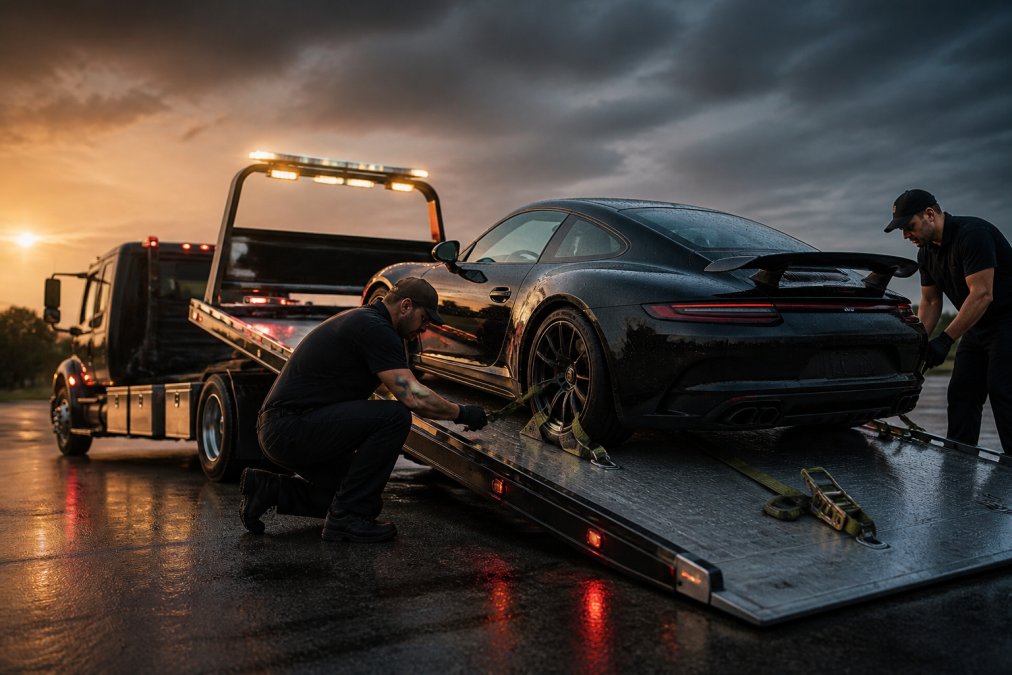
A flatbed truck lowers the entire bed to near-ground level, and your car is driven or winched onto it. Once loaded, your vehicle sits flat with no part touching the ground during transport. A wheel lift, by contrast, grabs your wheels and lifts the opposite end into the air, for a lowered vehicle, the bumper dips toward the road as the car tilts, causing scraping. A proper flatbed approach uses ramp extensions at a shallow angle so your car loads smoothly without scraping.
When you call for a tow, ask specifically: “Can you use a flatbed truck?” If they hesitate or suggest a wheel lift, call someone else. Neptune Towing uses flatbeds for low-clearance vehicles as standard practice, it’s not an upgrade, it’s the right way to do it.
Soft Straps and Protective Padding: Essential Equipment
Once your car is on the flatbed, securement is critical. Hard chains or metal hooks can scratch paint and damage body panels. Soft straps, typically made of canvas or nylon, wrap around your vehicle at secure points without causing damage. Protective padding goes between the strap and your car’s body to prevent contact damage.
Securement points are usually the frame, suspension components, or factory tie-down loops. A good operator knows where these are and avoids strapping across painted surfaces or body panels. Reputable towing services use flatbeds, ramps, and soft straps to prevent bumper and undercarriage damage on lowered vehicles.
Damage-Free Towing: What to Look for in a Towing Operator
When you need a tow, you’re looking for an operator who:
- Asks about your vehicle’s ground clearance before arriving
- Confirms flatbed availability and doesn’t push wheel lifts
- Knows how to identify securement points on your specific car
- Uses soft straps and protective padding as standard
- Takes time to load carefully instead of rushing
A good operator communicates clearly and takes time to load carefully. If an operator seems rushed or dismissive, that’s a red flag. Neptune Towing operates this way every day. As an owner-operated business, we handle every vehicle like it matters. Our goal is to ensure your car arrives at the repair shop in the same condition it left your driveway.
Preparing Your Low-Clearance Vehicle for Safe Transport
Before the tow truck arrives, a few steps protect your car and make the operator’s job easier.
Measuring Ground Clearance and Identifying Securement Points
Start by knowing your car’s ground clearance. Measure the distance from the lowest point of your vehicle to the ground. If your car is lowered, this number is critical information to give the tow operator. This measurement remains just as vital when managing low garage clearance, especially when you need to remove a bulky hardtop without scraping the ceiling.
Identify your securement points, factory tie-down loops, frame rails, or suspension components rated for towing.
The safest securement uses the car’s frame and factory attachment points. If your car has a custom body kit or non-standard modifications, tell the operator before they arrive so they can plan the best approach.
DIY Protective Hacks for Emergency Situations
If you’re broken down on I-44 and a tow truck is on the way, take quick steps to reduce damage risk: drape a blanket or towel over your bumper, clear debris from under your car so the operator can see securement points clearly, take photos of your car’s condition before the tow arrives, and tell the operator your car is lowered and ask them to confirm they’re using a flatbed.
EV Towing: Special Considerations for Electric Vehicles
Electric vehicles like Teslas require different towing methods than gas cars. A Tesla or other EV should never be towed with the drive wheels on the ground, electric motors can generate electrical current when the wheels spin, which can damage the battery and drivetrain. All four wheels must be off the ground during transport. Additionally, many EVs have low ground clearance, so a flatbed is the only safe option.
What to Tell Your Tow Truck Driver: Communication Checklist
When you call for a tow, the dispatcher needs information. When the operator arrives, you need to confirm they understand your vehicle’s needs. Here’s what to communicate:
On the phone with dispatch:
- “I have a lowered vehicle / low-clearance car”
- State your vehicle’s ground clearance if you know it
- Confirm flatbed availability: “Do you have a flatbed truck available?”
- Mention any custom modifications: “It has a custom body kit” or “It’s a lowered sports car”
- If it’s an EV: “I drive a Tesla and need all four wheels lifted”
- Provide your location clearly: “I’m on 15th Street near downtown” or “I’m on the on-ramp at I-44 and Riverside”
When the operator arrives:
- Ask: “Are you using a flatbed?”
- Show them the ground clearance: “This is how low my car sits”
- Point out custom modifications: “I have a lowered suspension and a custom bumper”
- Confirm securement method: “Will you use soft straps and padding?”
- Ask them to identify securement points: “Where will you attach the straps?”
- Request they take their time loading: “Please use the ramps carefully, I don’t want the bumper to scrape”
Common Towing Mistakes to Avoid
Mistake 1: Accepting a wheel lift for a lowered car
Mistake 2: Not measuring or communicating ground clearance
Mistake 3: Letting the operator strap to your bumper
Mistake 4: Rushing the loading process
Mistake 5: Not documenting the condition before towing
Choose an operator who prioritizes damage prevention, not one who prioritizes speed or cost.
Insurance and Liability: Protecting Yourself During Transport
If your car is damaged during towing, who pays for the repairs? This depends on liability, insurance, and what you can prove.
Your insurance:
The towing company’s liability:
What you can do:
- Document your car’s condition before towing (photos from multiple angles)
- Get the operator’s name and the tow company’s name
- Request an itemized receipt that describes the towing method used
- If damage occurs, report it to the towing company immediately and file a claim with your insurance
- Keep all photos, receipts, and communications
Frequently Asked Questions
Why is flatbed towing better for low-clearance vehicles?
Flatbed towing eliminates the risk of bumper scraping, undercarriage damage, and suspension contact that occurs with wheel-lift towing. The vehicle sits flat on the hydraulic bed, supported along its entire length. Soft straps and protective padding distribute load evenly, preventing shifting during transport. For lowered cars, custom body kits, and vehicles with extended bumpers or air suspension, flatbed towing is the only method that truly protects your investment.
What should I tell the tow truck driver if my car is lowered?
Be specific about your vehicle’s modifications: exact ground clearance measurements, any custom body work, air suspension settings, and low-hanging components like splitters or diffusers. Mention if the car has been lowered and by how much. Point out the safest securement points and ask the driver to confirm they’ll use a flatbed with soft straps. If the driver seems unsure about handling your vehicle, don’t hesitate to request a different operator experienced with custom vehicles.
Is it safe to tow an EV or Tesla with low clearance?
Yes, but only with flatbed towing and proper securement procedures. Electric vehicles have heavy battery packs mounted low in the chassis, making ground clearance even more critical. Never allow wheel-lift towing on an EV, it can damage the battery pack, drivetrain, and suspension. Flatbed transport keeps the vehicle level and prevents any risk of impact damage. Make sure the towing operator has experience with EVs and understands the location of your vehicle’s tow points.
What equipment prevents bumper damage during a tow?
Soft straps (not chains or steel cables) distribute pressure across the bumper and frame without digging in. Protective padding placed between straps and contact points absorbs vibration and prevents scratching. Proper securement points on the chassis, not the bumper, keep the vehicle stable. Wheel chocks or tie-downs prevent side-to-side movement. A flatbed truck with adequate ramp extensions ensures a shallow loading angle, reducing the stress on the front and rear of your vehicle during loading and unloading.