
Table of Contents
- Step 1: Decide Between Enclosed Transport and Flatbed Towing
- Step 2: Prepare Your Classic Car for Transport
- Step 3: Choose the Best Towing Services in Tulsa for Classic Cars
- Step 4: Understand Damage-Free Towing and Securement
- Step 5: Handle Insurance, Paperwork, and Title Logistics
- Step 6: Plan for Classic Car Roadside Assistance on the Road
- Common Mistakes to Avoid When Transporting Classic Cars
- Frequently Asked Questions
Last Updated: September 29, 2026
Step 1: Decide Between Enclosed Transport and Flatbed Towing
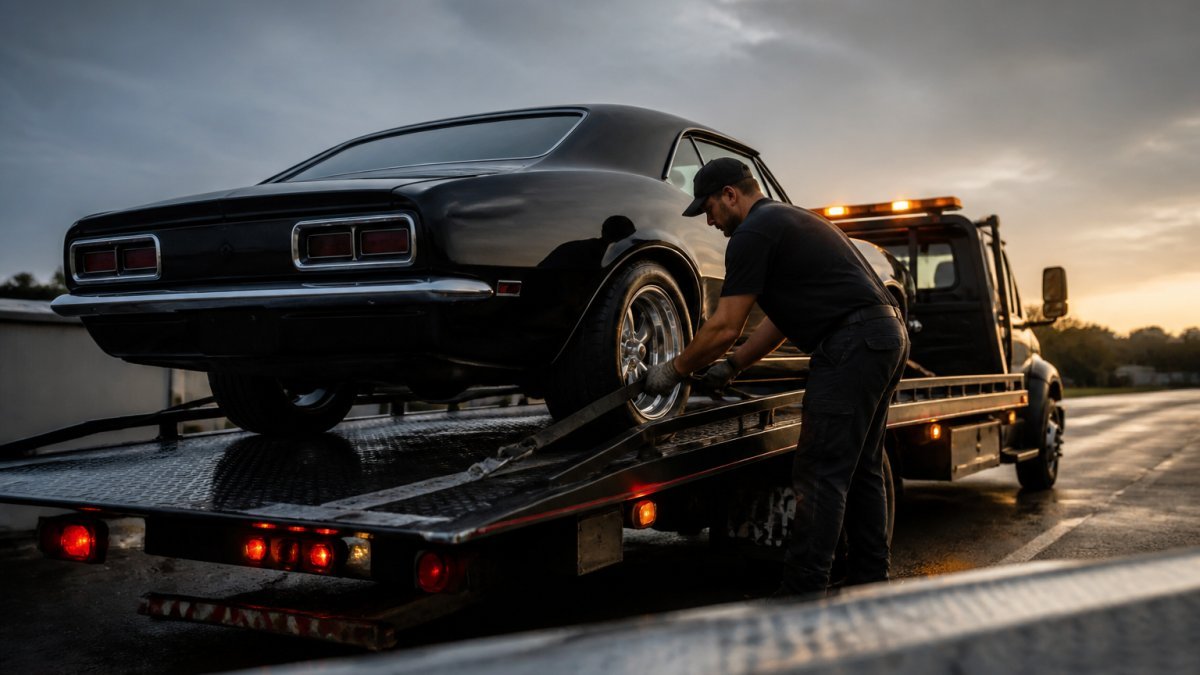
Learning how to safely transport classic cars starts with one decision: enclosed trailer or flatbed. For most classic owners moving a car around Tulsa, a flatbed tow truck is the practical answer. It keeps all four wheels off the ground and avoids the drivetrain wear that comes with dolly towing.
| Method | Best For | Protection Level | Typical Use |
|---|---|---|---|
| Flatbed towing | Local moves, breakdowns, short hauls | High, open air | Tulsa metro transport |
| Enclosed transport | Cross-country shipping, show cars | Highest, sealed | Long-distance moves |
When Enclosed Transport Makes Sense
Enclosed transport makes sense for long hauls and high-value cars. Industry guidance points to enclosed trailers as the safest option for rare or high-value classics because they seal the vehicle off from road debris, salt spray, and weather, according to Speedway Media’s 2026 transport guide.
Why Flatbed Towing Tulsa Drivers Trust Works for Most Classics
Flatbed towing works for most classics because the car never touches the road. A hydraulic lift-gate tilts the deck, you roll the vehicle on, and it rides secured above traffic the whole way.
Ask whether the truck uses a hydraulic lift-gate rather than ramps alone. A lift-gate lets a low-sitting classic roll on without scraping the front air dam or exhaust.
Step 2: Prepare Your Classic Car for Transport
Preparation is where most damage gets prevented before the truck even arrives. A few checks take 15 minutes and save you a repair bill.
Fluids, Battery, and Tire Pressure Checks
Start with the basics:
- Check tire pressure and inflate to spec before loading
- Confirm the battery holds a charge; a weak battery can fail during winching
- Top off coolant and check for leaks under the car
- Keep fuel at a low, safe level to cut weight and reduce spill risk
- Remove loose items from the interior, trunk, and glovebox
Fuel level management matters more than people think. Sherpa Auto Transport’s 2026 guidance recommends keeping fuel at a minimal threshold and removing personal belongings before transport (Sherpa Auto Transport classic car guide).
Documenting Condition Before the Move
Document the car’s condition before it moves. Walk around the vehicle and photograph every panel, the odometer reading, and any existing scratches or chips.
Step 3: Choose the Best Towing Services in Tulsa for Classic Cars
Choosing the best towing services in Tulsa for classic cars comes down to equipment, credentials, and experience, not the biggest ad or the lowest quote. Most practitioners find that the operators who handle classics well are the ones who ask you questions before you ask them.
Questions to Ask Before You Book
Run through this list before you commit. A reputable operator will answer every one without hesitation:
- Do you use flatbed trucks with soft tie-downs over the tires?
- Are you licensed, bonded, and insured, and can you show proof?
- Do you carry classic, low-clearance, and EV vehicles regularly?
- What’s your securement setup, nylon straps and chocks, or chains?
- Do you have a hydraulic lift-gate, or do you rely on ramps alone?
- Will the same person who answers the phone be the one loading my car?
Verify the Credentials, Don’t Just Trust the Logo
Any legitimate carrier operating across state lines holds a motor carrier (MC) number issued through the Federal Motor Carrier Safety Administration, and you can look that number up in the FMCSA’s public carrier database to confirm the business is registered and its operating authority is active (FMCSA carrier registration lookup). For a local tow within the Tulsa metro, ask for proof of insurance and a copy of the bill of lading before the truck rolls.
A few red flags worth watching for:
- No physical business address or local phone number
- Reluctance to put insurance details in writing
- Quotes that change once the truck arrives
- No flatbed available, only wheel-lift or dolly equipment
- Pressure to sign anything before you’ve seen the securement setup
Match the Equipment to the Car
Not every flatbed is set up for every classic. A low-sitting sports car needs a gentle load angle and a deck that tilts low enough to clear the front air dam. A convertible with a delicate top needs soft straps routed away from the trim. A heavy 1960s muscle car needs a deck rated for the weight and straps rated for the load.
The biggest mistake is booking on price alone. A cheap quote that skips soft straps or chocks can cost you a cracked bumper or a bent frame rail. Ask what securement they use before you commit, and don’t be afraid to walk away if the answer is vague.
Step 4: Understand Damage-Free Towing and Securement
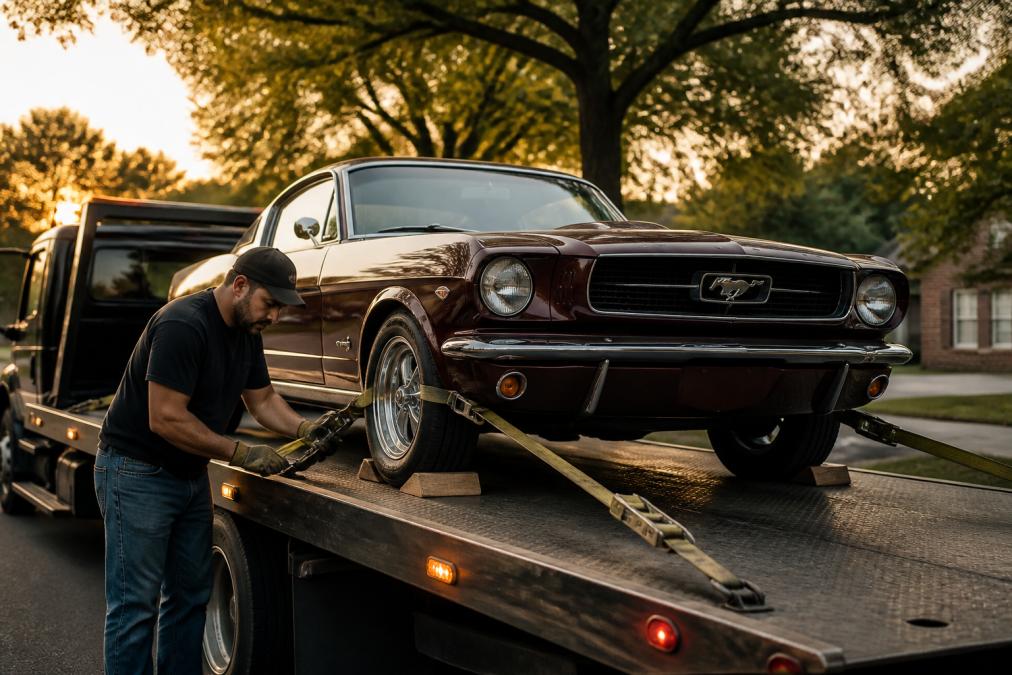
Damage-free towing means securing the car by its tires, not its frame. Modern best practices call for nylon straps and chocks instead of metal chains, which are a leading cause of transport damage, according to American Collectors Insurance’s transport guide.
Nylon Straps, Chocks, and Soft Tie-Downs
The right hardware makes the difference:
- Soft tie-downs loop over the tires, never the paint or trim
- Nylon straps replace metal chains that can mar wheels and suspension
- Chocks block the tires so the car can’t roll during transit
- Straps cross in an X pattern to stop side-to-side movement
Under-carriage clearance is the other factor. A low classic needs a gentle load angle so nothing scrapes on the way up the deck.
Step 5: Handle Insurance, Paperwork, and Title Logistics
Paperwork protects both sides, and for a classic car it’s often the part owners underestimate. Before the truck rolls, confirm the carrier’s insurance and get the details in writing. Then handle the title side, because a classic bought across state lines comes with its own set of rules. Securing the keys and verifying access protocols remains just as vital as the legal documentation, especially when preventing car lockouts ensures that your vintage investment remains accessible upon arrival.
Confirm Cargo Insurance in Writing
Ask for the carrier’s motor carrier number and proof of cargo insurance. A legitimate operation will share these without hesitation. The Federal Motor Carrier Safety Administration sets the rules carriers operate under, so a real MC number is a good sign you’re dealing with a registered business (FMCSA carrier registration lookup).
- Cargo insurance covers the vehicle being transported if it’s damaged in transit.
- Liability insurance covers damage the carrier causes to other people or property.
The Bill of Lading Is Your Receipt
For a straight tow, you’ll sign a bill of lading that lists the pickup and drop-off details, the vehicle’s condition at pickup, and the odometer reading. Read it before you sign. If the driver notes a scratch that was already there, make sure it’s recorded accurately. If something is missing, ask for it to be added.
Title Transfer Logistics for a Private Sale
This is the part most transport guides skip, and it’s where out-of-state classic purchases get complicated. When you buy a classic from a private seller in another state and have it shipped, the title has to travel with the car, or ahead of it, in a way the destination state will accept.
A few things to get right:
- Signed title in hand. The seller signs the title over to you, and the signature needs to match the name on the title exactly. A title with a mismatched or missing signature can stall registration for weeks.
- Odometer disclosure. Federal rules require odometer disclosure on vehicles under a certain age, and many states require it on the title itself for older vehicles too. Fill it out completely, even on a classic.
- Bill of sale. A separate bill of sale listing the VIN, sale date, buyer, seller, and purchase terms backs up the title if anything is questioned.
- Notarization. Some states require the seller’s signature on the title to be notarized. Check the rules in the state where the car is titled before the seller signs anything.
- Lien release. If the seller had a loan on the car, the title needs a released lien before it can be transferred. A title with an open lien is not a clean title.
Keep the Paperwork Together
If you’re buying a car out of state, keep the signed title, bill of sale, and odometer disclosure together in one folder, not in the glovebox of the car being shipped. Carry them with you or send them by a trackable method. A car that arrives without its paperwork is a car you can’t register.
Before the seller signs anything, photograph the front and back of the title. If the original gets lost in transit, those photos give you a starting point for a replacement title application.
Step 6: Plan for Classic Car Roadside Assistance on the Road
Classic car roadside assistance matters because older cars break down in older ways. A car that sat for months can lose a battery charge or spring a coolant leak on the first long drive.
Keep a simple plan ready:
- Save a tow number before you need it, not during a breakdown
- Carry jumper cables and a basic tool kit
- Check tire pressure and battery health before any long trip
- Know your route, including shoulders and exits on I-44 and US-169
Common Mistakes to Avoid When Transporting Classic Cars
Most classic car transport problems trace back to a handful of avoidable mistakes:
| Mistake | Why It Hurts | The Fix |
|---|---|---|
| Booking on price alone | Cheap securement risks damage | Ask what straps and chocks they use |
| Skipping photos | No proof of pre-existing damage | Document condition and odometer |
| Leaving a full tank | Extra weight, spill risk | Keep fuel at a low, safe level |
| Ignoring insurance | No coverage if something breaks | Confirm cargo insurance in writing |
| Choosing open transport for a show car | Exposure to debris and weather | Use enclosed for high-value cars |
The safest transport comes down to three things: the right truck, the right straps, and a driver who’s handled classics before. Get those right and the rest is logistics.
Frequently Asked Questions
What is the best way to transport a classic car?
For most classic cars, a flatbed tow truck with proper soft tie-downs is the safest option. The vehicle rides completely off the ground, so there is no wear on the drivetrain, tires, or suspension. Enclosed transport adds weather and debris protection for high-value or rare vehicles, especially over long distances. Whichever method you choose, confirm the carrier uses nylon straps and chocks rather than metal chains, which are a leading cause of transit damage.
How do I prepare my classic car for transport?
Start by documenting the vehicle’s condition with dated photos of every panel, the odometer, and any existing flaws. Remove loose components and personal belongings, and keep the fuel level low to reduce weight and fire risk. Check tire pressure and battery charge before loading. Disable or bypass any alarm system, and leave a spare key with the driver. A written vehicle inspection report signed by both parties protects you if a dispute comes up later.
Why is flatbed towing recommended for classic vehicles?
Flatbed towing keeps all four wheels off the pavement, so there is no rolling resistance on old bearings, no strain on a vintage transmission, and no risk of dragging a low front air dam. It also gives the operator room to position soft straps around the tires instead of hooking into the frame. For a car with original paint, original suspension, or under-carriage clearance measured in inches, that difference matters.
Is enclosed transport necessary for short-distance moves?
Not always. Over a short local move, a flatbed with proper securement protects the car from most risks. Enclosed transport becomes worth the extra cost when the route involves highway debris, road salt, or long exposure to weather. Some collectors still choose enclosed for short moves if the vehicle is rare or has a convertible top. Ask the carrier how they handle convertible top security and whether the load is fully sealed.
Transporting a classic car safely takes the right equipment, careful prep, and a company that treats your vehicle like its own. If you’re moving a classic, luxury car, or EV anywhere in the Tulsa area, Neptune Towing handles flatbed towing with damage-free securement, honest pricing, and no impound games. As an owner-operated local company, we answer the phone ourselves and show up when we say we will. Call (539) 292 3074 to get your classic moved safely.