
Table of Contents
- How to Prevent Towing Damage: Understanding the Risks
- Preparing Your Vehicle Before Towing
- Flatbed vs. Wheel Lift Towing: Which Prevents More Damage?
- Proper Vehicle Securing Techniques
- Anti-Towing Devices and Hardware Protection
- How to Document Towing Damage for Insurance
- Towing Damage Liability and Insurance Claims
- Choosing Damage-Free Towing in Tulsa
Last Updated: July 15, 2026
How to Prevent Towing Damage: Understanding the Risks
When your vehicle breaks down on the Tulsa Expressway or you’re stranded near Broken Arrow, improper towing can compound your problems. At Neptune Towing, we’ve handled thousands of vehicle recoveries across Tulsa, Jenks, Bixby, Owasso, and surrounding communities, and we’ve seen how proper preparation and the right towing method protect your vehicle from unnecessary harm.
Towing damage ranges from cosmetic scratches to serious drivetrain damage costing thousands to repair. Most damage is preventable through proper preparation before the tow truck arrives and selecting the right towing method for your vehicle type.
Common Types of Towing Damage
Frame damage occurs when improper straps or attachment points stress the vehicle’s chassis. Drivetrain damage happens when AWD or FWD vehicles are towed with wheels on the ground, the wheels turn while the transmission is in park or neutral, creating grinding resistance that damages internal components. RWD vehicles are safer to tow this way if the transmission is in neutral and the parking brake is fully released.
Suspension damage results from improper securing or overly tight straps. Paint and bumper damage from chains rubbing or incorrect strap placement is frustrating and expensive on luxury vehicles and newer Teslas.
Vehicle-Specific Damage Risks
AWD vehicles are particularly vulnerable to drivetrain damage if towed with all four wheels on the ground. Insist on flatbed towing or wheel lift towing with the front wheels off the ground.
FWD vehicles have similar risks. Towing them with front wheels on the ground can damage the transmission, differential, and suspension. Flatbed towing is the safest option.
Electric vehicles like Teslas require special handling. Standard towing can damage the battery, electric motor, or charging system. Tesla vehicles should only be towed on a flatbed, never with wheels on the ground. The regenerative braking system and electric drivetrain don’t respond well to traditional towing methods.
Luxury vehicles and classic cars demand extra care due to low ground clearance, sensitive suspension, and expensive finishes. Tow operators unfamiliar with high-value vehicles may not know proper tow points, leading to frame or cosmetic damage.
Preparing Your Vehicle Before Towing
What you do before the tow truck arrives is your best opportunity to prevent damage.
Releasing the Emergency Brake Safely
Release the emergency brake before the tow truck operator touches your vehicle. If your vehicle has a manual lever, pull it up and press the release button. For foot-operated brakes, press the brake pedal and use the release button or dashboard switch. Modern vehicles often have electronic parking brakes controlled by a dashboard button.
If the parking brake is engaged during loading, wheels won’t roll smoothly onto the flatbed, creating resistance that can damage the brake system, wheel bearings, or brake assembly. If your vehicle won’t start and you can’t release the brake electronically, tell the tow operator immediately.
Putting the Transmission in Neutral
For any vehicle towed with wheels on the ground, the transmission must be in neutral. A transmission in park creates internal resistance that damages gears, bearings, and seals during towing.
If your vehicle is running, shift into neutral before the tow truck arrives. If it won’t start, shift manually by pressing the brake pedal, turning the key to "On" without starting the engine, pressing the shift release button, and moving the gear selector to neutral.
Towing with the transmission in park risks serious internal damage. This damage may not be immediately visible but can lead to shifting problems, grinding noises, or complete transmission failure weeks after the tow. Transmission repairs cost thousands and are rarely covered by insurance if towing damage [is the](/why-flatbed-towing-is-safer/) cause.
Flatbed vs. Wheel Lift Towing: Which Prevents More Damage?
The towing method you choose has the biggest impact on preventing damage.
Flatbed Towing for Maximum Protection
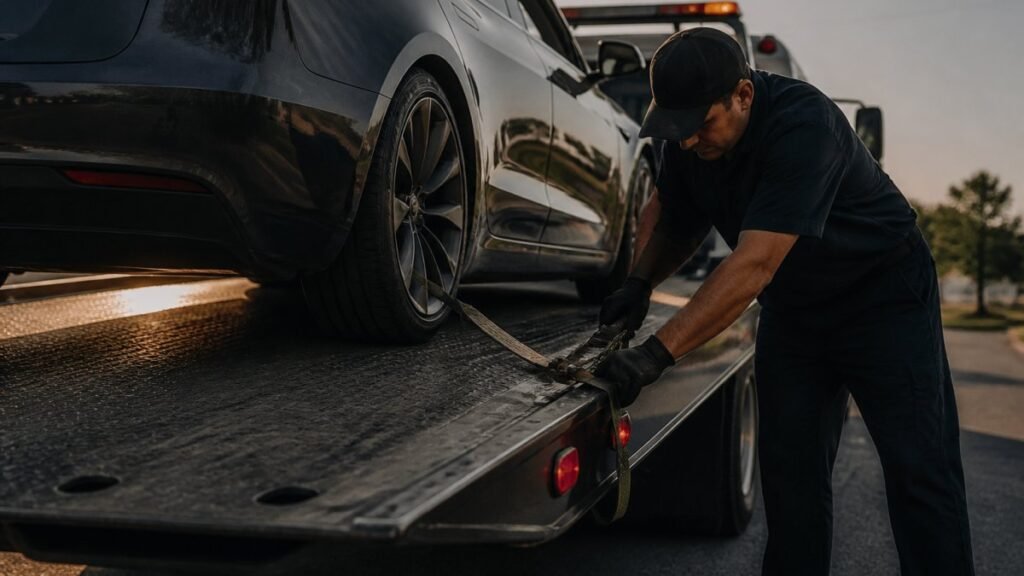
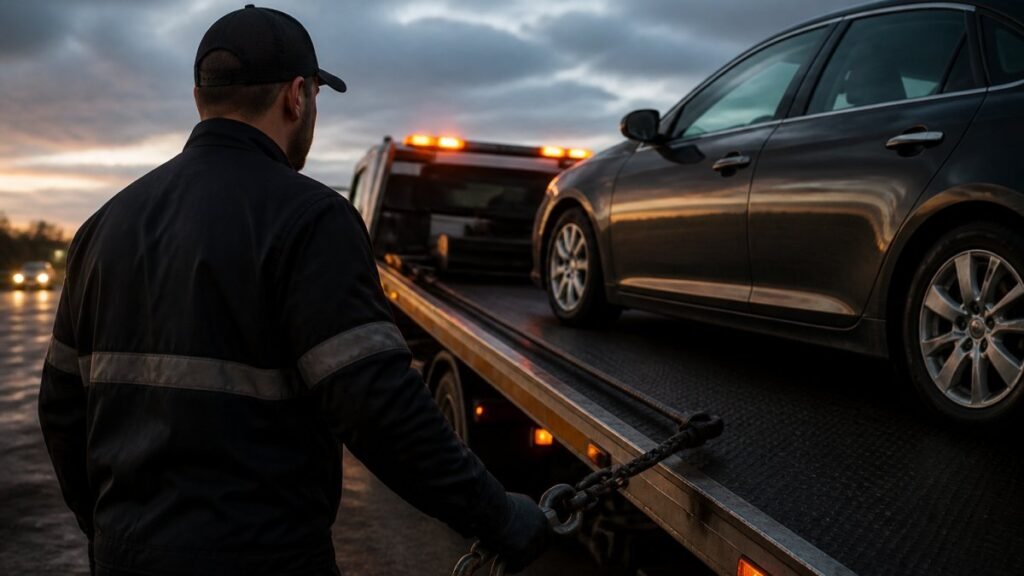
Flatbed towing is the gold standard for damage prevention. Your entire vehicle is loaded onto a flat platform and secured with straps and chains. All four wheels are off the ground, eliminating stress on the drivetrain, transmission, suspension, or brakes.
Flatbed towing works for every vehicle type: sedans, SUVs, trucks, AWD, FWD, and electric vehicles. Because your vehicle isn’t rolling, there’s no wheel rotation, no transmission stress, and no drivetrain damage risk. Flatbed towing is especially important for luxury vehicles, classic cars, and low-clearance vehicles, keeping them level and stable.
The main consideration is that flatbed towing requires more equipment and takes slightly longer to load, but that extra care is worth the protection.
Wheel Lift Towing and Drivetrain Risk
Wheel lift towing raises either the front or rear wheels off the ground, leaving the other two wheels to roll during transport. This method is faster but carries real risks for certain vehicles.
If you have an AWD or FWD vehicle and the front wheels are left on the ground, your transmission is at serious risk. For RWD vehicles, rear-wheel lift towing is generally safer. For electric vehicles, wheel lift towing is risky because the battery and electric motor systems are sensitive to the stresses created by wheels on the ground during transport.
Wheel lift towing can work for RWD vehicles on short-distance tows (under 10 miles) with the rear wheels lifted, but if there’s any doubt about your vehicle type or tow distance, flatbed towing is safer.
When you call for a tow truck in Tulsa, specify your vehicle type and ask which towing method is recommended. If they suggest wheel lift for an AWD or FWD vehicle, ask why. A reputable service like Neptune Towing will explain the reasoning and offer flatbed as an alternative if there’s any drivetrain risk.
Proper Vehicle Securing Techniques
How your vehicle is secured determines whether it arrives unscathed or with new damage.
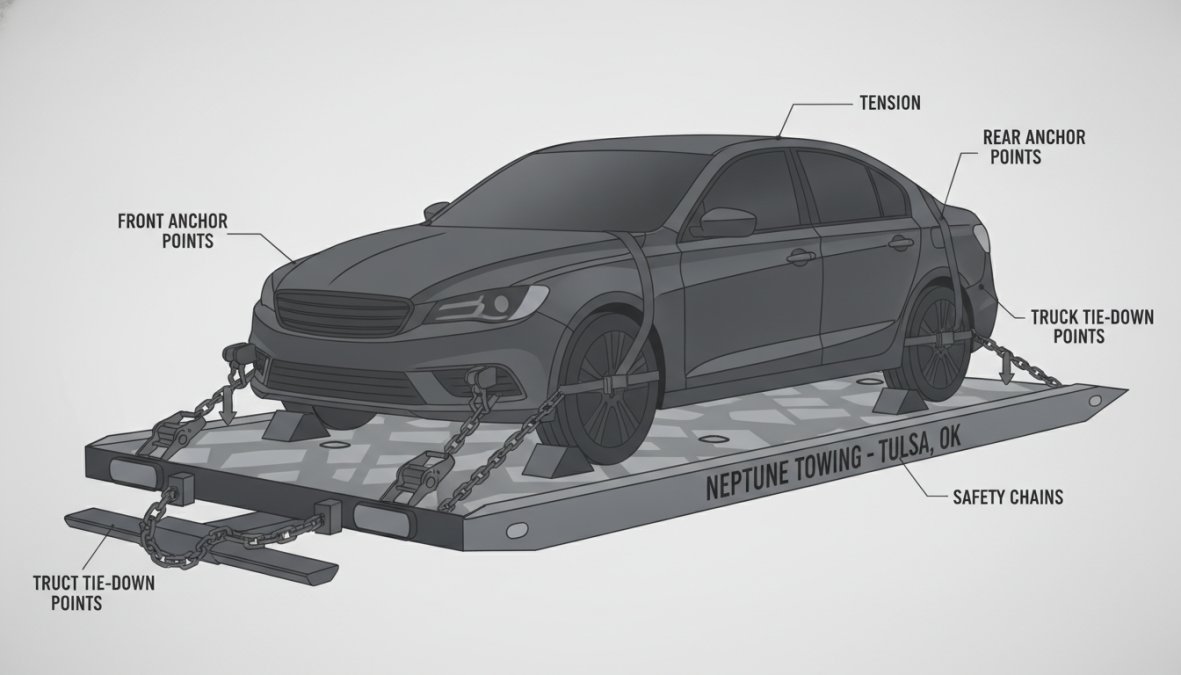
Securing with Straps and Chains
The tow operator should identify your vehicle’s designated tow points, reinforced frame areas designed for towing stress. Modern vehicles often have tow hooks or rings that screw into designated sockets, the safest attachment points.
Straps should be wide (at least 2-3 inches) to distribute pressure and prevent bumper or body panel damage. Chains are stronger but can damage paint if they rub directly. Quality operations use both: chains for strength and straps for protection.
Strap tension matters. They must be tight enough to keep the vehicle stable but not so tight that they bend the frame, damage suspension, or crush bumpers. On a flatbed, straps should attach at all four corners to prevent shifting. The vehicle should sit level with no tilting or sagging.
Preventing Frame and Chassis Damage
Frame damage affects structural integrity and can be obvious or subtle. Frame damage typically happens when straps attach to non-reinforced areas like bumpers, which aren’t designed to bear full towing stress.
Chassis stabilizers and air bladders prevent frame sag on flatbed tows. Stabilizers keep suspension from compressing unevenly during loading. Air bladders can be placed under the vehicle to prevent sagging or level it if sitting unevenly.
For low-clearance vehicles, sports cars, or lowered vehicles, extra care prevents undercarriage scraping. A professional operator uses gentle-angle ramps and additional supports to keep the vehicle elevated.
Anti-Towing Devices and Hardware Protection
Some vehicles have anti-theft devices requiring special attention during towing.
Wheel Locks and Clamps
Wheel locks prevent wheel removal without a special key. Tell the tow operator before loading if your vehicle has them. Wheel locks can interfere with wheel lift towing and be damaged if the operator doesn’t know they’re present.
Some operators carry master keys for common wheel lock brands. If yours is uncommon, you may need to provide the key. Never let an operator force or cut a wheel lock.
Tire clamps or boot devices should be removed before towing. Contact the entity that applied it and have them remove it before the tow begins.
Coupler and Connection Security
The coupler connects the tow vehicle to your vehicle on a wheel lift tow. A loose or damaged coupler can cause shifting or separation during transport. Before the tow begins, verify the coupler is secure, you should hear a click or feel a solid connection, not a loose rattle.
If the coupler looks corroded, cracked, or worn, mention it. A damaged coupler is a safety hazard and a sign the tow truck may not be well-maintained.
How to Document Towing Damage for Insurance
If damage occurs despite precautions, documentation is critical for an insurance claim.
Taking Photos and Video Evidence
Before the tow truck arrives, photograph your vehicle from all angles, front, rear, sides, and close-ups of paint, bumpers, wheels, and undercarriage. These baseline photos prove your vehicle’s pre-tow condition.
After unloading, immediately photograph any new damage with close-ups and context shots. Video is even more powerful, walk around your vehicle narrating what you see and pointing out new damage. If possible, have the tow operator present when documenting damage.
Creating a Damage Report
Write a detailed damage report immediately after the tow, including:
- Date, time, and towing company name
- Operator name and towing method used
- Starting location and destination
- Description of each damage piece (location, type, estimated size)
- Photos and video file names
- Estimated repair cost (get quotes from repair shops)
Keep this report organized and accessible for your insurance claim.
Towing Damage Liability and Insurance Claims
Understanding responsibility and how to claim protects you financially.
Understanding Your Coverage
Your auto insurance typically covers towing damage under collision or comprehensive coverage, though some policies have specific exclusions. Review your policy or call your agent before needing a tow.
Professional towing companies usually carry liability insurance covering damage they cause. If a professional service damages your vehicle, their liability insurance should cover repairs. If a friend tows you using their personal vehicle, your insurance is likely your primary coverage.
The Towing Damage Claim Process
- Report immediately. Contact the towing company and insurance company within 24-48 hours.
- Provide documentation. Submit photos, video, damage report, and repair estimates.
- Get a repair estimate. Take your vehicle to a repair shop for a written estimate.
- File a formal claim. Submit a written claim with all documentation.
- Follow up. Check claim status regularly and respond promptly to requests.
- Negotiate if necessary. You have the right to negotiate or seek legal advice if you disagree with the settlement.
Towing damage claims succeed with clear documentation, professional estimates, and prompt reporting. Report damage immediately, the sooner you report, the easier it is to prove what happened.
Choosing Damage-Free Towing in Tulsa
When you need a tow truck in Tulsa, Jenks, Bixby, Broken Arrow, Glenpool, Owasso, or surrounding areas, choosing the right company matters.
What to Ask Your Towing Company
Do you offer flatbed towing? This is the safest method for most vehicles.
What’s your experience with [your vehicle type]? If you drive an EV, AWD SUV, or luxury vehicle, ask about specific experience.
How do you secure vehicles? Ask about straps, chains, and securing methods.
Are your operators trained? Damage-free towing requires skill and knowledge.
Do you carry liability insurance? This protects you if damage occurs.
What’s your policy if damage happens? A reputable company has a clear process for addressing damage.
Why Owner-Operated Towing Matters
Owner-operated towing companies like Neptune Towing have personal responsibility for service quality and equipment condition. The owner is directly accountable, prioritizing reputation because their business depends on it.
Neptune Towing has served the Tulsa area since 2019, building a reputation on damage-free towing and honest service. We use well-maintained flatbed equipment, employ trained operators, and have experience handling family cars, luxury vehicles, and Teslas. When you need a local towing company treating your vehicle like their own, Neptune Towing is ready to help.
When a breakdown leaves you stranded on the Tulsa Expressway or nearby communities, the right towing service makes all the difference. Damage-free towing avoids repair bills and gives you confidence your vehicle arrives safely. Neptune Towing provides flatbed towing, emergency roadside assistance, and professional vehicle recovery with the care your vehicle deserves. Call Neptune Towing at (539) 292-3074 for damage-free towing service in Tulsa and surrounding Oklahoma communities.
Frequently Asked Questions
Can towing damage your car's transmission?
Yes, improper towing can damage your transmission, especially with wheel lift towing on front-wheel-drive vehicles. When a car is towed with the drive wheels on the ground and the transmission in gear, the wheels spin the engine backward, causing internal damage. Always ensure the transmission is in neutral and the parking brake is released before towing. If you need towing service in Tulsa, verify your towing company uses proper procedures to prevent transmission damage.
How do I document towing damage for insurance?
Document damage immediately after towing by photographing all affected areas from multiple angles, including close-ups of scratches, dents, and paint damage. Record the date, time, towing company name, and driver information. Write a detailed description of what you observed before and after towing. Keep all receipts and communication with the towing service. Contact your insurance company promptly with your documentation to file a towing damage claim. This evidence is crucial for your claim process.
Does flatbed towing prevent all damage?
Flatbed towing significantly reduces towing damage risk because the entire vehicle is supported and immobilized, with no wheels rolling and no drivetrain strain. However, damage can still occur if the vehicle isn't properly secured with straps, chains, and protective padding, or if the flatbed operator doesn't use careful loading techniques. Proper fastening, air bladders for suspension support, and professional handling are essential. Neptune Towing uses flatbed equipment and damage-free procedures to protect your vehicle during transport throughout Tulsa and surrounding areas.
What should I check before my car is towed?
Before towing, release the parking brake (emergency brake), put the transmission in neutral, and disable any anti-theft devices or wheel locks if applicable. Check that your fuel door and trunk are secure. Verify the towing company has proper equipment for your vehicle type, especially important for all-wheel-drive (AWD) and front-wheel-drive (FWD) vehicles. Inspect your vehicle's condition and document it with photos. Ask the towing operator about their securing procedures and whether they'll use flatbed towing, straps, and protective measures to prevent frame and chassis damage.
This article was written using GrandRanker