
Last Updated: October 31, 2026
Quick Summary
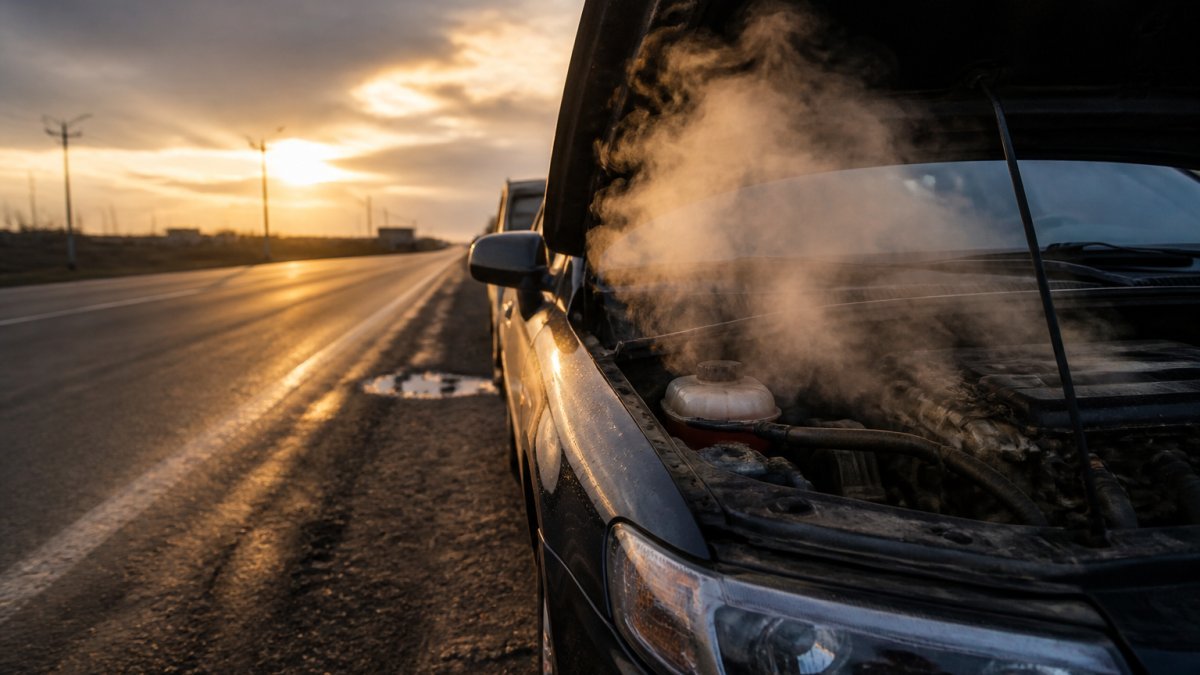
Engine overheating while driving usually comes from low coolant caused by a leak, a clogged or cracked radiator, a failed thermostat, or a water pump that can’t move coolant. A car that runs hot at highway speed points to a flow problem, while overheating at idle points to an airflow problem like a bad radiator fan.
- Pull over safely, shut off the engine, and wait at least 20 to 30 minutes before checking anything.
- Never open the radiator cap while the engine is hot, since pressurized coolant can spray and scald you.
- If the gauge climbs at highway speed but stays normal around town, suspect a clogged radiator, weak water pump, or thermostat.
- Coolant vanishing with no puddle and white smoke from the tailpipe points to a head gasket, so stop driving.
- Do not restart if the gauge pegs again, steam persists, or the oil looks milky; call for a flatbed tow.
Table of Contents
- Why Your Engine Temperature Gauge Climbs While You Drive
- What to Do When Your Car Overheats While Driving
- Low Coolant Causing Engine Overheating and Where It Leaks
- Radiator Problems, Cooling Fans, and Hoses That Fail Under Load
- Bad Thermostat Symptoms Overheating Drivers Often Miss
- Water Pump and Head Gasket Trouble: When the Damage Goes Deeper
- What to Do After an Engine Overheats
- Getting a Hot Car Off the Road in Tulsa
- Frequently Asked Questions
Why Your Engine Temperature Gauge Climbs While You Drive
Engine overheating is what happens when your cooling system can’t carry heat away from the engine fast enough.
Drivers on the Broken Arrow Expressway and I-44 often watch that gauge creep up and keep driving anyway. We understand the temptation. You’re ten minutes from home.
Most of the time, you can’t. Heat is the quiet killer of engines.
Here’s the thing most guides skip: overheating while moving is different from overheating in traffic.
What to Do When Your Car Overheats While Driving
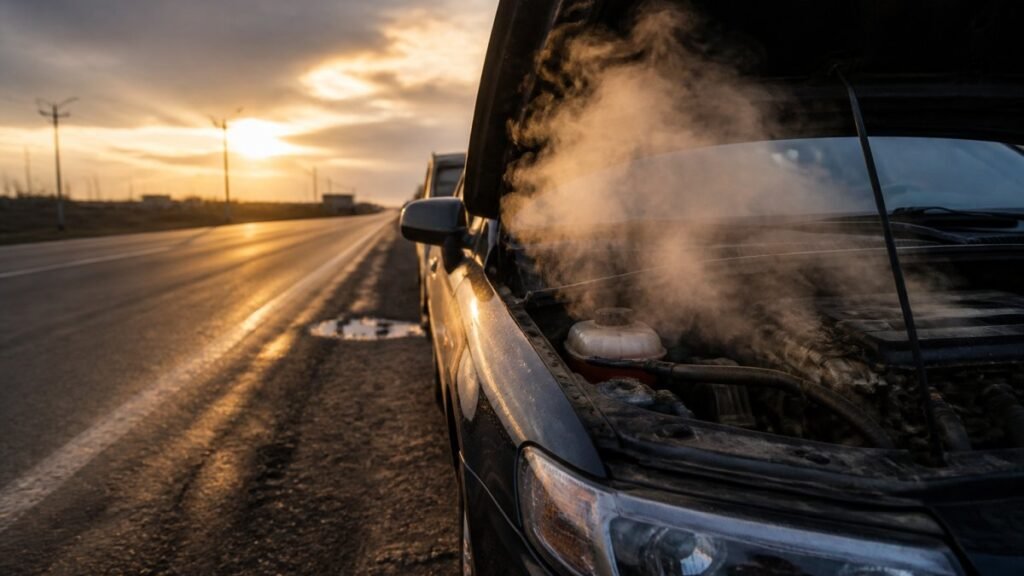
Pull over as soon as it’s safe and shut off the engine. That’s the whole answer. Do not “just get to the next exit.” Do not crank the heater and push through.
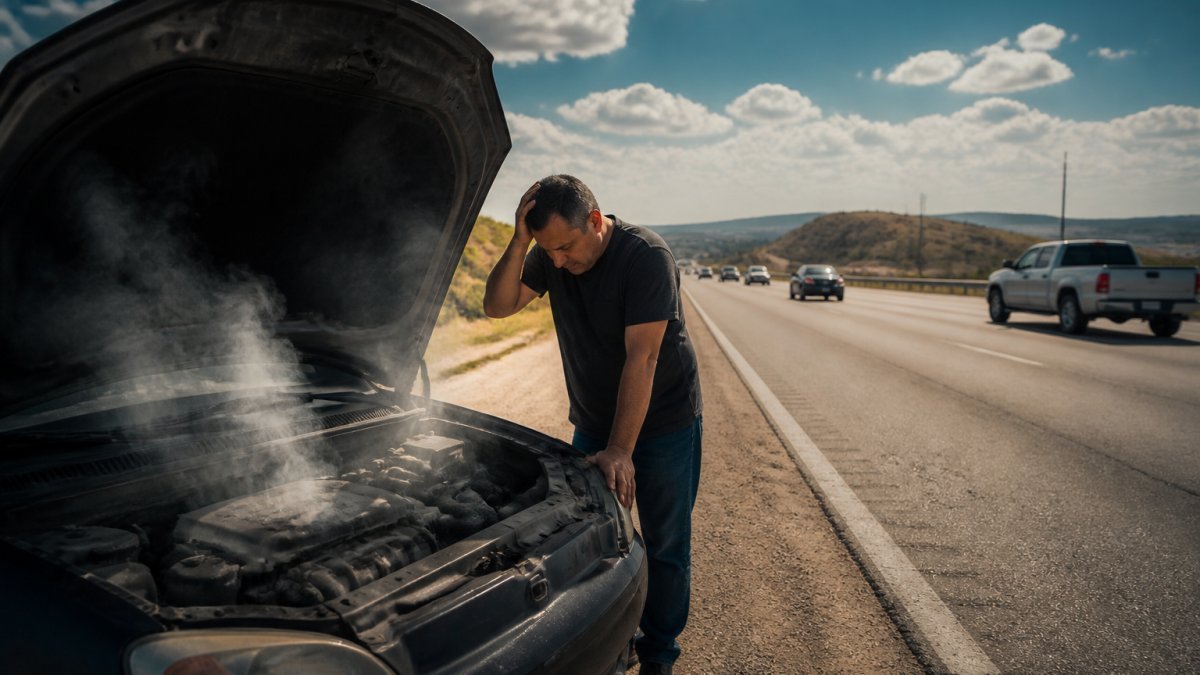
The safe sequence looks like this:
- Turn off the A/C and roll down the windows.
- Signal, move to the right shoulder or a parking lot, and stop.
- Shut off the engine and turn on your hazard lights.
- Pop the hood to let heat escape, but do not touch anything yet.
- Wait at least 20 to 30 minutes before checking anything.
- Never open the radiator cap while the engine is hot.
That last point matters more than the rest. A pressurized cooling system can spray scalding coolant when you crack the cap. If steam is pouring out, stay back and let it settle.
If the car won’t restart or you don’t feel safe on the shoulder, that’s a job for emergency towing in Tulsa. Our guide on towing service versus roadside assistance breaks down which one fits your situation.
Low Coolant Causing Engine Overheating and Where It Leaks
Low coolant causing engine overheating is the most common cause we see, and it’s usually a leak, not evaporation. Coolant doesn’t get “used up” in a healthy system. If the level keeps dropping, something is losing it.
Where it typically goes:
- Hoses: cracked or worn hoses weep at the clamps.
- Radiator: a pinhole or cracked plastic tank leaks under pressure.
- Water pump: a failing seal drips near the front of the engine.
- Head gasket: coolant disappears with no visible puddle, often with white smoke from the tailpipe.
- Reservoir cap: a bad cap lets coolant boil off.
A common mistake is topping off with water and calling it fixed. Water boils at a lower temperature than coolant and offers no corrosion protection. It buys you a day, not a repair. If you’re adding coolant more than once a month, get the system pressure-tested.
Radiator Problems, Cooling Fans, and Hoses That Fail Under Load
Radiator problems show up as overheating under load: climbing a hill, merging onto the highway, towing a trailer. A clogged radiator can’t transfer heat, and a cracked radiator loses pressure.
Radiator fans matter too, but mostly at low speed.
Hoses fail in a predictable way. Heat and pressure wear them from the inside out. A worn hose can look fine right up until it bulges or bursts.
Bad Thermostat Symptoms Overheating Drivers Often Miss
A thermostat is a small valve that stays closed while the engine warms up and opens once coolant reaches operating temperature.
A stuck-closed thermostat blocks coolant from reaching the radiator. The gauge climbs fast, often within a few minutes of start-up, and it keeps climbing no matter how fast you drive.
Watch for these signs:
- Temperature climbs quickly after a cold start, then holds high
- Gauge swings between hot and normal as you drive
- Heater blows cold while the engine runs hot
- Overheating returns shortly after a coolant top-off
- The upper radiator hose stays cool while the gauge reads hot
That last check is one of the few beginner-safe tests worth doing. With the engine cold, start it and let it idle. Feel the upper radiator hose after a few minutes.
Matching the symptom to the likely cause
This is where most guides stop short. The symptom pattern tells you more than any single part does:
- Overheats at idle, cools once you’re moving: airflow problem. Suspect the radiator fan, its relay, or a fan that isn’t kicking on in traffic on the IDL or sitting at a light on Memorial Drive.
- Overheats at highway speed, fine around town: flow problem. Suspect a clogged radiator, a failing water pump, or a thermostat that isn’t opening fully. Climbing the hill on Highway 169 toward Owasso or pulling a trailer up a grade loads the engine and exposes a weak cooling system fast.
- Overheats quickly after a cold start: often a stuck-closed thermostat or low coolant.
- Heater blows cold while the gauge reads hot: low coolant or an air pocket in the system, sometimes a water-pump flow problem.
- Steam or a sweet smell with a visible puddle: a leak you can see. Start with hoses, the radiator, and the water-pump seal.
- Coolant vanishing with no puddle and white smoke from the tailpipe: stop driving. That pattern points toward a head gasket, and it is not a roadside fix.
A thermostat is a small, low-cost part, but a stuck one can overheat an engine in minutes. If your gauge behaves erratically, have it checked before a cheap part turns into an expensive repair. If the gauge is already in the red and you’re on the shoulder, that’s a job for roadside assistance in Tulsa or a tow, not a parking-lot repair.
Water Pump and Head Gasket Trouble: When the Damage Goes Deeper
Water pump and head gasket failures are where overheating stops being a roadside annoyance and becomes a real repair bill. The water pump moves coolant through the engine. When its bearing or seal fails, flow drops and the engine cooks.
Signs of a failing water pump:
- Coolant dripping from the front of the engine
- A grinding or squealing noise from the belt area
- A loose or wobbly pump pulley
- Persistent overheating after other parts check out
Head gasket trouble is the one to fear. Symptoms include white smoke from the exhaust, coolant that vanishes with no leak, milky oil, or bubbles in the coolant reservoir.
What to Do After an Engine Overheats
After an engine overheats, the first decision is whether to restart at all. That decision matters more than any checklist, because restarting a hot engine to “see if it’s fixed” is how a head gasket job becomes an engine replacement.
When it’s reasonable to restart
A cautious restart is only worth considering if all of these are true:
- The gauge dropped back to normal and stayed there while the engine cooled
- The coolant reservoir was low and you topped it off with the correct coolant
- You found and can see the leak, and it’s a slow one
- There’s no steam, no white smoke from the tailpipe, and no milky oil on the dipstick
- You’re in a safe spot, not a narrow shoulder on I-44 or the Creek Turnpike
Even then, restart with the heater on and watch the gauge for the first few minutes. If it climbs past normal, shut it down.
When to stop and call for a tow
Do not restart, and do not drive, if any of these are true:
- The gauge pegs or climbs again within minutes
- Steam is still coming out after it cools
- Coolant is pouring out, not weeping
- The oil looks milky or the coolant reservoir has bubbles
- White smoke comes from the tailpipe
- The engine is making a knocking or grinding noise
- You can’t find the leak and the level keeps dropping
Those red flags point to internal damage or a failure that a top-off won’t fix. Driving even a short distance can warp a cylinder head, and that turns a manageable repair into a major one. This is the point where a flatbed tow protects the vehicle and avoids further strain on a hot engine.
Beginner-safe checks and their limits
Once the engine is fully cool, at least 30 minutes, you can do a few things safely:
- Check the coolant reservoir level when cold.
- Look under the car for drips or puddles.
- Squeeze the hoses when cold. They should feel firm, not spongy.
- Inspect the radiator cap and its seal.
- Top off with the correct coolant if needed.
What you can’t do at the roadside is pressure-test the system, check for a combustion leak, or confirm a water-pump flow problem. Those need a shop. If you’re adding coolant more than once a month, or the level drops with no visible puddle, get it pressure-tested before the next long drive.
How driving conditions change the picture
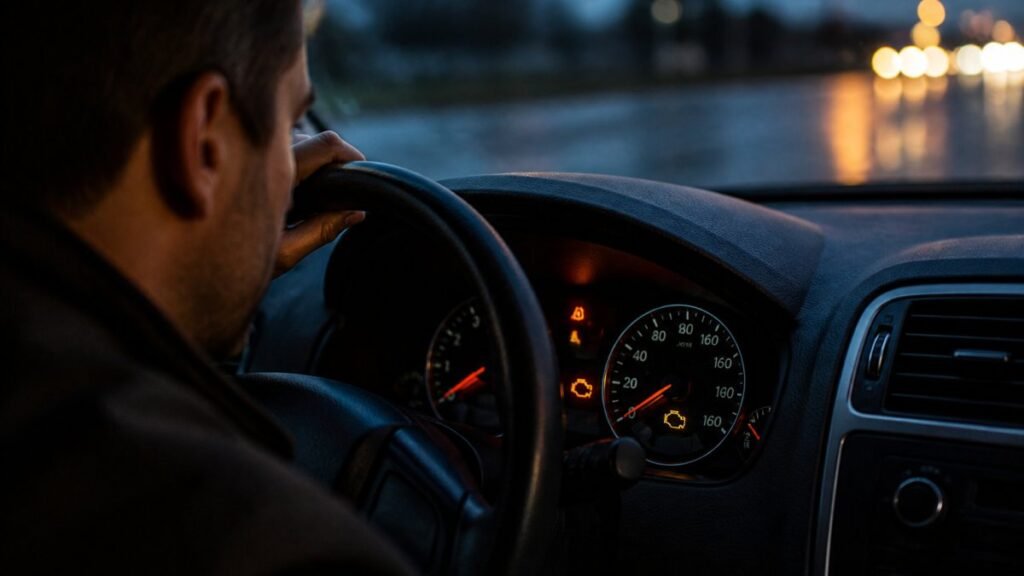
Overheating while driving isn’t the same as overheating in traffic. Ignoring these subtle thermal trends often leads to the illumination of dashboard warning lights, which serve as a critical signal that your vehicle requires immediate diagnostic attention.
When it’s time to move the car, flatbed towing protects the vehicle and avoids further strain on a hot engine. If you’re not sure whether you need a tow or just a roadside visit, our guide on towing service versus roadside assistance breaks down which one fits your situation.
Getting a Hot Car Off the Road in Tulsa
Getting a hot car off the road in Tulsa starts with knowing who to call and where you are.
Neptune Towing is owner-operated, and we don’t impound vehicles. We’re not in the storage-fee business. We’re the company you call when you need help, not a bill.
Not sure we cover your suburb? Check our Tulsa area service coverage for the full list of communities we serve, from Bixby to Sapulpa.
Frequently Asked Questions
Is it safe to keep driving if the temperature gauge is high?
No. Once the gauge pushes into the red or a warning light comes on, pull over as soon as it is safe and shut the engine off. Continuing to drive with engine overheating can warp the cylinder head, blow a head gasket, and turn a simple hose repair into a major engine job. If you cannot safely reach a shop, call for a tow rather than risk the motor.
Why does my car overheat in traffic but cool down while driving?
That pattern usually points to the radiator fan. At highway speed, airflow through the radiator does the cooling work. In stop-and-go traffic, the fan has to pull air through on its own. If the fan motor, relay, or fuse has failed, the engine temperature rises when you slow down and drops again once you pick up speed. A stuck thermostat or low coolant can cause similar swings.
Can a blown head gasket cause overheating?
Yes. A blown head gasket lets combustion gases into the cooling system or lets coolant into the cylinders. That can push coolant out of the radiator, create white smoke from the tailpipe, and make the engine overheat repeatedly even after you add coolant. It is one of the more serious causes and usually follows an earlier overheating episode that was not addressed.
Should I call roadside assistance if my car overheats?
If you are on a highway, in traffic, or the temperature will not come down after the engine cools, yes. A local towing company can move the vehicle to a repair shop without you risking further damage. If you are near home and the gauge settles after cooling, you may be able to add coolant and drive a short distance, but watch the gauge the whole way.
A car that overheats while you’re driving is a problem you can’t talk your way out of. The gauge is telling you something is wrong, and the fix is to stop, cool down, and let a professional move the vehicle. If you’re stuck on the shoulder with steam rising, call Neptune Towing at (539) 292-3074. We offer 24/7 emergency service, damage-free flatbed towing, and honest pricing with no surprise charges. Get started with Neptune Towing and get you and your car home safe.