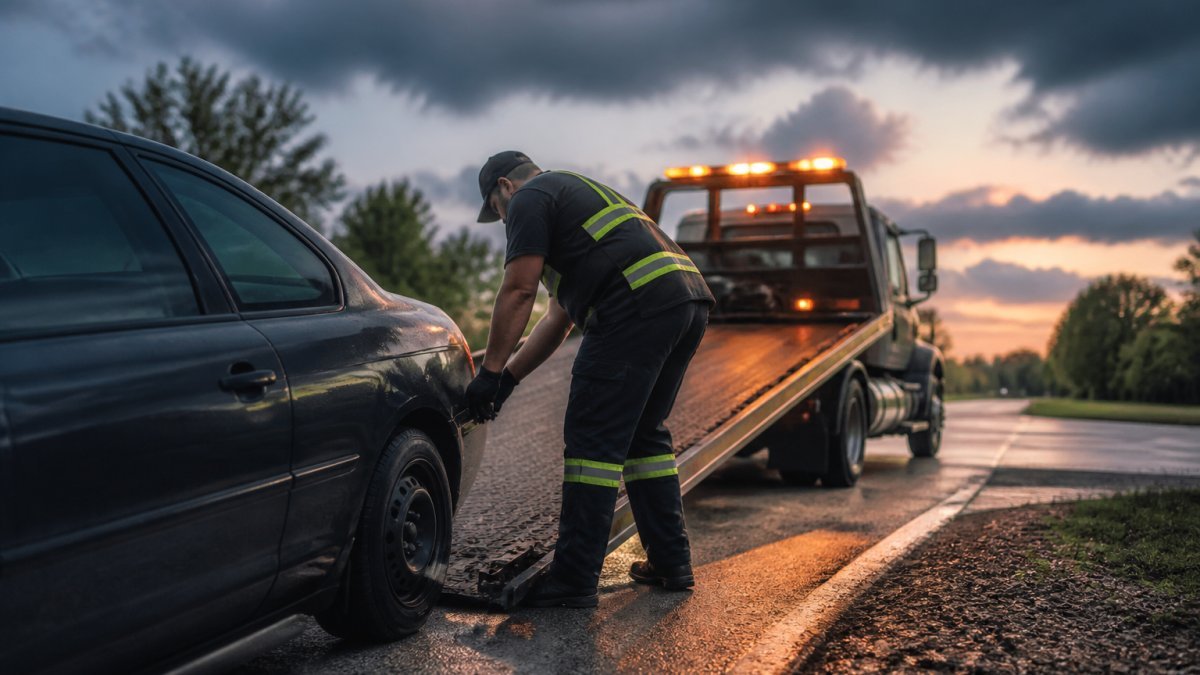

Table of Contents
- What You’ll Need Before You Call for a Tow
- How Towing Services in Bixby Oklahoma Handle a Breakdown
- Roadside Assistance Tulsa Drivers Can Count On
- Flatbed Towing Tulsa Drivers Trust for Low-Clearance Vehicles
- Lockout Service: When Your Keys Are Inside and You’re Outside
- EV Towing and Tesla Towing Without the Drivetrain Damage
- Common Mistakes Drivers Make When They Need a Tow
- Frequently Asked Questions
Last Updated: September 28, 2026
What You’ll Need Before You Call for a Tow
The U.S. automobile towing industry is projected to reach $12.0 billion in 2026, a 2.1% revenue increase even as the industry’s longer-term growth has slipped, according to IBISWorld’s Automobile Towing in the US industry analysis. That number matters less than what’s in your glovebox when your car quits on the Creek Turnpike.
Have these ready before you dial:
- Your exact location, including the nearest cross street or mile marker
- Vehicle make, model, and year
- Whether the car rolls, steers, and brakes
- Your phone number and a safe place to wait
Drop a pin in your maps app and text it to the dispatcher. “Near the QuikTrip on Memorial” wastes minutes. A pin puts the truck on your bumper.
How Towing Services in Bixby Oklahoma Handle a Breakdown
A breakdown follows the same rhythm whether you’re on Highway 51 or a quiet street off 151st. Knowing the sequence keeps you calm and keeps the driver moving. Most guides stop at “call a tow truck.” The part they skip is what you should actually do during the wait, and that’s where people get hurt.
Step 1: Get Off the Road and Stay Safe
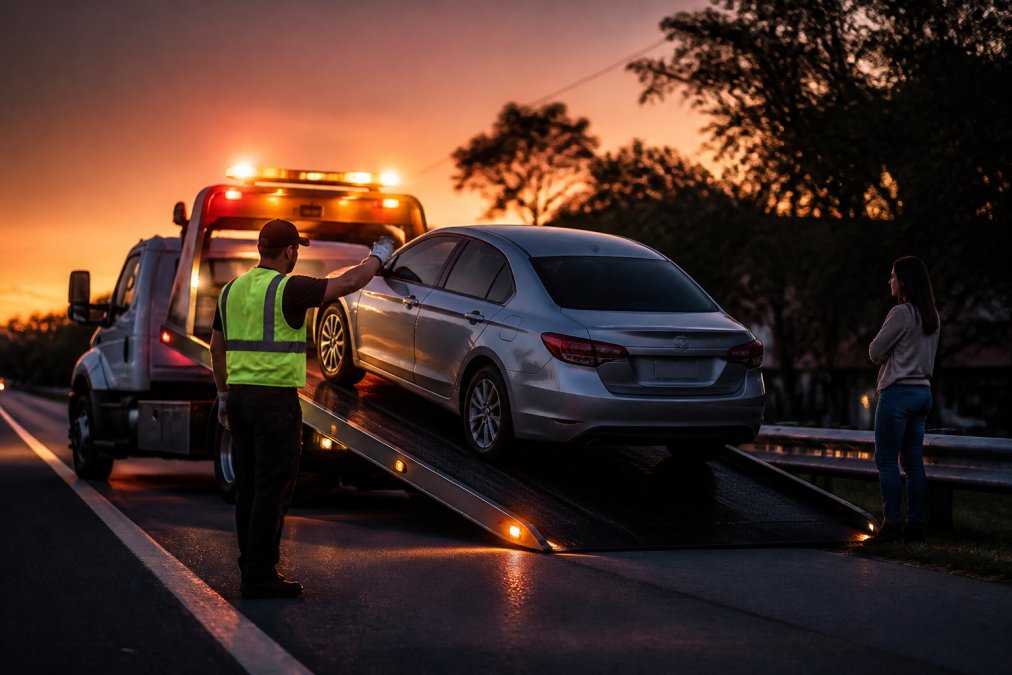
Move as far right as the shoulder allows, turn on hazards, and stay in the vehicle if traffic is heavy. If you can exit safely, stand behind the guardrail, never in front of or beside your car. On the Creek Turnpike or I-44, the right shoulder is often narrower than it looks, so angle your wheels away from traffic before you stop.
Step 2: Call a Local Dispatch and Describe Your Location
Give the dispatcher your pin, your vehicle details, and what happened. A real local dispatch asks follow-up questions because the operator knows the roads. “I’m on Memorial just south of 121st” tells us more than a street name alone, because we know which side of the road has a safe pull-off and which doesn’t.
Step 3: Let the Operator Match the Right Truck to Your Vehicle
Not every job needs a flatbed. A wheel-lift works fine for many standard vehicles, while low-clearance cars, EVs, and classics need a flatbed. The operator decides based on what you tell them. If you’re not sure what you drive counts as, say so. It’s a faster conversation than guessing.
What to Do While You Wait
This is the part most drivers get wrong, and it’s the part that matters most.
- Stay buckled if you’re in the car. If you’re on a highway shoulder with traffic flying past, your seatbelt is your best protection against a secondary hit.
- If you get out, go behind the guardrail, not in front of the car. Standing between your vehicle and oncoming traffic is the single most dangerous place on the shoulder.
- Turn your wheels toward the shoulder, not the road. If your car gets bumped, it rolls away from traffic instead of into it.
- Keep your hazard lights on and, if you have them, set out reflective triangles or a flare behind the car. Only do this if it’s safe to walk back there.
- Don’t try to change a tire on the traffic side of the vehicle. Wait for the truck. A tire change isn’t worth the risk on a busy road.
- Watch for the truck and stay visible. Wave a phone flashlight at night so the operator can spot you before he spots the car.
Text the dispatcher a pin from your maps app the moment you call. “Near the QuikTrip on Memorial” wastes minutes. A pin puts the truck on your bumper, and it also tells the operator which side of the road you’re on so he can approach safely.
What the Operator Is Doing on His End
While you wait, the driver is running the same checklist in reverse: confirming your location, deciding whether a wheel-lift or flatbed is the right call, and planning an approach that doesn’t put either of you in traffic. If he asks you to move, or to stay put, that’s not indecision. It’s him reading the road.
Roadside Assistance Tulsa Drivers Can Count On
Roadside assistance covers the problems that don’t always need a tow. A dead battery, a flat tire, an empty tank, or keys locked inside are all fixable on the spot.
Flatbed Towing Tulsa Drivers Trust for Low-Clearance Vehicles
Flatbed towing loads all four wheels onto the deck, so nothing drags and nothing spins. That’s the right call for sports cars, lowered trucks, classic cars, and anything with limited ground clearance. A wheel-lift truck raises two wheels and tows the rest. It’s faster and cheaper for many everyday vehicles, but it puts stress on the drivetrain and bodywork of a low car.
| Vehicle Type | Best Method | Why |
|---|---|---|
| Standard sedan or SUV | Wheel-lift or flatbed | Both work; flatbed is gentler |
| Lowered or sports car | Flatbed | No scraping, no drivetrain load |
| Classic or collector car | Flatbed | Protects paint and undercarriage |
| All-wheel drive | Flatbed | Prevents drivetrain damage |
| Electric vehicle | Flatbed | No spinning wheels, no motor stress |
Lowered Cars, Sports Cars, and Body Kits
A car that sits a couple of inches off the ground can’t climb a wheel-lift ramp without scraping the front lip, the exhaust, or the undercarriage. A flatbed uses a tilt deck and a winch, so the vehicle rolls on at a shallow angle instead of being dragged up. If you’ve spent money on a splitter, side skirts, or coilovers, that’s the difference between a clean tow and a repair bill.
All-Wheel Drive and 4×4 Vehicles
On an AWD vehicle, all four wheels are tied together through the drivetrain. Lift two wheels and let them spin while the other two stay still, and you’re forcing the system to fight itself. That’s how you cook a transfer case or a differential. A flatbed keeps all four wheels off the ground and stationary, which is the only method that’s safe for most AWD systems.
Electric Vehicles and Teslas
EVs need a flatbed for the same reason AWD does, plus one more. When an EV’s driven wheels spin, the motor can act as a generator and push current back into a system that isn’t expecting it. That’s how a simple tow turns into a battery or inverter repair. Tesla towing and EV towing also require knowing where the tow points are and how to avoid the battery pack underneath.
Classic and Collector Cars
Old cars have old parts. A wheel-lift puts load on suspension and steering components that may already be tired, and it exposes paint and chrome to road debris kicked up behind the truck. A flatbed keeps the whole car on the deck, strapped by the tires where it belongs. If your classic has a soft top, low-hanging exhaust, or a fiberglass body, tell the dispatcher up front so the right truck shows up the first time.
What to Ask Before the Truck Arrives
- “Will this be a flatbed or a wheel-lift?” If you drive any of the vehicles above, the answer should be flatbed.
- “Do you use soft straps or wheel baskets?” Proper securement protects rims and paint.
- “Have you towed this type of vehicle before?” A fair question, and a good operator won’t mind answering it.
Never let a driver hook up an all-wheel-drive or electric vehicle for a two-wheel tow. The damage often shows up days later, after the tow company is long gone. If the truck that arrives isn’t the right one for your vehicle, it’s okay to say so.
At Neptune Towing, we run flatbeds for the vehicles that need them and we’ll tell you honestly when a wheel-lift is fine. Damage-free towing isn’t a slogan. It’s knowing which method your vehicle actually requires and showing up with the right truck.
Lockout Service: When Your Keys Are Inside and You’re Outside
Lockout service gets you back into your car without breaking a window or damaging the door. A trained technician uses proper tools to open the door in minutes.
EV Towing and Tesla Towing Without the Drivetrain Damage
Electric vehicles need a flatbed, full stop. Towing a Tesla or any EV with two wheels on the ground can spin the motor and generate current with nowhere to send it. That’s how you turn a dead battery into a five-figure repair.
Common Mistakes Drivers Make When They Need a Tow
The biggest mistake is calling whoever answers first without asking how the vehicle will be moved. A cheap hookup fee means nothing if the tow damages your transmission.
Other frequent errors:
- Standing in traffic instead of behind the guardrail
- Giving a vague location like “near the mall”
- Not asking whether the quote includes mileage
- Assuming every truck can safely handle an EV or a classic
Frequently Asked Questions
What should I look for when choosing a local towing company in Bixby?
Look for a provider that is licensed and insured, answers its own phone instead of routing you through a national call center, and explains how charges are calculated before the truck arrives. Ask whether the operator uses a flatbed for low-clearance or electric vehicles, and confirm the company serves your exact location, whether that’s Memorial Drive, 151st Street, or a rural road near Lake Bixby. Owner-operated companies like Neptune Towing give you a direct line to the person handling your vehicle.
How does flatbed towing protect my vehicle from damage?
A flatbed carries all four wheels on the deck, so nothing drags and the drivetrain stays still. That matters for all-wheel-drive vehicles, low-clearance sports cars, and EVs, where spinning the wheels during transport can harm motors or battery systems. The operator secures the vehicle with soft straps at the tires rather than hooks on the frame. If you drive a classic car or a Tesla, request flatbed towing Tulsa drivers rely on for damage-free transport.
What steps should I take if I’m locked out of my car in Bixby?
Stay with the vehicle and call a lockout service rather than trying to pry the door open, which can bend the frame or break window glass. Give dispatch your exact location, the make and model, and whether a child or pet is inside. A trained technician uses slim jim tools and air wedges designed for your door type. Neptune Towing handles lockouts across the Tulsa metro.
Can you tow my Tesla or EV without causing drivetrain damage?
Yes, when the operator uses the right equipment. EVs should never be towed with two wheels on the ground because the motors can generate current and overheat. A flatbed keeps all four wheels stationary. Tell dispatch it’s an EV when you call so the right truck is sent, and mention if the vehicle is in Park with the electronic brake engaged. Neptune Towing handles EV towing and Tesla towing with flatbed equipment and proper securement.
When your car quits in Bixby, Jenks, or anywhere across the Tulsa metro, you want a local owner-operator who answers the phone and shows up, not a call center that farms you out. Neptune Towing has served the area since 2019 with damage-free flatbed towing, honest pricing, and no impound lots. Call (539) 292 3074 for 24/7 emergency towing, roadside assistance, jump starts, lockouts, and EV transport. Get started with Neptune Towing and get you and your vehicle home safe.