
Table of Contents
- Why Damage-Free Vehicle Recovery Matters
- 1. Assess the Scene Before Any Recovery Attempt
- 2. Know Your Vehicle’s Recovery Points
- 3. Choose the Right Recovery Method and Equipment
- 4. Safe Vehicle Recovery Tips for Proper Positioning
- 5. Professional Winch-Out Service Techniques
- 6. Flatbed Towing as the Gold Standard
- 7. What to Do When Your Car Breaks Down
- Frequently Asked Questions
Last Updated: October 19, 2026
Why Damage-Free Vehicle Recovery Matters
When your vehicle gets stuck, your first instinct is to get it out fast. But rushing a recovery without a plan is how most damage happens, a wrong strap, an improper attachment point, or a jerking motion can cost thousands in repairs. That’s why damage-free vehicle recovery matters.
At Neptune Towing, we’ve handled many recoveries across Tulsa and the surrounding communities. The difference between a clean recovery and an expensive disaster usually comes down to preparation.
1. Assess the Scene Before Any Recovery Attempt
Stop and look around before you do anything. Your safety and your vehicle’s safety depend on understanding the scene.
Identify hazards and traffic conditions
If you’re near active traffic, your first job is getting to safety, not recovering the vehicle. A distracted driver can turn a stuck vehicle into a collision in seconds.
Look for obstacles around the vehicle:
- Ditches or drop-offs
- Utility lines or power lines
- Debris or sharp objects
- Unstable ground or soft shoulders
Check road surface and weather
Rain, ice, or mud changes everything about how a vehicle behaves during recovery. Wet ground reduces traction and makes vehicles more likely to slip sideways, and wind can push lighter or high-profile vehicles.
Document the scene with photos or video before you attempt recovery. If something goes wrong, you’ll have a record of the conditions and the attempt.
2. Know Your Vehicle’s Recovery Points
Your vehicle has specific points designed to handle pulling force.
Tell rated recovery points apart from everything else
A rated recovery point is a reinforced, factory-engineered location on the frame or unibody designed to accept a recovery load.
Common rated recovery points include:
- Tow hooks (front and rear), often stamped or labeled with a rating
- Frame-mounted recovery points on trucks and body-on-frame SUVs
- Threaded recovery-point receptacles on some modern vehicles that accept a screw-in shackle
- Axle points only where the manufacturer explicitly approves them
Drivers often mistake a shipping tie-down loop for a tow hook.
Check the owner’s manual before you hook up
Your owner’s manual is the authority on your specific vehicle.
Vehicle type changes the answer:
- Pickups and body-on-frame SUVs usually have front and rear tow hooks or frame brackets rated for recovery.
- Sedans and unibody crossovers often have no rated recovery point, and the manual may prohibit strap recovery entirely.
- Electric vehicles like Teslas have specific recovery points and manufacturer-specific towing modes. Some require a tow-eye that screws into a threaded receptacle behind a small cover in the bumper, and the manual specifies which wheels must stay stationary.
- Modified vehicles with aftermarket bumpers may have rated shackle mounts, but only if the bumper is engineered and labeled for recovery.
If you cannot find a rated point in the manual, do not improvise.
Understand working load limits and vehicle weight
Every recovery point has a working load limit, the maximum force it can safely handle.
Never attach a strap or winch line to a bumper, control arm, sway bar, steering component, or a thin tie-down loop. These parts are not rated for recovery loads and can fail suddenly, sending hardware toward people and vehicles.
If you’re unsure about your vehicle’s recovery points or limits, don’t guess. Call a professional towing service. Neptune Towing’s team knows the recovery points for most vehicles on the road and can handle your vehicle safely.
3. Choose the Right Recovery Method and Equipment
The method you choose depends on how stuck your vehicle is, the terrain, and the equipment you have.
Match the method to how the vehicle is stuck
Each recovery method has a different damage profile:
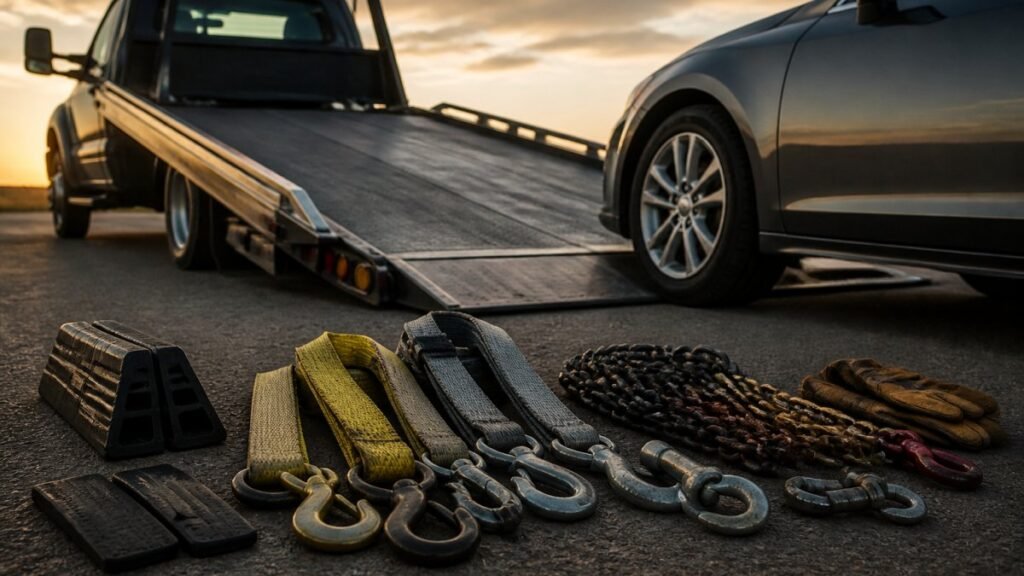
- Strap recovery (kinetic or static) works best for light recoveries where the vehicle is only partially stuck. A kinetic strap stretches and stores energy to help pop a vehicle out of sand or mud, but applies a dynamic load that stresses recovery points. A static strap is gentler but needs a steady pull. Neither is right for a deeply stuck or high-centered vehicle.
- Winching provides controlled pulling power for severe situations, but requires proper setup and skill to avoid shock loads. It’s the gentlest method on the drivetrain because the vehicle is pulled slowly and steadily rather than yanked.
- Chains are strong but have almost no stretch, so they transfer shock directly into the vehicle and recovery point. Most recovery practitioners avoid chains for vehicle recovery and reserve them for equipment and anchor work.
- Traction aids such as traction boards, sand ladders, and winch-anchors reduce the force needed to free a vehicle and are often the least damaging first step before any pull.
Understand ratings and compatibility
Every component in the recovery system has a working load limit, and the system is only as strong as its weakest link.
Compatibility matters as much as strength:
- Shackles must fit the recovery point and the strap eye. Too large can side-load and bend; too small can bind and fail.
- Strap ends should attach to rated points with the correct hardware, not wrapped around sharp edges or knotted.
- Winch line should match the winch’s rated capacity and be inspected for kinks, fraying, or glazing.
- Tree savers and anchors must be rated and positioned so the pull stays in line with the anchor.
Inspect gear before every use
Before you use any recovery equipment, inspect it:
- Look for fraying, tears, cuts, or weak spots on straps
- Check chains for bent links or corrosion
- Verify winch cables aren’t kinked, frayed, or damaged
- Make sure all attachment hardware is secure and correctly sized
Damaged equipment fails at the worst moment, a torn strap can snap under load and injure someone.
Never use recovery equipment with visible damage, and never mix components rated for different loads. A broken strap, shackle, or chain can cause serious injury and vehicle damage during recovery.
Know when to stop the DIY attempt
Some situations are past the point where more throttle or a bigger strap will help. Stop and call a professional if:
- The ground under the recovery vehicle is unstable or the anchor is moving
- The pull angle is more than slightly off straight and you cannot correct it
- Any component shows damage or is rated below the vehicle’s weight
- Visibility is poor or traffic is close
- The vehicle is high-centered, in water, or on a slope
Recognizing those stop conditions early separates a clean recovery from an expensive repair.
4. Safe Vehicle Recovery Tips for Proper Positioning
How you position the vehicles determines whether the force pulls straight or at an angle. Angled pulls cause sideways force that can damage frames.
Align vehicles in a straight line
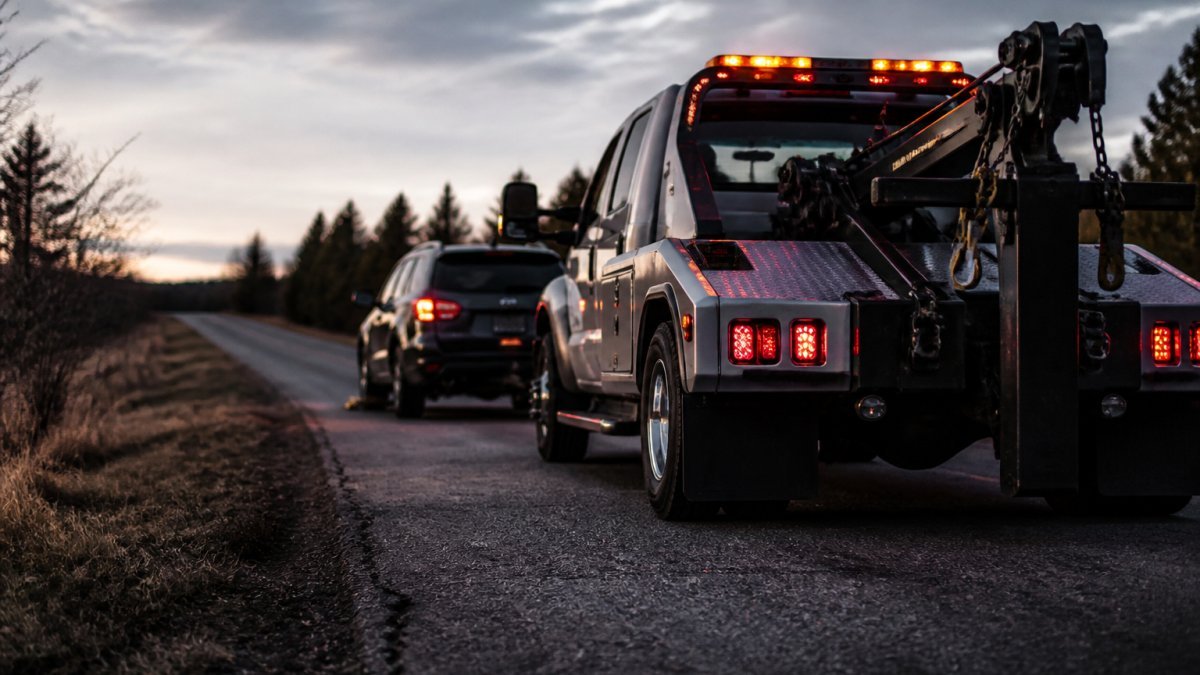
The recovery vehicle and the stuck vehicle should be aligned in a straight line with the pull direction, keeping all the force moving one way instead of pulling sideways.
Maintain safe distance and slack
Before you start pulling, make sure there’s slack in the recovery strap or chain so the equipment extends gradually instead of jerking tight.
5. Professional Winch-Out Service Techniques
A winch-out is a controlled recovery using a winch to pull a vehicle out slowly and steadily.
Avoid shock loads and jerking motions
Shock load happens when force is applied suddenly instead of gradually, the biggest cause of damage during winch recoveries.
Proper winch technique means:
- Starting the winch slowly
- Keeping tension steady and even
- Never jerking or stopping suddenly
- Maintaining constant pulling speed
Control throttle and maintain steady tension
If you’re using a recovery vehicle with a winch, control the throttle carefully.
Professional towing services have winch operators trained in these techniques who can read the situation and adjust pulling power to match the vehicle and terrain.
6. Flatbed Towing as the Gold Standard
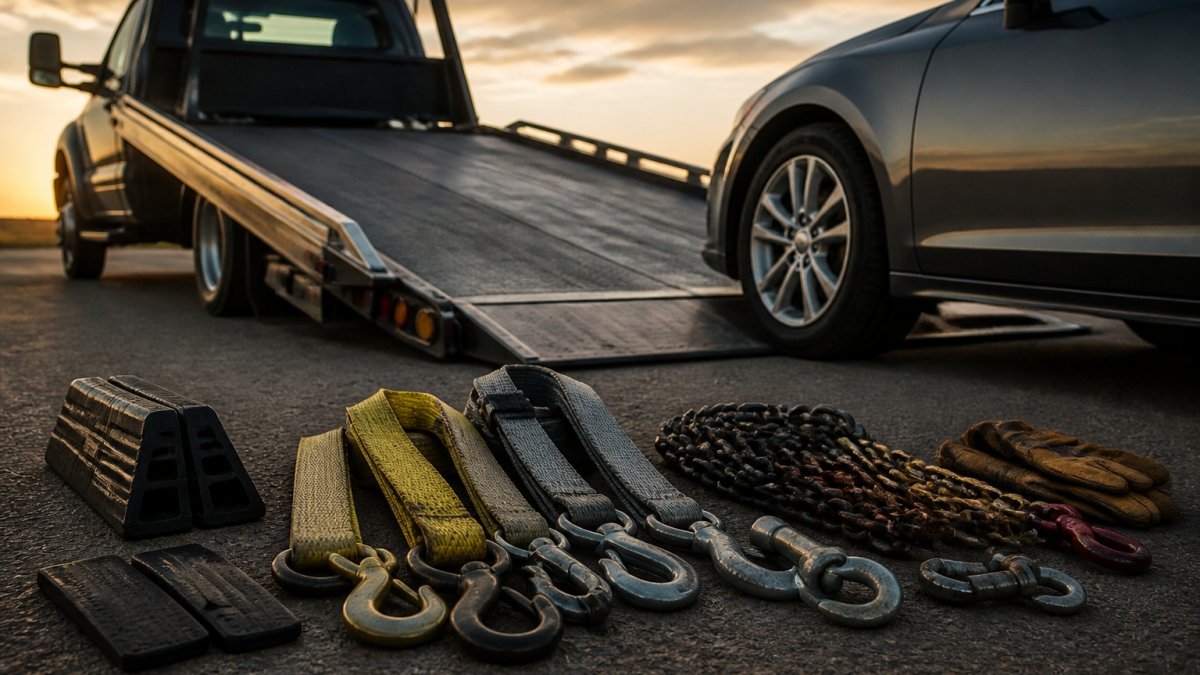
Flatbed towing is the safest way to transport a vehicle after recovery.
Why flatbed prevents damage to low-clearance and electric vehicles
Electric vehicles like Teslas need special care. Many EVs have single-speed transmissions that can be damaged if towed with wheels rolling.
Proper loading and securement procedures
When a vehicle is loaded on a flatbed, secure it properly:
- Use wheel straps or chains to hold all four wheels
- Secure the vehicle at multiple points
- Make sure the vehicle is centered on the flatbed
- Check that nothing shifts during transport
Improper loading can cause a vehicle to shift or slide, damaging it and creating a safety hazard on the road.
Neptune Towing uses flatbed equipment for most recoveries and secures every vehicle properly.
7. What to Do When Your Car Breaks Down
When your vehicle breaks down, your first priority is safety. Your second priority is getting help.
Immediate steps to take for your safety
If your vehicle breaks down on a roadway:
- Turn on hazard lights immediately
- Move to the shoulder if it’s safe to do so
- Stay inside the vehicle if traffic is heavy
- Keep the engine off unless you need heat or air conditioning
- Don’t attempt repairs on the roadside near traffic
On a highway like I-44 or the Broken Arrow Expressway, other vehicles are moving fast, and a broken-down vehicle on the shoulder is at risk.
When to call a professional instead of attempting DIY recovery
Call a professional towing service if:
- Your vehicle is stuck in a ditch or off the road
- You don’t know your vehicle’s recovery points
- The terrain is difficult or unstable
- Weather conditions are poor
- You don’t have proper recovery equipment
- You’re unsure about any part of the recovery process
Calling Neptune Towing gets you professional help fast. We dispatch from across Tulsa, Bixby, Broken Arrow, and surrounding areas, and our team knows how to handle your vehicle safely.
The safest recovery is the one done by someone trained to do it. When in doubt, call a professional.
| Recovery Situation | Best Approach | Why It Works |
|---|---|---|
| Lightly stuck in mud or soft ground | Tow strap from proper recovery point | Gentle force, minimal damage |
| Deeply stuck or high-centered | Professional winch service | Controlled pulling, prevents shock load |
| Low-clearance or electric vehicle | Flatbed towing | Protects undercarriage and drivetrain |
| Vehicle in ditch or off-road | Professional recovery service | Proper equipment and expertise |
| Uncertain about recovery points | Call for professional assessment | Prevents damage from wrong attachment |
Frequently Asked Questions
How can I avoid damaging my vehicle during a recovery?
Start by knowing your vehicle’s rated recovery points from your owner’s manual and never exceed the working load limit. Use proper equipment like quality tow straps or chains, maintain straight-line pulls, and avoid jerking motions. Flatbed towing is the safest option for low-clearance and electric vehicles. If you’re unsure about any part of the process, call a professional recovery service instead of risking damage.
When should I call a professional for vehicle recovery?
Call a professional immediately if your vehicle is on an active roadway, in severe weather, on a steep slope, or if you lack proper recovery equipment. If you’re stuck in mud, sand, or a ditch and feel uncertain about the recovery angle or technique, professional help prevents costly damage. For electric vehicles, Teslas, and luxury or classic cars, professional damage-free recovery is always the safer choice.
Is flatbed towing safer for my vehicle?
Yes. Flatbed towing eliminates contact between your vehicle’s tires and the road, reducing strain on the drivetrain and suspension. It’s especially critical for electric vehicles and low-clearance cars, where traditional towing can cause thousands in damage. Flatbed also protects your vehicle from road debris and weather during transport, making it the gold standard for damage-free recovery.
What information should I give a towing company when requesting recovery?
Provide your exact location, vehicle type (especially if it’s an EV or low-clearance model), how the vehicle became stuck, current weather and road conditions, and any visible damage. If you know your vehicle’s weight and recovery points, share that too. Clear details help dispatchers send the right equipment and expertise to handle your situation safely and without damage.
When your vehicle breaks down or gets stuck around Tulsa, you need someone you can trust. Neptune Towing has been serving the community since 2019 with damage-free towing, professional recovery services, and honest customer service. We handle everything from jump starts and lockouts to complex vehicle recoveries and flatbed towing for your Tesla or luxury vehicle. Call us at (539) 292-3074 for fast, dependable help.