
Table of Contents
- 7 Signs Your Car Battery Is Failing: What to Watch For
- Sign 1: Slow Engine Crank or Sluggish Starting
- Sign 2: Dashboard Battery Warning Light Illuminates
- Sign 3: Clicking Sound When You Turn the Ignition
- Sign 4: Dim Headlights and Interior Lights
- Sign 5: You Need Frequent Jump-Starts
- Sign 6: Corrosion on Battery Terminals
- Sign 7: Swollen or Warped Battery Case
- Understanding Car Battery Lifespan in Oklahoma’s Climate
- Alternator vs. Battery Problems: How to Tell the Difference
- How to Test Car Battery Health at Home
- Jump Start Service Tulsa: When to Call for Professional Help
- What Causes Battery Failure and How to Prevent It
- What to Do When Your Battery Fails: Your Next Steps
- Conclusion
Last Updated: July 28, 2026
7 Signs Your Car Battery Is Failing
When your car won’t start on a cold Tulsa morning, a failing battery is usually the culprit. Understanding these 7 signs can save you from getting stranded on I-44 or in a Brookside parking lot. At Neptune Towing, we respond to battery-related breakdowns almost daily. Drivers who catch these warning signs early avoid the stress of a complete dead battery and the emergency tow truck call that follows.
Sign 1: Slow Engine Crank or Sluggish Starting
Your engine cranks slower than usual when you turn the ignition key. That hesitation, where the starter motor sounds weak and labored instead of firing up immediately, indicates your battery is losing its ability to deliver the cranking amps your vehicle needs. A failing battery can’t maintain consistent voltage, reducing available power during startup. You might notice this on cold mornings first, since low temperatures make the problem worse.
If your car starts slowly but still starts, you have a window of time to replace the battery before it fails completely. Don’t wait, a slow crank today becomes a no-start tomorrow.
Sign 2: Dashboard Battery Warning Light Illuminates
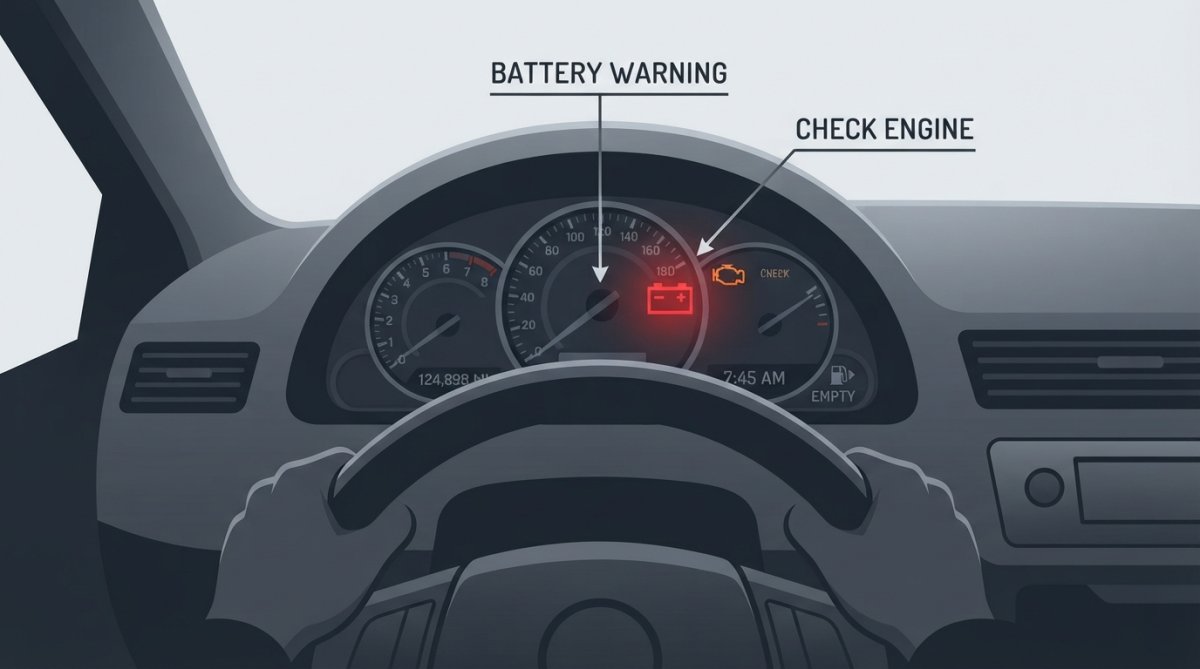
The battery warning light on your dashboard looks like a small battery symbol. When this light comes on while you’re driving, your vehicle’s electrical system is detecting a problem with the battery or charging system. This typically indicates that your alternator isn’t charging the battery properly, or the battery itself is failing.
Driving with the battery warning light on risks a complete power loss while you’re on the road. If you see this light, get to a mechanic or call for [roadside assistance](/blog/emergency-roadside-assistance-tulsa-oklahoma/) soon.
Sign 3: Clicking Sound When You Turn the Ignition
You turn the key and hear rapid clicking, click-click-click-click, but the engine doesn’t turn over. This distinctive sound means your battery doesn’t have enough power to engage the starter motor fully. The starter relay is clicking because it’s receiving some electrical signal, but not enough sustained current to crank the engine. When this happens on the side of I-44 near Tulsa, you’re looking at a tow truck call. A jump start might work temporarily, but a battery producing this symptom is at the end of its life.
Sign 4: Dim Headlights and Interior Lights
Your headlights look noticeably dimmer than usual, especially when idling at a red light. Your dashboard lights, dome light, and other interior lighting also appear weak. This dimming happens because the battery voltage is dropping. Pay attention to whether the dimming gets worse when you run the air conditioner or use other electrical systems.
Dim lights are one of the earliest signs of battery trouble. You might catch this weeks before the battery fails completely, giving you time to plan a replacement instead of facing an emergency.
Sign 5: You Need Frequent Jump-Starts
Your battery dies, you get a jump start, and it works, but then a few days later, you need another jump. This pattern indicates your battery is failing or your charging system isn’t recharging it properly. A healthy battery holds a charge for weeks, even if the car sits unused. If you’re jump-starting your car multiple times per week, replacement is overdue.
Frequent jump-starts also indicate potential alternator problems. Your alternator is responsible for recharging the battery while the engine runs. If the alternator is failing, the battery never fully recharges. Drivers in the Tulsa area who need frequent jump-starts should consider keeping a portable jump starter in their vehicle, but this is a temporary solution. The underlying battery or charging problem still needs professional attention.
Sign 6: Corrosion on Battery Terminals
Pop your hood and look at the battery terminals, the metal connectors where the cables attach. If you see white, blue, or green crusty buildup around the terminals, that’s corrosion. This corrosion forms when battery acid reacts with the metal terminals, creating a chemical barrier that prevents proper electrical connection.
You can clean minor corrosion yourself using a battery terminal cleaning tool. For heavy corrosion, professional cleaning is safer. If you clean the terminals and corrosion returns quickly, your battery or alternator likely needs replacement.
Sign 7: Swollen or Warped Battery Case
Open your hood and look at the battery case itself. A healthy battery is rectangular and flat. A failing battery sometimes swells or warps, looking bloated or misshapen. This swelling happens when the battery overcharges or when internal chemical reactions produce excessive gas. Tulsa’s hot summers mean batteries age faster here than in cooler climates. If you notice your battery case looking warped or puffy, get it replaced before it fails completely.
Understanding Car Battery Lifespan in Oklahoma’s Climate
Car batteries typically last three to five years, but Oklahoma’s climate accelerates degradation. Tulsa’s hot summers and occasional cold snaps put stress on batteries year-round. Summer heat causes faster chemical reactions inside the battery, speeding up the aging process. Most drivers in the Tulsa area should plan for battery replacement around the three-to-four-year mark.
Track your battery’s age. Write the installation date on your battery with a marker. When it approaches three years, start monitoring for warning signs. When it hits four years, plan replacement even if you haven’t noticed problems yet.
Alternator vs. Battery Problems: How to Tell the Difference
Not every starting problem is a battery problem. Your alternator charges the battery while the engine runs. If the alternator fails, the battery never recharges, and you’ll experience symptoms that look like battery failure.
A failing battery typically shows symptoms when the engine is off or at idle. Starting problems, dim lights at idle, and clicking sounds usually point to the battery. A failing alternator shows symptoms while driving. Your lights might be bright when you first start the car, then gradually dim as you drive. The battery warning light stays on while the engine runs. A multimeter can measure battery voltage at rest and while the engine runs. A healthy battery shows around 12.6 volts at rest. While the engine runs, the alternator should boost voltage to 13.5-14.5 volts.
How to Test Car Battery Health at Home
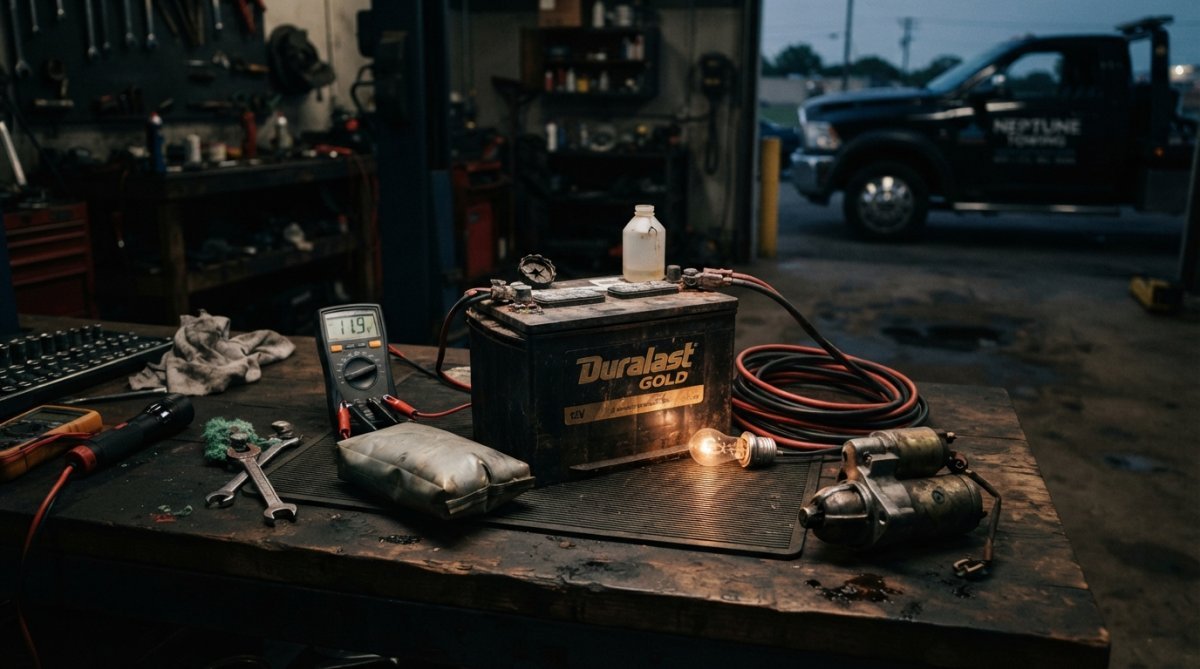
A simple multimeter from any hardware store measures voltage. Set it to DC voltage, connect the red probe to the positive terminal and the black probe to the negative terminal, and read the voltage. A healthy battery at rest shows 12.6 volts or higher. Start your engine and measure voltage again. While the engine runs, a healthy battery should show 13.5 to 14.5 volts. If voltage drops below 13 volts while the engine runs, your alternator may not be charging properly.
DIY Testing vs. Professional Battery Diagnostics
DIY testing with a multimeter tells you if voltage is low, but it doesn’t tell you why. A mechanic with proper equipment can test the battery’s cranking amps and check for parasitic drain (electrical current flowing when the car is off). Professional diagnostics identify the actual cause and what needs repair.
Jump Start Service Tulsa: When to Call for Professional Help
A jump start gets your car running when the battery is dead, but it’s a temporary fix unless the underlying problem is just a dead battery from leaving lights on or sitting unused. Call Neptune Towing when you’re stranded with a dead battery and don’t have access to jumper cables or another vehicle. Call when you’ve tried jump-starting and the car won’t stay running. Call when you need a tow to a repair shop because the battery or alternator needs replacement.
Neptune Towing provides 24/7 roadside assistance throughout the greater Tulsa area, including Jenks, Bixby, Broken Arrow, Glenpool, Owasso, and Sapulpa. The advantage of calling a professional tow truck instead of relying on a stranger’s jump start is safety and reliability. Our equipment is properly maintained, and we know how to connect jumper cables correctly without risking damage to your vehicle’s electrical system. If the jump start doesn’t work, we’re equipped to transport your vehicle to the repair facility of your choice.
Don’t hesitate to call for professional jump start service. A dead battery on I-44 during rush hour is stressful. Professional roadside assistance gets you moving faster than troubleshooting on the roadside.
What Causes Battery Failure and How to Prevent It
Car batteries fail for several reasons. Age is the primary cause, internal chemical reactions slow down over time, reducing the battery’s ability to deliver current. Heat accelerates this process. Tulsa’s hot summers mean batteries age faster here than in cooler climates.
Repeated deep discharges shorten battery life. Parasitic drain, electrical current flowing when the car is off, slowly empties the battery. A faulty alternator that doesn’t charge properly forces the battery to supply all power, draining it faster than it recharges. Poor maintenance contributes to failure. Corroded terminals reduce electrical connection, and a battery tray that doesn’t hold the battery securely allows vibration damage.
Parasitic Drain and Modern Vehicle Electronics
Modern vehicles draw power even when off. Clocks, radios, security systems, and computer modules all consume small amounts of current. This parasitic drain is normal and shouldn’t fully discharge a healthy battery over weeks of sitting. However, a faulty module, a stuck relay, or an aftermarket alarm system can draw excessive current, draining the battery in days or even hours. If your battery dies after just a few days of sitting, parasitic drain is likely the culprit.
What to Do When Your Battery Fails: Your Next Steps
Your battery is dead, and your car won’t start. Here’s what to do:
First, try a jump start. If you have jumper cables and another vehicle available, a jump start might get you running. Connect the positive cable to the dead battery’s positive terminal, then to the other vehicle’s positive terminal. Connect the negative cable to the other vehicle’s negative terminal, then to an unpainted metal surface on your car. Start the other vehicle, wait two minutes, then start yours.
If the jump start works, drive to a mechanic immediately. Don’t turn off the engine. Drive straight to a repair shop and have them test your battery and alternator.
If the jump start doesn’t work, call for professional help. Neptune Towing provides emergency towing in Tulsa and surrounding areas. We’ll tow your vehicle to the mechanic or repair facility of your choice. We handle all vehicle types safely, including family cars, trucks, luxury vehicles, Teslas, and electric vehicles. Our flatbed towing equipment ensures damage-free transport.
If you’re stranded far from help, call immediately. A dead battery in the middle of I-44 during rush hour is dangerous. Professional towing gets you and your vehicle to safety quickly. Neptune Towing’s dispatch system means help arrives fast, and our owner-operator approach means you’re dealing with a local Tulsa business that cares about getting you home safely.
A dead battery is frustrating, but recognizing the warning signs of battery failure gives you time to plan a replacement instead of facing an emergency. When you do need help, whether it’s a jump start, diagnostic testing, or emergency towing, Neptune Towing is ready 24/7. We serve Tulsa, Jenks, Bixby, Broken Arrow, Glenpool, Owasso, Sapulpa, and surrounding communities with honest, professional roadside assistance. Call (539) 292-3074 when you need a tow truck near you, and let us get you back on the road safely.
| Warning Sign | What It Means | Action to Take |
|---|---|---|
| Slow engine crank | Battery losing cranking power | Plan battery replacement soon |
| Dashboard battery light | Charging system or battery failure | Get diagnostics within 24 hours |
| Rapid clicking | Battery too weak to engage starter | Call for jump start or towing |
| Dim headlights | Low battery voltage | Test battery voltage |
| Frequent jump-starts needed | Battery or alternator failing | Professional diagnostics required |
| Terminal corrosion | Poor electrical connection | Clean terminals or replace battery |
| Swollen battery case | Internal battery damage | Replace battery immediately |
Frequently Asked Questions
How long does a car battery typically last in Oklahoma?
Car battery lifespan varies, but most lead-acid batteries last between 3 to 5 years. In Oklahoma's climate, with hot summers and occasional cold winters, extreme temperatures can accelerate wear on your battery's internal components. Regular maintenance and checking your battery's state of charge can help extend its life. If you notice any of the 7 signs your car battery is failing, have it tested by a professional before it leaves you stranded.
Can a bad alternator cause the same symptoms as a failing battery?
Yes. A failing alternator and a dead battery can produce similar symptoms like dim lights and difficulty starting. The key difference: if your alternator is bad, your battery won't recharge while driving. A quick way to test: if jump-starting your car works and it stays running, your alternator may be the culprit. However, alternator vs. battery problems can be tricky to diagnose alone. When in doubt, call a professional to test both your electrical system and battery health before making assumptions.
What does a rotten egg smell near my battery mean?
A rotten egg or sulfur smell near your battery indicates hydrogen sulfide gas, a sign of internal battery damage or overcharging. This happens when battery electrolyte breaks down or the charging system is overcharging the battery. This smell is a red flag and means your battery needs immediate attention. Do not ignore this warning. If you smell this near your vehicle, have it inspected right away. In Tulsa, Neptune Towing can help diagnose the issue or transport your vehicle safely to a repair shop.
Is it safe to jump-start a car with a swollen battery?
No. A swollen or warped battery case indicates internal damage and potential failure. Attempting to jump-start a swollen battery can be dangerous, it may leak, rupture, or fail unexpectedly during the process. If you notice your battery case is swollen, do not try to jump-start the vehicle yourself. Instead, call for professional roadside assistance. Neptune Towing provides safe jump start service in Tulsa and can transport your vehicle to a repair facility without risk to you or your car.
Where can I get my car battery tested in Tulsa?
Many local repair shops and service centers in Tulsa offer free or low-cost battery testing. AAMCO Tulsa provides free initial vehicle checks that include battery and charging system diagnostics. Mobile mechanics can also come to your location for testing. If your battery fails and you need immediate help, Neptune Towing offers roadside assistance throughout Tulsa, Jenks, Bixby, Broken Arrow, and surrounding areas. Call (539) 292-3074 for emergency towing or assistance with battery-related issues.
This article was written using GrandRanker