
Last Updated: October 30, 2026
Quick Summary
It depends on the color and symbol: a red dashboard warning light means stop as soon as it is safe, while a steady yellow one means drive cautiously and get it checked soon. Treat any flashing light like red, even if it is yellow, and pull over rather than trying to make it home.
- Green or blue dashboard lights are informational only and mean nothing is broken.
- Keep driving on a steady yellow light only if the engine feels normal and no red light is on.
- A flashing check engine light signals an active misfire that can damage the catalytic converter.
- When all dashboard lights come on at once, suspect an electrical fault such as a failing alternator.
- Call a tow truck when a red light is on, a yellow light is flashing, or you are simply not sure.
Table of Contents
- Dashboard Warning Light Basics: What the Colors Tell You
- Red Dashboard Warning Light: What to Do Right Now
- Yellow Dashboard Warning Light Meaning and When to Keep Driving
- Flashing Check Engine Light While Driving: Why It Changes Everything
- All Dashboard Lights Came On While Driving: What That Means
- Dashboard Warning Lights in Electric and Hybrid Vehicles
- When to Pull Over and Call a Tulsa Tow Truck
- Frequently Asked Questions
Dashboard Warning Light Basics: What the Colors Tell You
A dashboard warning light is a symbol on your instrument panel that tells you something needs attention, and the color sets the urgency: red means stop, yellow means check it soon, and green or blue just means a system is on.

Here is the short version:
- Red: Stop as soon as safe. Something critical is wrong.
- Yellow or amber: Drive cautiously, but get it checked soon.
- Green or blue: Informational. Nothing is broken.
- Flashing: Treat it like red, even if it is yellow.
Researchers studying how well drivers understand vehicle dashboard indicators have found that these symbols are not always clear to everyone, which is exactly why the color code matters so much (study on dashboard indicator comprehensibility).
One more thing most guides skip: if a symbol looks unfamiliar, you do not have to guess. Your vehicle manual has a symbol chart, and many modern dashboards will display a short text message next to the icon. Check that before you decide anything.
Red Dashboard Warning Light: What to Do Right Now
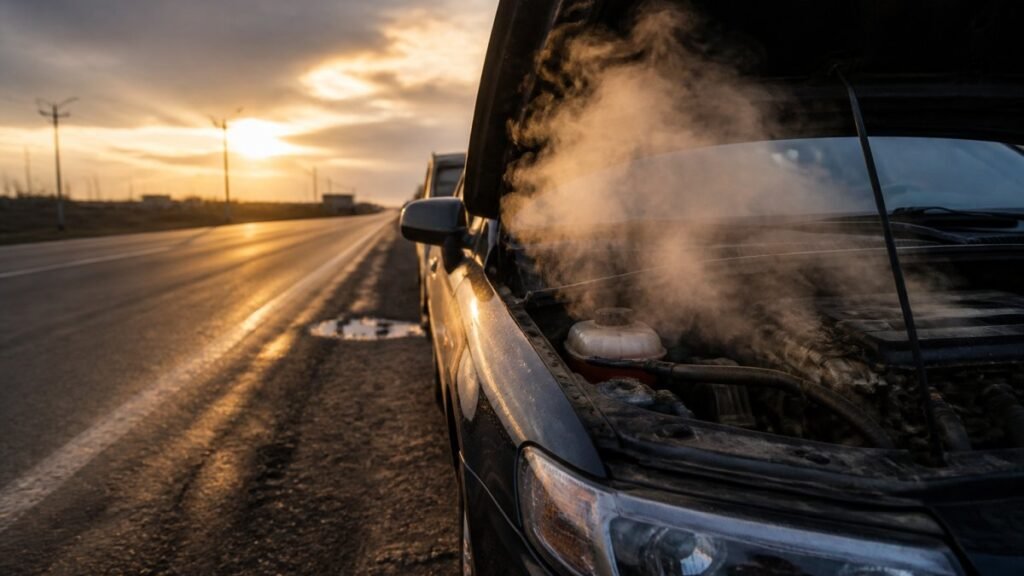
A red dashboard warning light means stop driving as soon as it is safe to do so. These lights point to problems that can cause real damage or put you at risk, and continuing to drive can turn a small repair into a major one. Here is what each red light usually means:
- Oil pressure light: The engine may not be getting lubrication. Pull over and shut it off.
- Temperature light: The engine is overheating. Keep driving and you risk warping components.
- Battery or charging light: The alternator may have failed. The car can die without warning.
- Brake warning light: Could mean low brake fluid or a brake system fault. Do not keep rolling.
- Power steering light: Steering can get heavy and unpredictable.
Watch out: driving even a short distance on a red oil pressure light can destroy an engine. The cost of a tow is nothing next to that repair bill.
Once you are off the road, turn off the engine, turn on your hazards, and stay in a safe spot away from traffic. Then call for help.
Yellow Dashboard Warning Light Meaning and When to Keep Driving
A yellow dashboard warning light means the vehicle has detected a problem that needs attention, but it is usually not an emergency. The honest answer to “can I keep driving” is: sometimes, and only under specific conditions. Most guides stop at “get it checked soon.” Here is a practical framework for deciding. Ignoring these indicators can quickly escalate a minor fault into a roadside crisis, making it essential to familiarize yourself with the emergency breakdown steps before you find yourself stranded.
Keep driving to a safe destination only if all of these are true:
- The light is steady, not flashing.
- The engine sounds and feels normal, no misfire, no loss of power, no new vibration.
- No red light is on at the same time.
- The temperature gauge is in its normal range.
- You are not towing a trailer or carrying a heavy load.
- You have a safe place to stop within a few miles if something changes.
Pull over and arrange service if any of these are true:
- The light is flashing.
- The car is running rough, surging, or losing power.
- You smell fuel, burning, or hot coolant.
- A red light joins the yellow one.
- The temperature gauge climbs above normal.
- You are on a highway shoulder with no safe exit nearby.
Common yellow lights and what they usually mean:
- Check engine light: Often an emissions or sensor issue. Steady is less urgent than flashing. A loose gas cap is a common cause, tighten it and see if the light clears after a few drive cycles.
- Tire pressure light: Check your tires at the next safe stop. A tire can lose pressure slowly and still look fine. If the light comes on with a thumping or pulling sensation, treat it as urgent.
- Traction control or stability light: Drive gently, especially in rain. On Tulsa roads after a storm, this light often means a wheel-speed sensor is wet or dirty.
- ABS light: Normal braking still works, but anti-lock braking may not. Leave extra following distance and avoid hard stops.
- Coolant level light: Top off only when the engine is cool. Never open a hot radiator cap.
If you are not sure which symbol you are looking at, your owner’s manual has a symbol chart, and many modern dashboards show a short text message next to the icon. Check that before you decide anything. Guessing is how a small repair becomes a big one.
If the car starts running rough, losing power, or making new noises, that changes things. Pull over and treat it like a red light. If you are on I-44, the Creek Turnpike, or a shoulder on Memorial and you are not comfortable continuing, call us and we will talk it through before you move.
Flashing Check Engine Light While Driving: Why It Changes Everything
A flashing check engine light while driving means stop driving and get the vehicle checked immediately. A steady check engine light is a warning; a flashing one is an active problem happening right now, often a misfire that can send unburned fuel into the exhaust and damage the catalytic converter.
Here is the difference in plain terms:
| Light Behavior | What It Means | What to Do |
|---|---|---|
| Steady yellow | A fault is stored, car is drivable | Get it diagnosed soon |
| Flashing yellow | Active misfire or serious fault | Pull over, stop driving |
| Steady red | Critical system failure | Stop as soon as safe |
| Flashing red | Immediate danger | Stop now, shut off engine |
If your check engine light is flashing, do not try to make it home. Pull over and arrange a tow.
All Dashboard Lights Came On While Driving: What That Means
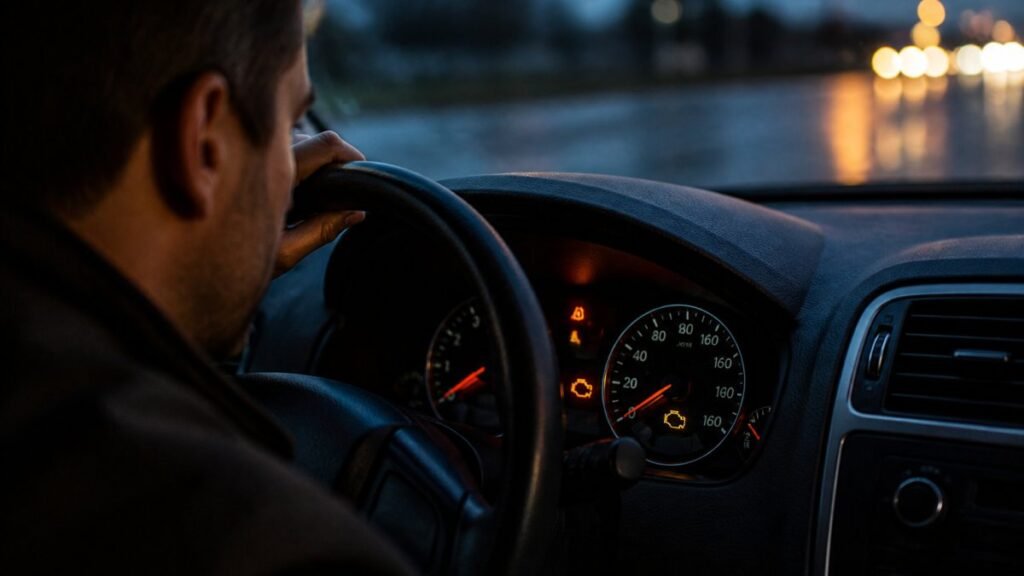
When all dashboard lights came on while driving at once, the most likely cause is an electrical fault, not a dozen separate failures.
Step 1: Get off the road safely. Signal, move to the right shoulder or the nearest exit, and put the car in park. Turn on your hazards.
Step 2: Note what happened in the moment. This is the information a shop or tow operator needs:
- Did the engine stall or lose power at the same time?
- Did the lights flicker before staying on, or come on all at once?
- Are the gauges, speedometer, or fuel gauge acting erratically?
- Did you smell burning, see smoke, or hear a belt squeal?
- Did the radio, headlights, or power windows dim or slow down?
Step 4: Know what not to touch. Do not disconnect the battery to “reset” the computer on the side of the road. Do not pour water on an engine that may be overheating.
A few patterns worth knowing:
- Lights dim, then everything comes on: Classic failing alternator. The car is running on battery power and will die soon.
- All lights on with a rough idle: Often a voltage problem affecting the computer, not a dozen separate sensors.
- Lights on after a jump start: The battery may be fine but the charging system is not. Have it tested before you trust it on a long drive.
- Lights on after hitting a bump or pothole: Suspect a loose ground, a chafed wire, or a battery terminal that has worked loose.
If the engine is dead or the car will not restart, you are not driving anywhere. That is a tow. Neptune Towing can help with breakdowns across Tulsa and nearby communities, and we will get you and the car to a shop safely.
Dashboard Warning Lights in Electric and Hybrid Vehicles
Dashboard warning lights in electric and hybrid vehicles work much like they do in gas cars, but the stakes are higher. A red high-voltage or battery temperature warning means stop driving, because these systems are not something to push through.
EVs and hybrids also show lights gas cars do not:
- High-voltage battery warning: Stop and let a professional handle it.
- Reduced power mode: The car is limiting itself. Get off the road.
- Regenerative braking warning: Braking feel may change.
If an EV warning light means your car needs a tow, it generally needs a flatbed, because wheel-lift towing can damage an electric drivetrain.
When to Pull Over and Call a Tulsa Tow Truck
Call a tow truck when a red light is on, when a yellow light is flashing, when the car will not run right, or when you simply are not sure. If you are ready to call, this guide to finding a towing service near you in Tulsa can help you get fast, reliable help. Guessing wrong is expensive. A local tow is cheap by comparison.
When you pull over, do this:
- Get as far off the road as you can.
- Turn on your hazards.
- Stay in the car with your seatbelt on if you are near traffic.
- Note your location, like the nearest exit on I-44 or a cross street on Memorial.
- Call for help and share that location.
If you just need a tire changed or a jump start, we can handle that too. You can book a roadside tire change instead of a full tow if that is all you need. And if you are searching for a towing service near you in Tulsa, we are owner-operated, we do not impound vehicles, and we answer the phone ourselves. Call (539) 292 3074.
Frequently Asked Questions
What does a yellow light on the dashboard mean?
A yellow or amber dashboard warning light means the system needs attention but usually does not require an immediate stop. Common examples include a steady check engine light, low tire pressure, or a traction control indicator. You can often continue driving cautiously to a repair shop, but pay attention to any change in how the vehicle runs. If the light begins flashing, treat it as urgent and pull over as soon as it is safe.
Which dashboard warning lights mean you should stop driving?
Red warning lights for oil pressure, engine temperature, brake system, and battery charging are the ones that usually mean stop as soon as safe. A flashing check engine light also calls for an immediate pull-over because it can signal an active misfire that may damage the catalytic converter. If you see one of these on I-44 or the Creek Turnpike, move to the shoulder, turn off the engine, and call for help.
Can I drive with a flashing dashboard warning light?
A flashing warning light is generally more urgent than a steady one. A flashing check engine light, for example, indicates a problem that can quickly damage emissions components. The safe move is to reduce speed, avoid hard acceleration, and pull over at the next exit or safe spot. From there, call a local towing company rather than continuing to drive and risking a larger repair bill.
What should I do if all my dashboard lights turn on while driving?
When all dashboard lights come on at once, it often points to a charging system or electrical fault rather than every system failing simultaneously. Pull over safely, turn off the engine, and check the battery connections if you can do so safely. If the lights stay on after a restart, do not keep driving. Call roadside assistance in Tulsa to have the vehicle checked or towed to a shop you trust.
A warning light is your car asking for help before something breaks. Ignoring it is the one move that turns a simple fix into an expensive one. Neptune Towing is a local, owner-operated company built on damage-free flatbed towing, honest communication, and no impound games. We offer 24/7 emergency service, transparent pricing with no surprise charges, and fast dispatch across the Tulsa metro. Get started with Neptune Towing and get you and your vehicle home safely.