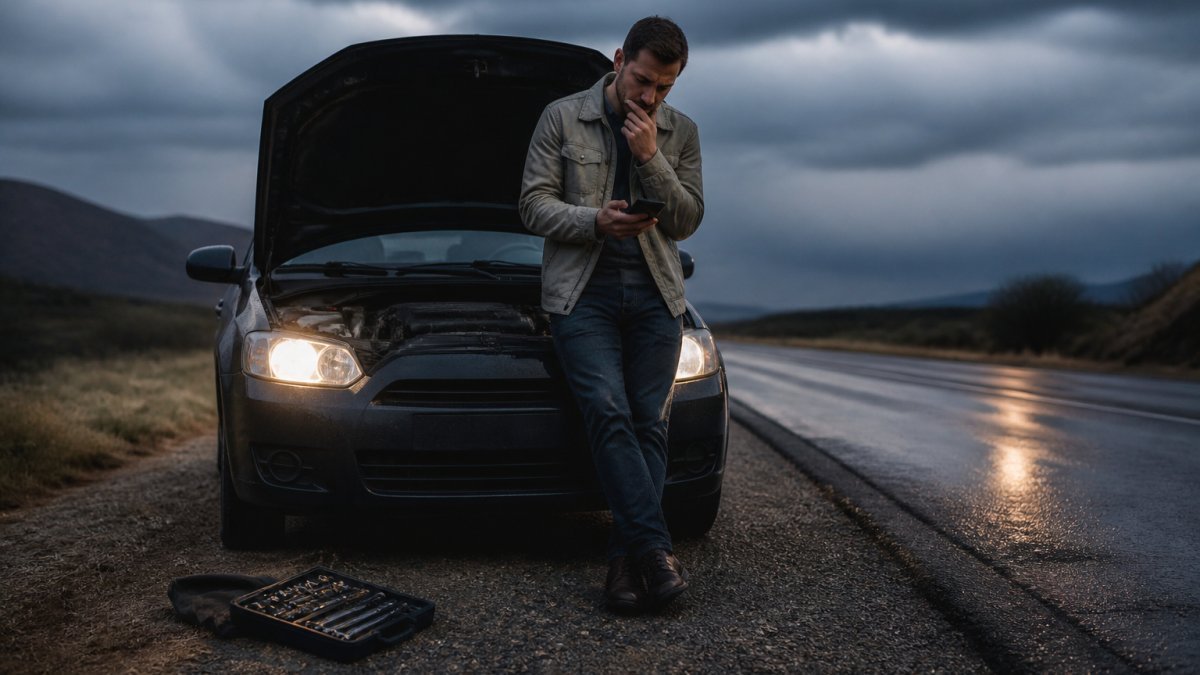

Last Updated: October 25, 2026
Quick Summary
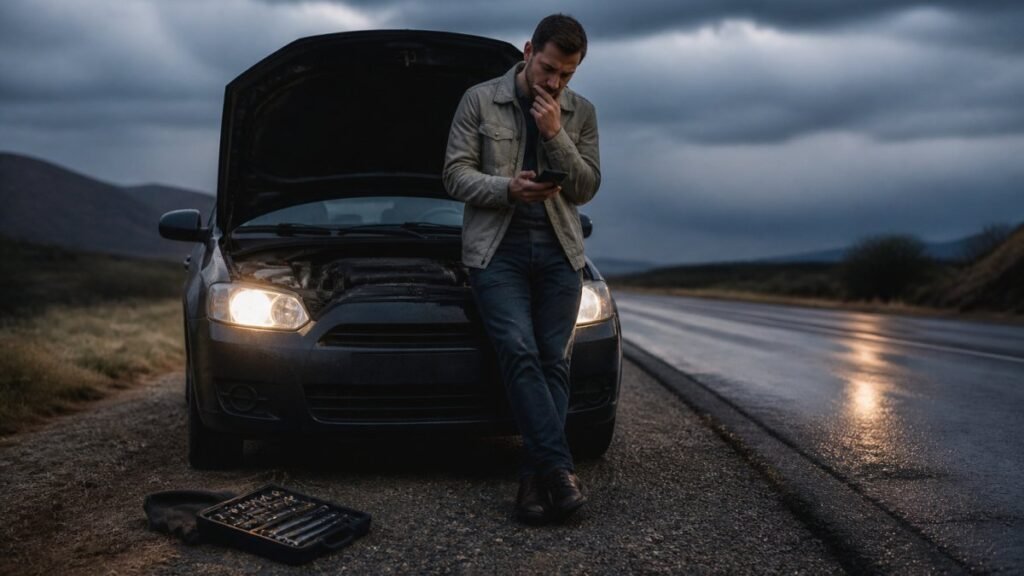
In a no signal breakdown, pull as far off the travel lane as you can, set the parking brake, turn on your hazard lights, and stay buckled until you know it is safe to move. Get visible first, then work through signal options like higher ground, texting, or asking a passing motorist to call before you consider walking for help.
- Turn your wheels away from traffic and keep your seatbelt on until you confirm it is safe to move.
- Stay buckled inside if you cannot reach a spot where a car could not hit you.
- Note mile markers, exit numbers, and the road and direction you were traveling for the dispatcher.
- Toggle airplane mode on and off so your phone re-scans for towers it may have missed.
- Leave a note with your name, departure time, direction, and phone number before leaving the vehicle.
Table of Contents
- What to Do When Your Car Breaks Down on the Highway
- What to Do If Your Car Breaks Down in the Middle of Nowhere
- How to Contact Roadside Assistance With No Signal
- Build a Car Breakdown Emergency Kit Before You Need It
- Staying Safe While You Wait for Help
- When to Call a Local Towing Company in Tulsa
- Next Step: Save a Tulsa Tow Number Before Your Next Breakdown
- Frequently Asked Questions
What to Do When Your Car Breaks Down on the Highway
A dead car with no signal feels like a trap. If you want the full step-by-step sequence for what to do when your car breaks down, we walk through it from the first minute to the tow.
Here’s the part most drivers get wrong. They reach for the phone first. Safety comes first, help comes second.
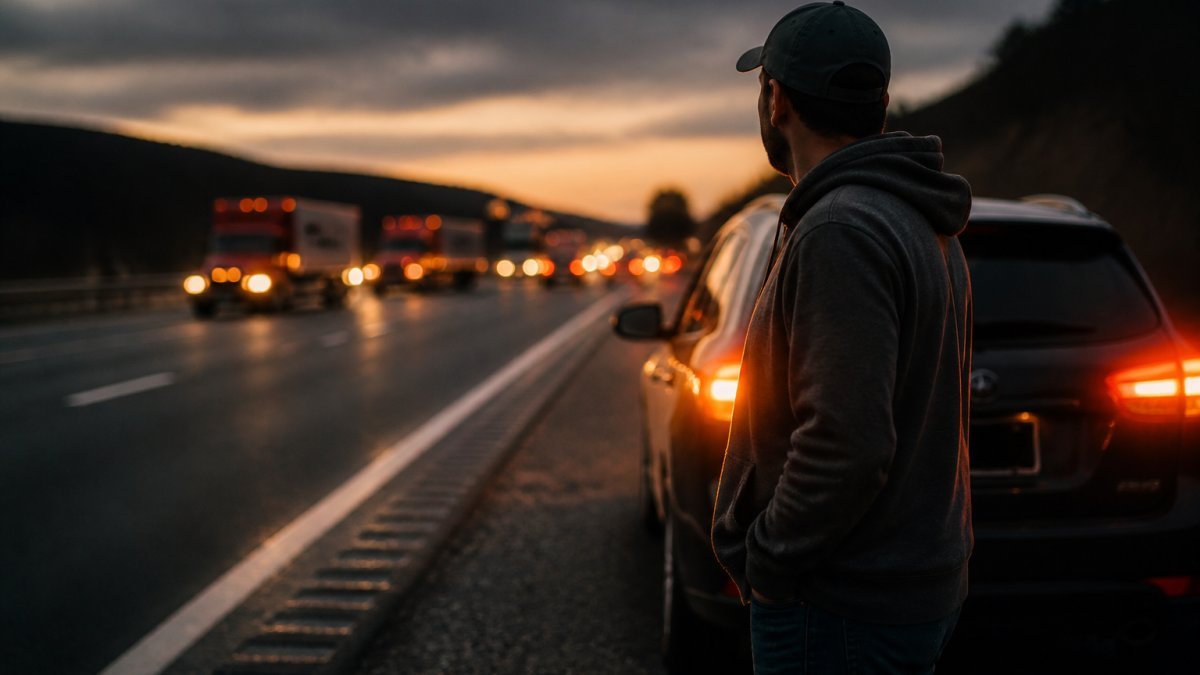
Step 1: Pull Over and Secure the Vehicle
Get as far off the travel lane as you can, then stop. If the car still rolls, coast to the right shoulder or the next exit ramp. On I-44 or the Creek Turnpike, that shoulder space matters more than saving time.
Once stopped:
- Set the parking brake.
- Turn the wheels away from traffic.
- Turn on your hazard lights.
- Keep your seatbelt on until you know it’s safe to move.
If the car dies in a live lane and won’t move, do not stand behind it. That situation has its own playbook, and we cover it in our guide on what happens if your car breaks down in a traffic lane.
Step 2: Make Yourself Visible and Decide Whether to Stay or Exit
Your hazard lights are your first warning signal. Flashers tell passing motorists you’re stopped, not just slow. Use them even in daylight.
Now the decision: stay in the car or get out?
Stay inside when traffic is close, when you’re on a narrow shoulder, or when it’s dark and you can’t see a safe path. Keep your seatbelt on and watch your mirrors.
Exit the vehicle when you can move well away from traffic, behind a guardrail, or up a slope. Take your phone, keys, and anyone with you.
A quick rule we share with drivers: if you can’t reach a spot where a car couldn’t hit you, stay buckled in.
What to Do If Your Car Breaks Down in the Middle of Nowhere
Remote breakdowns follow the same first steps, with one twist: nobody is coming unless you make it happen. Pull over, set the brake, hit the flashers, and get visible.
Then take stock of where you are. Look for landmarks, mile markers, exit numbers, or a business sign. Write down the road name and direction you were traveling. That location detail is the single most useful thing you can give a dispatcher later.
A common mistake is wandering far from the car to find help. Don’t. Stay close, stay visible, and wait for daylight or traffic if it’s night. If you’re near a ranger station, visitor center, or open business, that’s a safe place to wait.
How to Contact Roadside Assistance With No Signal
No bars doesn’t mean no options. A no signal breakdown is a communication problem, not a dead end. The goal is to get a message to someone who can send help, without becoming a second emergency in the process.
Try the phone first, in this order
- Move to higher ground. A ridge, a bridge approach, or an open lot often catches a signal a valley can’t.
- Toggle airplane mode on and off. Your phone re-scans for towers and sometimes grabs one it missed.
- Text instead of calling. A text sometimes sends when a call won’t connect, and it uses less power.
- Try 911 anyway. Emergency calls can connect through other carriers’ towers even when your own shows no service.
- Use a landline. Gas stations, stores, and businesses along the highway still have phones.
- Ask a passing motorist to call for you. Give them your exact location and the number you need, and ask them to confirm the call went through.
Walking for help: when it’s worth it and how to do it safely
Walking is the most dangerous option and the one most people get wrong. Highways have no pedestrian lanes, and drivers at speed do not expect a person on the shoulder. Before you walk, ask whether help is close enough to reach on foot. If a business, home, or ranger station is visible and you can reach it without crossing traffic, that is a reasonable walk. If the nearest help is miles away or across a highway, stay with the car.
If you do walk:
- Go toward the nearest exit, business, or house, not down the middle of the road.
- Walk facing traffic so you can see vehicles coming, and stay as far off the pavement as the ground allows.
- Take your phone, keys, water, and a layer of clothing.
- Tell anyone with you exactly where you are going and when you expect to be back.
Leave a note at the vehicle
Before you leave the car, for any reason, leave a note on the dashboard or driver’s window with your name, the time you left, which direction you went, and a phone number. If a trooper, tow driver, or good Samaritan stops while you’re gone, the note tells them you’re okay and where to look. It also keeps a passing motorist from reporting an abandoned vehicle.
Satellite SOS, messaging, and emergency beacons
Newer phones and some vehicles include satellite SOS. If your phone supports it, the emergency screen walks you through pointing at the sky and sending a message.
These tools are not magic. They need a clear view of the sky, a charged device, and, for most messengers and beacons, an active subscription or service plan set up before the trip.
Once you reach someone, tell them what roadside help you need. Our roadside assistance services cover jump starts, tire changes, lockouts, fuel delivery, and towing, so you can request the right service in one call.
When there are no bars, work through these options in order before you consider walking.
| Option | What to do | Key detail |
|---|---|---|
| Move to higher ground | A ridge, bridge approach, or open lot | Often catches a signal a valley can’t |
| Toggle airplane mode | Turn it on and off | Phone re-scans for towers |
| Text instead of calling | Send a text message | Sometimes sends when a call won’t connect |
| Try 911 anyway | Call 911 despite no service | Can connect through other carriers’ towers |
| Use a landline | Gas stations, stores, businesses | Businesses along the highway still have phones |
| Ask a passing motorist | Give your exact location and number | Ask them to confirm the call went through |
| Satellite SOS or beacon | Use phone satellite SOS or a messenger | Needs clear sky view, charge, and often a plan |
Build a Car Breakdown Emergency Kit Before You Need It
The best time to solve a no signal breakdown is before it happens. A small kit in the trunk covers most situations.
- Jumper cables or a portable jump starter
- Bright reflective triangles or road flares
- A powerful flashlight with fresh batteries
- A warm blanket and rain poncho
- Bottled water and shelf-stable snacks
- A first aid kit
- A portable phone charger or power bank
- A printed list of emergency numbers
- Work gloves and a basic tool kit
- A paper map of your route
That printed number list matters more than people think. When your phone is dead or searching, paper still works.
Staying Safe While You Wait for Help
Waiting is the risky part. Most breakdown injuries happen to people standing in or near traffic, not to people sitting safely inside a car.
Keep your hazard lights on. Stay buckled if you’re inside. If you’re outside, stay behind the guardrail and away from the shoulder. Watch for passing motorists who drift toward the shoulder, and keep your head on a swivel.
If you’re waiting alone at night, tell someone your location before your battery dies, and keep your doors locked if you’re inside. Our roadside safety tips for women driving alone cover more ways to stay secure while you wait.
One more thing: if you feel unsafe, call 911. Emergency services can reach you even when a tow company is still on the way.
When to Call a Local Towing Company in Tulsa
Sometimes the car isn’t going anywhere, and that’s when you call a tow. If the engine won’t start, a tire is shredded, or the vehicle is stuck in mud or a ditch, a tow is the safe answer.
This is where a local towing company beats a call center. At Neptune Towing, you reach an owner-operator, not a dispatcher reading a script. We run flatbed towing for cars, trucks, classics, and EVs, and we handle every vehicle with damage-free loading and securement. We also don’t impound vehicles.
If you’re stuck on the shoulder of US-169 or a backroad near Glenpool, call us and tell us your location. We’ll get a truck moving.
Next Step: Save a Tulsa Tow Number Before Your Next Breakdown
A breakdown with no signal is stressful, but it’s survivable when you’ve planned ahead. Keep a kit in the trunk, know your location, and save a number you trust before you need it.
Neptune Towing is owner-operated, available 24/7, and focused on damage-free towing and honest service. We don’t impound, and we don’t surprise you with fees. When you need a tow truck in Tulsa or roadside help anywhere in the metro, we’re ready.
Save our number now and get help fast: car towing service. Call (539) 292 3074 and get your vehicle to safety.
Frequently Asked Questions
What should I do if my car breaks down and I have no cell signal?
Get your vehicle as far off the travel lane as possible, turn on your hazard lights, and set the parking brake. Stay inside with your seatbelt on if traffic is close. If you must exit, move well away from the road and toward a safe landmark. Try a satellite SOS feature on a newer phone, flag a passing motorist, or walk to the nearest home, business, or ranger station. Once you have any signal, call a local towing company like Neptune Towing for roadside assistance.
How can I contact roadside assistance with no signal?
Without a signal, your phone cannot place a normal call. Use a satellite messaging feature if your phone supports it, or carry a personal locator beacon. Otherwise, ask a passing driver to call for you, or walk to the nearest business and ask to use their phone. Before you travel remote routes, save a local tow number and tell someone your route and expected arrival time so they can send help if you do not check in.
Should I stay in my car if it breaks down on the road?
Stay in your car with your seatbelt fastened when traffic is moving close by and you are on a shoulder or highway. The vehicle offers more protection than standing outside. If you can safely exit and move far from traffic, do so, especially if you smell smoke or see fire. Never stand behind or beside the car in the travel lane. Use your hazard lights and triangles to warn other drivers.
What should I keep in my car for a breakdown with no cell service?
Pack a car breakdown emergency kit with water, a flashlight, reflective triangles or road flares, a first aid kit, warm blankets, a portable phone charger, and a paper map. Add a tire pressure gauge, jumper cables, and non-perishable snacks. In remote areas, a satellite messenger or personal locator beacon can be the difference between waiting hours and getting help fast.