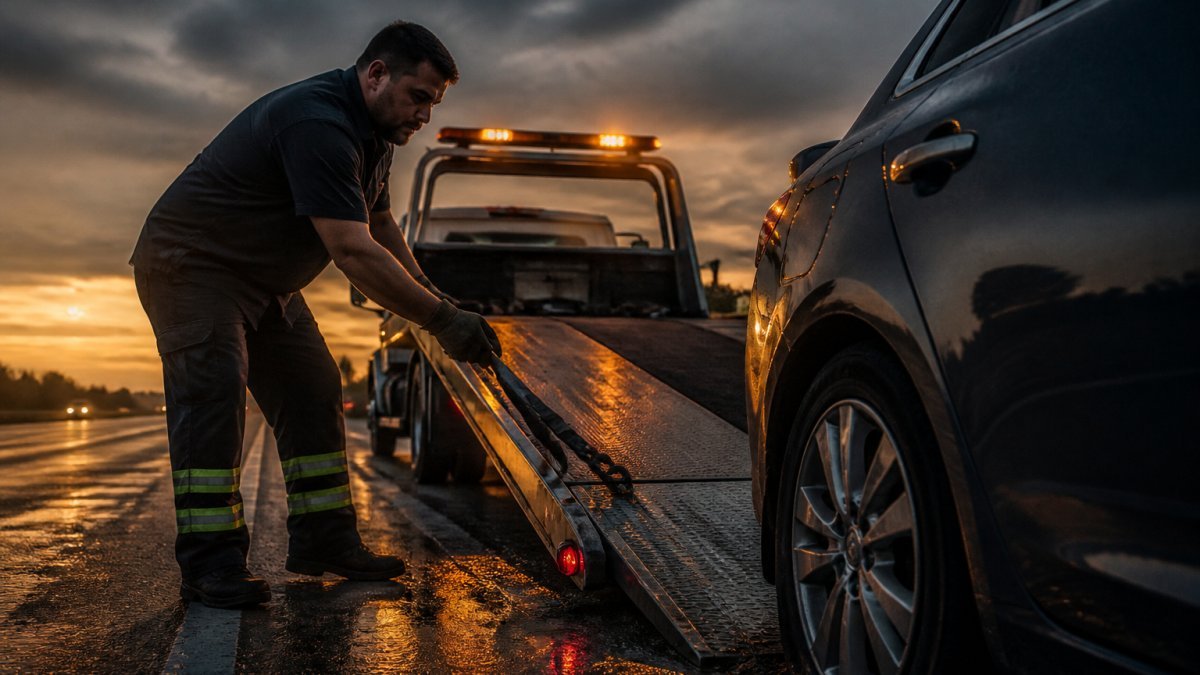

Table of Contents
- Can You Really Get Roadside Assistance Immediately?
- Roadside Assistance Without a Membership: Your Immediate Options
- How Long Does Roadside Assistance Take to Arrive?
- Jump Start Service: Getting Back on the Road Fast
- What to Tell Roadside Assistance When You Call
- What Roadside Assistance Covers and What It Doesn’t
- What to Do While Waiting for Help
- Frequently Asked Questions
Last Updated: October 14, 2026
Can You Really Get Roadside Assistance Immediately?
The short answer is yes, with a caveat about what “immediately” means. At Neptune Towing, we get calls from stranded drivers every day who need help right now, and we understand the panic of a breakdown on I-44 or a dead battery in a Bixby parking lot.
When you call for roadside assistance, the dispatch process itself is fast. According to AAA’s 24/7 roadside service documentation, online requests typically take less than 4 minutes to submit.
For drivers in Tulsa and surrounding communities, roadside assistance immediately is achievable through a few routes: calling a local towing company directly, using a membership service like AAA, or contacting your insurance company’s roadside program. Each has different response times and eligibility requirements.
The key is understanding what “immediately” means here. It doesn’t mean someone at your door in 60 seconds. It means help can be on the way within minutes of your call.
Roadside Assistance Without a Membership: Your Immediate Options
If you don’t have AAA membership or roadside coverage through your insurance, you still have options. The most direct route is calling a local towing company in your area, which is faster than waiting for a membership to activate.
When you call a local towing service like Neptune Towing directly, there’s no waiting period and no call center routing your request to a third party.
The advantage is straightforward: help without paperwork, membership fees, or eligibility questions. If your car won’t start, your tire is flat, you’re locked out, or you need fuel, a local towing company can dispatch a truck immediately.
If you prefer to use a membership service but don’t have one yet, understand that there’s typically a waiting period before coverage kicks in. AAA Mid-Atlantic’s roadside assistance FAQ notes that roadside benefits generally start 48 hours after payment approval.
For drivers in Tulsa, Broken Arrow, Bixby, and surrounding areas, the fastest path to roadside assistance immediately is a direct call to a local towing company. You avoid activation delays and get a truck dispatched right away.
How Long Does Roadside Assistance Take to Arrive?
There is no single number that applies to every call, and any company that promises one is guessing. Here’s how the timeline actually works, so you know what to expect and how to shorten the wait.
Location type matters more than distance. A truck two miles away on Brookside surface streets can take longer than one eight miles out on the Turner Turnpike, because highway access is direct and city traffic is not. Here’s how common situations play out in the Tulsa area:
- Highway shoulder (I-44, US-169, SH-51, I-244): Usually the fastest to reach because trucks stage near these corridors, but the driver has to approach safely with traffic moving past. Expect the truck to park well behind you and approach on foot.
- Arterial roads (Memorial, Sheridan, Peoria, 71st Street): Moderate. Signal timing and turn lanes slow the approach, and the driver may need to circle to reach your side of the road.
- Parking lots and garages (Woodland Hills, Tulsa Hills, downtown ramps): Often quick once the driver arrives, but low-clearance garages can require a different truck or entry point, which adds time.
- Rural and outer routes (toward Sapulpa, Owasso, Glenpool, or the county roads between them): Longer, because fewer trucks are staged out that way and the driver may be coming from the metro.
Service type changes the on-scene time, not just the drive time. A jump start, lockout, or tire change is typically a short visit once the truck arrives.
Conditions stack. Rain, ice, and the days around a hard freeze are the busiest times for every towing company in the area, as are the evening rush on the Broken Arrow Expressway and the morning rush on the IDL.
How to get a real ETA instead of a guess.
- Call and give your location first. Cross streets, exit numbers, and a landmark beat a street address on a highway shoulder.
- Ask directly: “Do you have a truck available now, and what is the estimated arrival?” A local dispatcher can answer that. A call center often cannot.
- Ask for the driver’s name and a callback number, and whether the driver will call or text when close.
- If the first company cannot dispatch promptly, ask them to say so. A clear “we are two hours out” is more useful than a hopeful estimate.
- If you are in a genuinely unsafe spot, say that on the call. It changes how the job is prioritized.
If you are on a highway shoulder, note the nearest mile marker or exit before you call. It is the single fastest way to get a truck pointed at the right spot, and it saves several minutes of back-and-forth.
What we will not do is promise a number we cannot hit. When you call Neptune Towing, you’re talking to the owner-operated business sending the truck, so the estimate is based on what’s actually on the road at that moment, not a script. If we’re backed up, we’ll tell you, and if another local company can get to you sooner, we’d rather you know that than sit waiting.
One more thing worth saying plainly: the sooner you call, the sooner the clock starts.
Jump Start Service: Getting Back on the Road Fast
A dead battery is one of the most common roadside emergencies and one of the fastest to resolve. A jump start service typically takes 15-20 minutes once the truck arrives.
When you call for a jump start, you’re calling for one of the quickest roadside assistance services available. The technician arrives with jumper cables or a portable jump box, connects it to your battery, and gets your engine running.
Call for help as soon as you realize your battery is dead. Don’t try to jump-start it yourself if you’re not comfortable, and don’t wait hoping it resolves on its own.
One thing to know: if your battery is older or has failed completely, a jump start might not hold, and you may need a tow to a repair shop to replace it.
What to Tell Roadside Assistance When You Call
When you call for help, be ready to give clear information. This speeds up dispatch and ensures the right truck is sent.
Have these details ready:
- Your exact location (highway, exit number, cross street, or landmark)
- Your vehicle description (color, make, model, year, license plate)
- The specific problem (dead battery, flat tire, locked out, mechanical issue, accident)
- Whether your vehicle is safe to remain where it is, or if it’s blocking traffic
- Your phone number and whether the driver can reach you when they’re nearby
If you’re on a highway, say so. If you’re in a parking lot, describe which business or area. If you’re between towns, give the nearest town name. The more specific you are about your location, the faster the driver finds you.
Tell the dispatcher if you need priority response because you’re in traffic or unsafe conditions. If you have passengers or pets in the vehicle, mention that too, it helps the driver understand the urgency and any special considerations.
For roadside assistance immediately, clarity on your location is the single biggest factor. Vague directions (“I’m somewhere on I-44”) slow dispatch.
What Roadside Assistance Covers and What It Doesn’t
Here is how the main paths compare.
Pay-per-use dispatch (calling a local towing company directly). No membership, no policy, no activation step. You call, a truck is assigned, and you settle up for the service performed.
Membership plans (auto clubs). You pay a recurring fee and get a set of covered services, usually including towing up to a mileage limit.
Insurance add-ons (towing and labor coverage). Many auto policies offer an optional roadside endorsement.
Manufacturer and credit-card benefits. Some new-vehicle warranties include roadside assistance for a set period, and some credit cards bundle a dispatch benefit.
What is commonly covered, whichever path you use:
- Jump starts for a dead battery
- Lockout service to get you back into your vehicle
- Tire changes, including mounting a spare
- Fuel delivery when you have run out
- Towing to a repair facility, usually within a mileage limit
- Winch-outs when a vehicle is stuck in a ditch, mud, or soft ground
What is commonly not covered, or covered only up to a limit:
- The repair itself. Roadside gets you moving or gets you towed; it does not fix the underlying mechanical problem.
- Parts and fluids beyond what the immediate service requires.
- Towing past the plan’s mileage limit. If your plan covers a set distance and the shop you want is farther, the overage is generally on you.
- More than one service call per incident, depending on the provider.
- Specialty handling. A lowered vehicle, a dually, a motorcycle, or an EV often needs equipment and care that a basic plan does not account for.
If you are counting on a membership or insurance benefit, confirm it is active before the truck arrives. A driver who shows up expecting a covered call and finds out the benefit has not started yet is a bad outcome for everyone, and it is avoidable with one phone call.
EV and Tesla owners, one specific note. Electric vehicles should not be towed with the drive wheels on the ground, and a flatbed is the right tool for the job. That matters for coverage because some basic plans are written around conventional vehicles and don’t spell out how an EV will be handled. If you drive a Tesla or another EV, ask how the vehicle will be loaded before you agree to the dispatch.
The bottom line on coverage. If you have active coverage, use it, and confirm the limits so there are no surprises.
What to Do While Waiting for Help
Being stranded is stressful, but the time you spend waiting is the time to prioritize safety and stay visible.
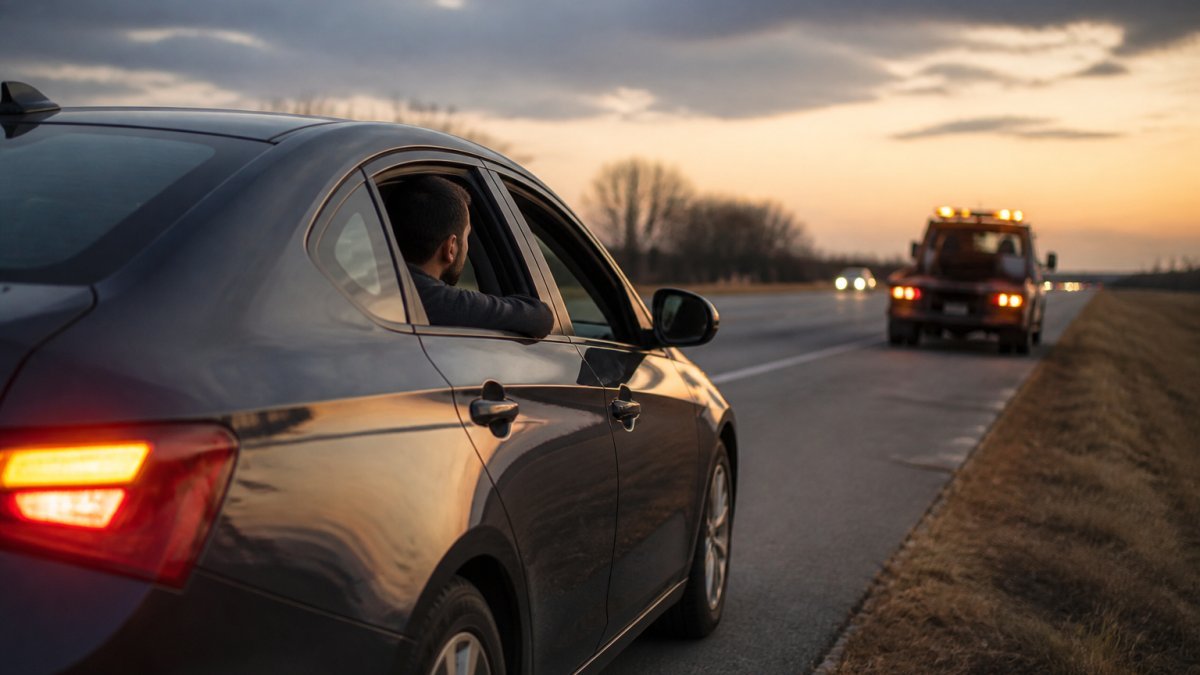
First, turn on your hazard lights immediately. This is the single most important thing you can do while waiting.
Second, stay in your vehicle if you’re on a busy road. Don’t stand in traffic trying to flag down help.
Use your phone to communicate with the dispatch center.
If it’s cold, keep the engine running for heat. If it’s hot, run the AC but keep the engine off if possible to preserve fuel.
Most importantly, don’t leave your vehicle unattended. It’s your shelter and your landmark for the tow truck driver.
The wait is temporary. A local towing company will get to you. Stay safe, stay visible, and stay put.
Frequently Asked Questions
Can I get roadside assistance immediately after signing up for a membership?
No. Most roadside assistance memberships include a waiting period before coverage activates. AAA, for example, typically requires 48 hours after payment approval before roadside benefits take effect. However, you can call directly and request immediate service by paying an out-of-pocket fee to waive the waiting period. If you need help right now and don’t have active coverage, calling a local towing company is your fastest option.
How long does it actually take for a roadside assistance truck to arrive?
Arrival time depends on your location, traffic, and how many calls the service is handling. When you call, always ask for an estimated arrival time so you know what to expect. Local, owner-operated towing services often dispatch faster than large national networks because they have fewer calls to manage and shorter distances to cover.
What information should I give when requesting roadside assistance?
Tell the dispatcher your exact location (highway, mile marker, cross street, or GPS coordinates), vehicle description (make, model, color, license plate), and what’s wrong with your vehicle (dead battery, flat tire, out of gas, won’t start). If you’re on a busy highway, mention that you’re in a safe location or need help moving to safety. The more specific you are, the faster they can send the right equipment and get to you.
Can I get a jump start or tire change without a membership?
Yes. You don’t need a membership to call a local towing company and request a jump start or tire change service. You’ll pay out-of-pocket, but there’s no waiting period, no activation delay, and no eligibility questions. Local roadside assistance providers in the Tulsa area can dispatch immediately and handle these services on the spot, making it a practical option if you need help right now.
When you need roadside assistance immediately in Tulsa, Broken Arrow, Bixby, or the surrounding area, Neptune Towing is ready to help. We’re owner-operated, we dispatch trucks fast, and we handle jump starts, lockouts, tire changes, fuel delivery, and towing without the delays of national membership services. Call us when you need help, not a membership activation, just real assistance from a local company that knows the roads and values your time. (539) 292-3074.