
Table of Contents
- Vehicle Maintenance and Pre-Trip Checks
- Parking Safety and Situational Awareness
- How to Jump Start a Dead Battery
- Building Your Emergency Kit and Roadside Supplies
- Car Lockout Service and Vehicle Security
- Getting Help: Roadside Assistance in Your Area
- Handling Road Rage and Aggressive Drivers
- Conclusion
- Frequently Asked Questions
Last Updated: September 23, 2026
Vehicle Maintenance and Pre-Trip Checks
Before you hit the road alone, understanding roadside safety tips for women driving alone starts with making sure your vehicle is ready. A 15-minute pre-trip inspection eliminates most emergencies before they happen.
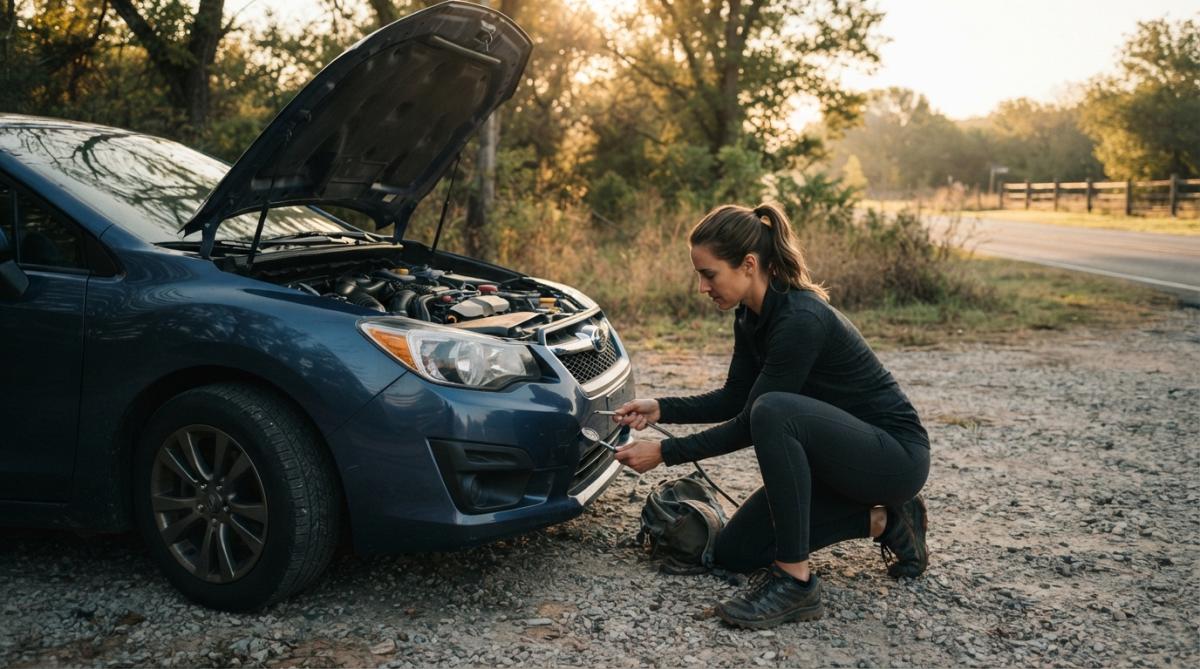
Check tire pressure and condition first, under-inflated tires are the leading cause of roadside breakdowns. Look for sidewall cracks or bulges, verify PSI against the driver’s-side door jamb, and inspect your spare tire.
Check engine oil, coolant, and battery terminals. Corroded terminals (white or blue buildup) cause no-start conditions, wipe them clean. Coolant should be at the full line when cold; low coolant signals a slow leak.
Test headlights, brake lights, and turn signals before you drive. Broken lights make you invisible to other drivers and increase collision risk.
Keep your fuel tank above half full whenever possible. Running on empty forces your fuel pump to work harder and can cause overheating in hot weather. It also leaves you with no safety margin if you get lost or traffic jams extend your trip. A simple rule: refuel when you hit the halfway mark.
An Innova diagnostic scanner can catch engine problems before they strand you. These tools read your vehicle’s onboard computer and alert you to issues your dashboard warning light might miss. For solo drivers, knowing your vehicle’s health before a trip is peace of mind worth the investment.
If your check engine light is on, don’t ignore it. Get a diagnostic scan done before a long drive. A small problem now is better than a breakdown 50 miles from the nearest service station.
Parking Safety and Situational Awareness
Where you park matters as much as how you drive. A safe parking spot keeps you visible and away from potential threats.
Park in well-lit, visible areas. Avoid trees, corners, or hidden spots. Parking lots near shopping centers are better than isolated side streets. For overnight stops, choose hotels or rest areas with security lighting.
Before approaching your vehicle, scan the area. Look under the car, check the back seat, and notice loitering. Trust your gut, if something feels off, walk to a nearby business or ask security for an escort.
Keep your doors locked while driving, even in traffic. This is basic but critical. Locked doors prevent carjacking attempts and give you time to react if someone tries to force entry. Your central locking system should engage automatically when you shift into Drive, but verify this works on your vehicle.
Stay alert to aggressive drivers, erratic behavior, or vehicles following you. If you feel unsafe, drive to a police station, fire department, or busy public place rather than pulling over on a deserted road.
Road rage incidents are rising. According to Forbes contributor Josh Max’s safety guidance, the best response is to never engage. Don’t make eye contact, don’t return aggressive gestures, and don’t escalate. Your goal is to create distance, not to win an argument.
How to Jump Start a Dead Battery
A dead battery is one of the most common roadside emergencies. A portable jump starter eliminates the need to wait for help or flag down a stranger.
The NOCO Boost Plus GB40 jump starter is compact enough to fit in your glove box and powerful enough to start most vehicles. It uses lithium-ion technology instead of traditional lead-acid batteries, so it holds a charge for months without use. The 1,000-amp capacity handles everything from sedans to pickup trucks, and it includes safety features like spark-proof technology and reverse polarity protection.
To use a portable jump starter, locate your battery under the hood. Connect the red clamp to the positive terminal (marked with a plus sign or red cover) and the black clamp to the negative terminal (marked with a minus sign or black cover). Press the power button on the starter, wait a few seconds, and try starting your vehicle. Once it starts, let it run for a few minutes before disconnecting the clamps.
If you don’t have a portable jump starter, Neptune Towing offers jump start service throughout the Tulsa area. Our team arrives quickly and handles the process safely without damaging your vehicle’s electrical system.
A portable jump starter gives you independence during a dead battery. It’s the single most valuable tool for solo drivers because it solves the problem without waiting for help.
Building Your Emergency Kit and Roadside Supplies
Your emergency kit is your safety net when things go wrong. A well-stocked kit in your trunk prepares you for minor emergencies.
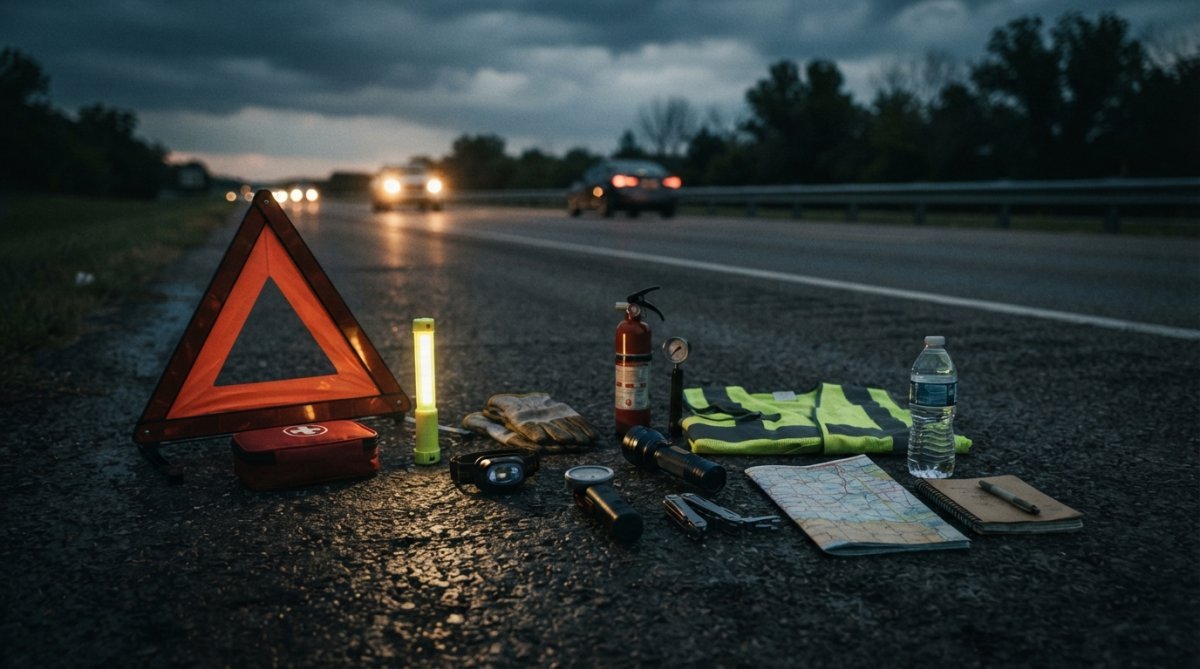
Start with a first aid kit. The First Aid Only comprehensive kit includes bandages, antiseptic wipes, gauze, and other basics for treating minor injuries. Keeping one in your vehicle takes up minimal space and could be critical if you’re injured in a minor accident or need to treat a cut or scrape while stranded.
Add a bright LED flashlight with extra batteries. It lets you see under your hood at night, inspect damage, or signal for help.
Include a portable jump starter, more practical for solo drivers than jumper cables, which require finding someone willing to help.
A tire repair kit or portable air compressor handles slow leaks and low pressure. The Slime Digital Tire Inflator plugs into your 12-volt outlet and inflates a tire in minutes. It includes an LED light for nighttime use, making it practical for roadside repairs.
Add a multi-tool, basic wrenches, and screwdrivers.
| Item | Purpose | Priority |
|---|---|---|
| First aid kit | Treat minor injuries | High |
| Flashlight & batteries | See in darkness, signal for help | High |
| Jump starter | Restart dead battery independently | High |
| Tire inflator | Handle low pressure and slow leaks | High |
| Multi-tool & wrenches | Make minor adjustments | Medium |
| Emergency contact card | Provide info if you’re incapacitated | High |
| Blanket | Stay warm if stranded | Medium |
| Water & snacks | Stay hydrated and alert | Medium |
Car Lockout Service and Vehicle Security
Getting locked out of your car is frustrating, but it’s solvable. The key is knowing who to call and how to prevent it from happening again.
Keyless entry systems are convenient but create new lockout risks. If your vehicle has this feature, take extra care to keep your fob with you. A lost fob is more expensive to replace than a traditional key.
Getting Help: Roadside Assistance in Your Area
When you need help, knowing your options saves time and stress. Roadside assistance comes in several forms, each with different coverage and response times.
Handling Road Rage and Aggressive Drivers
Aggressive drivers create dangerous situations, and your response determines whether a tense moment becomes a real threat. The goal is always to create distance and avoid confrontation.
Road rage can escalate quickly. Never assume an aggressive driver is just having a bad day. Treat every aggressive interaction as a potential threat and prioritize creating distance and reaching safety.
Conclusion
Essential roadside safety tips for women driving alone come down to preparation, awareness, and knowing when to ask for help. Maintain your vehicle before you travel, stay alert to your surroundings, build an emergency kit, and know who to call when things go wrong.
Frequently Asked Questions
What should I do if my car breaks down alone at night?
Turn on your hazard lights immediately and move to a safe location off the road if possible. Lock your doors and stay inside your vehicle with the engine running. Call a local roadside assistance provider or towing service right away, don’t accept help from strangers. Share your location with a trusted contact via phone or GPS app. If you’re on a major highway, use your cell phone to call 911 or the highway patrol. A professional towing company can reach you quickly and safely transport you to a repair facility.
How do I safely signal for help on a busy highway?
Activate your hazard lights as soon as you realize you have a problem. If safe, raise your hood to signal distress. Stay inside your locked vehicle rather than standing outside. Use your phone to call for professional help instead of flagging down strangers. If you must exit the vehicle, stay behind the guardrail or as far from traffic as possible. Wear bright or reflective clothing if you need to step out. A professional towing service will spot your hazard lights and hood and can reach you safely.
How can I prepare my vehicle for a solo road trip?
Start with a full pre-trip inspection: check tire pressure and tread depth, test your battery and charging system, top off all fluids, and inspect brakes and lights. Keep an emergency kit in your vehicle with a first aid kit, flashlight, jumper cables or portable jump starter, spare tire, jack, tire pressure gauge, and basic tools. Download offline maps on your phone and share your route with someone you trust. Ensure your phone is fully charged and consider a portable phone charger. Have your roadside assistance provider’s number saved in your phone. Let someone know your departure time and expected arrival.
What are the most important safety items to keep in my car?
Essential items include a first aid kit, flashlight with extra batteries, jumper cables or a portable jump starter, spare tire with a jack, tire pressure gauge, basic tool set, reflective warning triangles, and a fire extinguisher. Keep a blanket, water, and non-perishable snacks for longer trips. Add a phone charger and a portable power bank. Include a personal safety tool like a car escape device on your keychain. A multi-tool can handle many roadside problems. Store everything in a durable bag or container that fits in your trunk for easy access during emergencies.
Is it safer to stay in the car during a breakdown?
Yes, staying in your locked vehicle is generally safer than standing on the roadside, especially at night or on a busy highway. You’re protected from traffic and have a clear way to call for help. Turn on your hazard lights and raise your hood to signal distress. Keep your doors locked until professional help arrives. If you feel unsafe or a stranger approaches, do not open your window or door, call 911 immediately. A legitimate towing company will identify themselves and arrive in a marked vehicle. Your safety is the priority, so wait for verified professional assistance rather than accepting help from unknown individuals.