
Table of Contents
- Why Traditional Hook Towing Risks Your Classic Car
- Flatbed Towing: The Gold Standard for Classic Car Transport
- Damage-Free Classic Car Towing: What to Expect
- Enclosed Car Transport for Vintage Cars
- DIY Towing Equipment: Trailers, Dollies, and Rental Options
- Classic Car Recovery in Tulsa: Professional vs. DIY
- Comparison: Hook Towing vs. Flatbed vs. Enclosed Transport
- How to Prepare Your Classic Car for Safe Transport
Alternatives to Traditional Hook Towing for Classic Cars
Last Updated: July 30, 2026
When your 1987 Corvette breaks down on I-44 near downtown Tulsa, the last thing you want is a tow truck driver hooking chains around your chassis and dragging it backward down the highway. Traditional hook-and-chain towing poses serious risks to classic cars, especially vehicles with low ground clearance, delicate suspension systems, or irreplaceable original finishes. At Neptune Towing, we understand that alternatives to traditional hook towing for classic cars aren’t just nice-to-have options; they’re essential for protecting vehicles that took years to restore or hold real sentimental value.
The good news: flatbed towing, wheel-lift systems, enclosed transport, and DIY rental equipment now give classic car owners real choices when they need to move their vehicles safely. Below, we’ll walk you through every option available in the Tulsa area and help you understand which approach makes sense for your situation.
Why Traditional Hook Towing Risks Your Classic Car
Hook-and-chain towing works fine for modern vehicles with reinforced frames, but classic cars are different. Many have low ground clearance that gets scraped when the front wheels lift, delicate original paint and chrome that gets scuffed by chains, older suspension systems not designed for pulling stress, and original undercarriage components that can bend or crack under strain.
When a hook wraps around your frame and pulls your car backward, the entire weight transfers to two points of contact. For a classic car, this often means bent bumpers, cracked welds, separated body panels, or damage to steering linkage and suspension that costs thousands to repair.
Neptune Towing doesn’t use hook-and-chain methods on classic vehicles. We’ve seen too many restoration projects damaged by improper towing to risk it.
Hook-and-chain towing can result in significant frame, bumper, or suspension damage to a classic car. The tow itself might seem inexpensive, but the repairs are costly.
Flatbed Towing: The Gold Standard for Classic Car Transport
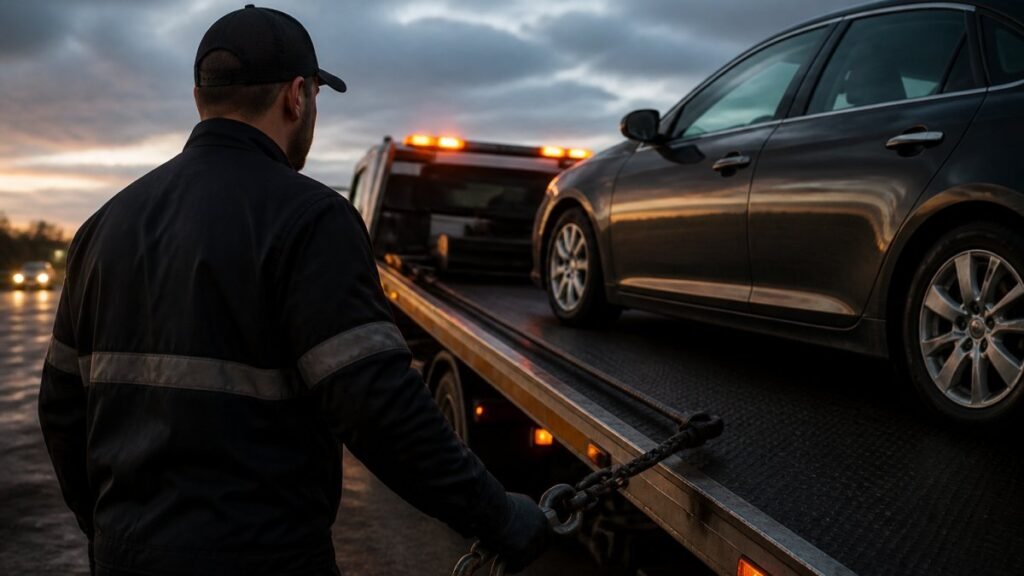
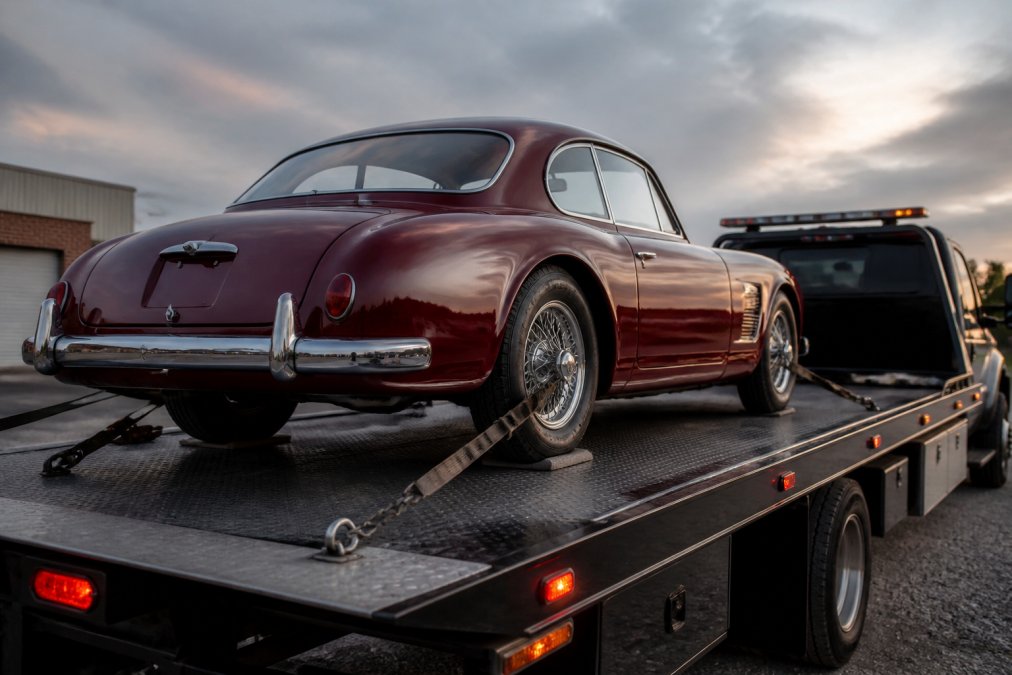
Flatbed towing is the industry standard for protecting classic cars. Instead of lifting the front wheels and dragging your vehicle, a flatbed trailer lowers completely flat, allowing your car to be driven or winched straight onto the platform. All four wheels sit on the deck, completely off the ground, which means zero stress on your suspension, steering, or frame.
How Flatbed Towing Protects Your Vehicle
When your classic car is loaded onto a flatbed, the entire weight is distributed evenly across the trailer deck. There’s no pulling, no dragging, no stress on any single component. The vehicle sits stable and level during transport, which means zero suspension stress, no frame damage, protection from road debris, and safety for inoperable vehicles.
Flatbed towing works equally well whether you’re moving your car from Broken Arrow to a repair shop in Tulsa or transporting it to a car show in Sapulpa.
Soft Tie-Down Straps and Damage Prevention
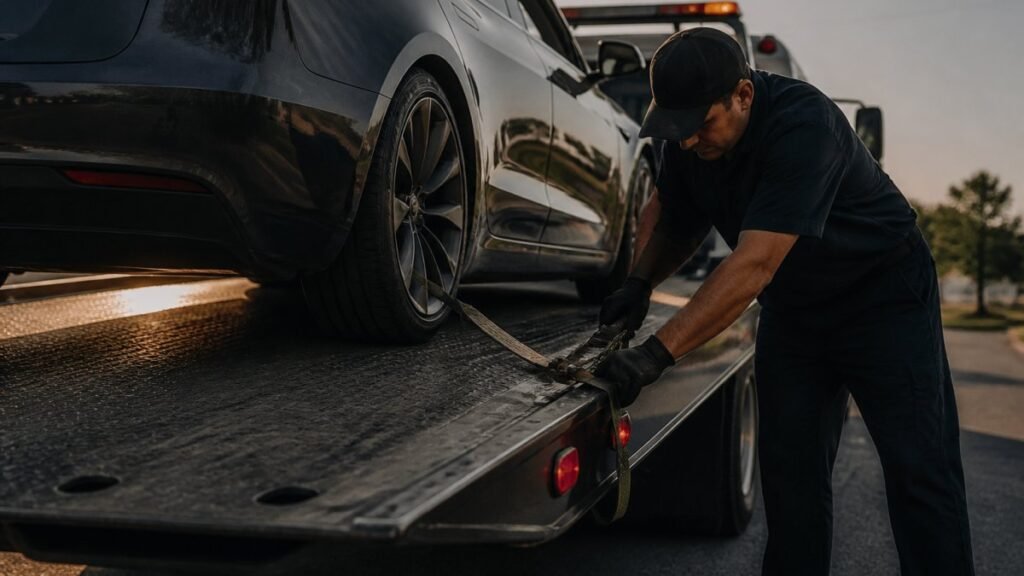
How your classic car is secured to the flatbed matters as much as the flatbed itself. Neptune Towing uses soft-loop tie-down straps made from heavy-duty polyester webbing, never chains or metal hooks that can scratch or dent your vehicle.
Soft tie-downs distribute the securing force across a wider area of your car’s frame, preventing the concentrated pressure points that chains create. The straps are designed to secure your vehicle without contacting painted surfaces, chrome, or delicate body panels.
Always ask a towing company whether they use soft tie-downs before booking. If they can’t confirm they use protective straps, keep looking.
Damage-Free Classic Car Towing: What to Expect
Damage-free towing isn’t just about the equipment; it’s about the process. From the moment a driver arrives at your location to the moment your classic car is unloaded at its destination, every step should prioritize protection.
Wheel-Lift Systems vs. Flatbed: Key Differences
A wheel-lift system (also called a "dolly" or "lift-gate" tow) raises one axle (usually the front) while the other axle remains on the ground. The vehicle is then towed with two wheels rolling and two wheels lifted.
Wheel-lift advantages: Lower cost than flatbed, faster setup, works well for operational vehicles.
Wheel-lift disadvantages: Only two wheels are off the ground, increases odometer mileage, puts stress on the lifted axle, not suitable for inoperable vehicles, and can damage low-clearance vehicles if the lift angle is too steep.
For classic cars, flatbed is superior because it completely removes your vehicle from the road.
Ground Clearance and Chassis Protection
Classic cars often sit lower to the ground than modern vehicles. Low ground clearance creates real problems during towing: scraping during loading if the flatbed angle is too steep, damage from road hazards like potholes or railroad tracks, and suspension compression that can cause damage over time.
A professional flatbed operator knows how to position the trailer and adjust the loading angle to keep your classic car’s chassis completely clear. Neptune Towing’s flatbed equipment is specifically chosen to handle low-clearance vehicles. We assess each car individually and adjust our approach based on its specific needs.
Enclosed Car Transport for Vintage Cars
For long-distance moves, car shows, or high-value classics, enclosed transport takes protection to the next level. Your car travels inside a fully enclosed trailer, protected from weather, road debris, and the elements.
When to Choose Enclosed Transport
Enclosed transport makes sense when moving across multiple states, transporting a show car, moving a rare or valuable classic, transporting during winter, or moving in high-humidity climates. For local moves within the Tulsa area (say, from Jenks to Bixby), enclosed transport is usually unnecessary. A flatbed with proper tie-downs gives excellent protection at reasonable cost.
Weather Protection and Long-Distance Moves
An enclosed trailer protects your classic vehicle from rain, snow, hail, road salt, dust, pollen, UV damage, and temperature swings. If you’re moving a 1965 Mustang with original paint and unrestored interior from Tulsa to California, enclosed transport ensures it arrives in the same condition it left.
DIY Towing Equipment: Trailers, Dollies, and Rental Options
Not every classic car move requires a professional towing company. If you own a suitable tow vehicle and need to move your classic car locally, DIY equipment rental can be cost-effective.
Air-Bagged Trailers and Drop-N-Load Systems
Air-bagged car trailers use airbag suspension to keep the deck level and absorb road shock. Some models feature "drop-n-load" systems that lower the trailer deck nearly to ground level, allowing low-clearance cars to drive on without ramps.
Pros of air-bagged trailers: Extremely smooth ride, low loading angle protects low-clearance cars, you maintain complete control, suitable for multiple moves.
Cons of air-bagged trailers: Significant upfront cost if purchasing, requires a capable tow vehicle with sufficient towing capacity, you’re responsible for safe loading and securing, and requires knowledge of proper tie-down techniques.
Wheel Dollies and Shop Movement Solutions
For moving your classic car around a garage or workshop without starting the engine, wheel dollies are invaluable. A set of four hydraulic dollies allows one person to move a vehicle in any direction.
Important limitation: Wheel dollies are NOT for road transport. They’re designed only for shop movement. Using them on public roads is illegal and dangerous.
Insurance and Liability When Using Rental Equipment
If you rent a flatbed trailer or tow dolly, your personal auto insurance typically does NOT cover damage to the rental equipment or to your classic car during transport. You’re responsible for any damage that occurs.
Most rental companies offer damage waiver insurance. Before renting equipment, ask about what insurance is included, what damage waivers are available, whether your personal auto insurance extends to rental equipment, and what happens if you damage the rental during transport.
For valuable classics, the peace of mind of professional towing often outweighs the cost savings of DIY rental.
DIY rental equipment is cheapest upfront but carries real liability risk. One mistake during loading can cost more than professional towing would have.
Classic Car Recovery in Tulsa: Professional vs. DIY
When your classic car breaks down or gets stuck, you face a choice: call a professional tow truck or attempt recovery yourself.
When Professional Towing Is Your Best Option
Professional towing makes sense when your car is stuck in a ditch or off-road, your car is inoperable, you’re unsure of proper loading techniques, your car is valuable or rare, you’re on a busy highway, or it’s after hours or during bad weather.
Neptune Towing operates 24/7 throughout the Tulsa area, including Broken Arrow, Glenpool, Owasso, and Sapulpa. Our drivers are trained in damage-free towing and know how to assess each situation quickly.
Vehicle-Specific Towing Requirements
Different classic cars require different towing approaches:
Low-slung classics (Corvettes, Ferraris, Porsches): Require flatbed towing or air-bagged trailers with drop-n-load capability. Standard wheel-lifts will scrape the undercarriage.
Unibody classics (1960s-70s Mustangs, Camaros, Challengers): Can use flatbed or wheel-lift, but flatbed is safer because there’s no stress on the frame during transport.
Rear-wheel-drive classics: If inoperable, must use flatbed. If operable, wheel-lift works but increases mileage.
All-wheel-drive or front-wheel-drive classics: Check the owner’s manual before towing. Some require all four wheels off the ground.
Antique vehicles (pre-1950s): Often require flatbed because their frames and suspension are more delicate.
When you call for towing, tell the operator the year, make, model, and any specific issues. A professional will know whether your car needs flatbed or if another method is safe.
Comparison: Hook Towing vs. Flatbed vs. Enclosed Transport
| Towing Method | Best For | Protection Level | Time |
|---|---|---|---|
| Hook-and-Chain | Modern vehicles, emergencies | Low | Fastest |
| Wheel-Lift | Operable vehicles, short distances | Medium | Fast |
| Flatbed | Classic cars, inoperable vehicles | High | Medium |
| Enclosed Transport | High-value classics, long distance | Highest | Slower |
Cost, Protection, and Practicality
Hook-and-chain towing is the wrong choice for any classic car. The money you save on the tow will be spent on repairs.
Wheel-lift towing costs less than flatbed but still carries risk for low-clearance or valuable vehicles. It works fine for modern cars but isn’t ideal for classics.
Flatbed towing is the sweet spot for classic car owners in the Tulsa area. It offers excellent protection and works for any type of classic car. Whether your car is operable or stuck, low-slung or high-clearance, flatbed towing is the safest choice.
Enclosed transport is the premium option with highest protection. It makes sense for irreplaceable vehicles or long-distance moves, but it’s overkill for local transport within Tulsa County.
How to Prepare Your Classic Car for Safe Transport
Before your classic car is loaded onto a tow truck or trailer, take these steps to prevent damage and ensure smooth transport.
Step-by-Step Loading Safety Checklist
Before the tow truck arrives:
- Remove or secure any loose items inside the car
- Check tire pressure and ensure all tires are in good condition
- Make sure the parking brake works and the car is in Park or Neutral
- Close all windows and doors completely
- Disable any aftermarket alarms that might trigger during transport
- Note any existing damage and take photos
When the tow truck arrives:
- Brief the driver on your car’s specific needs
- Watch the loading process and stop the driver if something doesn’t look right
- Confirm that soft tie-downs (not chains) are being used
- Verify that tie-downs are attached to the frame, not to bumpers or body panels
- Ask the driver to demonstrate that your car is secure before leaving
After loading:
- Ask for the driver’s name, phone number, and estimated arrival time
- Get a receipt or written confirmation of the tow
- Follow the tow truck if possible to watch for any issues
- Inspect your car immediately upon arrival at the destination
If you’re uncomfortable with how your car is being loaded, speak up immediately. A good towing operator will take time to explain their process and will welcome your questions.
When your classic car needs to move, you have real choices beyond traditional hook towing. Flatbed towing provides excellent protection and works for any type of classic vehicle. Neptune Towing specializes in damage-free flatbed towing throughout the Tulsa area, including Jenks, Bixby, Broken Arrow, Glenpool, Owasso, and Sapulpa. We use soft tie-down straps, proper loading techniques, and equipment specifically chosen to protect classic cars. When you need a tow truck in Tulsa that understands how to handle your vehicle safely, call Neptune Towing at (539) 292-3074.
Frequently Asked Questions
What makes flatbed towing safer for classic cars than traditional hook towing?
Flatbed towing lifts all four wheels completely off the ground, eliminating stress on the suspension, steering, and drivetrain. Traditional hook towing can damage low-clearance components, strain the transmission, and leave two wheels rolling on pavement. For classic cars with original suspensions and delicate undercarriages, flatbed towing prevents mechanical risks and protects paint and chrome from road debris. Neptune Towing uses soft tie-down straps and proper securement to ensure zero ground contact and damage-free transport throughout Tulsa and surrounding areas.
How much does enclosed car transport for vintage cars cost compared to open flatbed?
Enclosed car transport typically costs more than open flatbed towing due to the additional protection and specialized equipment required. However, pricing depends on distance, vehicle size, and specific service needs. For local moves in Tulsa, flatbed towing offers excellent damage prevention at a more accessible price point. For long-distance transport or extremely valuable classics, enclosed trailers justify the investment. Contact Neptune Towing for a transparent quote on your specific situation, we provide honest pricing with no surprise fees.
Can I tow my classic car myself using a rental dolly or trailer?
Yes, you can rent equipment like air-bagged trailers, tow dollies, or wheel dollies for DIY classic car transport. However, you'll need proper insurance coverage, a suitable tow vehicle, and knowledge of tie-down techniques, weight distribution, and highway regulations. Many insurance policies don't cover damage caused by DIY towing. For valuable classics or situations where you're uncertain about equipment, professional flatbed towing eliminates risk and liability. Neptune Towing handles the setup, securing, and transport so your classic arrives safely.
What's the difference between a wheel-lift system and flatbed towing for classic cars?
A wheel-lift system lifts one axle (usually the front) while the other two wheels remain on the road. This works for some modern vehicles but poses serious risks for classics: it strains the suspension, can damage the frame, and leaves the vehicle partially exposed to road debris. Flatbed towing supports the entire vehicle on a flat platform with all wheels off the ground, distributing weight evenly and protecting every component. For classic cars with original suspensions and delicate bodywork, flatbed is the damage-free choice.
How do I prepare my classic car for safe towing in Tulsa?
Before transport, ensure the vehicle is in neutral (or park for automatics), disable the parking brake if possible, remove any loose items inside, and document the condition with photos. If the classic hasn't run recently, check that fluids won't leak and secure any loose trim or weatherstripping. Communicate any specific concerns, low ground clearance, custom modifications, or mechanical issues, to your towing company. Neptune Towing asks these questions upfront so we can use the right equipment and loading angle for your specific vehicle, ensuring damage-free transport from pickup to delivery.
This article was written using GrandRanker