
Table of Contents
- Why Damage-Free Towing for Classic Cars Matters
- The Importance of Flatbed Towing for Vintage Vehicles
- Flatbed Towing for Vintage Cars: Damage Prevention Techniques
- How to Prepare a Classic Car for Transport
- Classic Car Transport Insurance Requirements
- Towing Equipment for Low-Clearance Vehicles
- Professional Damage-Free Towing Standards and Safety Protocols
- Local Damage-Free Towing Service in Tulsa and Surrounding Areas
Last Updated: July 14, 2026
Why Damage-Free Towing for Classic Cars Matters
Damage-free towing for classic cars is the difference between preserving a valuable investment and watching it deteriorate during transport. Classic cars, whether vintage muscle cars, restored collectors’ vehicles, or luxury cars worth tens of thousands of dollars, require specialized handling that standard towing cannot provide.
Your classic car isn’t just transportation. It’s a piece of automotive history, a labor of love, or a significant financial asset. When your vintage vehicle breaks down in Tulsa or surrounding areas, you need a towing service that treats it with the respect it deserves.
Conventional towing methods damage classic cars. Wheel-lift tow trucks, designed for modern vehicles with reinforced frames, place tremendous stress on components never engineered to handle that force. Suspension systems crack. Bumpers bend. Chrome gets scratched. By the time your vehicle reaches the repair shop, the towing process itself has caused damage requiring additional repairs.
Damage-free towing uses the right equipment, techniques, and expertise to ensure your vehicle arrives in pristine condition.
The Importance of Flatbed Towing for Vintage Vehicles
Flatbed towing is the gold standard for transporting classic cars. Unlike wheel-lift or hook-and-chain methods, a flatbed tow truck provides a completely flat, stable platform where your entire vehicle rests securely. The entire weight distributes evenly across the bed, eliminating stress points that cause damage.
Professional collectors and restoration specialists recommend flatbed towing exclusively. All four wheels remain off the ground and protected. There’s no dragging, tilting, suspension stress, or undercarriage damage. For low-clearance vehicles like sports cars or custom-built classics, flatbed towing is often the only viable option.
Flatbed vs. Wheel-Lift: Why Flatbed Wins for Classics
A wheel-lift tow truck raises the front or rear wheels and drags the remaining wheels along the road. This concentrates all vehicle weight on two wheels and their supporting frame components, subjects the suspension to unintended forces, and risks blowouts or damage to dragging wheels.
Flatbed towing eliminates these problems. Your vehicle sits on a completely flat platform with all four wheels off the ground and weight distributed evenly. There’s no dragging, tilting, or stress on any single component.
| Towing Method | Weight Distribution | Wheel Contact | Best For |
|---|---|---|---|
| Flatbed Towing | Completely even across platform | All 4 wheels off ground | Classic cars, luxury vehicles, low-clearance vehicles |
| Wheel-Lift | Concentrated on 2 wheels | 2 wheels dragging | Standard modern vehicles |
| Hook-and-Chain | Concentrated at frame points | 2-4 wheels dragging | Heavy equipment, junkers |
Flatbed Towing for Vintage Cars: Damage Prevention Techniques
Damage prevention starts before the tow truck arrives and continues through loading, transport, and unloading. Every step requires attention to detail and equipment designed specifically for protecting classic cars.
The most common mistake is assuming any flatbed tow truck provides damage-free transport. Equipment matters, but technique matters more. Two operators using the same flatbed truck can produce completely different outcomes depending on how carefully they secure the vehicle and what materials they use.
Soft Straps and Nylon Tie-Downs
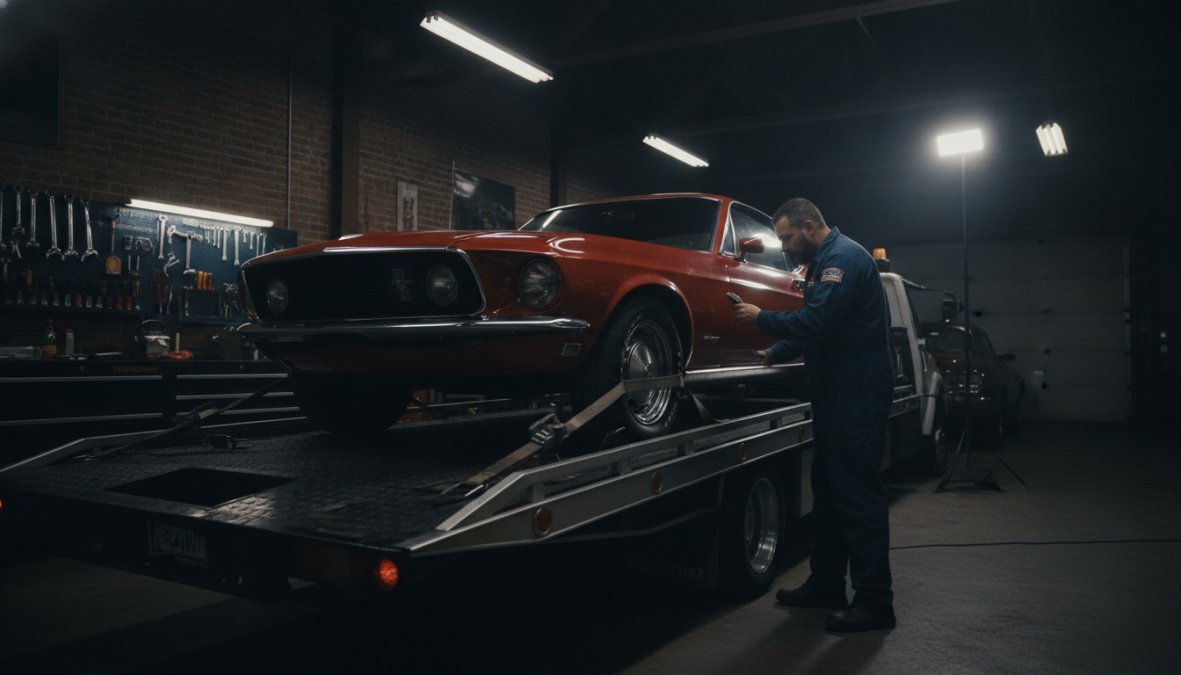
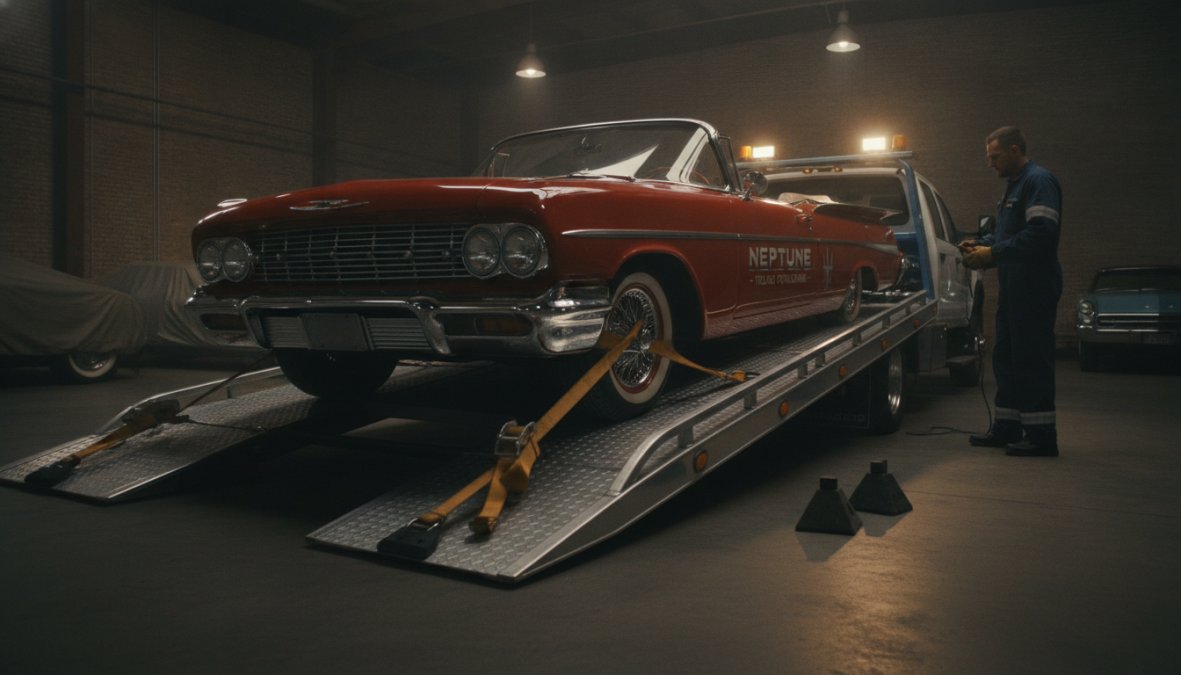
When your classic car is loaded onto a flatbed, soft straps and nylon tie-downs secure it without damaging the vehicle’s body. Hard chains and metal hooks scratch paint, dent panels, and damage chrome. Soft straps distribute pressure evenly across tie-down points without creating stress concentrations.
Professional damage-free towing uses wide nylon straps rated for the vehicle’s weight. The straps hold the car completely secure without any movement during transport. A professional operator knows the safe attachment points on your specific vehicle, typically reinforced frame rails or factory-installed tie-down loops rather than improvised attachment points.
Protecting Chrome and Paintwork During Transport
Chrome and painted surfaces show damage first during transport. Protective materials, blankets, foam padding, and protective coverings, should be placed between the vehicle and hard surfaces. The flatbed must be clean and free of debris. Wheel wells need padding to prevent tire damage or rim contact.
For particularly valuable finishes, show cars with museum-quality paint, or vehicles with original chrome, additional protection is necessary. Some professional services use custom protective covers or foam blocks at contact points.
Before your classic car is loaded, take photos from multiple angles showing the current condition. This documentation protects you and provides a clear record of the vehicle’s condition before and after transport.
How to Prepare a Classic Car for Transport
Preparing your classic car for towing requires attention to a few important details that prevent problems during transport.
Pre-Towing Inspection Checklist
Walk around your vehicle and document its current condition. Check for existing damage, scratches, dents, broken lights, and loose trim pieces. Take clear photos from multiple angles in good lighting. This documentation serves as your baseline and protects you if questions arise about the vehicle’s condition.
Verify that doors, windows, and trunk are secure. Remove or secure any loose items inside the car. Check the fuel tank level, tow operators prefer vehicles with less than a quarter tank for safety. For manual transmissions, verify the vehicle is in neutral and the parking brake is off. Know your vehicle’s tie-down points before the tow truck arrives so the operator can secure it properly.
Communicate any special considerations to the tow operator: low clearance, custom suspension, recent restoration, or fresh paint. This ensures the operator takes appropriate care.
Documenting Your Vehicle’s Condition
Take photos showing overall condition, close-ups of paint and chrome, tire condition, and any existing damage. Include photos of the odometer, interior, and undercarriage if accessible. Write down the vehicle’s current mileage, date, and time. Keep this documentation in a safe place.
For valuable classic cars, consider a professional pre-transport inspection. Documented inspection provides strong protection if disputes arise about the vehicle’s condition.
Classic Car Transport Insurance Requirements
Insurance is critical when transporting a classic car. Your personal auto insurance policy may not provide adequate coverage for transport, especially for high-value vehicles. Some policies exclude coverage during transport altogether.
Contact your insurance agent before calling a tow truck and ask specifically about coverage during towing and transport. For valuable classic cars, specialty insurance policies provide comprehensive coverage during transport. These policies are designed for collector vehicles and high-value vehicles where standard insurance is inadequate.
When hiring a towing service, verify that the company carries liability insurance and cargo coverage. This protects you if the towing company damages your vehicle during transport.
Don’t assume your insurance covers transport. Contact your agent before you need a tow truck. If your classic car is high-value, standard auto insurance may not provide adequate protection during transport.
Towing Equipment for Low-Clearance Vehicles
Classic cars often have lower clearance than modern vehicles. Sports cars, custom-built vehicles, and certain vintage models sit closer to the ground, creating challenges for standard towing methods. Low-clearance vehicles cannot be towed with wheel-lift or hook-and-chain methods because the apparatus would drag on the undercarriage.
Flatbed towing is the only practical method for low-clearance vehicles. The flatbed provides enough clearance that the vehicle can be driven or winched onto the bed without undercarriage contact.
Winch Operation and Secure Transport
When a classic car is loaded onto a flatbed, a winch pulls it onto the bed. The winch operator must understand the vehicle’s construction and apply force safely. Improper winching damages the frame, suspension, or undercarriage.
Professional winch operation uses soft straps or chains attached to reinforced tie-down points. The operator applies steady, even pressure to pull the vehicle onto the flatbed. Once on the flatbed, soft nylon straps secure the vehicle at multiple points, tightened evenly to hold it completely still without creating pressure points.
Professional Damage-Free Towing Standards and Safety Protocols
Damage-free towing for classic cars requires operators who understand the unique needs of vintage vehicles and follow consistent safety protocols. Professional towing services maintain strict standards for equipment inspection, operator training, and documented procedures for handling different vehicle types.
Drivetrain Protection During Transport
The drivetrain is vulnerable during transport. When a vehicle is towed with wheels on the ground, the drivetrain experiences unintended forces. This is why flatbed towing, which keeps all wheels off the ground, protects the drivetrain.
For manual transmissions, the transmission must be in neutral. For automatic transmissions, the parking brake must be off and transmission in neutral. For vehicles with electronic transmissions or special configurations, the towing operator needs specific guidance from the manufacturer or owner’s manual.
24/7 Availability for Emergency Classic Car Recovery
Classic cars break down at inconvenient times. When it happens, you need a towing service available immediately with specialized equipment and expertise. A professional towing service maintains 24/7 availability and keeps flatbed equipment ready for immediate dispatch.
For classic car owners in the Tulsa area, having a trusted towing service’s number saved in your phone is smart insurance. When an emergency happens, you want to call a service you trust, one that understands the value of what you own.
Local Damage-Free Towing Service in Tulsa and Surrounding Areas
When you need damage-free towing for classic cars in the Tulsa area, Neptune Towing is owner-operated and has served Tulsa, Jenks, Bixby, Broken Arrow, Glenpool, Owasso, Sapulpa, and surrounding Oklahoma communities since 2019.
What sets Neptune Towing apart is our commitment to damage-free towing and honest customer service. We don’t impound vehicles or profit from storage fees. Our flatbed towing equipment is specifically designed to protect your vehicle using soft straps, protective padding, and careful loading procedures.
When you call Neptune Towing, you’re dealing directly with a local business owner, not a large call center. We take time to understand your vehicle and situation, answer questions honestly, and provide transparent service. We’re available 24/7 for emergencies and committed to getting your classic car to safety in the same condition it left your driveway.
When your classic car breaks down or needs transport, damage-free towing requires specialized equipment, trained operators, and a commitment to protecting your investment. Neptune Towing provides flatbed towing with soft straps, protective padding, and careful handling procedures designed specifically for vintage vehicles. We’re owner-operated, available 24/7, and committed to honest customer service. Call Neptune Towing at (539) 292-3074 for damage-free towing service in Tulsa and the surrounding areas.
Frequently Asked Questions
How do you tow a classic car without damaging it?
Damage-free towing for classic cars requires using a flatbed tow truck with soft nylon straps, wheel dollies, and protective padding. Never use wheel lifts or chains that contact the vehicle's body. A professional towing service inspects tie-down points, secures the vehicle at four corners, and ensures the suspension and drivetrain are protected during transport. Proper equipment and technique prevent chrome damage, paintwork scratches, and mechanical harm.
What is the best type of tow truck for classic cars?
A flatbed tow truck is the best choice for vintage vehicles and collector cars. Flatbeds provide a completely level, secure transport surface that eliminates stress on the suspension and drivetrain. Unlike wheel-lift tow trucks, flatbeds keep all four wheels off the ground, preventing damage to low-clearance vehicles and protecting delicate undercarriages. Flatbed towing is the industry standard for damage-free transport of classic cars.
How do I prepare my classic car for towing?
Before towing, perform a pre-towing inspection: check fluid levels, document the vehicle's condition with photos, note any existing damage, and disable the alarm system. Remove or secure loose items inside the car. Ensure the fuel tank is not overfilled. Communicate any mechanical issues to the towing service. Document tire pressure and suspension condition. Taking these steps protects your classic car and provides evidence of its condition before transport begins.
Do I need special insurance for towing a classic car?
Many standard auto insurance policies have limited coverage for towing and transport. Classic car owners should verify their policy covers professional towing services and ask about additional coverage for long-distance transport. Some policies exclude certain types of transport or have mileage limits. Contact your insurance provider before arranging towing to confirm coverage details and understand any gaps. Documenting your vehicle's value and condition before towing helps with insurance claims if damage occurs.
This article was written using GrandRanker