
Table of Contents
- Why Luxury Car Shipping Demands More Than a Standard Tow
- Enclosed Auto Transport Requirements for High-Value Vehicles
- How to Verify a Luxury Car Shipper’s Credentials and Insurance
- Questions to Ask Auto Transport Brokers Before You Book
- How to Spot Car Shipping Scams and Broker Red Flags
- Vehicle Transport Inspection Checklist: Before, During, and After
- How Neptune Towing Handles Luxury and Specialty Vehicles Locally
- Frequently Asked Questions
Last Updated: September 22, 2026
Why Luxury Car Shipping Demands More Than a Standard Tow
Shopping for luxury car shippers is a different job than booking a regular tow. A Ferrari, a restored 1967 Mustang, or a Tesla Model S carries risk that a daily commuter car simply doesn’t. One bad strap or the wrong hookup point can cost thousands in damage before the truck even leaves your driveway.
That’s why the research matters. According to Forbes Advisor’s 2026 ranking of car shipping companies, the top-rated national transport provider earned a 4.9-star service rating, and the gap between good and bad operators is wide. At Neptune Towing, we handle luxury, classic, and electric vehicles on flatbeds here in Tulsa, so we know exactly what separates a careful shipper from a careless one.
Enclosed Auto Transport Requirements for High-Value Vehicles
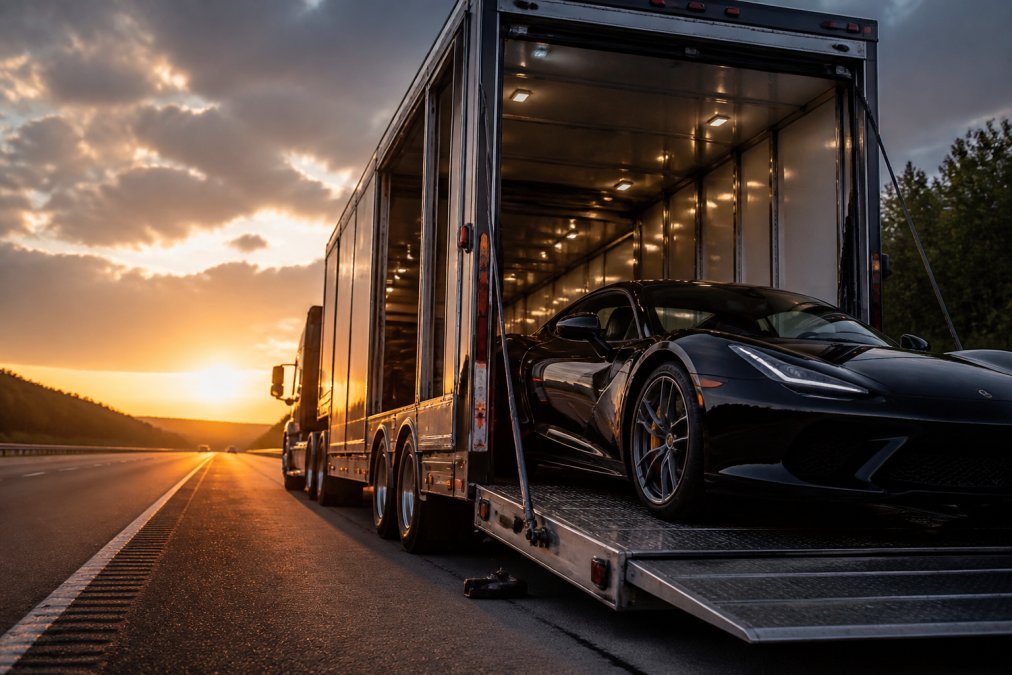
Enclosed auto transport is the standard for exotic, classic, and collector cars. Your vehicle rides inside a covered trailer, protected from road debris, weather, and UV exposure.
Industry data from JP Logistics on white-glove transport trends shows growing demand for specialized enclosed service as more owners ship high-end vehicles. The market reflects that shift: the luxury car market is projected to grow from $184.4 billion in 2026 to $404.9 billion by 2035, which Business Research Insights expects to keep driving demand for enclosed, door-to-door transport.
Enclosed auto transport requirements typically include:
- A fully enclosed trailer with soft tie-downs or wheel straps
- A lift gate or ramps rated for low-clearance vehicles
- Climate protection and no shared loading with loose cargo
- A vehicle condition report completed at pickup
- Proof of cargo insurance covering the full vehicle value
When Enclosed Transport Is Worth It (and When It Isn’t)
Enclosed transport is worth it for vehicles valued above roughly $50,000, any classic or restored car, and anything with custom paint or low ground clearance.
Open transport can work fine for a daily driver you’re moving across the state. But if you’d wince at a rock chip, pay for enclosed. The cost difference is real, but so is the repair bill on a repainted hood.
Ask the shipper whether your car will be the only vehicle in the trailer or one of several. Some “enclosed” quotes stack multiple cars, which increases the chance of door dings during loading.
How to Verify a Luxury Car Shipper’s Credentials and Insurance
Verifying a luxury car shipper takes about ten minutes and saves you from most disasters. Three checks matter most: FMCSA registration, cargo insurance limits, and whether you’re actually talking to the carrier or a broker reselling your shipment.
FMCSA Registration and Carrier Licensing
Every legitimate interstate carrier must hold a valid Federal Motor Carrier Safety Administration license and a USDOT number. Cars.com’s 2026 car shipping guidance notes that verifying FMCSA registration is the baseline step before booking any transport.
Look up the company’s USDOT number directly on the FMCSA site. Then confirm three things:
- The legal name on the FMCSA record matches the name on your quote and your bill of lading.
- The operating authority is active, not pending or revoked.
- The safety record shows no pattern of recent out-of-service violations.
If the number doesn’t exist, belongs to a different company, or the dispatcher dodges the question, walk away.
Cargo Insurance and Transport Liability Limits
Cargo insurance is what pays you if your car is damaged in transit. This is where luxury owners get burned, because the coverage that satisfies federal minimums is nowhere near enough to replace a six-figure vehicle.
Broker vs. Carrier: Why It Matters for Your Claim
A broker arranges transport. A carrier owns the truck. Both can be legitimate, but the distinction changes who is liable when something goes wrong.
| Check | What to Confirm | Red Flag |
|---|---|---|
| FMCSA / USDOT | Active authority, legal name matches quote and BOL | No number, revoked authority, or mismatched name |
| Cargo insurance | Per-vehicle limit covers your declared value | “We’re covered” with no certificate or VIN listed |
| Broker vs. carrier | Written carrier name and USDOT before deposit | Vague answers about who owns the truck |
| Bill of lading | Declared value and carrier name printed on it | No paperwork until the truck arrives |
Declare your car’s full value on the bill of lading and get the carrier’s USDOT in writing before you pay a deposit. Those two steps prevent most of the disputes luxury owners run into.
Questions to Ask Auto Transport Brokers Before You Book
The right questions to ask auto transport brokers separate a smooth shipment from a nightmare. Brokers arrange transport; they usually don’t own trucks. That’s fine, but you need to know who’s actually hauling your car.
Ask these before you pay a deposit:
- Do you own the truck, or do you subcontract?
- What’s the carrier’s USDOT number and insurance limit?
- Is pickup door-to-door or terminal-to-terminal?
- What’s the guaranteed pickup window?
- Who do I call if the driver is late?
- Is the quote binding, or can it change after pickup?
If a broker quotes a price far below every other estimate, expect a call later demanding more money before delivery. Your car is already on the truck, so you have no use.
How to Spot Car Shipping Scams and Broker Red Flags
Knowing how to spot car shipping scams comes down to pressure and paperwork. Scammers push you to pay fast and keep everything verbal. Legitimate operators do the opposite, they document everything and never rush you.
Watch for these red flags:
- Payment only by wire transfer, gift card, or crypto
- No physical address, or a residential address only
- Quotes that change after your car is picked up
- No bill of lading or condition report offered
- Reviews clustered on one platform with identical wording
- Pressure to “lock in today’s rate” within the hour
- A website that never names the actual carrier hauling your car
What Happens If Your Car Is Damaged: A Claims Walkthrough
Most shipping guides stop at “make sure they’re insured.” That’s the easy part. The hard part is what you actually do the day your car arrives with a scratch that wasn’t there at pickup. Here’s the sequence that protects you.
A broker with no carrier named on the bill of lading leaves you chasing a company you never hired. Get the carrier’s name and USDOT in writing before the truck shows up.
The Pre-Booking Scam Test
Before you pay anyone, run this three-question test:
- “What’s the carrier’s USDOT number?” A real operator answers immediately.
- “Can you email a certificate of insurance with my VIN?” A real operator sends it same day.
- “Is the quote binding, or can it change after pickup?” A real operator puts the answer in writing.
Three vague answers means three reasons to keep looking. The right shipper will welcome the questions.
Vehicle Transport Inspection Checklist: Before, During, and After
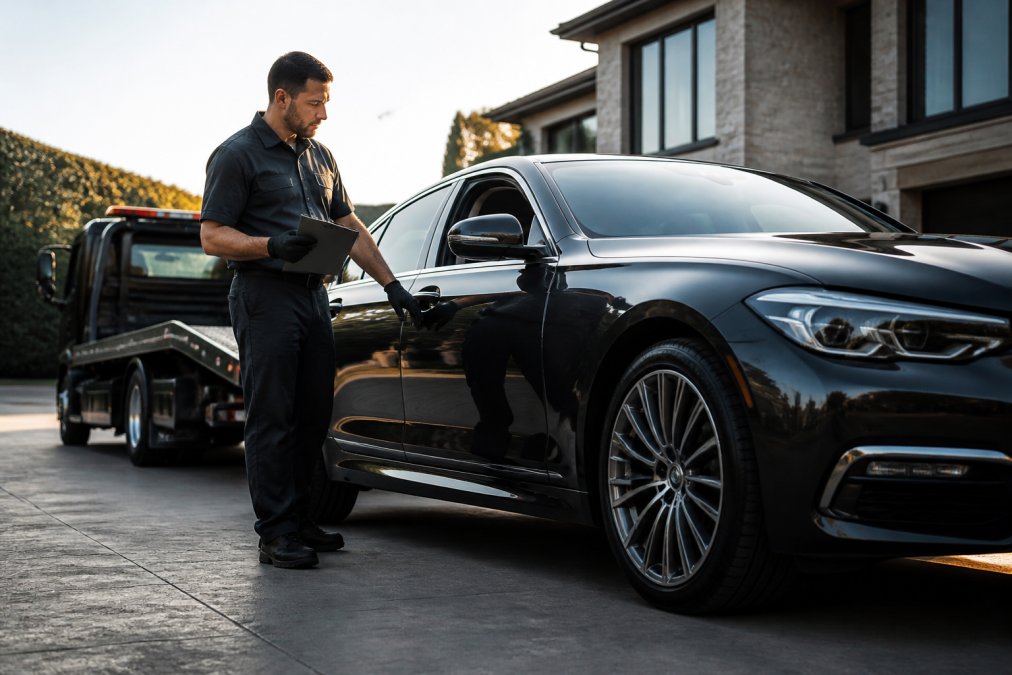
A vehicle transport inspection checklist protects you at every stage. Document everything in photos, and never skip the walkaround.
What to Document at Pickup and Delivery
- Photograph all four sides, plus roof and wheels
- Note existing scratches, chips, and curb rash
- Record the odometer reading
- Confirm fuel or charge level
- Photograph any personal items left inside
- Get the condition report signed by the driver
- Keep your copy of the bill of lading
Do the exact same walkaround at delivery before you sign anything. Once you sign, you’ve accepted the vehicle’s condition.
Film a slow video walkaround at pickup. Photos miss angles, but a two-minute video catches everything and timestamps itself.
How Neptune Towing Handles Luxury and Specialty Vehicles Locally
Neptune Towing is a locally owned, owner-operated towing company serving Tulsa, Jenks, Bixby, Broken Arrow, Glenpool, Owasso, Sapulpa, and the surrounding communities. Since 2019, Neptune Towing has earned the trust of drivers throughout Tulsa by providing reliable towing services, professional roadside assistance, and a customer-first approach. We don’t impound vehicles. We’re the company you call when you need help, not a bill.
Frequently Asked Questions
What credentials should a luxury car shipping company have?
Look for an active Federal Motor Carrier Safety Administration (FMCSA) registration and a U.S. Department of Transportation number, which you can verify directly on the FMCSA website. The carrier should also hold cargo insurance that covers the full value of your vehicle, not just the minimum requirement. Ask for a certificate of insurance before booking. If a company can’t provide these documents quickly, that’s a sign to keep looking.
How do I verify a car shipping company’s insurance coverage?
Request a certificate of insurance directly from the carrier or broker, then call the insurance company listed on it to confirm the policy is active and covers your specific vehicle value. If the coverage limit is lower than your car’s value, ask how they handle the gap. Get everything in writing before you hand over the keys.
What are the red flags of an unreliable car shipping company?
Watch for demands for large upfront cash deposits, quotes that are dramatically lower than everyone else, no physical business address, and pressure to sign contracts without time to review them. A legitimate broker will give you a written shipping quote, a bill of lading, and clear dispatch and transit time estimates. If they can’t tell you who the actual carrier is or refuse to share their FMCSA number, walk away.
Why is enclosed transport recommended for luxury vehicles?
Enclosed trailers protect high-value cars from road debris, weather, and UV exposure during transit. For exotic car transport or classic car shipping, an enclosed trailer with secure tie-downs and hydraulic lift gates reduces the risk of paint chips, undercarriage damage, and theft. Industry data from JP Logistics (2026) shows growing demand for white-glove service in this segment. If your vehicle is worth six figures or has custom paint, enclosed is the safer choice.
Finding reliable luxury car shippers takes homework, but it’s homework that protects a car you’ve invested in. Check the FMCSA number, confirm the insurance limit, ask who owns the truck, and document everything. If you’re in the Tulsa area and need your luxury, classic, or electric vehicle moved safely on a flatbed, call Neptune Towing at (539) 292 3074. We’re owner-operated, we don’t impound, and we treat every vehicle like it’s our own.