Last Updated: November 18, 2026
Quick Summary
After sliding off the road, stay calm, ease off the accelerator, and avoid hard braking. Once stopped, put the car in park, turn on your hazard lights, and check every occupant before anything else. Then call for help and share a precise location.
- Take your foot off the accelerator and avoid braking hard, which can worsen a skid.
- Turn on your hazard lights first, before checking anything else.
- Check every occupant for injuries, and call 911 if anyone is hurt.
- Give dispatch a precise location such as a mile marker, exit number, or cross street.
- Stay belted inside if traffic can reach you, and never stand between the car and oncoming traffic.
Table of Contents
- What to Do in the First Few Seconds After Sliding Off the Road
- Stay Inside or Get Out? A Simple Decision Guide
- Car Stuck in a Ditch: What to Do Before You Try to Drive Out
- What to Do If Your Car Is Sliding in Snow or Ice
- When to Call a Tow Truck After an Accident
- Vehicle Recovery After Sliding Off the Road and Getting Back Safely
- Frequently Asked Questions
What to Do in the First Few Seconds After Sliding Off the Road
Sliding off the road is scary, even at low speed. Your first few seconds matter most. Stay calm, keep your hands on the wheel, and let the car settle before you do anything else.
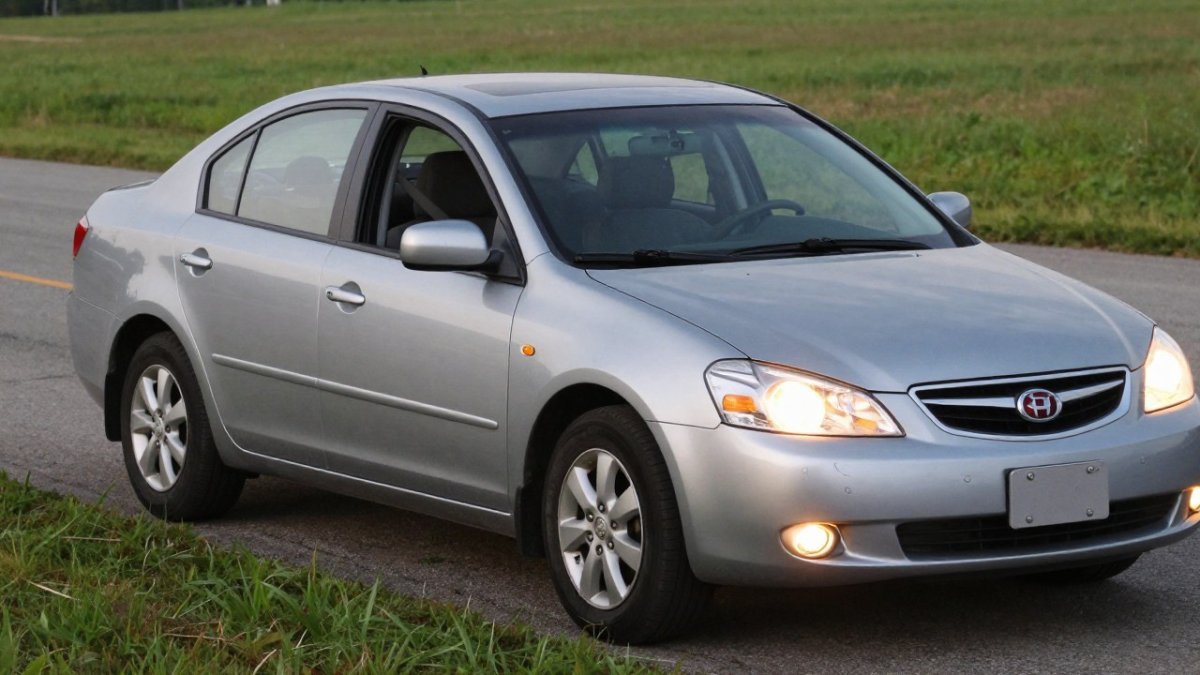
The most important first move is to take your foot off the accelerator. Do not slam on the brakes. Hard braking on a slick surface can make a skid worse and send the car deeper into a ditch or onto its side.
Taking your foot off the accelerator and avoiding sudden braking
Ease off the gas and let the car slow down on its own. If the car is still moving, brake gently only once the tires have regained some grip. On snow or ice, gentle pressure is the safest choice.
If the car is turning, steer gently in the direction you want the front wheels to point. Avoid sharp, jerky movements. Quick corrections can flip a car that is already off balance.
Once the car has stopped: the five-step sequence
Most guides stop at the skid. What you do in the first two minutes after the car comes to rest is what actually keeps you and your passengers safe.
1. Confirm the car is fully stopped and in park. Keep your foot on the brake, shift into park, and set the parking brake.
2. Turn on your hazard lights. Do this before anything else.
3. Check every occupant before you check the car. Ask each person if they are hurt. Look for bleeding, dizziness, confusion, or pain in the neck or back.
**4.
5. Call for help and share a precise location. This is where most drivers lose time. “I slid off the road somewhere on the highway” is not enough for a tow truck or a dispatcher to find you quickly. Use these tips:
- Read the nearest mile marker or exit number
- Name the road, the direction you were traveling, and the nearest cross street or landmark
- On a phone, open your maps app and share your live location with the person you are calling, or read the coordinates aloud
- Describe the vehicle by color, make, and body style, and mention any hazard like a fuel leak or a car sitting in tall grass
Preventing a second collision while you wait
Most slide-off injuries happen after the car has stopped, when a passing driver hits the stranded vehicle. While you wait for help:
- Keep hazard lights on the entire time
- Stay buckled inside if traffic can reach you, and get behind a guardrail if it cannot
- Do not stand behind the car to wave traffic around; drivers see hazards, not people
- If it is dark, keep your dome light on and use your phone flashlight sparingly so you do not blind oncoming drivers
- Watch the traffic side of the car, not your phone, until help arrives
Watch out: Do not try to push the car off the shoulder by hand on a live road. A vehicle that looks clear of traffic can still be clipped by a mirror or a wide load, and a person pushing is invisible to most drivers until it is too late. If the car needs to move, let a professional winch-out or flatbed handle it.
Stay Inside or Get Out? A Simple Decision Guide
Most drivers freeze on this question, and the advice floating around online is often contradictory. The honest answer is that it depends on two things: whether the car is in immediate danger, and whether traffic can reach you. Work through the questions below in order. The first one that applies to you is your answer.
Step 1: Is there an immediate threat inside or around the car?
Get out first and ask questions later if any of these are true:
- You see smoke, flames, or smell burning plastic or fuel
- The car is sitting in water that is rising or above the bottom of the doors
- The car is tipped, on its side, or resting on an unstable slope where it could roll
- A fuel leak is pooling under the vehicle
- A power line is down on or near the car
If a power line is touching the vehicle, do not touch the metal and do not step out normally. Call 911 and wait for guidance unless the car is on fire, in which case jump clear without touching the car and the ground at the same time, then shuffle or hop away with feet together.
Step 2: Can traffic reach you where you stopped?
If the car is in a travel lane, on the shoulder of a busy highway, or anywhere a driver could drift into it, staying belted inside is usually safer than standing outside. Modern vehicles are built to absorb a rear impact; a person standing beside the car is not. On I-44, the Creek Turnpike, US-169, or SH-51 during rush hour, this is the common case.
Step 3: If you stay inside, do these things
- Keep your seat belt on
- Turn on hazard lights and, if it is dark or foggy, your dome light so other drivers can see the car
- Call 911 and give your location, direction of travel, and which lane or shoulder you are in
- Keep the engine off if you smell fuel or see smoke
- Do not step out to wave traffic around you
Step 4: If you get out, exit on the safe side
Exit on the side away from traffic, even if that means climbing over the center console to the passenger door. Once outside, move to the far side of the guardrail, the top of the embankment, or well off the shoulder, and stay there. Keep children and pets with you and away from the road edge.
Watch out: Never stand between your car and oncoming traffic, and never stand directly behind or in front of the vehicle where a secondary hit could push the car into you.
Step 5: Reassess as conditions change
A decision to stay inside is not permanent. If the car starts to smoke, if water rises, or if a passing driver stops and warns you of a hazard you cannot see, reassess. If you are unsure, call 911 and describe your exact situation; dispatchers deal with this every day and will tell you whether to stay put or move.
Car Stuck in a Ditch: What to Do Before You Try to Drive Out
Many people try to rock the car free right away. That often makes things worse.
Before you try to drive out, look at the situation. Check whether the front wheels are still touching solid ground. Look for damage to the tires, wheels, or undercarriage.
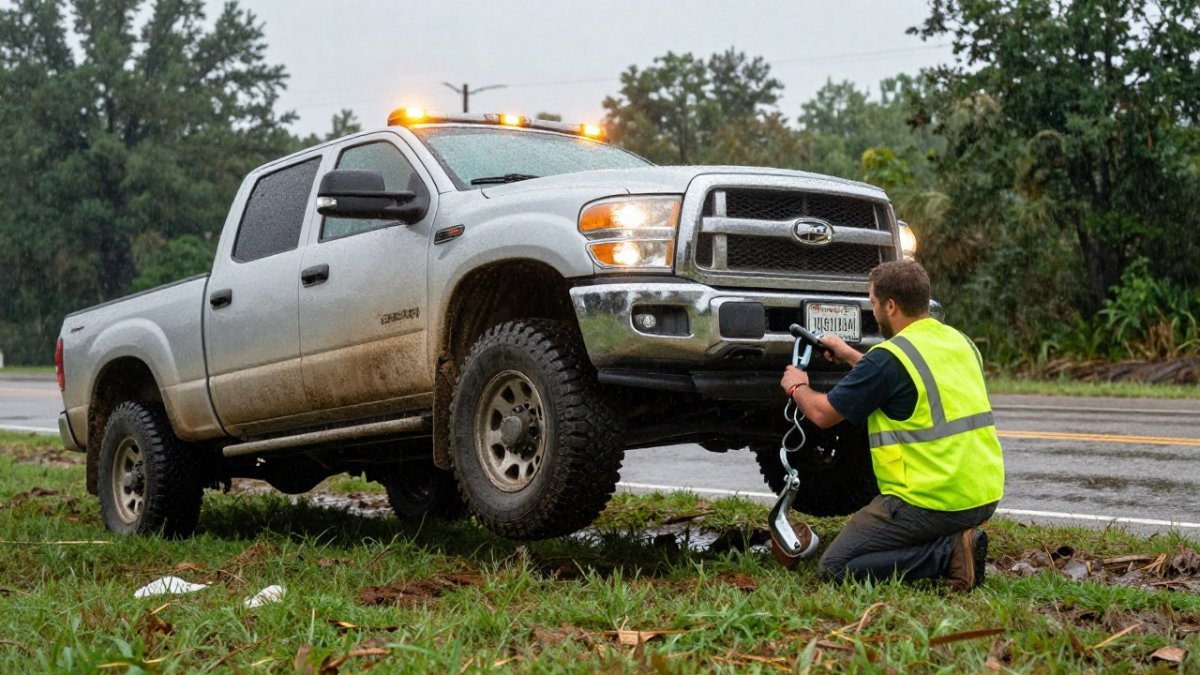
If the car is stuck in mud, snow, or a ditch, a winch-out may be the safer option. At Neptune Towing, we offer 24/7 winch-out service in Tulsa.
Watch out: Do not keep pressing the gas to free a stuck car. Spinning tires can overheat the transmission and damage the drivetrain.
Before you try to drive out, check a few things, since spinning the wheels can dig the car in deeper.
| Situation | What to do | Why it matters |
|---|---|---|
| Front wheels still touch solid ground | Check the ground before trying to drive out | Solid contact means a self-recovery attempt may work |
| Car stuck in mud, snow, or a ditch | Consider a winch-out | A winch-out is the safer option |
| Pressing the gas to free the car | Stop immediately | Spinning tires can overheat the transmission |
| Tires, wheels, or undercarriage look damaged | Inspect before moving | Damage can worsen when driven |
What to Do If Your Car Is Sliding in Snow or Ice
Snow and ice remove grip fast. A car can start sliding even when you are driving slowly. If you start to skid, stay calm and keep your eyes on where you want to go.
Ease off the accelerator. Steer in the direction you want the car to go. If the rear of the car slides, steer toward the direction the back is moving, then straighten the wheel once the car settles.
Avoid braking hard. If you have anti-lock brakes, press firmly and steadily. If you do not, pump the brakes gently.
Once you are stopped, turn on your hazard lights. Move slowly and wait for conditions to improve before attempting to drive back onto the road.
When to Call a Tow Truck After an Accident
Not every slide-off needs a tow. But some situations call for professional help. Call a tow truck if:
- Your car is stuck and you cannot get it moving safely
- The wheels, axle, or steering look damaged
- Fluid is leaking from the car
- The car will not start or drive straight
- Your car is in a spot where it blocks traffic
- You are unsure whether the car is safe to drive
At Neptune Towing, we are a locally owned and owner-operated company serving Tulsa, Jenks, Bixby, Broken Arrow, and nearby communities. We use flatbed trucks for damage-free towing, and we do not impound vehicles. Our goal is to get you and your car to safety.
Vehicle Recovery After Sliding Off the Road and Getting Back Safely
Vehicle recovery is more than pulling a car out of a ditch. It means getting the car back to a safe, drivable state. Before you return to traffic, walk around the car and check the tires, lights, mirrors, and windshield.
Listen for unusual noises or vibrations. Do not drive if the car pulls hard to one side or the steering feels loose. Have a professional inspect any car that has been in a ditch or off-road incident.
If you need help getting back on the road, call Neptune Towing at (539) 292-3074. You can read more about safe vehicle recovery and real-time dispatch tracking before you call.
Frequently Asked Questions
What should I do immediately after my car slides off the road?
Stay calm and take your foot off the accelerator without braking hard. Turn on your hazard lights so other drivers can see you, and check yourself and any passengers for injuries. If anyone is hurt, call 911 right away. If everyone is fine, assess whether the vehicle is stable and whether traffic is still moving nearby before you decide your next step. Avoid rushing back onto the road without looking first.
Should I try to drive my car back onto the road after sliding off?
Not until you have checked the situation. Look for damage to tires, a bent steering component, or fluid leaks, and make sure the vehicle is not sitting on an unstable slope. If the car is stuck in soft ground or a ditch, spinning the wheels can dig it deeper and cause more damage. When in doubt, wait for a professional. A tow operator can assess the angle and recovery options safely.
When should I call a tow truck after sliding off the road?
Call a tow truck if the vehicle is stuck in a ditch, nose-down in mud or snow, unable to move under its own power, or showing damage such as a flat tire, leaking fluids, or steering problems. Also call if you are unsure whether the car is safe to drive. At Neptune Towing, we handle winch-outs, ditch recovery, and damage-free flatbed towing for vehicles across Tulsa, Bixby, Broken Arrow, and surrounding areas.
What should I do if my car slides off the road in snow or ice?
Ease off the accelerator and avoid sudden braking or sharp steering. If the vehicle leaves the pavement, keep your hands steady on the wheel and let the car slow down gradually. Once stopped, turn on your hazard lights, stay buckled in if you are safe there, and call for help if the car is stuck or the roadway is hazardous. Snow and ice can make a stuck vehicle more dangerous, so waiting for a tow operator is often the safer choice.
