
Last Updated: October 26, 2026
Quick Summary
Choose a towing company by confirming it dispatches its own trucks, matches the equipment to your vehicle, and explains the quote before dispatch. Ask what truck is coming, whether a flatbed is available, and where you can read recent reviews.
- An owner-operated company has a name and reputation on the line with every truck.
- A flatbed is the safe default for low-clearance, all-wheel-drive, electric, and damaged vehicles.
- Ask directly whether the company is dispatching its own truck before you commit.
- Have your exact location, vehicle make and model, and a one-sentence description ready before calling.
- Ask about licensing, insurance, quote components, and what truck is coming before agreeing to service.
Table of Contents
- What to Compare Before You Call a Towing Company
- Flatbed Towing Protects Low-Clearance, Classic, and Electric Vehicles
- Roadside Assistance Covers the Breakdowns That Don’t Need a Tow
- Emergency Towing on I-44, the IDL, and Tulsa County Roads
- Vehicle Recovery for Cars in Ditches, Mud, and Tight Spots
- How to Verify a Local Towing Company Is Licensed, Insured, and Honest
- Call Neptune Towing When You Need Help in Tulsa
- Frequently Asked Questions
What to Compare Before You Call a Towing Company
The towing industry in the U.S. is forecast to generate $12.0 billion in revenue in 2026, according to IBISWorld’s Automobile Towing in the US Industry Analysis, which means you have plenty of choices when your car quits on you. That’s the problem. Plenty of choices makes it hard to tell a good towing company from a dispatcher who farms your call out to whoever answers. At Neptune Towing, we’ve watched drivers get burned by the same handful of gaps over and over, so here’s what we tell people to compare before they dial.
A towing company dispatches trucks to move disabled, damaged, or stuck vehicles and to handle roadside problems like dead batteries and flat tires. The differences show up in four places: who answers the phone, what equipment shows up, how pricing is quoted, and whether the company has a local reputation to protect.
Start with ownership. An owner-operated company has a name and a reputation on the line every time a truck rolls. Next, ask what kind of truck is coming. A flatbed handles almost anything safely; a wheel-lift wrecker is fine for some jobs and wrong for others. Then ask how the quote is built: the charges should be explained before dispatch, not after.
| What to Compare | Why It Matters | What to Ask |
|---|---|---|
| Ownership | Accountability stays local | “Do you own the trucks or subcontract?” |
| Equipment | Protects your vehicle type | “Is a flatbed available for this job?” |
| Quote structure | No surprise charges | “What’s the total, including mileage?” |
| Availability | Real response windows | “How long until a driver is dispatched?” |
| Local reputation | Track record you can check | “Where can I read recent reviews?” |
That table is the short version. The longer version is weighing those answers against your situation, because the right company for a dead battery in a Brookside parking lot isn’t always the right one for a rear-ended pickup on the shoulder of I-44.
Match the truck to the vehicle, not the other way around. A flatbed is the default safe choice for low-clearance cars, all-wheel-drive and four-wheel-drive vehicles, electric vehicles, and anything with damaged bodywork or a locked drivetrain. A wheel-lift wrecker can move many standard front-wheel-drive cars, but it lifts two wheels and drags the rest, which is why you should confirm flatbed availability before you commit. If a dispatcher can’t tell you what truck is coming, that’s your first warning sign.
Ask how the quote is built, not just what it is. A professional quote should explain the charges before dispatch. You don’t need to memorize rates. A single number with no breakdown means the company is guessing or planning to renegotiate at the curb.
Confirm who is actually coming. Ask directly: “Are you dispatching your own truck?”
Check the response window, not the arrival promise. Traffic on the IDL, a wreck on US-169, or a rain-soaked evening in Owasso all move the clock.
Read the recent reviews for patterns. Look for language about careful loading, honest communication, and whether the driver showed up when promised.
Before you call, have three things ready: your exact location with the nearest cross street or exit, the vehicle’s make and model, and a one-sentence description of what happened.
If it’s a breakdown rather than a crash, ask whether the company handles the roadside assistance Tulsa drivers actually need, jump start service, lockout service, tire changes, and fuel delivery, so you’re not paying for a tow you don’t need.
Flatbed Towing Protects Low-Clearance, Classic, and Electric Vehicles
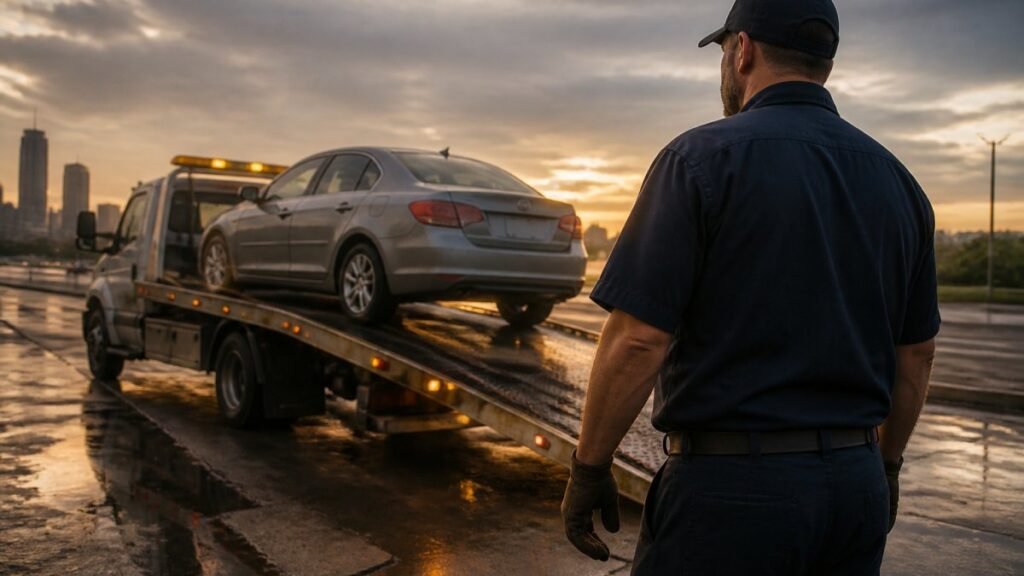
Flatbed towing is an option for vehicles that sit low, carry high value, or run on electric power, because the entire car rides on the deck instead of being dragged with two wheels down. We run flatbeds.
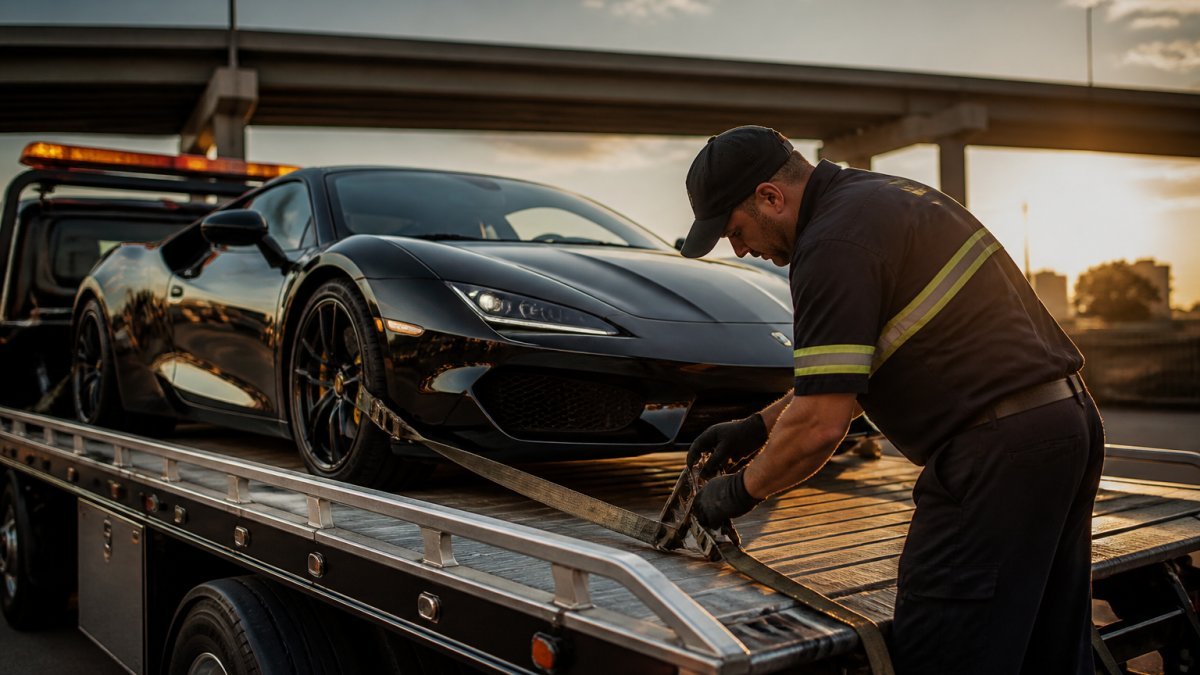
Securing your vehicle properly on a flatbed prevents costly frame or suspension damage that often complicates efforts to get transparent repair quotes after you reach the shop.
Low-clearance cars scrape on ramps and can catch a bumper on a wheel-lift. Classic cars have frames, paint, and trim that don’t forgive a careless hookup. Electric vehicles should be moved on a flatbed with all four wheels off the ground, with care around the battery and drivetrain.
Ask up front whether a flatbed is available. For the full safety case before you decide, read why flatbed towing is safer.
Roadside Assistance Covers the Breakdowns That Don’t Need a Tow
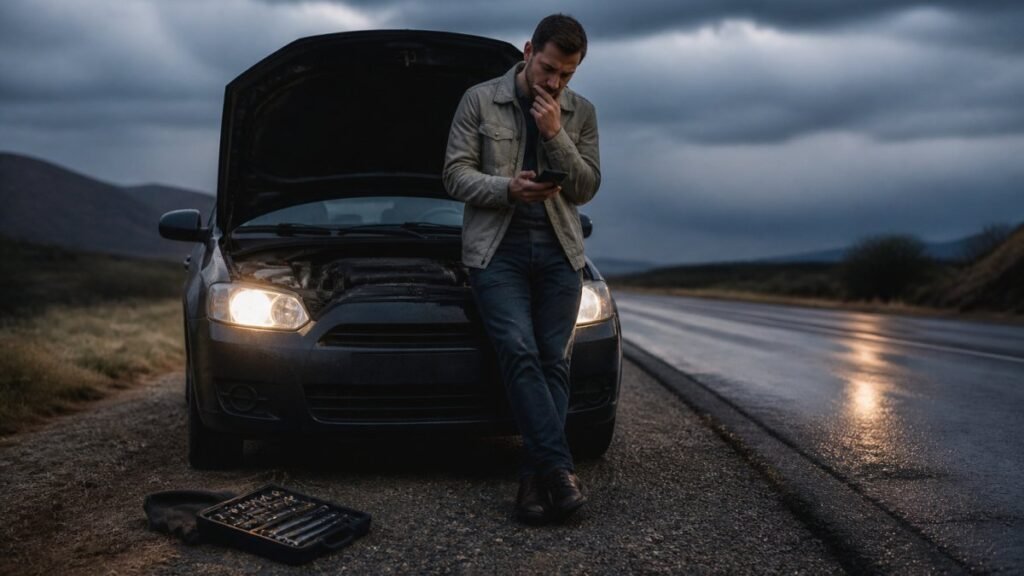
Roadside assistance solves a problem on the spot: a jump start, a lockout, a tire change, or a fuel delivery. Some breakdowns may call for roadside assistance rather than a tow.
A dead battery in a parking lot off Riverside Drive may call for a jump start. Keys locked inside at a Tulsa shopping center may call for a lockout service call. A flat with a usable spare may call for a tire change. Running out of gas on the way home from Owasso may call for fuel delivery.
Describe the symptom honestly and let the dispatcher tell you what’s actually required. For a deeper breakdown of where one service ends and the other begins, read our comparison of towing versus roadside assistance.
Emergency Towing on I-44, the IDL, and Tulsa County Roads
Emergency towing is the service you call when a vehicle can’t be driven and needs to move now, whether that’s a collision on I-44, a breakdown on the Inner Dispersal Loop, or a stall on a county road outside Broken Arrow. The priority is getting you out of the traffic lane and off the shoulder safely.
Highway work is its own skill. On I-44 and the IDL, the shoulder is narrow, traffic is fast, and the safest place for you is behind a barrier or well off the roadway, not next to your car. Tell the dispatcher your exact location, direction of travel, and nearest exit or landmark.
Availability matters in an emergency. Ask for an estimate and a callback if anything changes.
Vehicle Recovery for Cars in Ditches, Mud, and Tight Spots
Vehicle recovery is the work of getting a car out of a ditch, off a muddy shoulder, out of a tight spot, or back onto pavement after a winch-out, and it’s a different job from a standard tow.
A soft shoulder after heavy rain can swallow a tire, a gravel road near Glenpool can turn slick, and a misjudged turn can leave you nose-down in a drainage ditch with a bent bumper and no way to drive out.
If your car is stuck at an angle or on soft ground, consider professional recovery. Our article on signs your vehicle needs professional recovery covers when a DIY attempt makes things worse.
How to Verify a Local Towing Company Is Licensed, Insured, and Honest
Verifying a towing company comes down to questions about its credentials, insurance, and reviews. Ask before you agree to anything.
Ask directly about licensing and insurance.
Read recent reviews and look for repeated themes: did the driver show up when promised, was the final bill close to the quote, was the car handled carefully.
Here’s what to ask.
Licensing. Ask the company whether it holds a current operating license for the jurisdictions it serves.
Insurance. Ask whether the company carries insurance and whether it will provide proof of coverage.
Damage-free practices. Ask how the driver secures a vehicle. Neptune Towing uses proper loading and securement procedures to help protect vehicles during transport.
Honest quoting. Ask for the quote components before dispatch. If the number changes on arrival, ask why before you agree.
Reviews and reputation. Read recent reviews and look for specifics: driver names, vehicle descriptions, mentions of the neighborhood or road.
Ask about licensing, insurance, the quote, and what truck is coming before you agree to service.
One more thing worth checking: whether the company impounds vehicles. We don’t. For a step-by-step walkthrough of vetting a provider, our guide on how to find a reputable towing company in Tulsa lays it out.
Call Neptune Towing When You Need Help in Tulsa
When you need a tow truck in Tulsa, the difference between a good call and a bad one comes down to who picks up and how honestly they talk to you. Neptune Towing is owner-operated, licensed and bonded, and serves drivers in Tulsa, Jenks, Bixby, Broken Arrow, Glenpool, Owasso, Sapulpa, and the surrounding communities.
We handle flatbed towing, emergency towing, jump starts, lockout service, tire changes, fuel delivery, and vehicle recovery. We use proper loading and securement procedures to help protect vehicles during transport, and we don’t impound vehicles. We’re the company you call when you need help, not a bill.
If your car is disabled right now, call (539) 292 3074 and tell us where you are. If you’d rather see what we offer first, our towing service page covers the full range of help available 24 hours a day.
Frequently Asked Questions
How do I choose a reliable towing company in Tulsa?
Ask whether the dispatcher can give you a quote before the truck arrives and whether flatbed towing is available for your vehicle. Ask which cities the company covers, such as Tulsa, Jenks, Bixby, Broken Arrow, Glenpool, Owasso, and Sapulpa.
When should I request flatbed towing instead of a standard tow?
Neptune Towing offers flatbed towing for low-clearance, classic, luxury, and electric vehicles. Ask whether a flatbed is available for your vehicle.
How long does it usually take for a tow truck to arrive?
Arrival time depends on traffic, weather, and how many calls are already in the queue. Ask for an estimated arrival window when you call. If you are on I-44 or the IDL, tell the dispatcher your location.
What information should I give a towing company when I call?
Give your location first, including the nearest cross street, mile marker, or landmark. Then describe the vehicle: make, model, year, whether it is all-wheel drive or electric, and whether the wheels turn. Tell the dispatcher what happened, such as a dead battery, flat tire, lockout, or collision. Mention any passengers, pets, or hazards.
Can a towing company help with a dead battery, flat tire, or lockout?
Yes. Neptune Towing offers jump starts, tire changes, lockout service, and fuel delivery across Tulsa and surrounding communities. Call to discuss the assistance you need.