
Table of Contents
- Understanding Base Towing Rates and Hook-Up Fees
- Common Hidden Fees in Towing Company Invoices
- Winching, Recovery, and Equipment Surcharges
- Average Cost of Towing in Your Area
- What to Ask a Tow Truck Driver Before Service
- How to Avoid Predatory Towing Fees
- Reviewing Your Itemized Invoice and Disputing Charges
- Frequently Asked Questions
Last Updated: September 25, 2026
When your car breaks down on I-44 near Tulsa, or you’re stranded in a parking lot in Bixby, the last thing you want is surprise charges piling up on your towing bill. Unfortunately, hidden fees are how many towing companies pad their invoices, and most drivers don’t realize what they’re paying for until the bill arrives. Understanding the true cost of towing through a towing company hidden fee breakdown, from hook-up fees to mileage charges to after-hours premiums, helps you make informed decisions and avoid predatory practices. This guide breaks down exactly where towing company hidden fees come from, what to expect, and how to protect yourself when you need roadside assistance in the Tulsa area.
Understanding Base Towing Rates and Hook-Up Fees
The base rate, also called the hook-up fee, is the starting charge every towing company applies when they dispatch a truck to your location. According to American Towing UT’s 2026 pricing analysis, local towing base fees typically range from $75 to $125 depending on the service provider and your location. This is the non-negotiable cost you’ll see on every tow truck invoice.
The hook-up fee covers the dispatch, fuel to reach you, and the labor to connect your vehicle to the tow truck. It’s a legitimate charge, towing companies have real overhead: insurance, equipment maintenance, driver salaries, and fuel costs. What matters is knowing this charge upfront before the truck arrives.
At Neptune Towing, we believe in transparency. When you call for a tow truck in Tulsa, you’ll know what the base rate is before service begins. As an owner-operated company, we don’t hide charges in fine print or surprise you with inflated invoices. That’s the difference between dealing with a local business owner and a large call center that profits from confusion.
The key takeaway: base towing rates are standard across the industry, but not all companies disclose them upfront. Always ask for the hook-up fee before accepting service.
Common Hidden Fees in Towing Company Invoices
This is where most drivers get hit with unexpected charges. Beyond the base rate, towing companies add multiple surcharges that can easily double your bill. Understanding each one helps you spot predatory pricing before it happens.
Mileage Charges Beyond the Base Rate
Many towing companies bundle a short distance into the base fee, typically 5 to 10 miles, then charge per mile after that. If you’re being towed from downtown Tulsa to a repair shop in Broken Arrow, those extra miles add up fast. Mileage rates vary widely, but they’re a standard practice in the industry.
The problem occurs when companies don’t disclose the mileage threshold or charge inflated per-mile rates.
Administrative and Dispatch Surcharges
This is where hidden fees become predatory. According to NorthLend’s 2025 industry analysis, standard administrative fees often range from $80 to $100, which are increasingly being questioned by consumers as unnecessary charges. Some companies call these “dispatch fees,” “service fees,” or “administrative surcharges”, the name changes, but the result is the same: extra money on your bill for paperwork.
After-Hours and Holiday Premiums
Need a tow truck at 2 a.m. on a Sunday? Expect premium charges. After-hours fees, typically charged between 6 p.m. and 6 a.m., can add to your bill. Holiday surcharges apply on Thanksgiving, Christmas, New Year’s, and other major holidays.
If a towing company quotes you a base rate but won’t disclose after-hours charges upfront, that’s a red flag. Always ask: “What is your rate for a 2 a.m. tow?” before you agree to service.
Winching, Recovery, and Equipment Surcharges
When your car is stuck in a ditch, lodged against a guardrail, or buried in mud, simple towing isn’t enough. Winching and vehicle recovery require specialized equipment and additional labor, and these services come with separate charges.
If your vehicle is in a ditch or stuck position, take a photo and send it to the towing company before they arrive. This helps them estimate recovery difficulty and quote you accurately without surprises.
Average Cost of Towing in Your Area
Towing costs in the Tulsa area depend on several factors: distance, time of day, vehicle type, and service complexity. A simple local tow from your home to a nearby repair shop in Tulsa costs far less than a long-distance recovery or an after-hours emergency on I-44.
What to Ask a Tow Truck Driver Before Service
The moment a tow truck arrives at your location is your last chance to ask questions before charges start accumulating. Here’s what you need to know before the driver hooks up your vehicle.
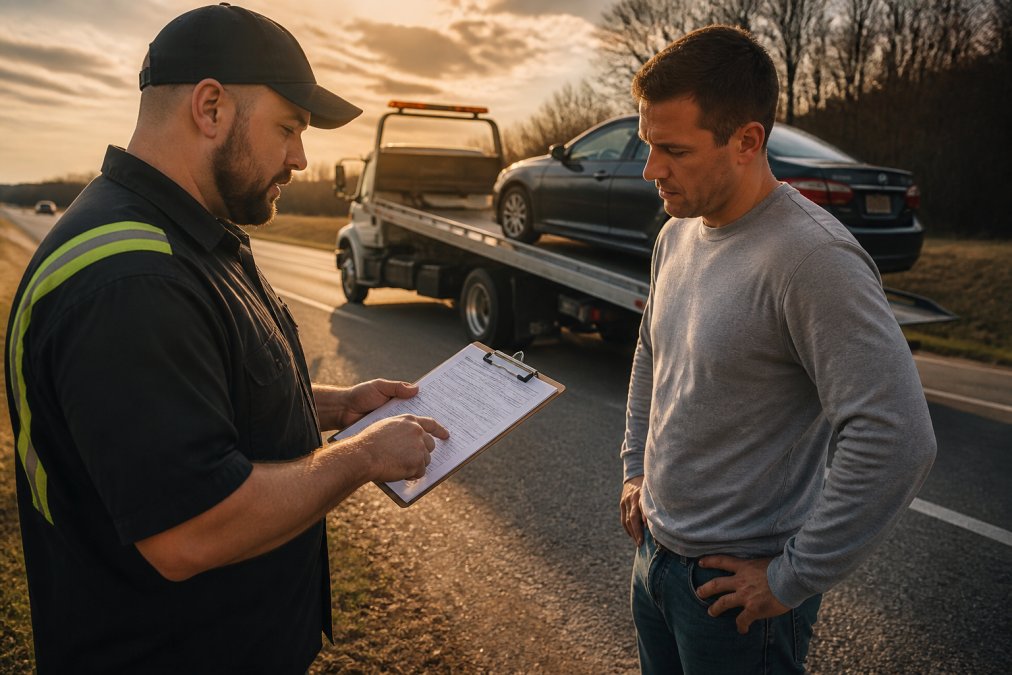
- “What is the total cost of this tow, broken down by service?” Don’t accept vague answers. You deserve an itemized estimate.
- “What distance is included in the base rate, and what do you charge per mile after that?” This prevents mileage surprises.
- “Are there any additional charges I should know about?” This catches administrative fees, after-hours premiums, or recovery surcharges before they appear on your bill.
- “Will you provide an itemized receipt?” A professional company will. A company that resists transparency is a red flag.
- “Do you accept insurance?” If your insurance covers towing, confirm the company works with your carrier to avoid billing disputes.
- “What happens if I dispute a charge?” Understand the dispute process before you sign anything.
How to Avoid Predatory Towing Fees
Predatory towing practices are real, documented, and widespread. The American Transportation Research Institute found that nearly one-third of crash-related tows involve inflated invoices and hidden fees. Here’s how to protect yourself.
The single best way to avoid predatory fees is to call a company you trust before you need them. Build a relationship with a local towing provider now so you know exactly who to call when emergencies happen.
Reviewing Your Itemized Invoice and Disputing Charges
You’ve received your towing bill, and something doesn’t add up. Here’s how to review your invoice and challenge unfair charges.
Line by line review: Your invoice should show:
- Hook-up or base fee (should match the quoted amount)
- Mileage charges (verify the distance and per-mile rate)
- Recovery or winching fees (should be explained clearly)
- Administrative or dispatch fees (question anything over $75)
- After-hours or holiday premiums (should be disclosed upfront)
Frequently Asked Questions
What are the most common hidden fees in towing company invoices?
Hidden fees often include administrative surcharges, mileage charges beyond a base radius, after-hours premiums for night or weekend calls, gate fees at service facilities, equipment surcharges for specialized gear, and dispatch fees. Nearly one-third of crash-related tows involve predatory billing practices, according to the American Transportation Research Institute. Always request an itemized invoice and ask for a breakdown of all charges before authorizing service.
How much should I expect to pay for a basic tow truck service?
Base hook-up fees vary for local towing services. However, your total cost depends on mileage, time of day, vehicle type, and whether additional services like winching or recovery are needed. Winching fees vary depending on complexity. To get an accurate estimate for your specific situation, contact your local towing service directly and ask them to itemize all expected charges upfront.
What questions should I ask a tow truck driver before they hook up my vehicle?
Ask for the total estimated cost broken down by service (hook-up, mileage, equipment), confirm whether additional fees will be added later, request an itemized invoice before payment, clarify the company’s damage-prevention procedures if you have a luxury or electric vehicle, ask about their licensing and bonding status, confirm the destination address, and get a timeframe for arrival. A reputable operator will answer these questions clearly and provide transparent pricing before work begins.
How can I tell if a towing company is using predatory pricing?
Warning signs include refusing to quote a price upfront, adding unexpected charges after service is complete, charging excessive administrative fees without explanation, using vague invoice language instead of itemized line items, charging storage fees when you didn’t authorize impound, or pressuring you to pay before you can review the invoice. Research local towing regulations in your area, compare quotes from multiple providers, and always ask for a written estimate. Transparent companies like owner-operated services prioritize honest communication over hidden charges.
What is the difference between a base hook-up fee and mileage charges?
The base hook-up fee covers the initial dispatch, arrival, and connection of your vehicle to the tow truck. Mileage charges are separate and apply per mile traveled from the tow truck’s current location to your vehicle and then to your destination. Some companies include a base mileage radius in the hook-up fee, then charge per mile beyond that. Always clarify the exact mileage rate and whether there’s a minimum charge before authorizing the tow.
Are there extra charges for roadside assistance services like jump starts or lockouts?
Yes, roadside assistance services typically carry separate fees from towing. Jump starts, lockout services, tire changes, and fuel delivery are usually charged as service calls rather than full tows. These fees vary by provider but are often lower than towing costs. Some insurance policies and roadside assistance memberships cover these services at no additional cost, so check your coverage first. Always ask the dispatcher whether a service call or full tow is needed for your situation.
What should I do if I receive an invoice with charges I don’t understand?
Request an itemized breakdown of every charge on the invoice. Contact the towing company immediately and ask for clarification on unfamiliar line items. Compare the invoice against any written estimate you received before service. If charges significantly exceed the estimate or seem unreasonable, document everything and contact your state’s attorney general or consumer protection office. If the tow was insurance-related, file a dispute with your insurance company. Many states have regulations on maximum allowable towing rates, so verify whether the charges comply with local law.
When you need a tow truck in Tulsa, you deserve honest pricing and professional service. Neptune Towing has served the Tulsa community since 2019 as a locally owned, owner-operated business. We provide damage-free flatbed towing, emergency roadside assistance, and transparent pricing without hidden fees or storage lot charges. Call (539) 292-3074 for immediate assistance or to get a clear quote before service begins.