
Table of Contents
- Why Signaling for Help Matters When You’re Stranded
- The Universal Hand Signal for Help
- Visual Signaling Techniques for Maximum Visibility
- Auditory Signaling Methods and Whistle Blasts
- How to Stay Safe During a Vehicle Breakdown
- Getting Emergency Roadside Assistance in Tulsa
- Finding a Tow Truck Near You: What to Do Right Now
- Signaling for Help in Different Scenarios
- Frequently Asked Questions
Last Updated: September 1, 2026
Why Signaling for Help Matters When You’re Stranded
You’re stuck on the side of the road. Your car won’t start, your phone’s at 2% battery, and traffic is flying past at 60 mph. Knowing how to safely signal for help when stranded could be the difference between getting assistance in minutes or waiting hours in dangerous conditions.
According to TOOLTROOPERS roadside emergency statistics, approximately 69 million vehicle breakdowns occur annually in the United States, roughly 189,000 per day. More than 700 people are killed each year due to breakdowns, and over 14,000 are injured. Research shows that 73.1% of incidents involving stranded motorists occurred at night, when visibility is compromised and passing drivers are less likely to notice someone in distress (peer-reviewed research).
The real danger isn’t just being stranded, it’s being stranded and invisible. A driver who knows how to signal effectively gets noticed and gets help.
At Neptune Towing, we’ve responded to countless breakdowns across Tulsa and surrounding areas. This guide covers practical methods to signal for help when stranded, from the universal hand signal to visual and auditory techniques that work in different scenarios. We’ll also explain when to stay in your vehicle versus when to exit, how to position yourself safely on the roadway, and what to do when you need professional roadside assistance in the Tulsa area.
The Universal Hand Signal for Help
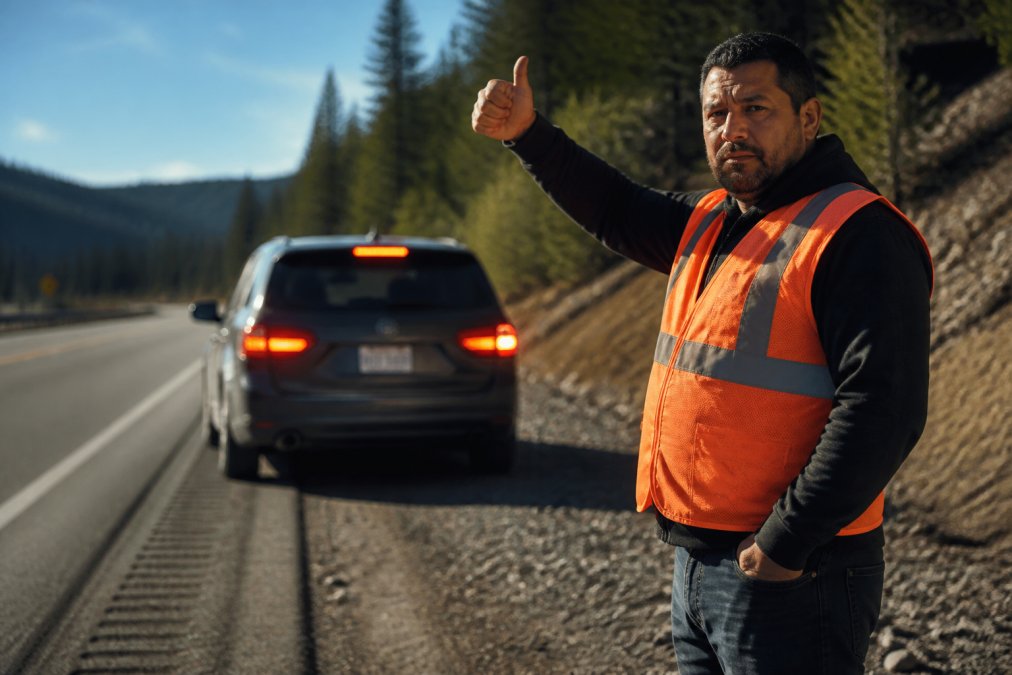
The hand signal for help is simple and recognizable. Stand outside your vehicle with your thumb pointed upward, arm extended fully, palm facing toward oncoming traffic. The gesture is unmistakable and most drivers immediately recognize it as a request for assistance.
How to Execute the Signal Correctly
Position yourself safely. Stand on the shoulder well away from traffic. On a highway, position yourself at least 10 feet from your vehicle, on the side away from traffic flow.
Make yourself visible. Wear bright or light-colored clothing. A reflective vest or safety jacket is critical, especially at night.
Hold the signal steady and clear. Extend your arm fully with your thumb up at chest height or slightly higher. Keep it visible long enough for drivers to register what they’re seeing.
Make eye contact when possible. As vehicles approach, try to make eye contact with the driver. A direct look communicates urgency in a way a gesture alone cannot.
Stay alert and ready to move. Watch for vehicles that are slowing down and be prepared to step back if needed.
When Hand Signals Work Best
Hand signals are most effective in moderate traffic conditions during daylight hours on two-lane highways where drivers have time to react. They’re less effective in heavy traffic, at night, or on high-speed interstates where drivers have only seconds to notice and respond. In these situations, you need additional visual aids.
Visual Signaling Techniques for Maximum Visibility
When a hand signal alone isn’t enough, visual signaling techniques increase your chances of being noticed dramatically.
Making Your Vehicle Stand Out
Activate your hazard lights immediately. This is the first thing you should do when you pull over. Hazard lights tell every driver behind you that something is wrong and are visible in daylight and at night.
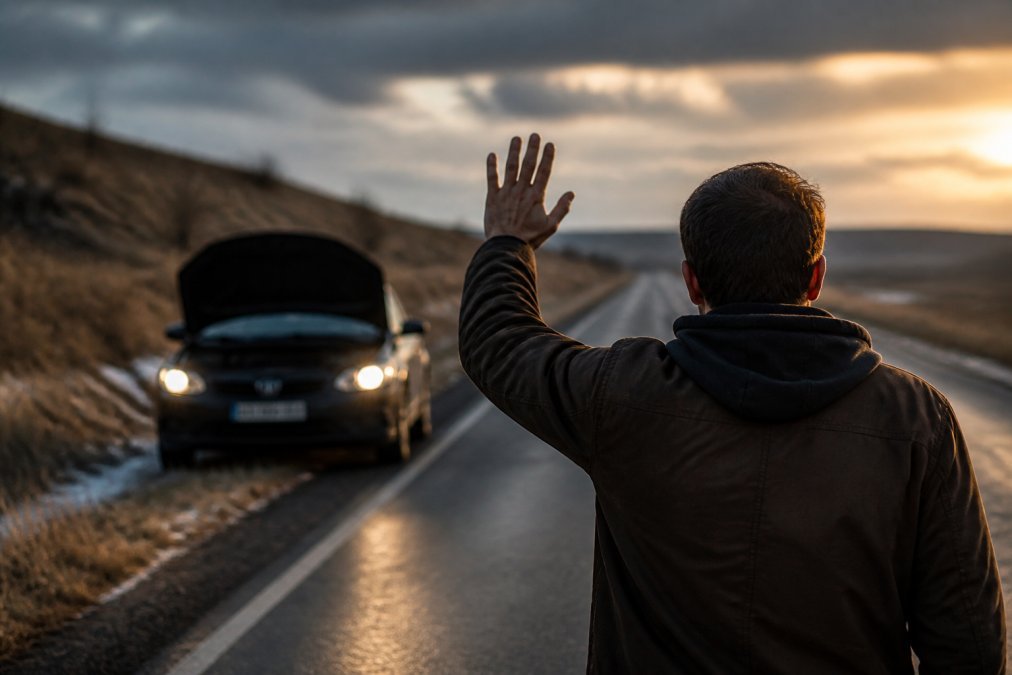
Open your hood. An open hood is a universal signal that your vehicle needs help and is visible from a distance.
Raise your trunk or open doors slightly. This increases the visual profile of your vehicle and makes it look disabled rather than just parked.
Position your vehicle safely. If you’re on a highway and able to move, pull as far off the roadway as possible. Use your vehicle as a shield by standing behind or to the side of it, never in front or between your vehicle and oncoming traffic.
Using Reflective Materials and Light
Reflective materials and light sources dramatically increase visibility, especially at night:
Reflective vests and jackets. Wear one immediately if you have it. Reflective material is visible from hundreds of feet away with headlights.
Flashlights and headlamps. A flashlight pointed toward approaching traffic at night gets attention fast. Flash it in a pattern, three short, three long, three short (SOS), or simply point it toward oncoming vehicles.
Flares and emergency lights. Place them on the road behind your vehicle at a safe distance. These create a visual barrier that alerts drivers to slow down.
Chemical light sticks. These glow-in-the-dark sticks are lightweight, inexpensive, and extremely effective at night. Attach them to your vehicle or hold them in your hand.
Mirrors or reflective surfaces. In daylight, a mirror can catch sunlight and create a visible flash toward approaching traffic.
Auditory Signaling Methods and Whistle Blasts
Sound is another powerful way to signal for help, especially when visual signals might be missed or when visibility is limited.
Your vehicle’s horn. Use it deliberately. A pattern of three short, three long, three short blasts is the auditory equivalent of SOS and communicates distress.
Whistles. A whistle is louder and carries farther than shouting. Three short blasts is the universal distress signal. Carry a whistle in your vehicle, they’re inexpensive and take up almost no space.
Combination signaling. Use auditory and visual signals together. Flash your lights while honking, or blow a whistle while waving. Multiple sensory inputs make your distress signal much harder to ignore.
According to AAA Foundation for Traffic Safety study on roadside safety, drivers respond more quickly and reliably to multiple signals than to a single method.
How to Stay Safe During a Vehicle Breakdown
Signaling for help is only part of the equation. Staying safe while you wait for assistance is equally important.
Inside vs. Outside Your Vehicle
Research shows that the risk of serious injury was significantly higher when individuals were outside their vehicles (77.2%) compared to inside (22.8%). However, this requires context.
Stay inside your vehicle if:
- You’re on a high-speed highway or interstate
- Traffic is heavy
- It’s nighttime or visibility is poor
- You don’t have reflective clothing or visibility aids
- You’re alone and feel unsafe retrieving locked keys.
Exit your vehicle if:
- You need to signal for help and staying inside makes you invisible
- You’re on a low-traffic road where you can safely stand away from the vehicle
- You’re in a safe location away from traffic
Don’t stay inside your vehicle if it makes you invisible to passing traffic. But do it safely, use reflective clothing, position yourself away from traffic, and be ready to move if a vehicle approaches too quickly.
Positioning and Visibility on the Roadway
Distance from your vehicle. Stand at least 10 feet away from it, on the side away from traffic. This gives you space to move if a vehicle drifts toward the shoulder.
Behind the line of traffic. Position yourself behind your vehicle, not in front of it or between it and oncoming traffic.
Visible and stationary. Stand where approaching drivers can see you clearly. Avoid shadows or blind spots. Stay still and maintain your signal.
Lit areas at night. Position yourself in streetlight or other light sources. If not available, use a flashlight or headlamp to illuminate yourself.
Away from the roadway. If you’re on a rural road with a wide shoulder, move as far from the pavement as safely possible.
Getting Emergency Roadside Assistance in Tulsa
When you need professional help, knowing who to call makes the process faster and less stressful. If you’re stranded in the Tulsa area, Neptune Towing provides 24/7 emergency towing and roadside assistance throughout Tulsa, Jenks, Bixby, Broken Arrow, Glenpool, Owasso, Sapulpa, and surrounding communities.
Neptune Towing responds to breakdowns, jump starts, lockouts, tire changes, fuel delivery, and vehicle recovery calls every day. As a locally owned and owner-operated towing company, we respond quickly with no hidden fees or surprise charges. You get honest communication, fair pricing, and a tow truck that arrives quickly.
For drivers with high-value vehicles, electric vehicles, or specialty cars, Neptune Towing offers damage-free flatbed towing. Whether you’re driving a Tesla that requires specialized EV towing, a classic car that needs careful handling, or a luxury vehicle that deserves professional transport, we use proper loading and securement procedures to protect your vehicle during transport.
Finding a Tow Truck Near You: What to Do Right Now
If you’re stranded right now and need immediate help:
Call for professional assistance immediately. Have your location ready, know what highway or road you’re on, what direction you’re heading, and any nearby landmarks.
Provide clear information. Tell the dispatcher:
- Your vehicle’s make, model, and color
- Your exact location (highway number, mile marker, or cross street)
- What’s wrong with your vehicle (if you know)
- Whether you’re safe or need immediate emergency assistance
- Your phone number
Activate your hazard lights and signal for help. While you’re waiting, make yourself visible using the signaling techniques covered earlier.
Stay in or near your vehicle. Unless you’re in immediate danger, stay close to your vehicle so the tow truck driver can find you.
Be ready to provide payment or insurance information. Have your payment method or insurance information ready when the tow truck arrives.
When you call Neptune Towing at (539) 292-3074, you’re getting a response from a business that values your time and your vehicle. No impound fees, no storage charges, just honest towing and roadside assistance.
Signaling for Help in Different Scenarios
The best signaling strategy depends on where you are and what conditions you’re facing.
Highway Breakdowns
On a highway, visibility and safety are your top priorities. Traffic is moving fast and drivers have limited time to react.
Activate hazard lights immediately. This is your first line of defense.
Get your vehicle as far off the pavement as possible. Pull completely off the highway onto the shoulder.
Open your hood. This signals to other drivers that your vehicle is disabled.
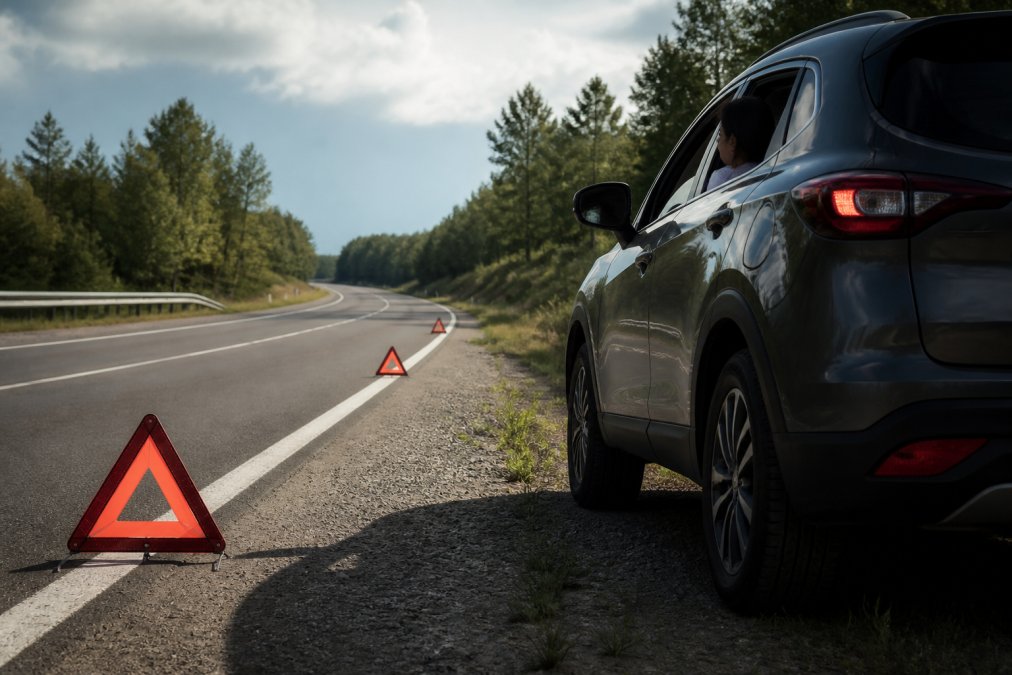
Use reflective materials. Wear a reflective vest or jacket. Place emergency flares or reflective triangles behind your vehicle. These create a visual barrier that alerts drivers to slow down.
Stand away from traffic. Position yourself on the shoulder where drivers can see you. Use your hand signal or flashlight to attract attention.
Call for professional help. Don’t rely solely on passing traffic. Call a towing service immediately.
Remote or Rural Areas
In remote or rural areas, traffic is sparse and you might wait a long time before seeing another vehicle.
Make your vehicle highly visible. Open your hood, activate hazard lights, and use bright materials or light sources.
Position yourself where you can see approaching traffic. Stand somewhere with a clear view of the road in both directions.
Use auditory signals. In quiet rural areas, sound carries farther. Use your horn or a whistle if a vehicle is within earshot.
Have your phone ready. If you have service, call for help immediately. If you don’t, stay with your vehicle and wait for passing traffic.
Consider the time of day. Rural roads have less traffic at night. If you break down at night in a remote area, your best option is usually to stay with your vehicle, use your hazard lights and flashlight, and call for professional help if you have service.
Night Signaling
At night, visibility is dramatically reduced. Your signaling strategy needs to compensate.
Hazard lights are essential. These are visible from a considerable distance at night and are your most important signal.
Use a flashlight or headlamp. Point it toward approaching traffic. Flash it in patterns if possible.
Wear reflective clothing. A reflective vest is visible from hundreds of feet away with headlights.
Use chemical light sticks. These glow in the dark and are visible from a distance. Attach them to your vehicle or hold them in your hand.
Consider your location. Position yourself in streetlight or other light sources if available. If not, use your flashlight or headlamp to illuminate yourself.
Stay alert. At night, drivers are often tired and less attentive. Don’t assume that a driver who sees your hazard lights will recognize that you need help. Use multiple signals and stay ready to move if a vehicle approaches too quickly.
When you’re stranded, every minute counts. Knowing how to safely signal for help when stranded puts you in control of the situation. You’re not just hoping someone stops, you’re actively communicating your need for assistance in ways that drivers recognize and respond to.
If you’re stranded in the Tulsa area and need professional roadside assistance or emergency towing, Neptune Towing is available 24/7. As a locally owned towing company, we respond quickly to breakdowns, jump starts, lockouts, and vehicle recovery calls throughout Tulsa, Bixby, Broken Arrow, and surrounding communities. Call (539) 292-3074 for immediate assistance. We provide damage-free towing, transparent pricing, and honest customer service, because your vehicle and your safety matter.
Frequently Asked Questions
Q: What is the universal hand signal for help when stranded?
A: The most recognized distress signal is raising your hand with your palm open, or making a thumbs-up gesture toward approaching vehicles. However, the most effective signal for help when stranded involves staying visible, using your vehicle’s hazard lights, and positioning yourself safely on the roadside. When you signal for help when stranded, combine hand gestures with high-visibility markers like reflective triangles or emergency flares to increase your chances of being noticed by emergency responders or passing motorists.
Q: Should I stay inside or outside my vehicle while waiting for help?
A: Safety research is clear on this: stay inside your vehicle unless it is unsafe to do so. A study on stranded motorist incidents found that the risk of serious injury increased to 77.2% when individuals were outside their vehicles, compared to just 22.8% when inside. Keep your doors locked, hazard lights on, and wait for professional help to arrive. If you must exit, position yourself away from traffic and make yourself visible with reflective clothing or a safety vest.
Q: What should I do if I’m stranded on a highway at night?
A: Night signaling requires extra precaution because visibility is severely reduced. Most incidents involving stranded motorists (73.1%) occur at night on roadways with speed limits of 46-65 mph. Turn on your hazard lights immediately, set up reflective warning triangles at least 100 feet behind your vehicle, and use a flashlight or chemical light stick if available. Stay inside your locked vehicle with interior lights on so rescuers can see you. Call for emergency roadside assistance right away rather than attempting to flag down vehicles. If you’re in the Tulsa area, professional tow truck services are available 24/7 to reach you safely.
Q: How do I find a tow truck near me when I’m stranded?
A: Call 911 if you’re in immediate danger or on a busy highway. For non-emergency breakdowns, contact a local towing service directly. When searching for a tow truck near you, look for owner-operated companies that provide transparent communication and fast dispatch. Professional towing services in your area can typically provide an estimated arrival time and keep you updated on their location. Many drivers in the Tulsa region rely on local towing companies that specialize in emergency roadside assistance and can handle various vehicle types safely, from standard cars to electric vehicles and specialty vehicles.