
Table of Contents
- Towing Company vs Insurance Dispatch: Quick Comparison
- How Insurance Dispatch Works (and Where It Slows Down)
- What to Expect from a Local Towing Company
- Does Car Insurance Cover Towing? Policy Limits and Reimbursement
- When to Call for Emergency Towing Tulsa Drivers Trust
- Roadside Assistance Tulsa Drivers Actually Need
- Flatbed Towing Tulsa: Why Some Vehicles Need More Care
- Frequently Asked Questions
Last Updated: September 14, 2026
Towing Company vs Insurance Dispatch: Quick Comparison
The towing company vs insurance dispatch decision usually comes down to one question: how fast do you need help? Calling a local towing company directly typically gets a truck rolling in minutes, while insurance dispatch routes your request through a call center, then a motor club network, then a contracted provider. According to MyQuoteIQ’s 2026 towing industry analysis, the industry generates an estimated $16.2 billion in revenue across 40,065 businesses, and most of those operators will tell you the same thing: the fastest call is the one made straight to the company that’s actually sending the truck.
Here’s the short version before we get into the details.
| Factor | Local Towing Company | Insurance Dispatch |
|---|---|---|
| Who you talk to | The owner or dispatcher | Call center, then a network |
| Typical wait | Often fastest available | Extra coordination layers |
| Out-of-pocket cost | Paid upfront, may be reimbursed | Often billed to policy |
| Provider choice | You pick the company | Network assigns one |
| Best for | Urgent breakdowns, accidents | Non-urgent, reimbursement-friendly calls |
This guide from Neptune Towing breaks down how each option works, when insurance towing makes sense, and when you’re better off calling a tow truck in Tulsa yourself.
How Insurance Dispatch Works (and Where It Slows Down)
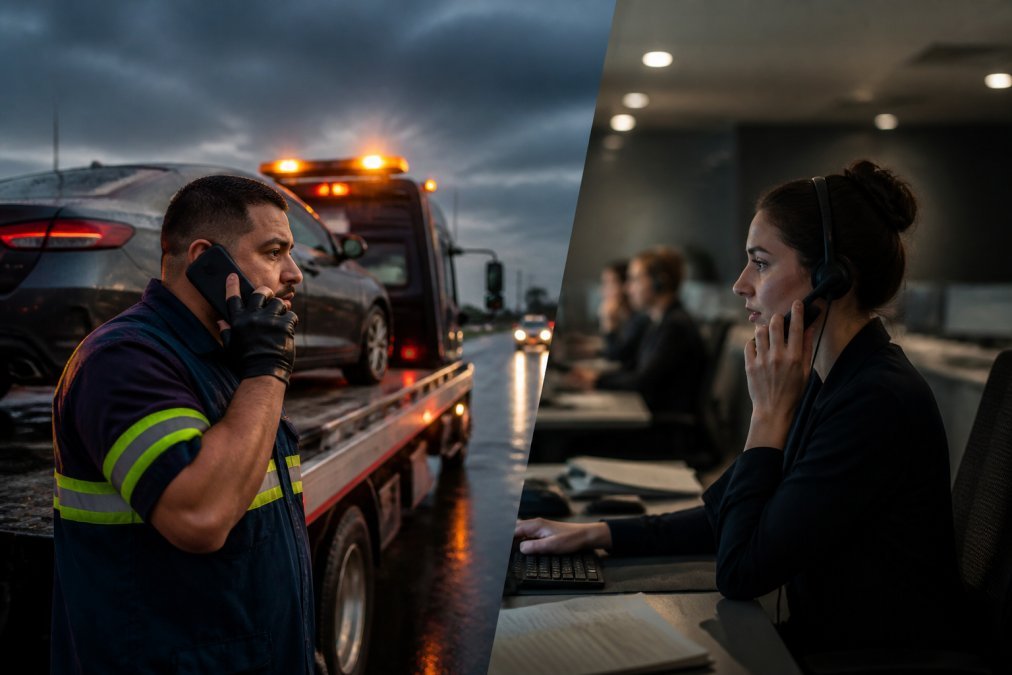
Insurance dispatch is the process where your auto insurer or motor club receives your service request, then routes it to a contracted towing provider in their network. You call one number, a dispatcher logs your location and vehicle, and the job goes to whoever is available.
The friction lives in the middle layers. Your request passes from the insurer to a motor club to a dispatch center to a third-party provider, and each handoff adds wait time. Motor clubs typically pay operators between $35 and $55 per job, with the club keeping the rest of the service fee, according to TowMarx’s analysis of motor club vs dispatch software. That payout structure means the closest truck isn’t always the one that gets sent. It means the truck that accepts the club’s rate gets sent.
The biggest mistake drivers make with insurance dispatch is assuming “covered” means “fast.” Coverage and speed are two separate things. If you’re stranded on the shoulder of I-44 at night, waiting an extra 45 minutes because of dispatch layers is a safety issue, not just an inconvenience.
What to Expect from a Local Towing Company
A local towing company handles the whole job in-house: you call, you talk to a real person, and that person is often the one hooking up your vehicle. No network, no third-party provider, no waiting to find out which truck is coming.
That direct line matters more than people expect. With an owner-operated company, you can ask what the service will cost before the truck arrives, describe your vehicle’s needs, and get a straight answer about arrival time.
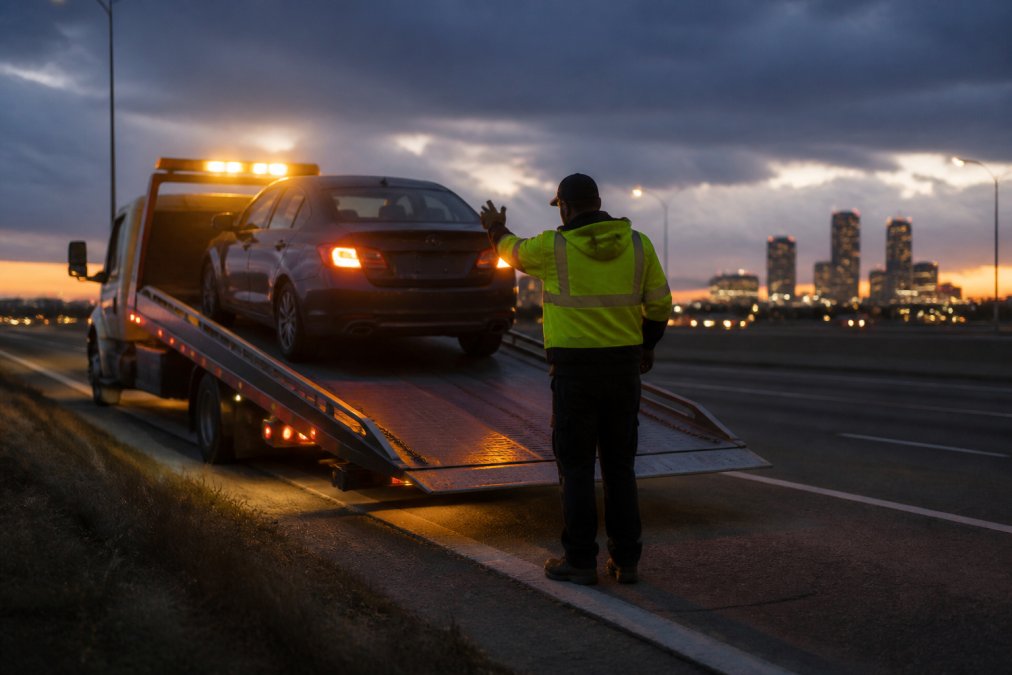
For drivers in Jenks, Bixby, Broken Arrow, and Glenpool, a local company also knows the roads, which shortens response time because the driver isn’t relying on a dispatch center’s map to find you.
Does Car Insurance Cover Towing? Policy Limits and Reimbursement
Most auto policies cover towing only if you added roadside assistance coverage, and that coverage almost always comes with a per-incident limit rather than unlimited protection. Anything beyond that limit comes out of your pocket. Without the add-on, you pay upfront and may be able to file for reimbursement afterward.
The first thing to sort out is what kind of breakdown you’re dealing with, because it changes which part of your policy responds.
Non-accident towing (mechanical breakdown). A dead battery in a Midtown parking lot, a flat on the Creek Turnpike, a starter that quits outside Woodland Hills Mall, these are roadside events, handled under your roadside assistance coverage or motor club membership, not your collision coverage. No collision claim, no deductible, and in most cases no effect on your premium.
Accident towing (collision). If the vehicle is undrivable because of a crash, the tow is usually folded into the collision or comprehensive claim itself. That’s a different process: you’re filing a claim, a deductible may apply to the repair, and the tow is arranged through the claims side rather than the roadside side.
That distinction matters because drivers often call the wrong number first. If you broke down and you’re not in a crash, you don’t need to open a claim, you need a tow. If you were in a collision, your insurer’s claims department is the right contact.
Will using insurance-dispatched towing raise my rates?
This is the question drivers ask most, and the honest answer is: a roadside assistance claim generally does not affect your premium the way an at-fault accident does. Roadside coverage exists for exactly this purpose, and using a benefit you paid for is not the same as filing a collision claim. That said, repeated roadside claims in a short window can prompt a review at renewal. Use your coverage for what it’s for, not as a maintenance plan. Drivers should also remain mindful that frequent requests for automotive lockout assistance can contribute to this pattern of activity, making it essential to understand the proper protocols for handling such urgent situations.
Understanding your coverage limits
Before you need a tow, know three numbers on your policy:
- The per-incident dollar limit on roadside assistance
- The distance included (many plans cap the tow at a set number of miles, then charge per mile beyond that)
- Whether the plan pays the provider directly or reimburses you after the fact
If your breakdown happens farther from home than your plan’s included distance, the overage is yours. That’s one reason a direct call to a local company can be simpler, you know the scope of the job before the truck rolls.
How to file a reimbursement claim
If you paid out of pocket and want to recover the cost, the process is straightforward but paperwork-dependent:
- Call your insurer or motor club before or immediately after the tow and confirm the reimbursement procedure and any pre-authorization requirement.
- Pay the tow operator and request an itemized receipt, not a handwritten total, an itemized one.
- Submit the receipt, proof of payment, the date, time, and location of the breakdown, your policy number, and a short description of why the vehicle couldn’t be driven.
- Keep a copy of everything you send and note the claim reference number.
- Follow up if you haven’t heard back within the window your insurer quotes.
A common mistake is paying cash without requesting an itemized receipt. Without that paperwork, the reimbursement process stalls fast, and some insurers won’t process a claim without it.
If you think you’ll file for reimbursement, tell the dispatcher before the truck arrives. Some insurers require pre-authorization, and a quick phone call upfront saves a denied claim later.
Commercial roadside assistance memberships typically run $150 to $500 per year, based on LogRock’s roadside assistance cost data. Whether that’s worth it depends on how often you drive, how old your vehicle is, and how much you value having one number to call. For drivers who mostly stay close to home in Broken Arrow or Owasso, a direct call to a local tow truck when something goes wrong is often the simpler path.
When to Call for Emergency Towing Tulsa Drivers Trust
Call a local tow truck directly when you’re in an unsafe position, when you need the vehicle moved now, or when you’re not sure your policy covers the situation. Emergency towing is about getting you and your vehicle off a live roadway, and that decision shouldn’t wait on a dispatch queue.
But there’s a wrinkle most articles skip: sometimes you don’t get to choose the tow company at all. Understanding why helps you know when you still have a say.
The rotation system, explained
When a crash happens on a public roadway and law enforcement responds, the officer often calls for a tow through a rotation list, a roster of companies that have agreed to respond to police-ordered tows in that jurisdiction. The truck that shows up is whichever company is next in the rotation, not necessarily the one you would have picked. It’s standard practice across most agencies, and it exists so that someone reliable responds quickly to clear a hazard.
A police-ordered tow is different from a private tow in a few important ways:
- Who initiates it. The officer requests the tow; you didn’t call anyone.
- Where the vehicle goes. It’s typically taken to a location the officer or the rotation rules specify, not necessarily the shop you wanted.
- Who you deal with for release. Because it wasn’t your call, the process for getting your vehicle back runs through the agency or the company that responded, not through a company you chose.
This is exactly why the choice matters when you do have one. If your vehicle is in a parking lot or on the shoulder and no officer is directing the scene, you’re free to call whoever you want. That’s the moment to call a local company you trust rather than waiting to see who the rotation sends.
When you should call directly
- You’re in a live lane or on a narrow shoulder. Safety first, get behind the barrier, then call. Tell the dispatcher your nearest exit or mile marker; a local operator who knows the area can often find you faster than GPS coordinates.
- No officer is on scene. If you’re handling this yourself, you choose the provider.
- You need a specific capability. A flatbed for an EV, a winch-out for a vehicle that slid off a rural road near Sapulpa, or careful handling for a classic car, you want to name the equipment, not hope the assigned truck has it.
- You want to know the scope before the truck arrives. A direct call lets you describe the situation and get a straight answer about what the job involves.
- You’re not sure your policy covers it. Calling your own provider avoids a coverage debate in the middle of a bad night.
When letting insurance or police dispatch handle it makes sense
If you’re in a collision with injuries, let responding officers manage the scene, they’ll coordinate the tow, and that’s appropriate. If your breakdown is non-urgent, you’re somewhere safe, and you’d rather have the cost handled through your coverage, going through your insurer’s dispatch is a reasonable choice. The key is deciding deliberately rather than by default.
The American Transportation Research Institute’s work on towing practices has flagged the problem of unauthorized tow operators showing up at accident scenes and creating billing disputes. Knowing who you called, and calling them yourself when you have the choice, protects you from that entirely.
If someone hooks up your vehicle and you never called them, ask who dispatched them before anything moves. At a police-directed scene, that’s the rotation. Anywhere else, you have the right to say no and call your own tow truck.
You can’t always pick your provider, police-ordered tows go through a rotation. But whenever no officer is directing the scene, the choice is yours, and calling a local company directly is how you keep it.
Roadside Assistance Tulsa Drivers Actually Need
Roadside assistance covers the small emergencies that don’t require a tow at all: a dead battery, keys locked inside, a flat tire, or an empty tank. These calls are quicker and simpler than a full tow, and handling them directly with a local company often means one call instead of three.
Neptune Towing handles jump starts, lockout service, tire changes, and fuel delivery across the Tulsa metro, and because we’re owner-operated, you’re talking to the person who’s actually coming. No call center, no ticket number, no wondering if a third-party contractor will show up.
Not every breakdown needs a tow. A jump start, a spare tire, or a gallon of fuel can get you moving again in minutes, and it’s almost always cheaper than towing.
Flatbed Towing Tulsa: Why Some Vehicles Need More Care
Flatbed towing is the right call for vehicles that can’t be safely towed on their wheels: all-wheel drive, low-clearance cars, classic cars, and electric vehicles. A flatbed carries all four wheels off the ground, removing the risk of drivetrain or bumper damage.
Tesla towing and EV towing deserve special attention here. Electric vehicles shouldn’t be towed with two wheels rolling, and improper hookups have caused real drivetrain damage. A flatbed with proper securement is the safe method.
| Vehicle Type | Recommended Method | Why |
|---|---|---|
| All-wheel drive | Flatbed | Prevents drivetrain damage |
| Low-clearance sports car | Flatbed | Avoids bumper and splitter damage |
| Classic or collector car | Flatbed | Protects older frame and paint |
| Tesla or other EV | Flatbed | Avoids motor and battery damage |
| Standard front-wheel drive | Wheel-lift possible | Safe when towed correctly |
When your vehicle won’t start, you’ve got a flat on the Broken Arrow Expressway, or your Tesla needs a careful ride to the shop, the fastest answer is usually a direct call to a local operator. Neptune Towing is owner-operated, licensed and bonded, and available 24/7 with damage-free flatbed equipment for everything from daily drivers to classic cars and EVs. We don’t impound vehicles and we don’t profit from storage fees. We just get you and your car where you need to go. Call (539) 292 3074 and get help on the way.
Frequently Asked Questions
Is it faster to call a local towing company directly than using insurance dispatch?
In many urgent situations, yes. Insurance and motor club dispatch often routes your request through a call center before assigning a contracted provider, which adds wait time. Calling a local company directly puts you in touch with the dispatcher who is sending the truck. If you are stranded on I-44 or the Creek Turnpike, that direct line usually means a faster response and clearer updates on arrival time.
Does insurance roadside assistance cover the full cost of a tow?
Not always. Many policies cap towing coverage at a set dollar amount or mileage limit, and anything beyond that becomes an out-of-pocket expense. Check your policy limits before you need them. If the tow exceeds your coverage, you may pay the difference yourself. Some drivers find that paying a local company directly is simpler than filing a reimbursement claim for a small overage.
Why do some local towing companies decline insurance dispatch calls?
Motor clubs typically pay operators a flat rate per job, which can be lower than what the company charges for direct service calls. For an owner-operated business, accepting too many low-payout dispatch jobs can mean running at a loss after fuel, insurance, and equipment costs. Some local companies prefer direct calls so they can price fairly and respond faster without waiting on approval from a third-party dispatch center.
Will using my insurance for a tow affect my premiums?
Roadside assistance claims are usually treated differently from accident claims. Many insurers do not raise premiums for a simple tow or jump start, but it depends on your policy and provider. A pattern of frequent roadside claims could factor into future rates. If you are unsure, ask your agent directly before filing. For non-accident situations like a dead battery, paying out of pocket often avoids the question entirely.
What are the benefits of using a local, owner-operated towing service?
You deal directly with the person dispatching and often driving the truck, so communication is clearer and wait times are shorter. Owner-operators like Neptune Towing handle vehicles with care, use proper flatbed securement, and do not profit from impounds or storage fees. For Tesla, classic, or low-clearance vehicles, that hands-on attention matters. You also support a local business instead of a national call center.