
Table of Contents
- What Predatory Towing Is and Why It Matters
- Red Flags: How to Spot a Predatory Towing Operator
- Understanding Your Towing Rights and Regulations
- Steps to Take If Your Vehicle Is Towed Unexpectedly
- How to Report Illegal Towing and Deceptive Practices
- Why Choosing a Reputable Local Towing Company Matters
- Conclusion
Last Updated: August 20, 2026
What Predatory Towing Is and Why It Matters
Predatory towing happens when a towing company egregiously overcharges, withholds vehicle release, or adds deceptive charges unrelated to the actual service rendered. From 2022 to 2024, the National Insurance Crime Bureau reported an 89% increase in predatory towing claims nationwide.
When your vehicle gets towed unexpectedly, you’re stressed and desperate to get your car back. Predatory operators exploit that exact moment. Without clear regulations or transparent billing, they hide behind the chaos. This guide covers the warning signs, your legal protections, and the exact steps to take if you suspect predatory towing.
Red Flags: How to Spot a Predatory Towing Operator
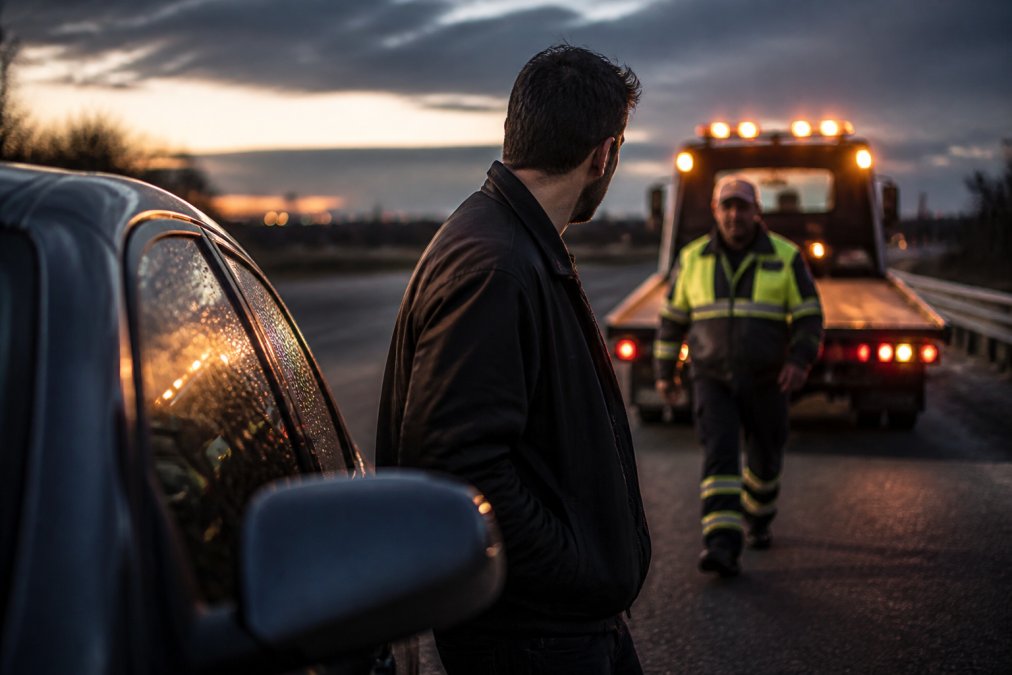
The tow truck arrives fast. Too fast. You didn’t call them, but they were already nearby. That’s the first red flag.
Predatory operators monitor police scanners, patrol high-traffic areas like I-44 and I-244, and position themselves to respond to accidents before legitimate companies can arrive.
Watch for these specific warning signs:
Unsolicited arrival. A legitimate tow truck company responds to a call you make or one your insurance provider requests. If a tow truck shows up without being summoned, that’s predatory towing in motion.
Pressure to sign immediately. They want your signature before you’ve read anything or asked questions. Legitimate companies provide time to review paperwork.
Vague pricing. If they can’t tell you the exact cost upfront, walk away. According to the American Transportation Research Institute, 83% of truckers who have been towed experienced excessive rates, that’s not coincidence.
Missing or illegible credentials. A reputable local towing company displays its license, insurance information, and company name clearly on the vehicle.
Refusing to accept insurance. If they demand cash payment and won’t work with your insurance company, that’s a major warning.
Towing to an unfamiliar location. They want to tow your vehicle to a lot you’ve never heard of, potentially far away.
Aggressive or intimidating behavior. If the operator is hostile or uses pressure tactics, trust that instinct.
Understanding Your Towing Rights and Regulations
What the Law Requires Before Your Vehicle Can Be Towed
Your vehicle cannot be towed legally without specific conditions being met. For nonconsensual tows initiated by law enforcement or property owners, the law requires clear notice. Tow-away signs must be posted prominently on private property, visible and legible from a driver’s normal vantage point.
Oklahoma received a B- grade for its towing laws, indicating safeguards are in place to prevent predatory towing, including tow-away signs, picture requirements, maximum fees, and itemized billing requirements.
Before signing anything, ask the operator:
- What is the legal authority for this tow?
- Is there a police report number?
- Can you show me the posted signage that authorized this tow?
- What is your license number and company name?
Statutory Limits on Towing and Storage Fees
Many states cap what towing companies can charge. Oklahoma law sets maximum rates for nonconsensual tows, though the exact limits vary by jurisdiction and type of service. The Oklahoma Corporation Commission sets maximum nonconsensual wrecker rates statewide. For a single vehicle weighing 8,000 pounds or less, the hookup fee is capped at $108.06, with mileage at $4.99 per mile for the first 25 miles. Daily outdoor storage is capped at $23.94, and after-hours release is capped at $19.95 per quarter hour. Nearly 30% of crash-related heavy truck towing invoices included excessive rates or unwarranted additional charges, according to the American Transportation Research Institute’s comprehensive truck towing analysis.
Before accepting a tow, ask for the company’s posted rate schedule. Request an itemized invoice that breaks down every charge: towing fee, mileage, storage, administrative fees, everything. Document the statutory limits for your jurisdiction by contacting the Corporation Commission or your local attorney general’s office.
Steps to Take If Your Vehicle Is Towed Unexpectedly
Document Everything at the Scene
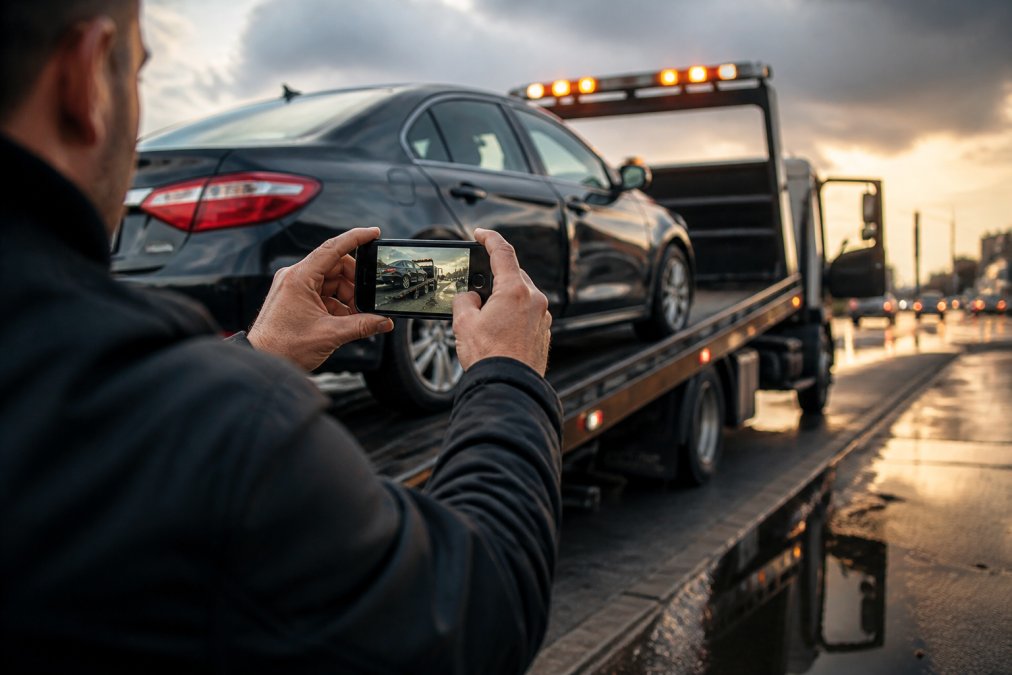
The moment you realize your vehicle has been towed, pull out your phone and start documenting.
Take photos of the scene from multiple angles. Capture the tow truck, the operator’s face and name badge, the company name and license plate, any damage to your car, and the surrounding area. If there’s supposed to be a tow-away sign, photograph it or photograph its absence. If police initiated the tow, get the officer’s name and badge number. Write down the exact time, date, and location.
Take a video recording of your conversation with the tow operator. Ask them directly: "Why is my vehicle being towed?" Record their answer. Ask for their name, company, and license number. Send yourself copies of all photos and videos immediately via email or cloud storage. avoid unnecessary car repairs.
Get the operator’s contact information and the towing company’s phone number. Ask where your vehicle is being taken. Get a written receipt or invoice on the spot, even if incomplete.
Request an Itemized Invoice
Before paying anything, demand a detailed, itemized invoice. Not a summary. Line-by-line itemization of every charge.
Legitimate charges include:
- Towing fee (the base cost to retrieve and transport your vehicle)
- Mileage (if applicable, calculated from the incident location to the storage facility)
- Storage fees (daily rate, clearly stated)
Predatory charges often include administrative fees, equipment fees for equipment never used, and miscellaneous charges vaguely described.
If you see charges you don’t understand, circle them and ask for an explanation in writing. If the operator can’t explain them, refuse to pay them. Get a copy of the invoice. If they refuse to provide one, that’s grounds for a complaint to your state’s regulatory agency.
Verify the Towing Company’s License and Credentials
A legitimate towing company has a valid license, insurance, and a verifiable business address.
Ask the operator:
- What is your business license number?
- What is your insurance company and policy number?
- Can you provide proof of bonding?
Write down these numbers. Later, you can verify them with your state’s regulatory agency. In Oklahoma, the Corporation Commission oversees towing companies. Call your insurance company immediately and provide them with the tow company’s information, the incident details, and your documentation.
If the company refuses to provide credentials or verification shows the license is expired, you have grounds to dispute the entire bill.
How to Report Illegal Towing and Deceptive Practices
File a Consumer Complaint with Your State
Your state’s attorney general or consumer protection agency investigates predatory towing. In Oklahoma, complaints go to the Attorney General’s Consumer Protection Unit. Provide:
- Your name and contact information
- The towing company’s name, address, and license number
- The date and location of the tow
- A detailed description of what happened
- Copies of the invoice, photos, and any written correspondence
Include your documentation. Photos of the scene, the invoice, the operator’s credentials (or lack thereof), and your contemporaneous notes all support your complaint.
Report to the National Insurance Crime Bureau
The National Insurance Crime Bureau tracks predatory towing claims and investigates patterns of illegal behavior. If your tow involved fraud or systematic overcharging, NICB wants to know about it. You can file a report online through their website.
Dispute Fraudulent Charges in Small Claims Court
If the towing company refuses to reduce or remove fraudulent charges, you can sue in small claims court. This is a civil action accessible to regular people without hiring an attorney.
Bring your documentation: photos, invoices, the operator’s credentials (or lack thereof), your contemporaneous notes, and any written correspondence. Bring proof that you paid the charges. Bring evidence of the statutory limits in your jurisdiction and how the charged amount exceeded them.
The judge will decide whether the charges were legitimate or predatory. If you win, the company must refund the overcharge.
Why Choosing a Reputable Local Towing Company Matters
When you need a tow truck, you’re stranded, stressed, and desperate. That’s exactly why choosing a reputable local towing company before you need one matters so much.
Neptune Towing is owner-operated, which means the person answering your call is the person responsible for your vehicle. There’s no corporate structure insulating decision-makers from consequences. That accountability changes everything.
A local company knows the roads, neighborhoods, and highways around Tulsa, Bixby, Broken Arrow, and Glenpool. They understand the specific challenges of towing in this area. That local knowledge translates to faster response times and fewer complications.
Neptune Towing doesn’t impound vehicles. Some towing companies profit from storage fees, the longer your car sits, the more money they make. Neptune Towing’s business model is different. We help people get their vehicles back safely and quickly.
Damage-free towing is another critical difference. Your vehicle is valuable, whether it’s a family car, a luxury vehicle, a classic, or an electric vehicle like a Tesla. Reputable companies protect your investment through proper loading, securement, and transport procedures.
Before you need a tow truck, research local companies. Read reviews. Call and ask questions. Find out if they’re licensed and bonded. Ask about their pricing and whether they provide itemized invoices. Ask if they work with insurance companies. Ask if they handle specialty vehicles, classics, and EVs safely.
When an emergency happens, you’ll already know who to call.
Predatory towing thrives in the gap between knowledge and urgency. Drivers who understand their rights, document the scene, and know how to dispute fraudulent charges are far less likely to be victimized. Verifying credentials, requesting itemized invoices, and filing complaints aren’t just protective. They’re how you reclaim control when someone tries to exploit your emergency.
When you need a tow truck in the Tulsa area, call a company that treats your vehicle and your situation with respect. Neptune Towing is available 24/7. We provide transparent pricing, damage-free towing, and honest service. No surprise charges. Just reliable help when you need it.
| Red Flag | What It Means | Your Response |
|---|---|---|
| Unsolicited arrival | Operator arrived without being called | Request a different company or call your insurance |
| Pressure to sign | Demanding signature before review | Refuse to sign; take time to read paperwork |
| Vague pricing | Cannot quote exact cost upfront | Ask for itemized rate schedule in writing |
| Missing credentials | No license, insurance, or company info visible | Request credentials and verify with state agency |
| Refusing insurance | Demands cash, won’t work with your insurer | Contact your insurance company immediately |
| Unfamiliar tow location | Taking vehicle to unknown lot far away | Document the location and ask why |
| Aggressive behavior | Hostile, dismissive, or intimidating | Trust your instinct; request another operator |
Frequently Asked Questions
What are the most common signs of a predatory towing service?
Predatory towing operators often arrive unsolicited at accident scenes, pressure you to sign paperwork immediately, refuse to provide itemized invoices, charge excessive fees without explanation, and demand payment before releasing your vehicle. The National Insurance Crime Bureau reports that 89% of predatory towing claims involve unauthorized arrival at crash sites. Watch for operators who monitor police scanners, quote prices verbally without written estimates, or add mysterious administrative fees and equipment charges to your bill.
How can I verify if a towing company is reputable before I need one?
Check whether the company holds a current towing license and is bonded with your state's regulatory agency. Ask for references from recent customers and verify their Better Business Bureau rating. A reputable local towing company should provide transparent pricing upfront, explain all charges clearly, and have no history of consumer complaints. Owner-operated businesses that focus on helping customers rather than impound fees are typically more trustworthy. Call ahead and ask about their pricing structure, legitimate operators welcome questions.
What should I do if I suspect my vehicle was towed unfairly?
First, gather all documentation: photos from the scene, the towing invoice, police reports, and any written communication. Request an itemized bill showing each charge separately. File a consumer complaint with your state's Attorney General or regulatory agency that oversees towing. Report the incident to the National Insurance Crime Bureau if you believe fraudulent billing occurred. Small claims court is an option for disputing excessive charges. Keep copies of everything and document the timeline of events. Many states have statutory limits on towing and storage fees, compare your bill against those limits.
Are there specific regulations for towing in Oklahoma?
Oklahoma has established safeguards to prevent predatory towing, including requirements for tow-away signage, picture documentation, maximum towing and storage fees for non-consensual towing, public rate display, and itemized billing. The state received a B- grade for towing law protections, meaning safeguards exist but enforcement varies. Towing companies must post their rates publicly and provide written estimates. If a vehicle is towed from private property, clear signage must be visible. Always request a written invoice that itemizes each charge separately, this is a legal requirement in Oklahoma.
This article was written using GrandRanker