
Table of Contents
- Engine Overheating: When to Stop and Call for Help
- Dashboard Warning Lights That Signal Professional Towing
- Unusual Noises: Grinding, Squealing, and Clunking Sounds
- Vehicle Won’t Start: Battery Failure and Beyond
- Fluid Leaks and Coolant Loss Under Your Car
- Smoke, Burning Smells, and Fire Hazards
- Transmission Failure and Limp Mode Warnings
- Roadside Accidents and Collision Damage
Last Updated: June 21, 2026
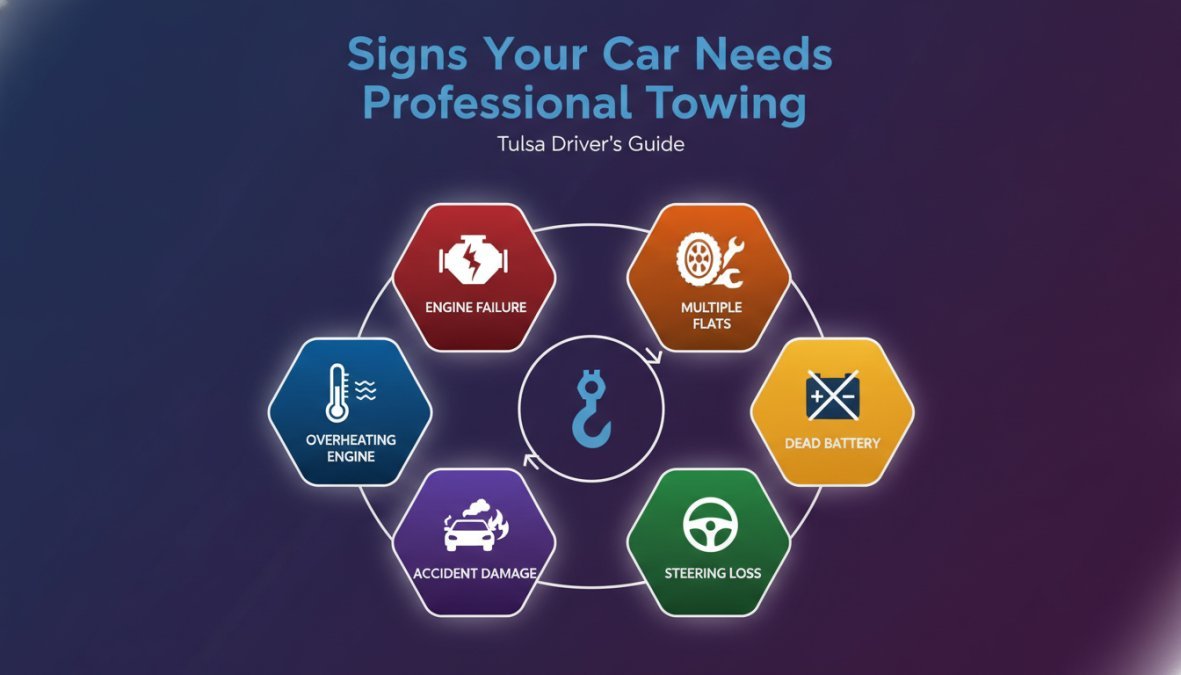
Knowing the signs your car needs professional towing can be the difference between a manageable breakdown and a dangerous situation on the road. At Neptune Towing, we respond to vehicle breakdowns across Tulsa, Broken Arrow, Jenks, Bixby, and surrounding communities every day. Below, we walk through the most common warning signs that tell you it’s time to stop driving and call a tow truck, plus what to do while you wait and how to think through the DIY-versus-towing decision.
Many mechanical failures give clear signals well before a vehicle becomes undriveable, and recognizing those signals early protects both you and your car.
Engine Overheating: When to Stop and Call for Help
An overheating engine is one of the clearest signs your car needs professional towing. The moment your temperature gauge climbs into the red zone or a thermometer warning light appears, the engine is telling you something is seriously wrong.
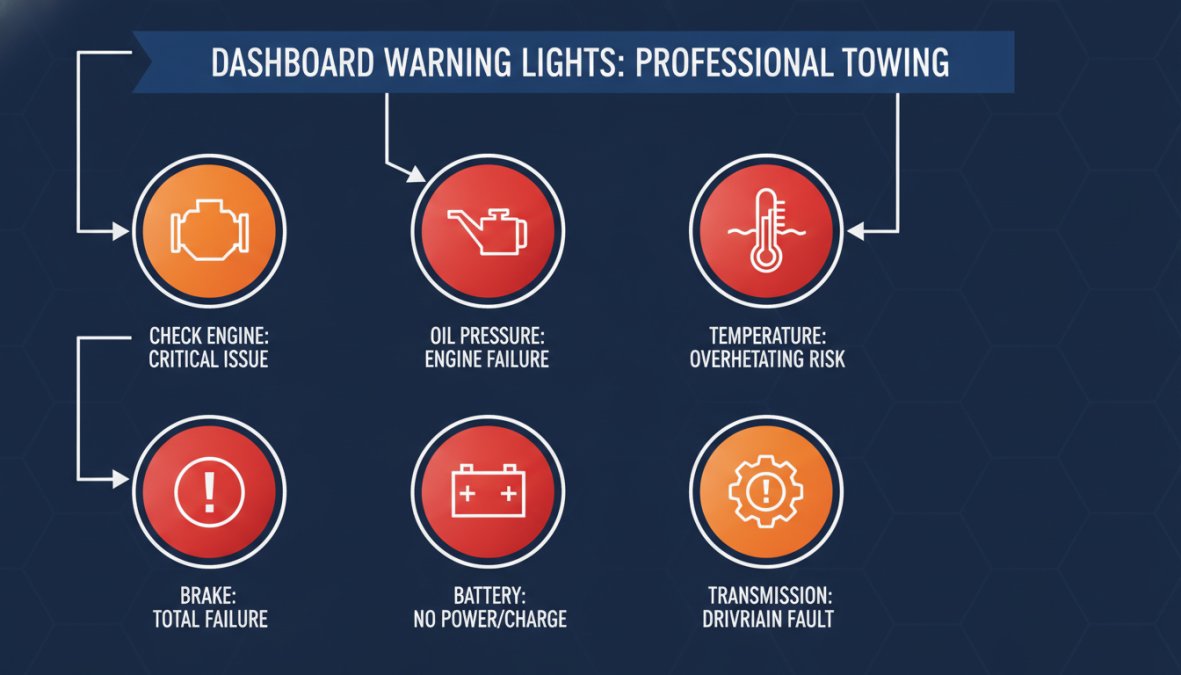
Why overheating demands immediate professional towing
Driving even a short distance on an overheated engine can warp the cylinder head, crack the engine block, or destroy head gaskets, repairs costing several times more than a simple tow. The underlying causes vary: a blown radiator hose, failed water pump, low coolant from a leak, or stuck thermostat. None are safe to diagnose at highway speed.
Pull off the road immediately, turn off the engine, and call for a tow truck. Do not open the radiator cap or pour cold water on a hot engine; both can cause burns or crack the block. If the temperature gauge rises again after dropping, stop and call for roadside assistance.
Never open a radiator cap on an overheated engine. The pressurized coolant can spray and cause serious burns. Wait at least 30 minutes after the engine cools before touching anything under the hood.
According to AAA’s vehicle breakdown research, cooling system failures are among the most common causes of roadside breakdowns, particularly during Oklahoma’s summer months.
Dashboard Warning Lights That Signal Professional Towing
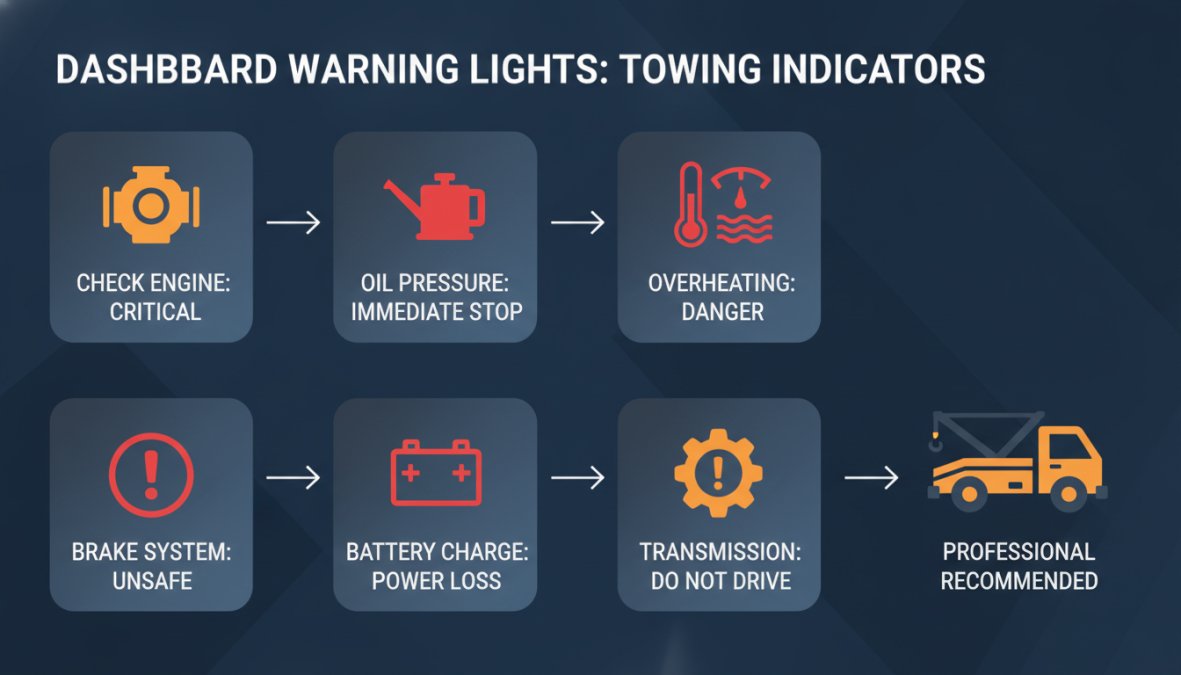
Dashboard warning lights are your vehicle’s built-in communication system. Some lights are informational; others are emergencies.
(/the-ultimate-guide-to-choosing-the-best-towing-company-in-tulsa-oklahoma/)]
Check engine light, oil pressure, and brake warnings
A flashing check engine light signals an active engine misfire that can damage your catalytic converter within minutes. A solid check engine light may only indicate a loose gas cap.
The oil pressure warning light is non-negotiable. If a red oil can symbol appears, pull over immediately. Driving with low or no oil pressure can seize an engine in under a minute.
Brake warning lights deserve the same urgency. If your brake light illuminates while driving and your parking brake is not engaged, you may have low brake fluid, hydraulic failure, or worn pads. None are situations where you want to test the brakes on busy roads.
| Warning Light | Color | Action |
|---|---|---|
| Oil pressure | Red | Pull over immediately, do not restart |
| Temperature (overheating) | Red | Pull over, engine off, call for tow |
| Check engine (flashing) | Orange | Pull over, call for tow |
| Check engine (solid) | Orange | Drive cautiously to repair shop |
| Brake warning | Red | Pull over, check brake fluid, call if uncertain |
| Battery | Red | Drive directly to shop or call for help |
| Transmission temp | Orange/Red | Pull over, let cool, call for tow |
Unusual Noises: Grinding, Squealing, and Clunking Sounds
What separates a driver who catches a problem early from one who ends up stranded? Usually, whether they paid attention to sounds.
What these sounds mean for your vehicle’s safety
Grinding when you apply the brakes means your brake pads have worn through to metal rotors. Stopping distance increases significantly, creating a genuine safety hazard.
A clunking noise from underneath, especially over bumps or during turns, often points to a failing CV axle, worn ball joint, or loose suspension component. These parts hold your wheels in alignment. When they fail completely, you can lose steering control without warning.
Squealing from the engine bay, particularly on startup or acceleration, usually indicates a worn serpentine belt. When it snaps, you lose electrical charging and often power steering simultaneously.
Unusual noises almost always get worse with continued driving. A small clunk becomes a broken component; a grinding squeal becomes a rotor needing replacement alongside the pads.
Record the sound on your phone if you can do so safely. A short audio clip helps a mechanic understand what happened before they even look at the vehicle, which speeds up diagnosis at the repair shop.
Vehicle Won’t Start: Battery Failure and Beyond
A car that won’t start is one of the most straightforward signs your car needs professional towing, but the cause matters for deciding what kind of help you need.
Battery failure is the most common culprit. If you hear rapid clicking when you turn the key, the battery is likely too weak to turn the starter motor. A single click or no sound at all can mean a failed starter or completely dead battery. These often respond to a jump start service.
The situation changes when a vehicle cranks normally but refuses to fire. This points to fuel system problems, failed ignition components, or more serious mechanical failure. Repeated start cycles can flood the engine or drain the battery entirely.
Towing is the right call over a jump start when:
- The battery has been jump started multiple times recently
- The vehicle starts but stalls immediately after jump cables are removed
- There is a burning smell during the start attempt
- The starter motor makes a grinding sound when engaging
According to the National Highway Traffic Safety Administration’s vehicle safety resources, electrical system failures are a leading cause of unexpected roadside breakdowns and can create fire hazards if not properly diagnosed.
Fluid Leaks and Coolant Loss Under Your Car
Look at the ground where your car was sitting. A puddle or stain is one of the more reliable signs your car needs professional towing before a small problem becomes a stranded-vehicle situation.
The color of the leak tells you a lot. Bright green or orange fluid is coolant. A coolant leak means your engine is losing the liquid it needs to stay at safe operating temperature. Even a slow leak can empty a cooling system within a few miles of highway driving.
Dark brown or black fluid near the center or rear is usually oil. A sudden oil leak can drop oil pressure to dangerous levels quickly. Red fluid near the front is typically transmission or power steering fluid. Either leak affects your ability to control the car safely.
Clear water under the vehicle after running the air conditioning is normal condensation. Everything else warrants a closer look before you drive.
Smoke, Burning Smells, and Fire Hazards
Smoke coming from under the hood or a sharp burning smell inside the cabin is not a "wait and see" situation. These are immediate signs your car needs professional towing and, depending on the source, a potential safety emergency.
Smoke from the engine bay usually means coolant or oil is dripping onto a hot engine component. White smoke from the exhaust can indicate a blown head gasket. Blue smoke typically means the engine is burning oil.
A burning smell from the brakes, particularly after heavy use on downhill stretches or in stop-and-go traffic, means the brake pads are overheating. Overheated brakes lose effectiveness rapidly.
The most urgent scenario is any dark or black smoke, or visible flames. Get out of the vehicle, move away from it, and call 911 before calling a tow truck.
If you smell something burning but cannot identify the source, do not keep driving to “see if it goes away.” Electrical fires in vehicles can start slowly and become serious within minutes.
Transmission Failure and Limp Mode Warnings
Transmission problems are expensive to ignore and dangerous to drive through. A vehicle that hesitates to shift, slips out of gear, or refuses to move in drive or reverse needs professional towing.
Limp mode is a built-in protection feature. When the transmission control module detects a serious fault, the vehicle limits itself to one or two gears and reduced speed. If your car suddenly loses power, struggles to shift above second gear, and the transmission warning light appears, you are in limp mode.
Driving in limp mode for extended distances causes additional damage to an already compromised transmission. Other transmission warning signs include a burning smell from beneath the vehicle, a delay of several seconds before the car moves after shifting into drive, and shuddering or jerking during acceleration.
Flatbed towing is particularly important for vehicles with transmission failure because it keeps all four wheels off the ground. Towing a vehicle with a damaged transmission on its drive wheels can cause additional internal damage during transport.
According to the Car Care Council’s vehicle maintenance resources, transmission repairs are among the most expensive vehicle repairs, and early intervention significantly reduces the total repair cost.
Roadside Accidents and Collision Damage
After a collision, even a minor one, the decision to drive the vehicle or call for a tow is not always obvious. Visible damage may look cosmetic while structural damage underneath affects how the vehicle handles.
Collision damage that warrants professional towing includes anything affecting the wheels, steering, or suspension. If a wheel is visibly bent or sitting at an angle, the vehicle should not be driven. If the steering pulls sharply to one side after impact, a suspension component may be bent or broken.
Airbag deployment is another clear signal. A vehicle with deployed airbags has sustained significant impact force that often affects frame geometry in ways not visible but affecting safe operation.
Even when a vehicle appears driveable after a minor collision, fluid leaks from damaged radiators, oil pans, or brake lines can develop quickly. The safest approach after any collision is to move the vehicle to a safe location, assess the damage carefully, and call for help if there is any doubt.
DIY vs. Towing: A Practical Decision Framework
Not every breakdown requires a tow truck. Here is a straightforward way to think through the decision:
Call for a tow when:
- Any red warning light is illuminated
- The vehicle is smoking or has a burning smell
- Fluid is actively leaking
- The vehicle has been in a collision
- The brakes feel soft, spongy, or unresponsive
- The vehicle is in limp mode
- Unusual noises developed suddenly while driving
Roadside assistance may be enough when:
- The battery is dead and the vehicle has no other issues
- You have a flat tire and a usable spare
- You ran out of fuel
- You are locked out of the vehicle
When you are uncertain, a tow is almost always the safer choice. Driving a compromised vehicle and having it fail completely at highway speed creates a far more dangerous situation than the inconvenience of a tow.
Safety Protocols While Waiting for a Tow Truck
Getting to safety is the first priority after deciding to call for help. The second is staying safe while you wait.
Pull as far off the road as possible. If you can reach an exit, parking lot, or side street, do so before stopping completely.
Turn on your hazard lights immediately and keep them on even during daylight hours. Place road flares or reflective triangles behind the vehicle if you have them, at least 50 to 100 feet back.
Stay inside the vehicle with your seatbelt fastened if you are on a highway and cannot move far enough from traffic. If you are in a location where it is safe to exit, move behind a guardrail or well away from the roadway.
According to FHWA traffic safety guidelines for roadside incidents, secondary crashes involving stopped vehicles are a significant cause of roadside injuries. Distance from traffic is your most important safety factor while waiting.
Share your location with someone you trust and keep your phone charged. When you call Neptune Towing, you will speak directly with a local Tulsa operator who can confirm your location and give you an accurate arrival time.
Recognizing the signs your car needs professional towing before a situation becomes a crisis is a skill worth developing. If your vehicle is showing any of the warning signs covered here, Neptune Towing provides 24/7 emergency towing and roadside assistance throughout Tulsa, Broken Arrow, Jenks, Bixby, Owasso, Sapulpa, and Glenpool. As an owner-operated towing service with damage-free flatbed equipment and transparent pricing, we focus entirely on getting you and your vehicle to safety. Call Neptune Towing at (539) 292-3074 and speak directly with a local Tulsa driver who understands these roads.
Frequently Asked Questions
What are the most common reasons for needing a tow truck?
The most common reasons drivers in the Tulsa area need professional towing include engine overheating, dead batteries, transmission failure, mechanical breakdown, flat tires, and collision damage. Many of these situations are unsafe to drive through, making emergency towing the right choice. If your vehicle won't start, is smoking, making grinding noises, or leaking fluid, professional towing service is your safest option.
Is it ever okay to drive a car that is overheating?
No. Driving an overheating engine risks catastrophic damage and potential fire. If your temperature gauge climbs into the red zone or you see steam from under the hood, pull over immediately to a safe location away from traffic. Turn off the engine and let it cool. Do not attempt to drive to a repair shop, call a professional towing service in Tulsa instead. Continuing to drive can turn a fixable problem into a total loss.
What should I do if my car breaks down on the highway in Oklahoma?
First, turn on your hazard lights and carefully move your vehicle as far onto the shoulder as possible. If you're on a busy highway near Tulsa, Broken Arrow, or Sapulpa, stay inside your vehicle with seatbelt fastened if traffic is heavy. Call a local towing company immediately and provide your exact location. Avoid standing in traffic lanes. Keep your phone charged and stay alert. A professional towing service will dispatch a tow truck to safely recover your vehicle.
How do I know if my car's transmission is failing?
Signs of transmission failure include delayed engagement when shifting, grinding or shaking during gear changes, burning smells, fluid leaks underneath the vehicle, and the transmission entering limp mode (reduced power). If your dashboard shows a transmission warning light or your vehicle is slipping between gears, do not drive long distances. Professional towing service is recommended to prevent further damage and safely transport your vehicle to a repair shop.
This article was written using GrandRanker