
Last Updated: October 23, 2026
Quick Summary
The things to check before calling tow truck are your safety and injuries, your vehicle’s make and model, your exact location, and whether the problem is serious enough to stop driving. Assess yourself and passengers first, gather your vehicle information, identify where you are using mile markers or landmarks, and recognize warning signs like strange noises, fluid leaks, or overheating that mean you shouldn’t drive.
- Turn on hazard lights immediately and move to a safe location away from traffic if possible.
- Have your vehicle’s year, make, model, and exact location ready before calling dispatch.
- Stop driving if you hear grinding noises, see fluid leaks, experience overheating, or lose engine power.
- Secure your vehicle, gather personal items, and document any existing damage with photos before the tow truck arrives.
- Stay in your vehicle with doors locked on busy highways, keep your phone charged, and verify the tow truck driver is legitimate before opening your doors.
Table of Contents
- 1. Assess Your Safety and Injuries First
- 2. Identify Your Vehicle’s Make, Model, and Current Location
- 3. Recognize When to Call a Tow Truck Instead of Driving
- 4. Know What Information to Give When Calling a Tow Truck
- 5. Prepare What to Do Before Getting Your Car Towed
- How to Stay Safe While Waiting for a Tow Truck
- Questions to Ask Your Towing Provider Before Dispatch
- Conclusion
- Frequently Asked Questions
1. Assess Your Safety and Injuries First
The moment your vehicle breaks down or you’re involved in a collision, your personal safety comes before anything else.
If you’re on a busy highway like I-44 or the Broken Arrow Expressway, your next move is critical. Turn on your hazard lights immediately. This signals to other drivers that something is wrong. If you can safely exit the vehicle, do so.
Once you’ve confirmed everyone is okay, move to a safe location if possible. Get off the roadway and away from traffic. If you’re on the shoulder, stand behind your vehicle or on the grass away from the road. Don’t stand between your car and oncoming traffic.
If anyone is seriously injured, call 911 first. Don’t call a tow truck until emergency medical services have responded. A tow truck driver can’t help if someone needs immediate medical attention.
Keep a small first aid kit in your vehicle. Bandages, antiseptic, and pain relievers take up minimal space but can make a real difference while you’re waiting for help.
2. Identify Your Vehicle’s Make, Model, and Current Location
Before you call a towing service in Tulsa or anywhere in the surrounding area, have your vehicle information ready. This matters more than you might think. When you call, the dispatcher will ask for your vehicle’s make, model, and year.
Your location is equally important. If you’re stranded on I-44 near downtown Tulsa, you need to know exactly where. Look for mile markers, exit numbers, or nearby cross streets.
Use your phone’s GPS or Google Maps to get your exact location. You can share this with the dispatcher, and many towing companies now offer real-time tracking so you can see where the tow truck is.
For owners of electric vehicles like Teslas, mention that upfront. EV towing has specific requirements to prevent drivetrain damage. Neptune Towing specializes in damage-free EV transport using flatbed equipment, which is the safest method for Teslas and other electric vehicles.
Have your vehicle’s year, make, and model memorized or written down. Knowing your exact location saves dispatch time and gets help to you faster.
3. Recognize When to Call a Tow Truck Instead of Driving
This is where judgment matters. Some vehicle problems are minor annoyances.
If your vehicle won’t start, that’s a clear sign to call for roadside assistance. A dead battery, bad starter, or electrical issue means you’re not going anywhere.
Strange noises or unusual vibrations are warning signs. If you hear grinding, banging, or metal-on-metal sounds, something mechanical is failing.
Fluid leaks are another red flag. If you see fluid pooling under your vehicle, oil, coolant, transmission fluid, or brake fluid, don’t ignore it.
Overheating is serious.
Loss of power or repeated stalling means your engine is struggling. If your car suddenly loses power while driving or stalls repeatedly, don’t risk it.
Check out 5 Signs Your Vehicle Requires Professional Recovery to learn more about recognizing when professional recovery is necessary.
Stop driving immediately if your vehicle shows any of these warning signs.
| Warning Sign | What It Means | Action to Take |
|---|---|---|
| Engine won’t start | Dead battery, bad starter, or electrical issue | Call for jump start or tow |
| Strange noises or vibrations | Grinding, banging, or metal-on-metal sounds | Stop driving immediately and call tow truck |
| Fluid leaks under vehicle | Oil, coolant, transmission, or brake fluid loss | Pull over and call for tow |
| Overheating engine | Temperature gauge in red zone or steam visible | Let cool 15 minutes, then call tow if it happens again |
| Loss of power or repeated stalling | Engine struggling or shutting down while driving | Don’t risk it, get towed to repair shop |
4. Know What Information to Give When Calling a Tow Truck
When you call a towing service, the dispatcher will ask specific questions. Having answers ready speeds up the process and ensures the right equipment is sent. Here’s what to prepare:
Your vehicle’s make, model, year, and color come first. “I have a 2022 Honda Accord, silver” is much clearer than “I have a regular car.” If your vehicle is low to the ground, a luxury car, or an electric vehicle, mention it. These details determine whether a flatbed is necessary.
Describe your vehicle’s condition and the problem. “My engine won’t turn over” or “I heard a loud bang and now the car won’t move” tells the dispatcher what they’re dealing with. Are the wheels damaged?
Give your exact location. Mile marker, exit number, cross street, nearby business, whatever you have. If you’re in a parking lot, describe which one and where in the lot you are.
Explain any access issues. Is your vehicle in a tight space? Is there low clearance overhead? Are there obstacles around it?
Let the dispatcher know if anyone is injured or if you feel unsafe. If you’re on a busy highway and traffic is whizzing past, say that.
Learn more about How to Find a Reputable Towing Company in Tulsa to understand what questions to ask before the tow truck arrives.
5. Prepare What to Do Before Getting Your Car Towed
Once you’ve called a towing service and help is on the way, there are several things to check before calling tow truck and things you should do to prepare. First, secure your vehicle.
Gather your personal items. Don’t leave your phone charger, sunglasses, documents, or anything else valuable in the vehicle. Take everything with you or lock it in the trunk if you’re staying nearby.
If you have roadside assistance coverage through your insurance, have that information ready. You can also see Neptune Towing prices for towing and roadside assistance in Tulsa to understand service options available before you need them.
Document the vehicle’s condition if there’s been an accident or if you’re concerned about existing damage. Take photos with your phone.
If you’re having your vehicle towed to a specific repair shop, let the dispatcher know the destination. Some shops are preferred by insurance companies, and knowing where you’re going helps the driver plan the route.
How to Stay Safe While Waiting for a Tow Truck
The time between calling for help and the tow truck arriving can feel long, especially if you’re on a busy highway.
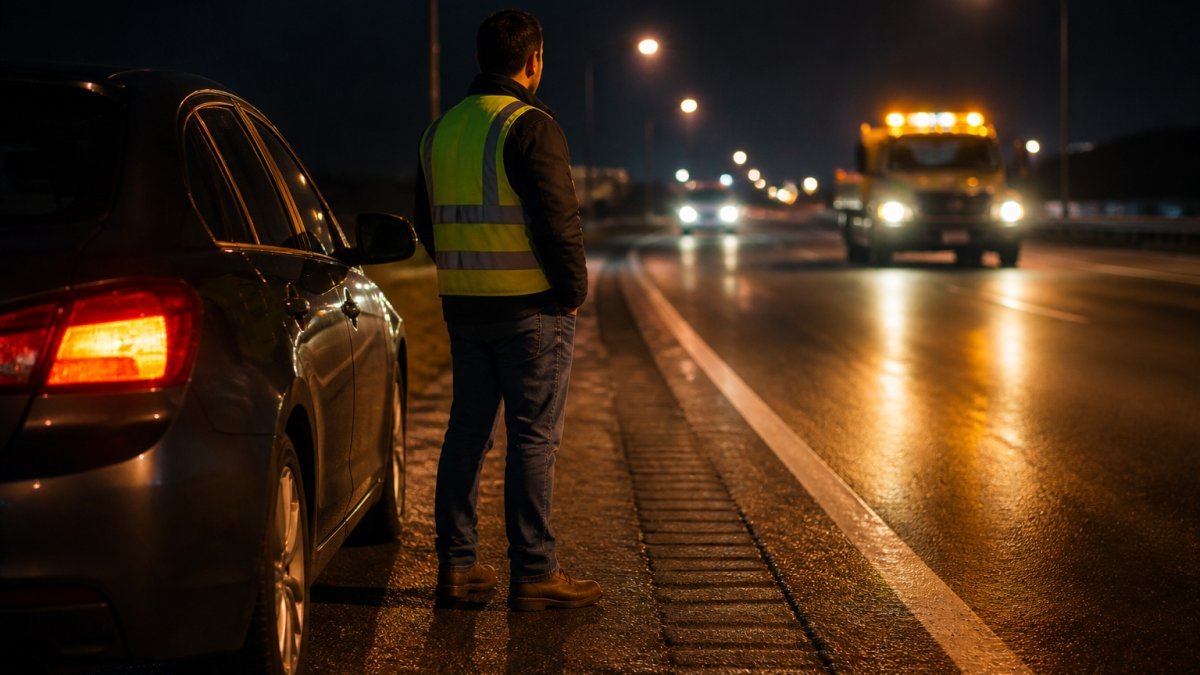
Stay in your vehicle if you’re on a highway or in heavy traffic. With your seatbelt on and doors locked, you’re protected from other vehicles.
If you’re on a quieter road or in a safer location, you can stand outside your vehicle, but stay away from traffic.
Don’t accept rides from strangers, even if they offer to help. Learn roadside safety tips for women driving alone to get specific guidance for staying safe while waiting for help.
Keep your phone charged and available. You may need to call the dispatcher for updates or to provide additional information.
If you’re waiting during extreme weather, heavy rain, snow, or intense heat, stay in your vehicle with the engine off and windows cracked for ventilation.
Questions to Ask Your Towing Provider Before Dispatch
Before the tow truck arrives, it’s smart to clarify a few things with the dispatcher. This prevents misunderstandings and ensures you get the service you need. Here are the key questions:
What type of tow will be used? Ask whether they’ll use a standard wheel-lift tow or a flatbed. For luxury vehicles, low-clearance cars, or electric vehicles, a flatbed is the safer choice. It keeps all four wheels off the ground, which prevents drivetrain damage and protects your vehicle’s undercarriage.
How long until arrival? Knowing the estimated time helps you plan. If you’re in a safe location, you might wait comfortably.
What’s included in the tow? Some towing services include basic roadside assistance like jump starts or lockout service at no extra charge. Others charge separately. Clarify what you’re getting.
Do you have real-time tracking? Many modern towing companies offer GPS tracking so you can see where the tow truck is.
What payment methods do you accept? Ask about cash, credit card, or insurance billing.
Are there any additional charges? Ask about mileage fees, after-hours charges, or other potential costs. Reputable companies are transparent about pricing upfront.
Do you handle vehicle-specific needs? If you have a Tesla or other EV, confirm that the company has experience with electric vehicle towing.
Learn more about Safe Vehicle Recovery and Real-Time Dispatch Tracking to understand what professional recovery practices look like.
Conclusion
When your vehicle breaks down or you’re in an accident, the first few minutes matter. Check for injuries, move to safety, gather your vehicle information, and call for help. Knowing when to stop driving instead of risking further damage protects both your wallet and your safety.
Neptune Towing is here when you need us. As a locally owned, owner-operated towing company serving Tulsa and the surrounding communities, we provide damage-free flatbed towing, emergency roadside assistance, and fast dispatch. We handle everything from jump starts and lockouts to professional EV transport for Teslas and other electric vehicles. When you call Neptune Towing, you’re dealing directly with a local business owner who values honest service and transparent pricing, not a call center or a company focused on impound fees. Call (539) 292-3074 for immediate assistance.
Frequently Asked Questions
What information should I give when I call for a tow truck?
Have your vehicle’s year, make, model, and color ready. Tell the dispatcher your exact location, use mile markers, highway numbers, cross streets, or nearby businesses as landmarks. Describe your vehicle’s condition: Is it running? Did it break down? Are there injuries? Mention any special circumstances like low clearance, tight parking spaces, or if your vehicle is an electric vehicle like a Tesla. The more details you provide upfront, the faster the right equipment arrives.
When should I call a tow truck instead of trying to drive?
Call immediately if your vehicle won’t start, has lost power steering, is overheating, makes grinding or metal-on-metal noises, or if you’ve lost brakes or control. Fluid leaks, burning smells, or repeated stalling are also red flags. If you’ve been in a collision or feel unsafe, don’t drive. Attempting to drive a vehicle with serious mechanical problems risks your safety and can cause thousands in additional damage. If you’re unsure, it’s always safer to call.
What should I do before my car is towed?
Remove personal items, medications, and valuables from your vehicle. If it’s safe to do so, secure loose items inside so they don’t shift during transport. Note your vehicle’s fuel level and current mileage, document any existing damage with photos if possible. Inform the tow truck driver of any mechanical issues or special handling needs. If your vehicle is a luxury car, classic vehicle, or electric vehicle, mention this so the driver uses appropriate equipment like a flatbed to prevent damage.
How can I stay safe while waiting for a tow truck?
Turn on your hazard lights immediately. If you’re on a highway, exit your vehicle and stand well away from traffic, at least 100 feet behind your car if possible. Wear a reflective vest if you have one. Stay alert to oncoming traffic and never stand between your vehicle and moving lanes. If conditions feel unsafe, heavy rain, darkness, or high-speed traffic, wait inside your vehicle with doors locked and windows up. Keep your phone charged and stay in contact with the dispatcher.
What makes flatbed towing different from standard towing?
Flatbed towing uses a flat platform that your entire vehicle is loaded onto, keeping all four wheels off the ground. This method prevents drivetrain damage and is essential for all-wheel-drive vehicles, low-clearance sports cars, and electric vehicles like Teslas. Standard wheel-lift towing picks up the front or rear wheels, which can cause damage to certain vehicles. If your vehicle has low clearance, is all-wheel drive, or is an EV, always request flatbed towing to ensure damage-free transport.