

Table of Contents
- How Much Does Roadside Assistance Cost in 2026?
- What Roadside Assistance Plans Actually Cover
- Is Roadside Assistance Worth the Money? A Cost-Benefit Breakdown
- Jump Start Service, Lockout Service, and Other Common Calls
- EV Towing and Tesla Towing: Why Specialized Service Matters
- Hidden Fees, Coverage Limits, and What Plans Leave Out
- Conclusion: The Real Answer for Tulsa Drivers
- Frequently Asked Questions
Last Updated: September 13, 2026
How Much Does Roadside Assistance Cost in 2026?
Whether roadside assistance is worth the cost depends almost entirely on which version you buy. Standalone memberships typically run between $50 and $150 annually, while adding coverage to an existing auto insurance policy often costs just $10 to $30 per year, according to Owl-let’s 2026 pricing breakdown. That gap is the whole ballgame, and most drivers never compare the two before signing up.
At Neptune Towing, we often hear from people who paid for a membership and still got stuck with a bill.
Standalone Memberships vs. Insurance Add-Ons
Standalone memberships buy you a dedicated network and extra perks. Insurance add-ons buy you a lower annual premium with tighter limits. State Farm, for example, reports its roadside coverage averages $10 to $20 per year for policyholders, per State Farm’s roadside assistance overview.
| Plan Type | Typical Annual Cost | Best For | Main Trade-Off |
|---|---|---|---|
| Insurance add-on | $10-$30 | Budget-focused drivers | Tied to your policy and vehicle |
| Standalone membership | $50-$150 | Frequent travelers | Higher annual premium |
| Pay per use | Varies by call | Rarely-stranded drivers | No coverage limit surprises |
Check your credit card benefits before buying anything. Several major cards include roadside dispatch as a built-in perk, and a lot of drivers pay for coverage they already have.
What Roadside Assistance Plans Actually Cover
Roadside assistance is a service that dispatches help to your vehicle when it breaks down or won’t start, covering problems like dead batteries, flat tires, lockouts, and empty fuel tanks. Consumer Reports notes these plans are effective at defraying the cost of exactly those common issues, per Consumer Reports’ guide to choosing a plan.
What most plans cover:
- Battery jump start
- Lockout assistance
- Flat tire change
- Fuel delivery
- Towing to a repair facility
What many plans leave out: winch-out service, long-distance towing, and mechanical labor beyond the service call itself.
Is Roadside Assistance Worth the Money? A Cost-Benefit Breakdown
The honest answer is that it depends on how often you actually get stranded, and on what a single call would cost you out of pocket. Most drivers never run that math. They either buy a membership on instinct or skip it and hope. Here is how to settle it for your own situation.
Start With Your Vehicle, Not the Plan
Vehicle age and mileage are the strongest predictors of whether coverage pays off. A newer car still under a factory warranty is a poor candidate for a paid membership, because major failures are the manufacturer’s problem and the odds of a dead battery or flat are low. An older, higher-mileage vehicle is the opposite. Batteries fail, alternators quit, belts snap, and the odds of at least one no-start event in a year climb sharply.
A common pattern among drivers who track this: the people who get real value from a membership are the ones who would have needed at least one paid call anyway. If you have called for a jump, a lockout, or a tow in the last two years, that is your answer. If you cannot remember the last time you needed help, you are probably paying for peace of mind rather than service.
The Break-Even Question
Instead of asking whether coverage is “worth it” in the abstract, ask whether the annual premium is less than what one or two out-of-pocket calls would cost you. For most drivers, a single tow or a single after-hours lockout is the whole year’s premium and then some. That means the membership only loses if you go a full year without using it.
Run it three ways:
- You needed help twice last year. Coverage almost certainly wins. Pay-per-use would have cost you more than the premium.
- You needed help once. It is close. The membership is roughly a wash, and the convenience of a single dispatch number is the tiebreaker.
- You have not needed help in three years. Pay per use. Keep the premium and call a local company when something actually happens.
When Paying Per Use Wins
Skip the membership if you drive a newer car, stick close to home, and have needed a tow once in five years. Plenty of drivers in that camp report paying annual fees for a service they have never used, a point raised repeatedly in driver discussions on r/driving. Pay out of pocket when something happens.
There is a second group that should think hard before buying: drivers who already have coverage through a credit card, a factory warranty, or a new-car purchase perk. Paying for a standalone membership on top of coverage you already hold is the most common way people waste money on roadside assistance. Check what you already have before you add anything.
The Reliability Angle Most Articles Skip
Here is the part the cost-benefit charts leave out. The value of roadside assistance is not just the dollar offset, it is the difference between a planned expense and an emergency one. A breakdown on the Turner Turnpike at night, in bad weather, with kids in the car, is not the moment you want to be comparison shopping for a tow. A membership converts that scramble into a phone call you already paid for.
That said, the coverage only helps if the provider actually shows up and does the job right. A cheap plan with a slow network and a mileage cap can leave you paying out of pocket anyway, which is why the fine print matters more than the sticker. We will get to that below.
Do not ask whether roadside assistance is worth it in general. Ask whether it is worth it for your car, your commute, and your last two years of actual breakdowns. That answer is usually obvious once you write it down.
Jump Start Service, Lockout Service, and Other Common Calls
A jump start service sends a technician to boost your battery on the spot, no tow required. A lockout service gets you back into your car without breaking a window. These two calls make up a huge share of what we run in Tulsa, and both are usually resolved in minutes rather than hours.
If you’re stuck on the shoulder of I-44 or the Broken Arrow Expressway, call for help rather than trying to flag someone down.
Attempting repairs on a live traffic shoulder is genuinely dangerous. The AAA Foundation for Traffic Safety has documented roadside providers being struck and killed while working, per AAA Foundation for Traffic Safety research. Stay in your vehicle with your seatbelt on and call for dispatch.
EV Towing and Tesla Towing: Why Specialized Service Matters
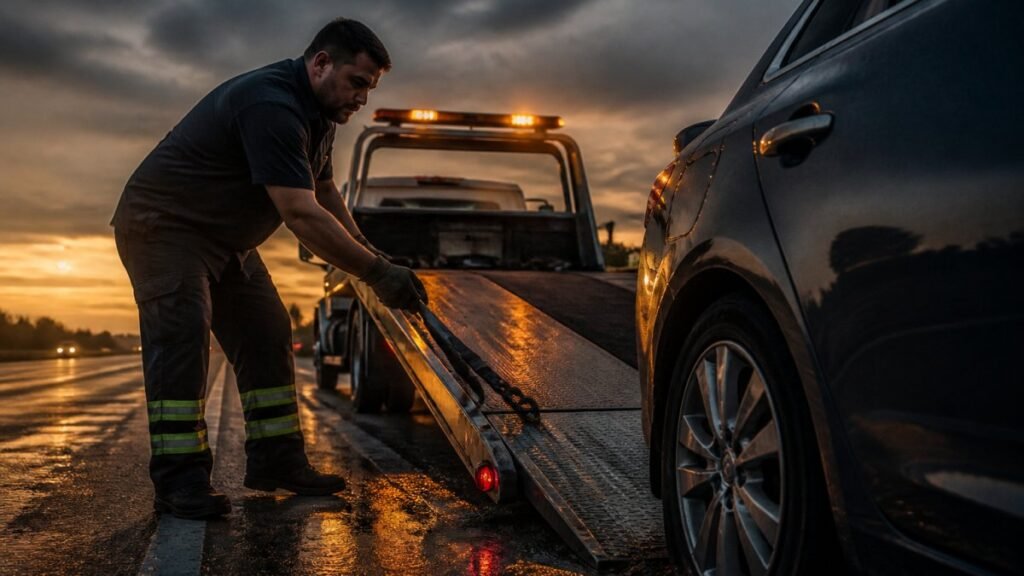
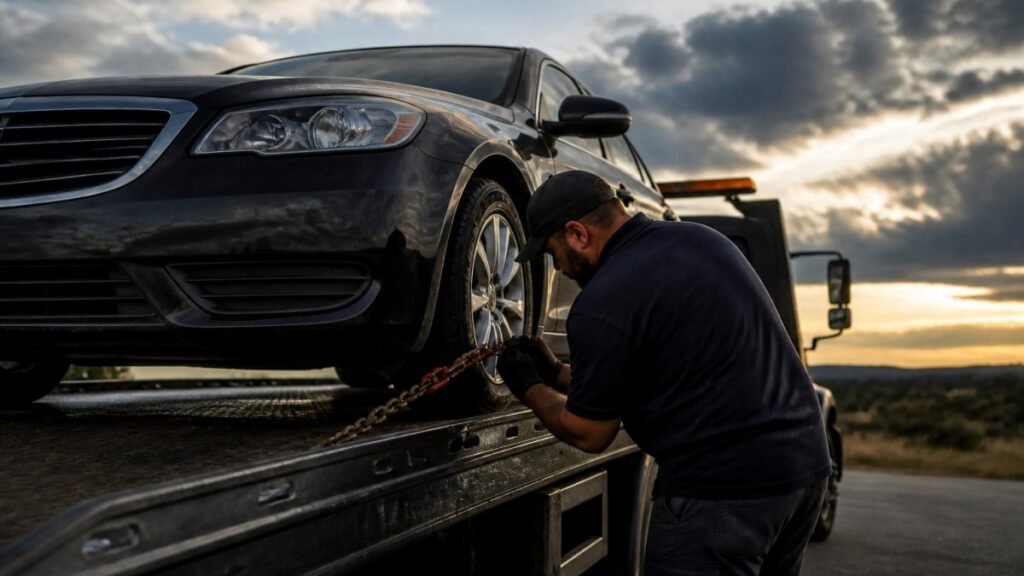
EV towing requires a flatbed and a driver who knows where the tie-down points are. Hook a Tesla or any electric vehicle wrong and you risk drivetrain damage that runs into serious money. That’s why we run flatbed equipment for every EV call, with proper loading and securement procedures.
A driver asked us recently how to know we won’t damage their Tesla. Fair question. The answer is that flatbed transport keeps all four wheels off the ground, which is the correct method for electric drivetrains.
For EVs, the equipment matters more than the brand name on the side of the truck. Ask whether the company runs flatbeds before you book.
Hidden Fees, Coverage Limits, and What Plans Leave Out
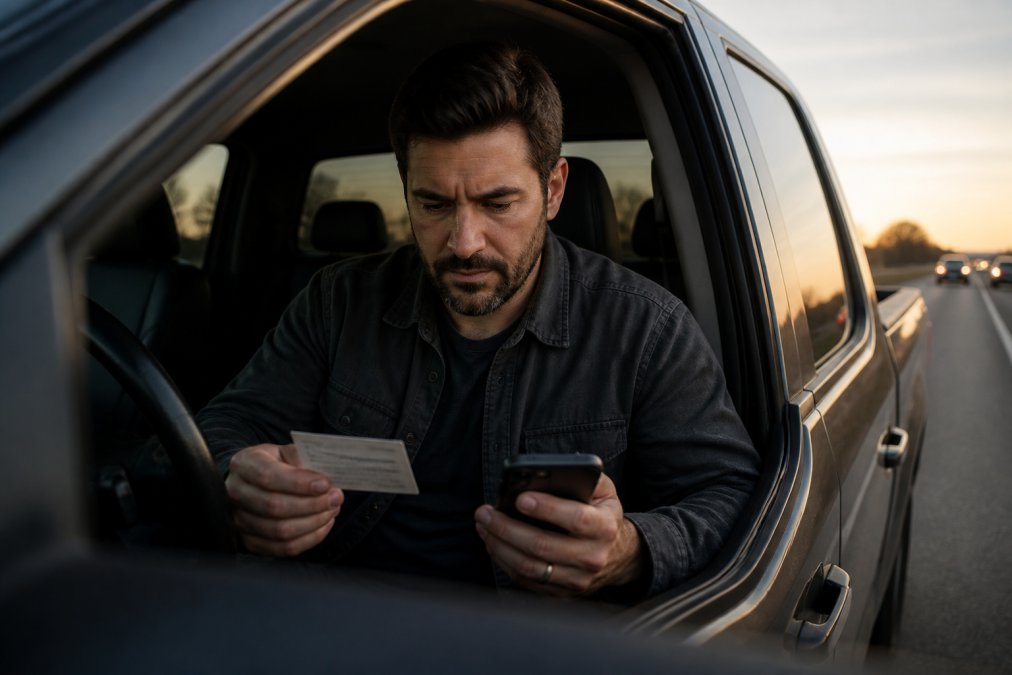
The fee that catches people is mileage. Many plans cap towing at a set radius, then charge per mile beyond it. Others cap the dollar amount per event, leaving you to cover the rest. Trip interruption coverage, deductible rules, and policy rider terms all vary wildly between providers. Here is what each of those limits actually means when you are the one on the shoulder.
Mileage Caps
A plan that advertises “free towing” usually means free towing up to a set distance, often somewhere in the range of a few miles to a couple dozen. Past that radius, you pay per mile. On a long highway run, that gap adds up fast. The practical question is not how far the cap is, it is how far you actually are from the shop you trust. If your preferred mechanic is across town and the cap is short, you are paying the difference.
Per-Event Dollar Limits
Some plans do not cap distance at all, they cap the dollar amount they will pay for a single call. That sounds generous until you realize a heavy-duty recovery or a long tow can blow past the cap in one event. Read the number and ask yourself whether it covers a worst-case call, not an average one.
Reimbursement vs. Direct Dispatch
This is the limit almost nobody checks. Some plans dispatch a truck for you. Others make you pay the provider up front and reimburse you later, sometimes weeks later, sometimes only after you submit paperwork. If you do not have the cash on hand for an emergency tow, a reimbursement plan can leave you stuck even though you are “covered.” Ask which model your plan uses before you need it.
What Most Plans Exclude
The list of exclusions is where the real money hides:
- Winch-out and off-road recovery. If you slide into a ditch or get stuck in mud or snow, many plans treat that as recovery, not towing, and it is often not covered.
- Mechanical labor. A plan gets a technician to your car. It does not pay for the repair itself.
- Accident-related towing. Some plans exclude tows that follow a collision, leaving that to your auto insurance instead.
- Wrong-fuel and specialty situations. These are frequently outside standard coverage.
- Multiple service calls. Some plans limit how many times per year you can use the benefit.
The Questions to Ask Before You Buy
Before you sign up for anything, read the contract terms and get straight answers to these:
- What is the towing radius, and what is the per-mile charge beyond it?
- Is there a per-event dollar cap, and how much is it?
- Does the plan dispatch a truck or reimburse me after the fact?
- Is winch-out recovery covered, or is that on me?
- How many service calls am I allowed per year?
- Does the plan cover the vehicle or the driver? A driver-based plan follows you into a rental or a friend’s car; a vehicle-based plan does not.
When you call any towing company, ask for the total price before dispatch. A local operator will give you a straight answer. If a dispatcher dodges the question, that is your signal.
The cheapest plan is not the best plan if it leaves you paying out of pocket at the worst possible moment. A short mileage cap and a reimbursement model can turn a “covered” tow into a bill you were not expecting. Read the limits, not the marketing.
Conclusion: The Real Answer for Tulsa Drivers
Roadside assistance is worth the cost if you fit the profile: older vehicle, long commutes, or unpredictable weather. If you don’t, pay per use and keep the annual premium in your pocket.
What matters more than the plan is who shows up. Neptune Towing is owner-operated, licensed and bonded, and available 24/7 for flatbed towing, jump starts, lockout service, fuel delivery, and EV transport across Tulsa, Jenks, Bixby, Broken Arrow, and Glenpool. We don’t impound vehicles and we don’t profit from storage fees. We’re the local towing company drivers call when they need help, not a bill.
Call (539) 292 3074 and get a straight answer on pricing before we roll.
Frequently Asked Questions
What does roadside assistance not cover?
Most plans exclude major repairs, parts replacement, and breakdowns inside a garage or driveway. Towing is usually capped by mileage, and some plans limit how many service calls you get per year. Winch-outs and accident recovery often carry extra charges. Before buying, read the contract terms for coverage limits and mileage restrictions so you know what you are actually getting. If you need help outside a plan’s scope, a local towing company can quote the job directly.
Is a dedicated roadside assistance plan better than insurance add-ons?
It depends on how often you drive and what you drive. Insurance endorsements typically cost much less per year, and State Farm reports its coverage averages $10 to $20 annually. Standalone memberships run higher but often include extras like longer towing radius and travel perks. For most daily commuters, the insurance add-on delivers the same core services for less. Drivers with older vehicles or long commutes may find the extra coverage of a dedicated plan worth the difference.
Does using roadside assistance through insurance affect my premiums?
In most cases, no. Roadside assistance is a service benefit, not a claim against your collision or liability coverage, so using it does not usually raise your rate. Some insurers track usage patterns, but a jump start or lockout service is not treated like an accident. Check your specific policy rider to be sure. If you are unsure, ask your agent directly before you assume it will cost you later.
How does on-demand towing compare to annual subscription plans?
On-demand towing means you pay only when you need help, with no annual premium. Subscription plans spread the cost across the year and can save money if you use them more than once. Some drivers report needing a tow only once in five years, which makes paying per use cheaper overall. The trade-off is predictability: a plan gives you peace of mind and a known cost, while on-demand keeps your money until you actually need it.
What are the most common roadside emergencies for local drivers?
Dead batteries, flat tires, lockouts, and running out of fuel top the list. In the Tulsa area, summer heat stresses batteries and winter ice causes spin-outs on I-44 and the IDL. Having a reliable number saved, whether a plan or a local tow truck, cuts your stranded time significantly.