Table of Contents
- Why a Police Report Matters After a Crash in Tulsa
- Step 1: Get a Copy of Your Accident Report
- Step 2: Check the Report for Factual Errors
- Step 3: Gather Evidence That Supports Your Version
- Step 4: Submit a Written Request to Amend the Report
- Step 5: Understand Fault Disputes and Insurance Claims
- Getting Your Vehicle Safely Home While the Dispute Is Pending
- Next Steps: Get Help When Your Report Is Still Wrong
- Frequently Asked Questions
Last Updated: November 12, 2026
Why a Police Report Matters After a Crash in Tulsa
A police report is one of the most important papers you will deal with after a car accident, and understanding how to dispute police report errors can protect your claim. Insurance companies often rely on it to decide who was at fault. If the report has mistakes, your claim can suffer, even when you did nothing wrong.
Many drivers are surprised to learn a crash report can be wrong. The good news is that you have options to correct it.
The report is also a record of what the officer saw and heard at the scene. National Highway Traffic Safety Administration crash reporting resources explains why accurate crash data matters for safety and insurance decisions.
Watch out: Do not assume the report is final just because it was written at the scene. Check it as soon as you can get a copy.
Step 1: Get a Copy of Your Accident Report
Start by getting a copy of your crash report. Most agencies let you request it online, by mail, or in person. Have your report number, the date of the crash, and the location ready.
Ask the agency that responded to the crash how to request the report, including how long it takes and what fee applies. If you are in Tulsa and need help after the crash, see our Tulsa area service coverage to confirm we serve your city and nearby communities. Confirm those details before you pay.
Once you have the report, read every section carefully. Look at the names, the vehicle details, the location, the time, and the narrative.
Step 2: Check the Report for Factual Errors
Compare the report to what you remember and what your photos show. Common errors include wrong vehicle information, incorrect street names, the wrong number of vehicles or passengers, and a misstated direction of travel.
Write down every error you find. Be specific about what is wrong and what the correct information should be.
Facts Versus Opinions in an Officer’s Report
Not every part of a report can be changed. Facts, such as your name, plate number, and the time of the crash, are easier to correct. Opinions, such as the officer’s conclusion about who caused the crash, are harder to dispute.
Avrek Law Firm guide on correcting a car accident police report notes that an officer may change a report when given strong, conclusive evidence. Disagreeing with an opinion does not always mean the report will change. Focus first on clear factual errors.
Step 3: Gather Evidence That Supports Your Version
Evidence is what makes a correction request credible. The more proof you have, the easier it is to show what really happened.
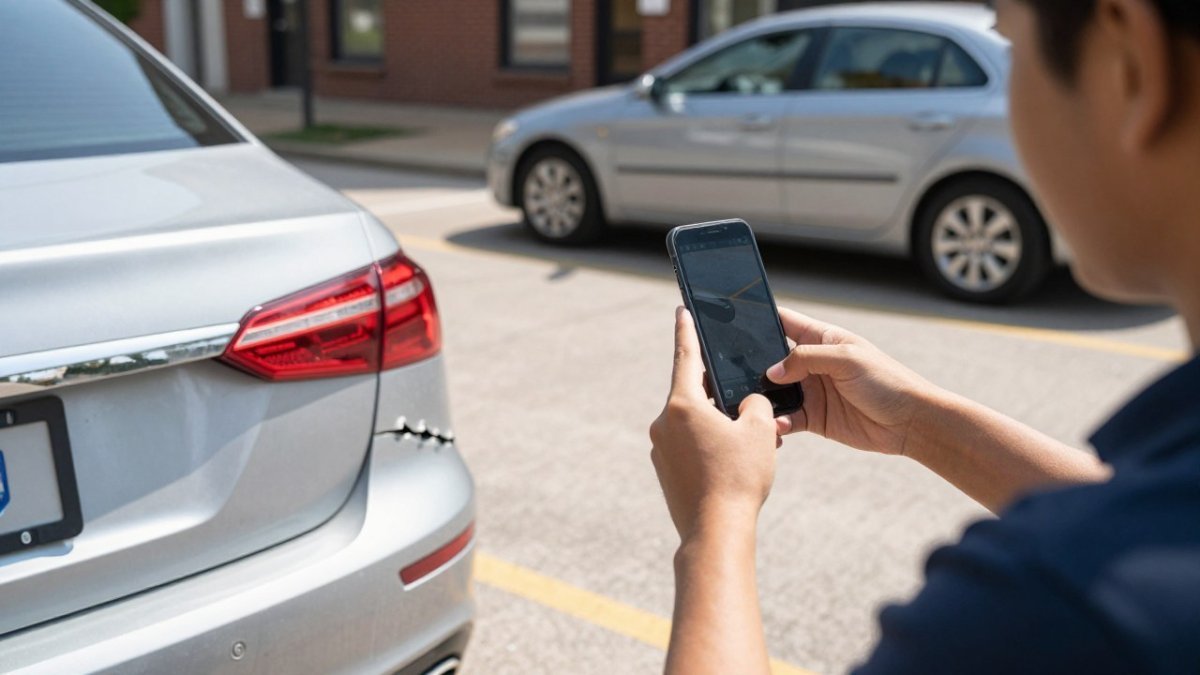
Useful evidence includes:
- Photos of vehicle damage, the road, traffic signs, and the scene
- Dashcam or phone video, if you recorded anything
- Witness names and phone numbers
- Repair estimates or tow receipts that match the crash details
- Medical records, if injuries affected your account
Save digital files in their original format. Back them up to a second location. Do not edit photos, since that can hurt their credibility.
Keep the same evidence in one folder so it is easy to submit later.
Step 4: Submit a Written Request to Amend the Report
A correction request works best when it reads like a short, factual memo rather than a complaint. The person reviewing it at the records division is comparing your words to the officer’s narrative and to whatever evidence you attach. Make that comparison easy.
What to include in the request
Put these items at the top so the file can be matched quickly:
- Your full name, phone number, and mailing address
- The crash report number and the date of the crash
- The agency and, if you have it, the reporting officer’s name and badge number
- The location of the crash as written on the report
Then list each error on its own line. Use this pattern: the section of the report, what it currently says, what it should say, and the evidence that proves it. For example: “Section 4, Direction of Travel: report states westbound; should be eastbound. Attached photos 3 and 4 show my vehicle facing east at the intersection, and the witness statement from the driver behind me confirms I was traveling east on Memorial Drive.”
Close with a clear ask. Say whether you want the report amended, a supplemental statement added to the file, or both. Sign and date it, and keep a copy.
A short template you can adapt
To the Records Division:
I am requesting a correction to crash report [number] from [date] at [location]. I have attached evidence for each item below.
- [Section and field]: report says [current text]; correct information is [correct text]. Evidence: [photo, video, witness statement, repair estimate].
- [Section and field]: report says [current text]; correct information is [correct text]. Evidence: [item].
Please amend the report or add this letter and my evidence to the file as a supplemental statement. I can be reached at [phone] and [email].
Thank you,
[Name]
How to send it and what to expect
Ask the records division which channel it prefers: online portal, email, fax, or in person. Send it the way they ask, because a request sent to the wrong inbox can sit for weeks. Keep the dated copy, the delivery confirmation, and a note of anyone you spoke with.
Agencies usually correct objective facts, such as a plate number or street name, more readily than an officer’s conclusion about fault. That is not a reason to skip the request. Even when the report stays the same, your letter and evidence become part of the record, and your insurer can see that you raised the issue early.
Watch out: Do not send original photos or your only copy of a dashcam file. Send copies and keep the originals backed up in a second location, because once a file leaves your hands you may not get it back.
If you have not heard back after a reasonable wait, call the records division and ask for a status update. Ask specifically whether your request was received, whether it was routed to the reporting officer, and whether a supplemental statement is an option. Write down the answers and the date.
Step 5: Understand Fault Disputes and Insurance Claims
A corrected report does not automatically settle who was at fault. Insurance adjusters look at the report, statements from everyone involved, and physical evidence. A dispute can take time.
Tell your insurance company that you are disputing the report. Share your evidence and your written request. Keep records of every call and email.
For a fault dispute with a large claim or injuries, many drivers talk with an attorney. This is a sensible step if the insurer denies your version or offers a settlement that does not match the facts.
Getting Your Vehicle Safely Home While the Dispute Is Pending
Your car may still be unsafe to drive while you work through the report and the claim. Do not drive a vehicle with damaged brakes, steering, or tires.
A flatbed tow gets your vehicle off the road with all four wheels lifted, which helps avoid further damage. Neptune Towing provides flatbed towing in Tulsa, Jenks, Bixby, Broken Arrow, and Glenpool, and we use proper loading and securement for the vehicle being moved.
Call Neptune Towing at (539) 292 3074 for flatbed towing in Tulsa. We do not impound vehicles, and we are an owner-operated company.
Next Steps: Get Help When Your Report Is Still Wrong
A refusal is not the end of the road. Agencies often decline to rewrite an officer’s conclusion even when they will accept your evidence into the file. What matters is that your version of events is documented and visible to the people who will decide your claim.
Build a paper trail the insurer can follow
Keep every version of the report, your written request, the agency’s response, and a short log of phone calls with names and dates. If the agency will not amend the report, ask in writing whether it will attach your letter and evidence as a supplemental statement. A supplemental statement does not erase the original report, but it puts your account in the same file.
Use your evidence directly with your insurer
You do not have to wait for an amendment before notifying your insurer. Tell the adjuster in writing that you are disputing specific items, point to the evidence, and ask them to note the dispute in the claim file. Adjusters routinely weigh photos, dashcam video, witness statements, and vehicle damage alongside the report, and a report is not the final word on fault.
Preserve digital evidence before it disappears
Dashcam footage and nearby surveillance video can be overwritten on a loop, sometimes within days. Export the original files, note the date and time they were captured, and store copies in two places. Do not crop, filter, or edit them, because altered files invite doubt.
Know when to bring in an attorney
Simple factual fixes are usually manageable on your own. An attorney makes more sense when fault is disputed, injuries are involved, or the insurer leans on the report to deny your version. Ask about deadlines early, since claim and legal timelines can run while a correction request is pending. While a correction request is pending, keep the rest of your claim on track by documenting the crash, preserving evidence, and following the next steps with Central Illinois Legal Advocates.
Keep your vehicle safe in the meantime
While the dispute works through the agency and the insurer, do not drive a car with damaged brakes, steering, or tires. A flatbed tow keeps all four wheels off the road, which helps protect the vehicle during transport. Neptune Towing provides flatbed towing in Tulsa, Jenks, Bixby, Broken Arrow, Glenpool, Owasso, and Sapulpa. We are owner-operated, and we do not impound vehicles.
If you need a vehicle moved after a crash, call Neptune Towing at (539) 292 3074 for local towing, roadside assistance, or flatbed service.
Frequently Asked Questions
Can you dispute being at fault in a car accident?
Yes. A police report’s fault determination is an officer’s opinion based on the scene, so it is not final. You can contest it through your insurer’s claim process and, if needed, with your own evidence such as photos, witness statements, and dashcam footage. An insurance adjuster or attorney can help you present that evidence. Keep your written account consistent and submit it promptly, since delays can weaken your position.
Can a police report be changed after an accident?
A report can sometimes be amended, but the process depends on the agency that wrote it. Factual errors such as a wrong plate number, date, or lane position are the easiest to correct. Changes to an officer’s opinion about fault are harder, and one legal source notes an officer may revise a report only with strong, conclusive evidence. Contact the records division of the reporting agency to ask what it requires.
What should you do if the officer will not amend the report?
If the agency declines to change the report, you still have options. You can attach a written supplemental statement to the file, keep your evidence organized, and share it with your insurance adjuster. Your insurer may weigh your documentation even when the police report says otherwise. If the dispute involves significant injuries or liability, speak with an attorney about your options before accepting a final determination.
