Last Updated: November 19, 2026
Quick Summary
Classic car transport insurance is usually a set of coverages that apply at different stages, including loading, transit, and unloading. Your own collector policy may not cover the car once it leaves your possession, so confirm coverage in writing before shipping. The carrier’s cargo insurance has its own per-vehicle limits and exclusions that may fall short of a classic car’s value.
- Ask your insurer in writing whether the policy covers loading, transit, and unloading.
- Request the carrier’s certificate of insurance and check its dates and limits.
- Confirm the carrier’s per-vehicle limit meets or exceeds your car’s agreed value.
- Find out whether the carrier pays agreed value, stated value, or actual cash value.
- Photograph the car and note existing damage on the condition report before pickup.
Table of Contents
- How Classic Car Transport Insurance Works Across Each Stage
- Does Classic Car Insurance Cover Transport?
- What Auto Transport Carrier Insurance Coverage Includes and Excludes
- Agreed Value vs. Stated Value Classic Car Insurance
- Open vs. Enclosed Transport: Protection Differences and Pros and Cons
- Classic Car Shipping Damage Claims: Evidence and Dispute Prevention
- Verifying Coverage Before You Hand Over the Keys
- Frequently Asked Questions
How Classic Car Transport Insurance Works Across Each Stage
Classic car transport insurance is usually not one policy. It is a set of coverages that can apply at different points: when the car is picked up, while it is in transit, and when it is delivered.
For a long-distance move, the shipping company’s coverage, your own policy, and any supplemental policy all play a role, and they do not always overlap cleanly.
Each stage carries its own exposure. Loading and unloading are where many transport-related dents and scrapes happen, while transit covers accidents, theft, and weather.
Does Classic Car Insurance Cover Transport?
Often, a standard classic car policy does not automatically cover the vehicle once it leaves your possession.
Some policies do extend coverage during transit, but the terms vary. Before you ship, call your insurer and ask directly whether the policy covers the vehicle while it is loaded, in transit, and unloaded.
CNBC Select’s overview of classic car insurance policy features, including mileage limits shows how varied classic car policy terms can be, which is why checking your specific policy matters.
What Auto Transport Carrier Insurance Coverage Includes and Excludes
The carrier’s insurance is the coverage the shipping company carries for the vehicles it hauls. It is separate from your own policy, and it has its own limits and exclusions. Read the carrier’s certificate of insurance rather than relying on a verbal assurance.
Carrier Cargo Coverage
Cargo coverage protects the vehicle while the carrier has it. It generally pays for damage that happens during loading, transit, and unloading, but it pays only up to a stated limit and subject to exclusions.
The limit is the problem for classic owners. RPM Moves’ classic car transport owner’s guide explains that carrier cargo coverage pays actual loss and may not match an appreciating car’s value.
Carrier Liability Coverage
Liability coverage addresses the carrier’s legal responsibility, typically for damage it causes to property or people. It is not the same as cargo coverage, and it does not necessarily pay you for damage to your own vehicle. Ask the carrier which coverage applies to a loss on your car specifically, and get the answer tied to the policy language rather than a verbal promise.
Exclusions to Ask About
Carrier policies commonly exclude or limit certain situations, and the wording varies by carrier. Ask directly about each of these before you book:
- Pre-existing damage. Scratches, chips, and worn trim noted on the condition report are usually not covered because they existed before pickup.
- Inoperable or non-running vehicles. Some carriers exclude damage tied to a car that cannot roll, steer, or brake on its own, or they require special loading equipment.
- Loose parts and personal items. Detached trim, antennas, hubcaps, and anything stored inside the car are often excluded or capped.
Watch out: a carrier can be fully insured and still leave your car underinsured if the per-vehicle limit is below its agreed value, the certificate proves coverage exists, not that it is enough.
How to Verify the Certificate
Ask the carrier for a certificate of insurance and check four things: the policy effective and expiration dates, the cargo limit per vehicle and per load, the named insured (confirm it is the actual carrier, not just a broker), and any listed exclusions or endorsements. If a broker arranged the haul, ask for the underlying carrier’s certificate separately. A practical insurance-document verification checklist, request the certificate, confirm dates and limits, identify exclusions, and confirm the actual carrier is the named insured, resolves most of the confusion before a car is ever loaded.
Carrier coverage has its own limits and exclusions, so the table below sums up the key points to check before booking.
| Item | What to check | Why it matters |
|---|---|---|
| Cargo coverage | Per-vehicle and per-load limits | Limit may fall below a car’s agreed value |
| Liability coverage | Which policy applies to your car | Liability may not pay for your vehicle’s damage |
| Pre-existing damage | Noted on condition report | Usually not covered |
| Inoperable vehicles | Carrier rules for non-running cars | Some carriers exclude or require special equipment |
| Loose parts and personal items | Exclusions or caps | Detached trim and items inside are often excluded |
| Mechanical failure | Transit exclusions | Failure-related damage may fall outside cargo cover |
| Certificate of insurance | Dates, limits, named insured, exclusions | Confirms coverage exists and is enough |
Agreed Value vs. Stated Value Classic Car Insurance
Agreed value and stated value are often confused, and the difference affects what you are paid after a loss. An agreed-value policy sets the payout amount in advance, based on a value you and the insurer settle on.
For a collector car, agreed value is usually the better fit because the car may be worth more than its depreciated cash value.
How Limits and Valuation Interact
The valuation method on your own policy and the limits on the carrier’s policy are two separate questions, and a gap between them is where high-value cars get underinsured. A transparent hypothetical shows the pattern: suppose a car has an agreed value of a given amount, the carrier’s per-vehicle cargo limit is lower than that figure, and the carrier’s deductible applies to any claim. If the car is damaged in transit, the carrier’s cargo coverage pays up to its limit minus the deductible, and the owner is responsible for the difference between that payout and the agreed value.
A common pattern is for owners to compare the carrier’s limit to the car’s market value and stop there, without checking whether the carrier’s policy uses agreed value, stated value, or actual cash value to calculate the payout. The valuation method can matter as much as the limit.
Questions to Ask Before You Book
- Does the carrier’s cargo policy pay agreed value, stated value, or actual cash value?
- What is the per-vehicle limit, and does it meet or exceed my car’s agreed value?
- What deductible applies, and who pays it?
Watch out: a carrier’s limit that matches your car’s value on paper can still leave a shortfall if the policy pays actual cash value or applies a deductible, confirm the valuation method, not just the number.
Open vs. Enclosed Transport: Protection Differences and Pros and Cons
Open transport is the common, lower-cost option: your car rides on a multi-car trailer exposed to road debris and weather. Enclosed transport costs more but keeps the vehicle covered and separated from other cars.
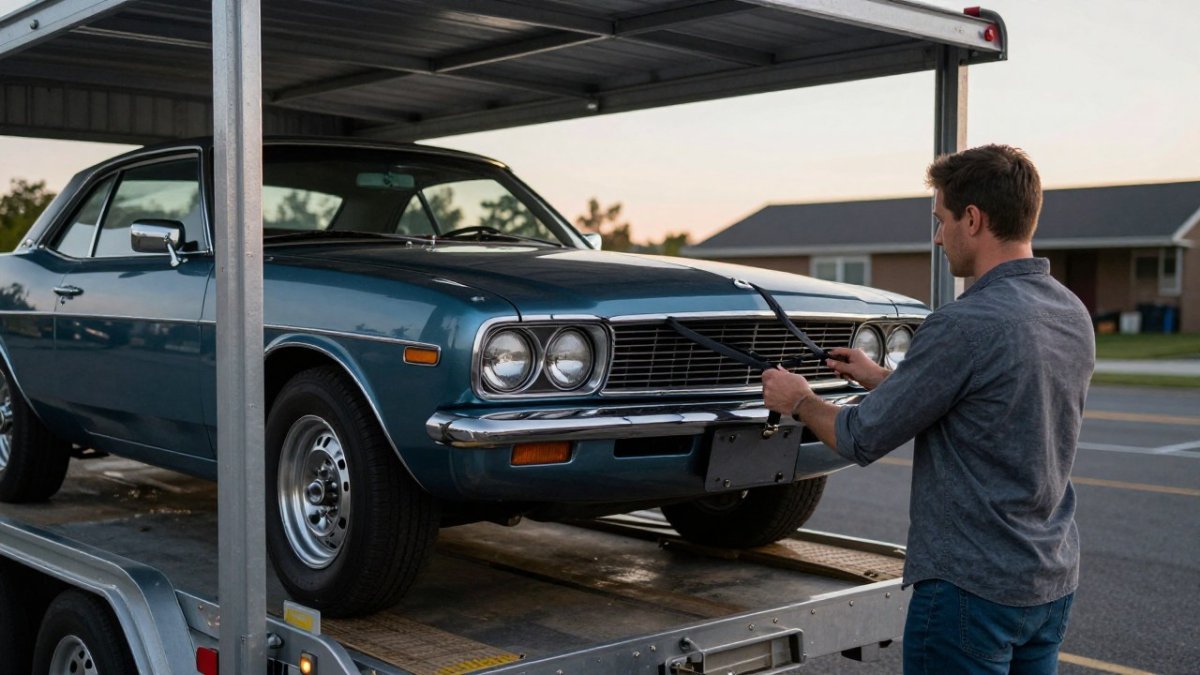
- Open transport: lower cost, more exposure to weather and road debris, more common.
- Enclosed transport: higher cost, better protection from weather and debris, more handling care for low or fragile vehicles.
Enclosed service does not remove the need for insurance. Verify coverage under either method. If your car is low-clearance, that is worth raising with any transport company before loading.
Classic Car Shipping Damage Claims: Evidence and Dispute Prevention
Most disputes come down to documentation. Photograph the car from every angle before pickup, note existing scratches or chips on the condition report, and sign nothing you have not reviewed.
If damage appears on delivery, note it on the delivery paperwork before you sign, and photograph it that day. Filing the claim quickly, with dated photos and the condition report, makes a settlement much more likely.
Verifying Coverage Before You Hand Over the Keys
Before any classic car leaves your driveway, confirm three things in writing: the carrier’s cargo limit and whether it meets your car’s agreed value, what your own policy covers during transit, and whether a supplemental policy is needed to close the gap. Ask for the carrier’s certificate of insurance and check that it is current.
Classic Motor Group’s guidance on comprehensive transport coverage for accidents, theft, and environmental damage is a useful checklist to compare against any policy you are offered. If you are moving a vehicle locally or need a tow instead of a long-distance shipment, book a towing service in Sapulpa or call Neptune Towing, a locally owned towing company serving Tulsa and nearby Oklahoma communities.
How do I confirm my classic car is covered during transport? Ask your insurer in writing whether the policy covers loading, transit, and unloading, and get the carrier’s certificate of insurance.
Neptune Towing can help you understand local towing options. Compare long-distance towing options in Tulsa if your move runs beyond the city, or check luxury and classic car towing before you decide on a flatbed.
Frequently Asked Questions
How does insurance work when transporting a car?
Insurance during car transport usually comes from several sources at once: the carrier’s cargo policy, the carrier’s liability policy, and sometimes your own policy or a supplemental collector policy. Carrier cargo coverage typically applies while the vehicle is being loaded, transported, and unloaded, subject to the policy terms, exclusions, and limits. Your personal auto or classic car policy may not automatically cover the car in transit, so check whether it does before the pickup date. Ask the carrier for a certificate of insurance and confirm the limits in writing.
Does classic car insurance cover damage during transport?
It depends on the policy. Many standard classic car policies are written for use on the road and may not cover a vehicle while it sits on a carrier’s trailer. Carrier cargo coverage is designed for transport damage, but it generally pays actual loss rather than the full agreed value of an appreciating classic. Owners often carry a collector policy with an agreed value that fills that gap. Read the transit and exclusion language before relying on either policy.
How can I verify a car carrier’s insurance coverage?
Request a current certificate of insurance and check that the cargo and liability limits are shown, the policy is active on your pickup date, and the coverage names the carrier’s operating authority. Confirm the deductible and whether the cargo limit is enough for your car’s value. Call the insurer listed on the certificate if anything is unclear. Save the certificate with your transport contract so you have it if a claim becomes necessary.
What is the difference between agreed value and stated value insurance?
Agreed value means you and your insurer set the vehicle’s value in advance, and that figure is the amount paid for a total loss, usually subject to the policy’s terms. Stated value is typically a declared figure that the carrier or insurer may limit or adjust at claim time based on documented evidence. For a classic car, agreed value often gives more predictable protection because the amount is fixed before anything goes wrong. Keep appraisals and photos to support the figure you agree on.
What should I do if my classic car is damaged during shipping?
Document the damage before you sign the delivery paperwork. Take time-stamped photos and video from every angle, note any new damage on the bill of lading or delivery receipt, and do not sign a clean receipt if the car is damaged. Notify the carrier and its insurer promptly, and keep copies of every document. Gather repair estimates and your pre-shipment condition report to support the claim. Quick, thorough documentation is the best way to avoid a dispute.
Is an enclosed carrier better for transporting a classic car?
Enclosed transport generally offers more protection from weather, road debris, and road-side hazards than open transport, which is why many collectors choose it for high-value vehicles. It typically costs more per mile. Open transport can be a reasonable choice for lower-value cars when the carrier’s coverage is adequate. Whichever you choose, confirm that the carrier’s cargo limits match the car’s value, not just the transport type.
Does carrier cargo insurance cover my car’s full value?
Not always. Carrier cargo coverage often pays actual loss rather than the full value of an appreciating classic, and limits vary by carrier. If your car is worth more than the cargo limit, or if the policy would pay only depreciated or actual loss, you may recover less than you expect. Review the policy limits, compare them with your car’s agreed value, and consider a supplemental collector policy to close the gap.
