
Last Updated: November 13, 2026
Quick Summary
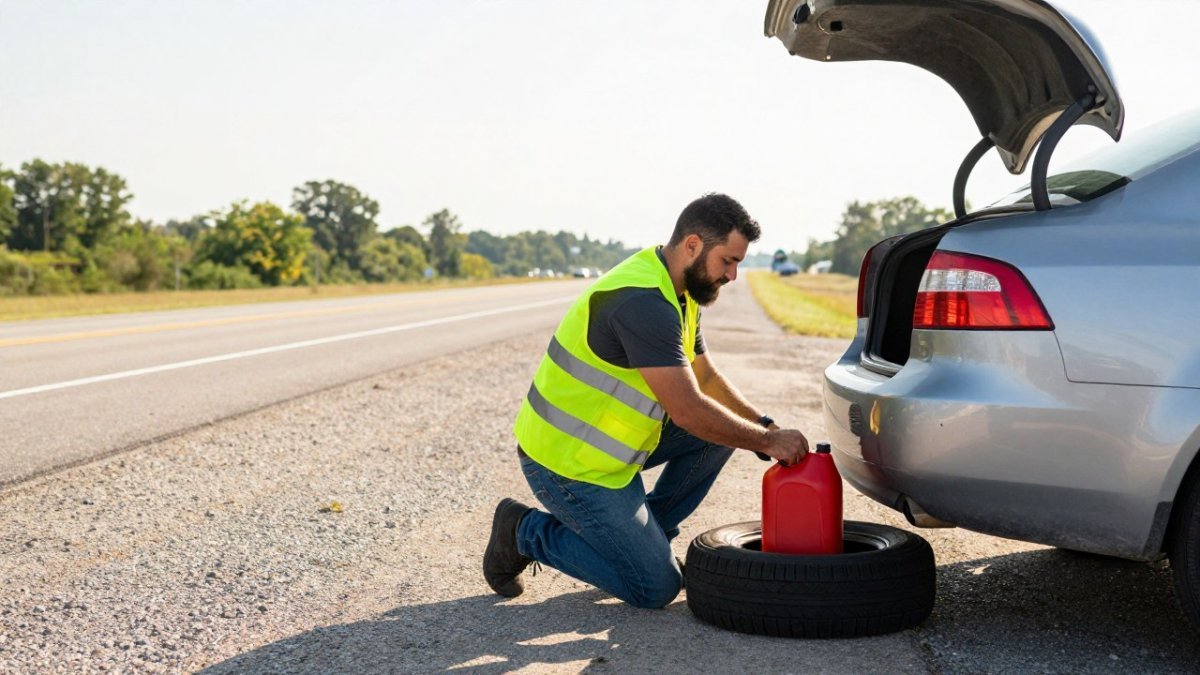
Keeping gasoline in a car trunk is not a safe way to store fuel. Vapor builds up in a closed, hot trunk, so a gasoline in car trunk setup only suits a sealed, approved can on a brief trip, never overnight.
- Gasoline gives off flammable vapor, which builds up in unventilated, hot spaces like a closed trunk.
- A can that is still in the trunk the next morning counts as storage, not transport.
- Use a sealed, approved container with the cap tight and keep it upright and secured.
- Never carry gas inside the passenger cabin, and keep windows partly open during the trip.
- After a spill, pull over, turn off the engine, and ventilate before getting back in.
Table of Contents
- Why a Gas Can in the Trunk Is a Bigger Risk Than It Looks
- Brief Transport Versus Overnight Storage in Your Car
- How to Safely Carry a Gas Can in a Car
- Vehicle-Specific Tips for Sedans, SUVs, and Pickup Beds
- What to Do If Gasoline Spills in Your Trunk
- Emergency Fuel Options for Stranded Drivers in Tulsa
- Call Neptune Towing for Fuel Delivery Instead of Hauling Gas
- Frequently Asked Questions
Why a Gas Can in the Trunk Is a Bigger Risk Than It Looks
Keeping gasoline in a car trunk can feel convenient until you think about what is actually happening back there. Gasoline gives off vapor all the time, and that vapor is flammable. In a closed trunk on a hot Oklahoma afternoon, the vapor has nowhere to go.
Gasoline gives off flammable vapor, and that vapor can build up in unventilated locations where heat collects. A trunk is about as unventilated as a space gets, and summer heat inside a parked car can climb well past what most people expect.
The short answer: a gasoline in car trunk arrangement is not a safe way to keep fuel for any length of time. Short trips with a sealed, approved container are a different matter, and we cover that below.
Brief Transport Versus Overnight Storage in Your Car
These two situations get lumped together, but they carry very different risks. The difference comes down to time, heat, and how much vapor can collect while you are not watching.
- Brief transport: Driving a sealed, approved can to a gas station, a mower, or a generator for a short trip. The can is in the car for a short time and you are driving with the windows partly open.
- Overnight or routine storage: Leaving gasoline in the car for hours or days. Heat, sun, and trapped vapor all build up, and a leak or tipped can can go unnoticed for a long time.
Here is the mechanism that matters. Gasoline gives off vapor even when the cap is tight, and that vapor is heavier than air. In a closed trunk it settles and pools instead of drifting away. Add a hot afternoon and the liquid expands, the vapor pressure rises, and any weak point in the cap or spout starts to seep. A can that smelled fine at the pump can smell strong by evening. That is why the same container is a reasonable carrier for twenty minutes and a poor storage unit for a week.
A properly sealed container may be carried in a trunk for a short trip, but gasoline should be kept out of hot, closed spaces. If you would rather not haul fuel at all, book fuel delivery in Tulsa and skip the can entirely. Treat the car as a temporary carrier, never as a storage unit, and remember that a parked trunk in an Oklahoma summer is about as unventilated as a space gets.
A simple rule we give drivers: if the can is still in the trunk the next morning, that is storage, not transport. Move it out of the car and into a well-ventilated shed or garage away from heat sources, water heaters, and anything that can spark. If you cannot store it safely at home, buy only what you will use in one trip so there is nothing left to store.
Watch out: a can that has been sitting in a hot trunk can build pressure and spray fuel when you open the cap. Loosen it slowly, away from your face, and let it vent before you pour.
The two situations look similar but carry very different risks, mainly because of time and heat.
| Situation | Typical duration | Main risk |
|---|---|---|
| Brief transport | Short trip with a sealed, approved can | Limited vapor, windows partly open |
| Overnight or routine storage | Hours or days in the car | Heat and trapped vapor build up |
| Hot, closed trunk | Parked in the sun | Vapor pools and pressure rises |
| Can left in trunk next morning | Still there after a night | Counts as storage, not transport |
How to Safely Carry a Gas Can in a Car
If you have to transport fuel, these habits lower the risk a lot:
- Use a sealed, approved container with the cap tight.
- Put the can upright and keep it from tipping.
- Drive straight to where you are going and unload it right away.
- Keep the windows partly open for airflow.
- Never carry gas inside the passenger cabin.
Choosing an approved container
Use a can designed for gasoline, usually a red metal or heavy-duty plastic container with a spring-loaded spout and a tight cap. Avoid old milk jugs, soda bottles, or any container that is cracked, dented, or missing its cap. A cracked container leaks vapor and liquid, and the leak is hard to spot until it is too late.
Securing and ventilating during a short trip
Set the can on a flat, non-slip surface where it cannot roll or tip. A cargo mat or a strap around the can works well. Keep the trunk or cargo area as ventilated as you can while driving, and do not leave the can in the car while you run other errands.
Vehicle-Specific Tips for Sedans, SUVs, and Pickup Beds
- Sedans: Trunk space is small and enclosed. Place the can near the rear seat’s back, upright, and secured. Expect more vapor buildup in a closed trunk, so keep the trip short.
- SUVs and hatchbacks: The cargo area is larger and often has more airflow, but it can still get very hot. Secure the can so it does not slide into the rear seats.
- Pickup beds: An open bed gives the best ventilation. Strap the can down, keep it upright, and cover it if you can to protect it from sun and rain.
No matter the vehicle, keep gasoline away from passenger seats, floor mats, and anything that could spark.
What to Do If Gasoline Spills in Your Trunk
Spills happen, especially when a cap is loose or a can tips on a turn. If you also have a flat, a flat tire change in Tulsa can get you back on the road with your usable spare. This is the part most guides skip, and it is the part that matters most in the moment. A spill in an enclosed trunk is a vapor problem before it is a stain problem, so the order of your actions counts.
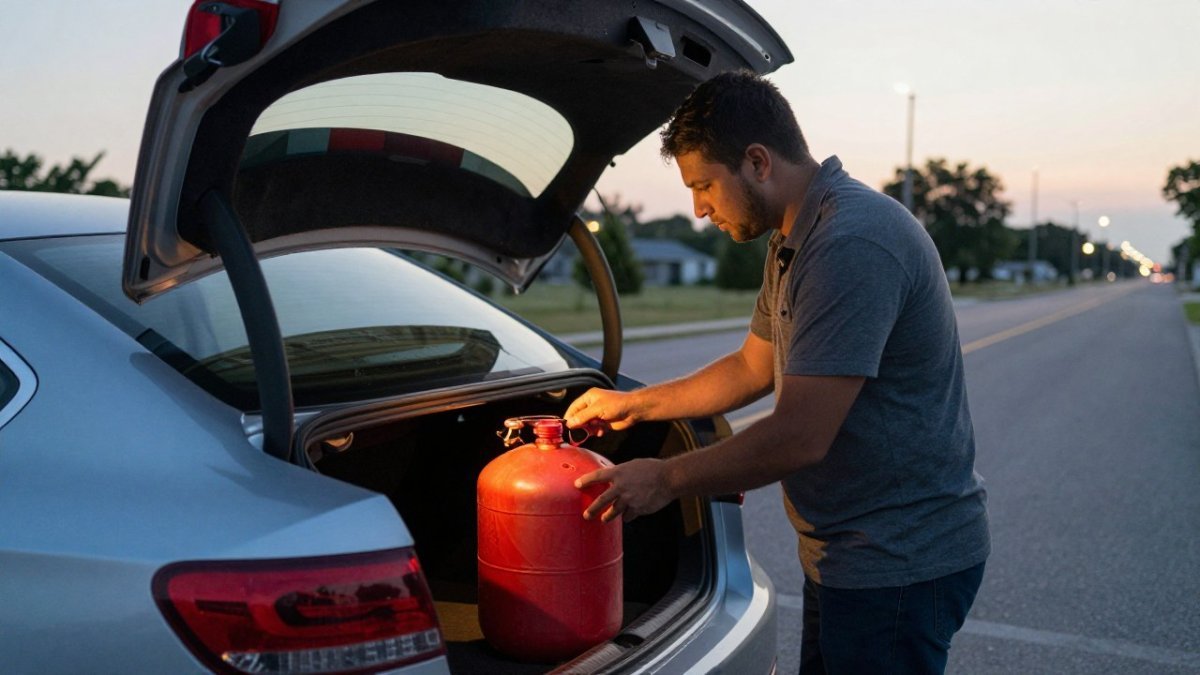
- Pull over somewhere safe and turn off the engine. Get away from traffic, open flames, and anyone smoking. Do not pull into a garage or carport.
- Get people out and open up. Open the trunk, the doors, and the windows from outside the car if you can. Let the vapor move before you climb in.
- Move the can outside, upright, if you can do so safely. Set it on pavement away from the vehicle, not on grass or near a storm drain.
- Clean up the spill with absorbent material such as cat litter, sand, or rags. Blot rather than scrub so you do not spread fuel into the carpet padding.
- Store the soaked material outdoors in a sealed metal container, away from the house, until you can dispose of it properly. Soaked rags left in a pile can heat up on their own.
- Check for fumes before getting back in the car. If you still smell strong gasoline after ventilating, do not drive with passengers. Leave the trunk open and let it air out.
If you or anyone with you feels sick after exposure to fumes, get fresh air right away and seek medical care if symptoms continue. If fuel has soaked into carpet or padding, the smell can linger for days and the fire risk lingers with it. In that case, have the vehicle aired out and the affected material removed rather than trying to mask the odor. Once the affected material is removed and the vehicle is safe to use, avoiding another can of gasoline in the trunk may mean arranging emergency fuel delivery if you run out on the road.
Watch out: never use a shop vac or any vacuum to clean up gasoline. The motor can spark, and the vapor inside the canister is exactly what it needs to ignite. Sweep up absorbent material with a broom and scoop instead.
If a spill leaves you with a car you should not drive, or you are stranded with a fuel smell on the shoulder of I-44 or the Broken Arrow Expressway, call for help rather than pushing your luck. A local tow operator can help move the vehicle to a safe spot.
Emergency Fuel Options for Stranded Drivers in Tulsa
Running out of gas on I-44 or Memorial Drive is stressful, and carrying a spare can is not always the best answer. Emergency towing in Tulsa and roadside help can get you moving again quickly. Calling for roadside fuel delivery means you do not have to haul gas yourself.
If you are stuck, safety comes first. Move your vehicle out of traffic if you can, turn on your hazard lights, and stay with your car in a safe spot.
Call Neptune Towing for Fuel Delivery Instead of Hauling Gas
Hauling gas in your trunk is a risk most drivers do not need to take. At Neptune Towing, we bring fuel to you when you are out of gas in Tulsa, Jenks, Bixby, Broken Arrow, and nearby areas. You do not have to keep a can in your car or carry it across town.
We are a locally owned, owner-operated company, so when you call, you reach a local business owner. See the full range of roadside services offered in Tulsa before you reach out. Call (539) 292-3074 for fuel delivery or roadside help.
Frequently Asked Questions
Is it safe to keep a gallon of gas in your trunk?
A single sealed gasoline container in a trunk for a short drive is far less risky than leaving it there. Gasoline gives off vapor that can build up in a closed, hot space, and the vapor is flammable. Keep the container upright, tightly capped, and secured so it cannot tip or slide. Get it out of the car as soon as you reach your destination, and never leave it in a parked car in summer heat. If you are unsure, a roadside fuel delivery is the safer choice.
Is it safe to store gasoline in your car trunk overnight?
No, overnight storage is not a safe practice. A closed trunk can trap fuel vapor and heat the container, raising the chance of leaks and fire. Gas cans are meant for short transport, not storage. Move the container to a well-ventilated outdoor spot away from ignition sources, and only keep what you need. Neptune Towing’s fuel delivery can bring fuel to you so you do not have to keep a can in your car.
What should you do if gasoline spills in your trunk?
Stop driving and move to a safe, open area away from traffic. Turn off the engine and keep people away from any open flame or sparks. Open the trunk and the doors to let vapor disperse, then remove the container if you can do so safely. Wipe up what you can with absorbent material and dispose of it properly. If you smell strong fumes, feel dizzy, or the spill is large, call 911 and then call a towing company for help moving the vehicle.
How do you safely carry a gas can in a car?
Use an approved, tightly sealed container, place it upright in the trunk or on a flat surface, and secure it so it cannot roll or tip. Keep windows cracked for airflow and never put it in the passenger compartment. Avoid transporting it on hot days or leaving it in a parked car. Drive directly to where the fuel is needed and remove the can right away. For frequent or emergency needs, a roadside fuel delivery in Tulsa avoids the hazard altogether.
