
Table of Contents
- Step 1: Know Whether Your Car Is Being Towed or Doing the Towing
- Step 2: Run a Complete Vehicle Transport Inspection Checklist
- Step 5: Secure the Load and Plan Your Route
- Your Long-Distance Car Towing Checklist: What to Do Before You Leave
- Conclusion: When to Call a Professional Towing Service in Tulsa
- Frequently Asked Questions
Last Updated: October 13, 2026
Step 1: Know Whether Your Car Is Being Towed or Doing the Towing
Before anything else, answer one question: is your car being towed, or is it towing a trailer? The answer changes your entire prep list for long-distance towing.
If your car is the tow vehicle, you are pulling a trailer, so confirm it can handle the weight. If your car is being towed, get the car itself ready for transport with fluid checks, tire checks, and a decision on how it will ride.
If Your Car Is the Tow Vehicle: Capacity and Hitch Checks
Start with your owner’s manual and find three numbers: gross vehicle weight rating, gross combined weight rating, and payload capacity. Check your receiver hitch for cracks, rust, or loose bolts, and confirm the hitch class matches your trailer weight. Then check tongue weight, too little causes sway, too much overloads your rear axle.
- Confirm your maximum trailer weight against the manual
- Inspect the hitch connection and safety chains
- Verify your trailer load stays under the limit
If Your Car Is Being Towed: Flatbed, Tow Dolly, or Flat Tow?
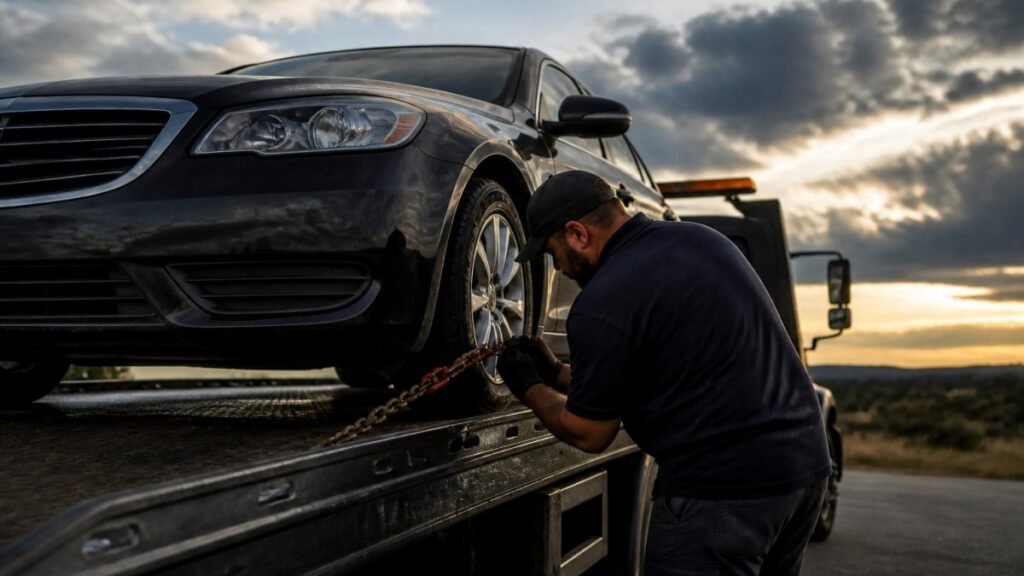
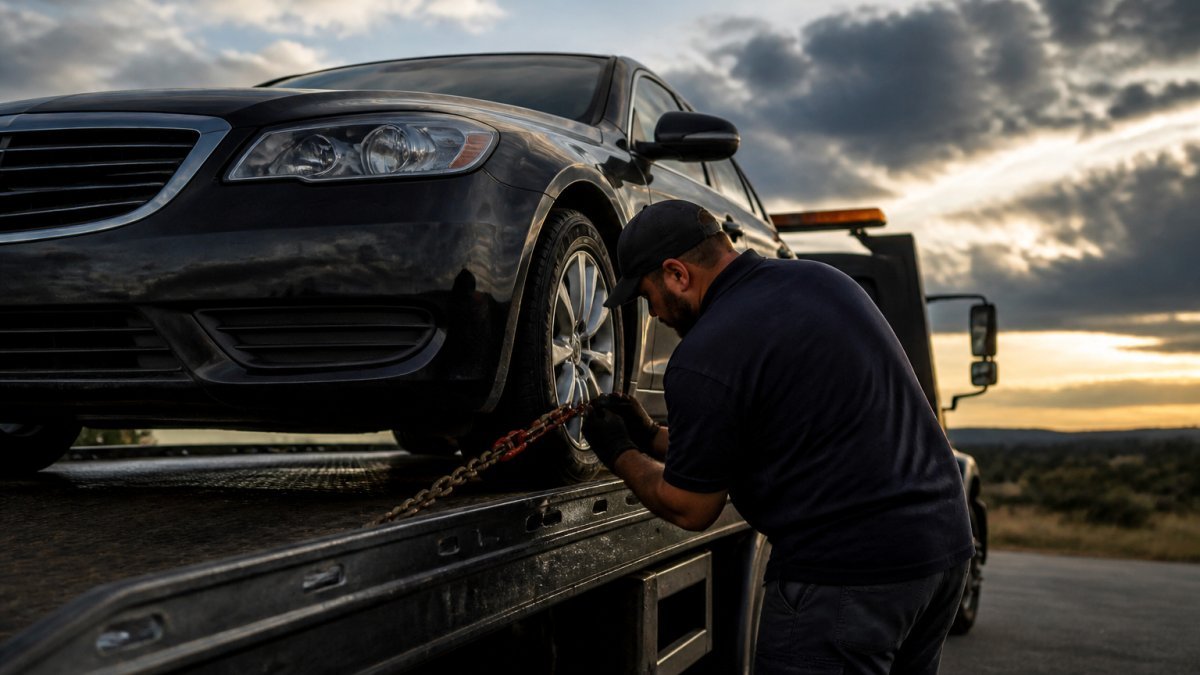
Flatbed towing puts all four wheels off the ground. It is the safest option for low-clearance cars, classic cars, and electric vehicles.
A tow dolly lifts two wheels. It works for some front-wheel-drive cars, but not all.
Flat towing means all four wheels roll on the road. This only works if your car is built for it.
If your car is all-wheel drive or has a CVT transmission, do not flat tow or use a tow dolly without checking the manual first. The wrong method can destroy a transmission in a few miles.
Step 2: Run a Complete Vehicle Transport Inspection Checklist
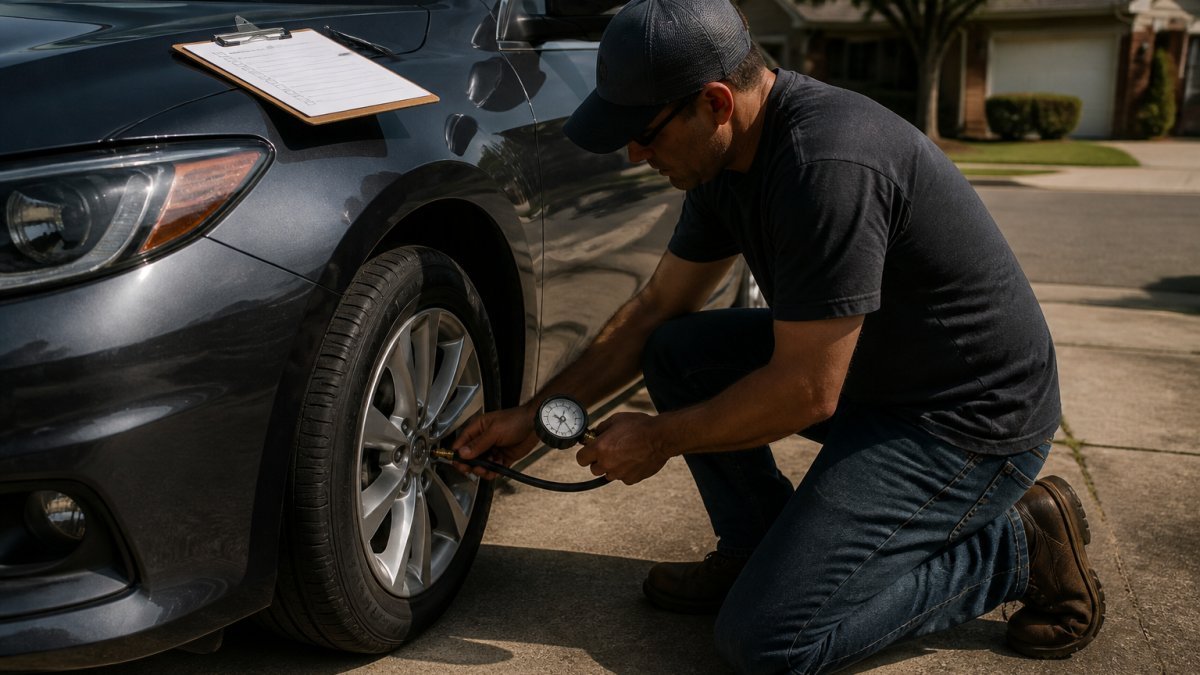
A vehicle transport inspection checklist is the difference between a smooth trip and a breakdown in the middle of nowhere. Run through it in your driveway before you leave.
(/blog/why-flatbed-towing-is-safer/) with all four wheels off the ground.
Before transport:
- Charge the battery to a moderate level, not full
- Disable any automatic parking or security features
- Note any low-clearance issues for the loader
Neptune Towing handles Tesla towing and EV towing around Tulsa with flatbed equipment built for low-clearance vehicles. We use proper securement points so nothing touches the battery pack or undercarriage.
Step 5: Secure the Load and Plan Your Route
Securement is where good trips go right and bad trips go wrong. Here is the version we use on flatbed towing runs around Tulsa and on long hauls out of state.
Use Rated Straps, Not Whatever Is in the Garage
Not all straps are equal. A ratchet strap from a big-box store may be rated for a few hundred pounds, nowhere near enough for a 3,000-pound car.
- Use four tie-down straps at minimum, one at each corner.
- Check the working load limit printed on the strap. It should be well above the weight of the vehicle, with a safety margin.
- Inspect straps for cuts, fraying, or faded tags before every trip. A damaged strap can fail without warning.
Attach to Approved Securement Points
Every vehicle has specific points the manufacturer recommends for tie-down, on most cars, the frame rails, subframe, or designated slots in the unibody. Your owner’s manual or a quick look under the car will show you where.
- Never strap through suspension parts, brake lines, or fuel lines.
- Never strap over the body panels, you will dent or scratch them.
- On EVs and Teslas, avoid the battery pack and undercarriage shields. Use the same frame points the manufacturer specifies.
- Tighten until there is no slack, then check again after a few miles. Straps stretch and settle.
The Recheck Schedule
This is the part that separates a safe tow from a roadside surprise. Plan to recheck at these points:
- Before you leave the driveway
- After the first 10 to 15 miles
- At every fuel stop
- After any hard braking or rough road section
At each stop, check strap tension, look for shifted cargo, feel the trailer tires for excessive heat, and confirm lights and connections are still working.
Route Planning for a Loaded Tow
A loaded tow accelerates slower, stops longer, and does not like quick lane changes. Plan the route with that in mind.
- Avoid steep grades when you can. If you cannot, downshift before the grade, not on it.
- Check for low bridges and clearance restrictions on your route. This matters more with a tall trailer or a lifted vehicle.
- Plan fuel stops with room to pull a trailer through, not every station has the turning radius.
- Give yourself more following distance. A loaded tow needs roughly double the stopping distance of an empty car.
If you are heading out of Tulsa on I-44, US-169, or the Turner Turnpike, plan your stops before you leave. Loaded tows need more room to merge, turn, and stop, and the turnpike does not give you many chances to fix a problem once you are on it.
When to Hand It Off
If your route includes mountain grades, tight urban interchanges, or a vehicle that is not set up for self-towing, the safer call is a professional. Neptune Towing handles flatbed towing for drivers in Tulsa, Jenks, Bixby, Broken Arrow, Glenpool, Owasso, and Sapulpa. We are owner-operated, we do damage-free towing, and we do not impound vehicles.
Your Long-Distance Car Towing Checklist: What to Do Before You Leave
Use this long-distance car towing checklist before every trip.
| Step | What to Check | Why It Matters |
|---|---|---|
| 1 | Towed or towing? | Sets your whole prep list |
| 2 | Tires, brakes, fluids, lights | Prevents breakdowns on the road |
| 3 | Remove loose items and weight | Protects the car and keeps you under limits |
| 4 | EV towing method | Prevents drivetrain damage |
| 5 | Straps and route plan | Keeps the load secure and the trip safe |
Print it, keep it in the glove box, and run through it every time.
Conclusion: When to Call a Professional Towing Service in Tulsa
Some trips are not worth the risk. If your car will not start, has a flat you cannot change, a professional towing service in Tulsa is the safer call.
Neptune Towing is owner-operated and built on damage-free towing. We handle flatbed towing, emergency towing, and EV towing for drivers in Tulsa, Bixby, Broken Arrow, and Glenpool.
Call (539) 292 3074 and we will get you moving.
Frequently Asked Questions
How should I prepare my car for long-distance towing?
Start by confirming whether your car is being towed or doing the towing, since the prep work differs. If it is being towed, remove personal items, check tire pressure and tread, verify the battery is secure, and document existing damage with photos. If it is the tow vehicle, check towing capacity, hitch connections, trailer wiring, and brake function. A written checklist helps you avoid missing anything before the wheels roll.
What should I remove from my car before it is towed?
Take out anything valuable or loose: phone chargers, toll transponders, garage door openers, cash, and personal documents. Remove aftermarket accessories that could shift or snag during loading, such as phone mounts or dash cams. If your car will be transported on an open flatbed, expect road debris and weather exposure, so anything you would not leave in a parking lot overnight should come with you.
Can a car be towed long distance on a flatbed?
Yes. Flatbed towing is the safest method for long-distance transport because all four wheels stay off the ground, which means no wear on the drivetrain, tires, or transmission. It is the preferred choice for electric vehicles, all-wheel-drive cars, low-clearance sports cars, and classics. A professional operator secures the vehicle at designated tie-down points and checks straps during the trip.
Should I leave my car in park or neutral for a tow?
It depends on how the car is being towed. On a flatbed, the vehicle is typically left in park with the parking brake set once it is secured to the deck. If a car is being flat-towed behind a motorhome, the transmission often needs to be in neutral, but only if the owner’s manual says the vehicle is flat-tow compatible. Always follow the manufacturer’s guidance for your specific make and model.