

Table of Contents
- Mobile Fuel Delivery vs. Traditional Gas Stations: The Real Comparison
- How Mobile Refueling Pricing Works
- Time and Labor Savings: Where the Real Value Lies
- Roadside Assistance in Tulsa: When Fuel Delivery Becomes Essential
- Break-Even Analysis: Is Mobile Fuel Delivery Right for Your Fleet?
- What to Do When You’re Running Out of Gas
- The Hidden Costs and Regulatory Considerations
- Conclusion: Making the Right Decision for Your Situation
Last Updated: August 30, 2026
Mobile Fuel Delivery vs. Traditional Gas Stations: The Real Comparison
When you’re managing a fleet or running a business with multiple vehicles, fuel costs and the time spent refueling add up fast. The question isn’t whether fuel delivery exists, it does, but whether is mobile fuel delivery worth the cost for your specific situation.
The answer depends on your operation’s size, fuel consumption, and how much you value time savings. For large commercial fleets, the math is clear: mobile fuel delivery eliminates hours of unproductive driving to gas stations. For single-vehicle owners or small operations, traditional gas stations remain more practical. But here’s what most people get wrong: the real cost comparison isn’t just about per-gallon pricing. It’s about total operational efficiency, labor hours, and downtime.
Let’s break down how these two approaches actually stack up.
| Factor | Mobile Fuel Delivery | Traditional Gas Stations |
|---|---|---|
| Per-gallon pricing | Often competitive or lower at scale | Standard retail rates |
| Labor time | Eliminated, fuel comes to you | Driver time spent refueling |
| Downtime reduction | Significant for fleets | Vehicles off-route during refueling |
| Convenience | On-demand, scheduled delivery | Fixed location, fixed hours |
| Setup requirements | Account setup, minimum orders | None, drive and pay |
| Best for | Commercial fleets 5,000+ gal/month | Individual drivers, small ops |
The critical insight: mobile fuel delivery isn’t cheaper for everyone. But for operations that consume enough fuel to meet minimum order thresholds, typically 250 to 500 gallons per delivery, the labor savings alone can justify the cost. According to Future Market Insights 2025 mobile fuel delivery analysis, trucks lead the mobile fuel delivery vehicle segment with a 70% market share, primarily because commercial fleets have the volume to make the economics work.
How Mobile Refueling Pricing Works
Mobile fuel delivery pricing operates differently from what you’re used to at the pump. There’s no single "price per gallon" you’ll see advertised, instead, costs vary based on location, fuel type, order size, and delivery frequency.
Here’s the structure: most mobile fuel delivery providers charge a base service fee plus a per-gallon rate. The base fee typically covers dispatch and the truck arriving at your location. The per-gallon charge is usually competitive with or slightly below local retail station prices, but the real savings come from eliminating the labor cost of having drivers spend time at gas stations.
According to How Mobile Fuel Delivery Works Step-by-Step Guide 2026, for commercial fleets consuming above 5,000 gallons per month, total delivered cost typically lands $0.30 to $0.50 per gallon below retail station prices in comparable markets. That’s meaningful savings at scale, but only if your fleet volume is large enough to clear the minimum order threshold.
For smaller operations, the math doesn’t work. A single vehicle owner or a business with just a few trucks faces account setup costs and minimum order requirements that don’t amortize. You’re better off using a fuel card at a traditional station or relying on roadside assistance services like those Neptune Towing offers when you’re genuinely stranded.
The hidden cost most people overlook: fuel surcharges. When fuel prices spike, some providers adjust their delivery rates. Additionally, there’s often a service fee per delivery, not per gallon, but per trip. If you’re scheduling frequent small deliveries, those fees stack up. Larger, less frequent deliveries spread the fixed cost across more gallons, which is why volume matters so much.
Ask any mobile fuel delivery provider for their minimum order quantity and service fee structure upfront. The break-even point depends on your monthly consumption and how those fixed costs divide across your total gallons. For most small fleets, that number lands somewhere between 20 and 25 vehicles.
Time and Labor Savings: Where the Real Value Lies
The real case for mobile fuel delivery isn’t about saving a few cents per gallon. It’s about reclaiming labor hours and keeping vehicles productive.
Think about what happens when a driver leaves your fleet to refuel at a traditional gas station. They’re off the clock for your business, driving to the station, waiting in line, paying, and driving back. For a single vehicle, that’s maybe 30 minutes. For a fleet of 20 trucks, that’s 10 hours per week of unproductive time. Over a year, that’s 500 hours of labor you’re paying for while your vehicles aren’t generating revenue.
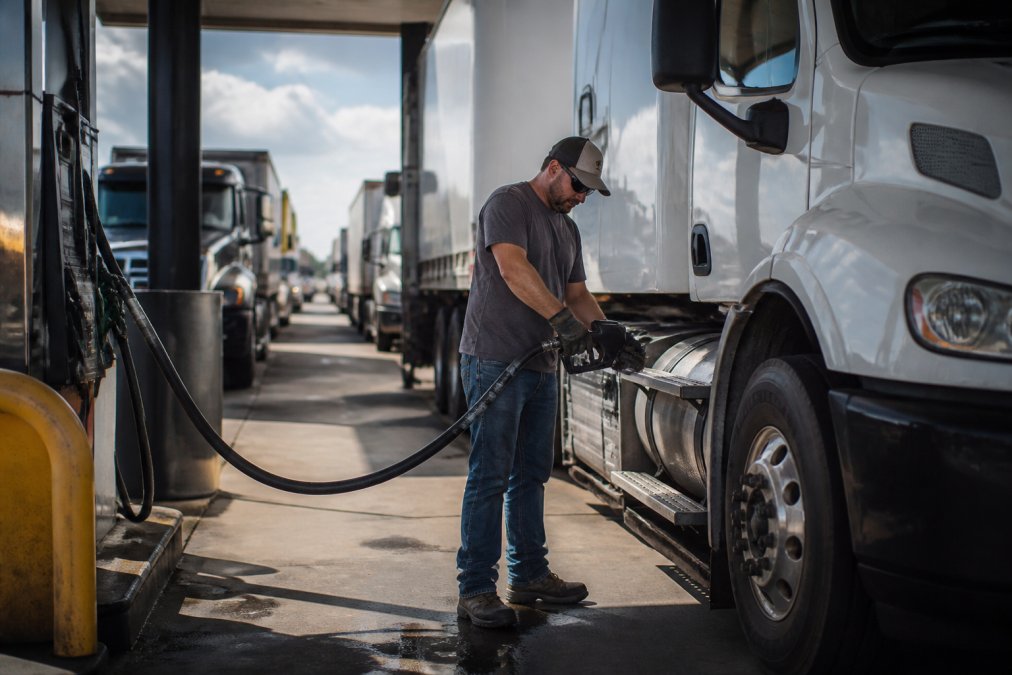
Mobile fuel delivery eliminates that entirely. The fuel truck arrives at your facility or job site while your drivers work on other tasks. The vehicle gets refueled without anyone leaving the operation. According to research from Persistence Market Research 2026 mobile fuel delivery trends, approximately 74% of logistics operators prioritize mobile fuel delivery systems specifically for reducing downtime.
For fleet operations, this translates directly to operational efficiency improvements. Vehicles spend more time working and less time in non-revenue-generating activities. The labor cost savings alone, not the fuel discount, is where the real value sits for medium to large fleets.
But there’s a threshold. If your fleet is small enough that drivers can refuel during natural breaks (lunch, between jobs, end of shift), the time savings argument weakens. The economics only favor mobile delivery when you have enough vehicles and enough daily fuel consumption that traditional refueling becomes a measurable operational drain.
Roadside Assistance in Tulsa: When Fuel Delivery Becomes Essential
Running out of fuel on I-44 between Tulsa and Broken Arrow isn’t a scheduling problem, it’s an emergency. This is where the distinction between planned mobile fuel delivery and emergency roadside assistance matters.
Planned mobile fuel delivery works for fleet operations with predictable fuel consumption and scheduled deliveries. But for individual drivers, unexpected situations demand a different solution. You need a service that responds on-demand, not one that requires a business account and minimum order commitments.

This is where Neptune Towing steps in. As a locally owned towing and roadside assistance company serving Tulsa, Bixby, Broken Arrow, and surrounding communities, we provide fuel delivery for drivers who need immediate help. Whether you’ve miscalculated your fuel range, hit unexpected traffic, or simply run dry, roadside assistance in Tulsa includes fuel delivery as part of our emergency response.
The difference between emergency fuel delivery and commercial mobile fueling is response time and flexibility. Commercial providers require accounts and scheduled deliveries. Emergency services operate 24/7 and respond to wherever you are, whenever you call. For individual drivers, that’s the realistic option.
When you’re stranded on the highway, you’re not thinking about per-gallon pricing or service fees. You’re thinking about getting your vehicle running again and getting home safely. That’s what local roadside assistance is designed for.
Break-Even Analysis: Is Mobile Fuel Delivery Right for Your Fleet?
The break-even point for mobile fuel delivery is where the labor and operational savings exceed the service fees and delivery costs. For most fleets, this happens somewhere between 20 and 25 vehicles consuming at least 5,000 gallons per month.
Here’s how to think about it: calculate your current monthly cost of fuel. Then estimate the labor hours your drivers spend refueling each week. Multiply that by your average hourly labor rate. That’s your monthly labor cost for refueling. Now compare that to what a mobile fuel delivery provider would charge. fuel delivery fees.
For a fleet of 10 vehicles consuming 3,000 gallons per month, the labor savings might be $800 to $1,200 per month. If the mobile fuel provider charges a $500 base fee plus a modest per-gallon surcharge, you’re barely breaking even, and you’re still paying account setup costs. The economics don’t favor you yet.
For a fleet of 25 vehicles consuming 8,000 gallons per month, the labor savings jump to $2,500 or more. Now the service fees become negligible relative to the value gained. This is where mobile fuel delivery becomes genuinely worth the cost.
According to research on mobile fuel delivery adoption, 38% of fleet operators in the U.S. adopted mobile fuel delivery systems in 2023 to optimize route refueling, up 12% from 2021. That growth reflects fleets reaching the size and consumption threshold where the economics make sense.
Don’t assume mobile fuel delivery is cheaper just because providers advertise competitive per-gallon rates. The real cost includes service fees, account minimums, and setup costs. Calculate your break-even point before committing to an account. For fleets smaller than 20 vehicles, traditional refueling often remains more cost-effective.
The contrarian take: if your fleet isn’t yet at the break-even volume, don’t force mobile fuel delivery into your operation. Stick with traditional gas stations and fuel cards. The time will come when growth makes the switch economically obvious. Jumping in too early wastes money on fees and setup costs that don’t yet translate to meaningful labor savings.
What to Do When You’re Running Out of Gas
Running out of fuel is one of the most common roadside emergencies, and the response depends on where you are and what resources you have available.
If you’re on a highway near Tulsa or in the surrounding area, call for roadside assistance immediately. Neptune Towing provides fuel delivery as part of our 24/7 emergency response. We serve Tulsa, Jenks, Bixby, Broken Arrow, Glenpool, and surrounding communities. When you call, you’re reaching a local owner-operated business that dispatches help directly to your location.
If you’re far from home or in an unfamiliar area, your best option depends on your membership status. AAA members can call for emergency fuel delivery as part of their roadside assistance coverage. If you don’t have AAA, on-demand services like HONK and Urgent.ly offer pay-per-use fuel delivery through their mobile apps. Both provide upfront pricing and real-time tracking of arrival times.
For commercial drivers or fleet operators, having a mobile fuel delivery account already established makes sense. You’ve got a provider on speed dial, and they know your vehicle specifications and delivery preferences. But for individual drivers, on-demand roadside assistance is more practical than maintaining a commercial account.
The key is having a plan before you need it. Know which service you’ll call. Save the number in your phone. For drivers in the Tulsa area, that means knowing Neptune Towing’s number: (539) 292-3074. For drivers elsewhere, research what’s available in your region.
The Hidden Costs and Regulatory Considerations
Mobile fuel delivery comes with costs beyond the per-gallon rate and service fees. Understanding these hidden expenses is critical to making an informed decision about whether it’s worth the cost for your operation.
First, there’s fuel volatility. Mobile fuel delivery prices fluctuate with market fuel costs, just like retail stations. But some providers include fuel surcharges that amplify price swings. A 10-cent jump in wholesale fuel prices might result in a 15-cent increase in your delivered cost due to surcharges. Over thousands of gallons, that adds up.
Second, minimum order requirements create inflexibility. If your provider requires a 250-gallon minimum per delivery and you only need 200 gallons, you’re either waiting until you have enough fuel to order or you’re paying for fuel you don’t immediately need. That ties up capital and creates storage considerations.
Third, regulatory and insurance hurdles exist. Mobile fuel delivery involves transporting hazardous materials on public roads. Providers must maintain proper licensing, insurance, and compliance with Department of Transportation regulations. If something goes wrong during delivery, a spill, an accident, liability questions arise. Verify that your provider carries appropriate insurance and that their operations are compliant with local regulations.
Fourth, fuel quality assurance is your responsibility. When you pump fuel yourself at a branded station, you know the source. With mobile delivery, you’re trusting the provider’s fuel sourcing. Ask about their fuel suppliers and quality standards. Contaminated fuel can damage engines and create expensive problems.
Finally, there’s the integration cost with your existing systems. If you use fuel cards for fleet management and accounting, adding mobile fuel delivery creates a second payment method and tracking system. That adds administrative overhead.
The real cost of mobile fuel delivery includes fuel surcharges, minimum order requirements, regulatory compliance, insurance verification, and administrative integration. The per-gallon price is only one component. Calculate the total cost of ownership before committing.
Conclusion: Making the Right Decision for Your Situation
Is mobile fuel delivery worth the cost? The answer is: it depends on your operation’s size and fuel consumption.
For commercial fleets with 20 or more vehicles consuming 5,000+ gallons monthly, mobile fuel delivery delivers measurable value through labor savings and operational efficiency. The service fees become negligible relative to the hours reclaimed and the vehicles kept productive.
For small operations, individual drivers, and businesses with fewer than 10 vehicles, traditional gas stations and emergency roadside assistance remain more practical and cost-effective. The minimum order requirements and account setup costs don’t amortize at lower volumes.
For drivers in the Tulsa area facing unexpected fuel emergencies, Neptune Towing provides on-demand fuel delivery as part of our comprehensive roadside assistance services. We’re a locally owned business serving Tulsa, Bixby, Broken Arrow, and surrounding communities. When you need help, you’re calling an owner-operator who prioritizes honest service and transparent communication, not a national aggregator managing thousands of accounts.
Frequently Asked Questions
How much does mobile fuel delivery typically cost compared to traditional gas stations?
Mobile fuel delivery pricing depends on location, fuel type, quantity, and delivery frequency. For commercial fleets with high volume, research shows potential savings of $0.30 to $0.50 per gallon below retail station prices. Individual drivers using on-demand services typically pay a service fee plus the fuel cost. The actual value depends on your fleet size, refueling frequency, and time savings. Contact Neptune Towing for a personalized quote based on your specific needs.
What's the break-even point for a business considering mobile fuel delivery?
Businesses with 10 or more vehicles typically start seeing labor cost savings. Fleets with 20 to 25 vehicles often break even on fuel and service costs while gaining operational efficiency. Smaller fleets may find traditional gas stations more cost-effective due to minimum order requirements (typically 250 to 500 gallons per delivery) and account setup costs. Your break-even depends on fuel consumption, driver wages, and how much downtime mobile delivery eliminates.
What should I do if I run out of gas on the road?
Stay calm and move your vehicle to a safe location away from traffic if possible. Turn on hazard lights and stay inside your vehicle. Call for roadside assistance immediately, services like Neptune Towing offer emergency fuel delivery and can reach you quickly. Avoid walking to find a gas station, especially on highways. On-demand fuel delivery services bring fuel directly to your vehicle, eliminating the safety risk and time spent searching for a station.
Is mobile fuel delivery worth it for individual drivers?
For individual drivers, mobile fuel delivery makes sense primarily for emergencies when stranded on the road. Regular use through on-demand services may cost more than self-service gas stations. However, the convenience, safety, and peace of mind, especially in areas far from stations, can justify the cost. Most value comes from commercial fleets and businesses managing multiple vehicles, where operational efficiency and labor savings create genuine ROI.
When you’re stranded or facing a vehicle emergency in the Tulsa area, Neptune Towing is ready to help. We provide 24/7 emergency towing, roadside assistance, fuel delivery, jump starts, lockout service, and damage-free flatbed towing for all vehicle types. Call (539) 292-3074 for immediate assistance anywhere in Tulsa County.
This article was written using GrandRanker