
Table of Contents
- Flatbed vs Wheel Lift Towing: Quick Comparison
- What Is Flatbed Towing?
- What Is Wheel Lift Towing?
- Key Differences: Flatbed vs Wheel Lift Towing
- Damage-Free Towing: Why Method Matters
- EV Towing: Special Considerations for Electric Vehicles
- When to Choose Flatbed Towing
- When to Choose Wheel Lift Towing
Last Updated: August 9, 2026
Flatbed vs Wheel Lift Towing: Quick Comparison
When your car breaks down on I-44 or you’re stranded in a Broken Arrow parking lot, you need a tow truck fast. But not all tow trucks are the same. The choice between flatbed towing vs wheel lift towing isn’t just about what’s available, it’s about protecting your vehicle during transport. The wrong method can damage your drivetrain, suspension, or alignment, especially if you’re driving an all-wheel-drive vehicle or an electric vehicle like a Tesla.
| Feature | Flatbed Towing | Wheel Lift Towing |
|---|---|---|
| Load angle | 7.5-10 degrees (low profile) | 15-20 degrees (steeper) |
| All wheels | Off ground | Two on road, two lifted |
| Best for | AWD, EV, low-clearance, luxury vehicles | Standard RWD/FWD vehicles |
| Ground clearance risk | Minimal | Higher risk for low cars |
| Maneuverability | Requires more space | Tighter turning radius |
| Long-distance transport | Superior | Adequate for shorter distances |
Flatbed towing lifts your entire vehicle onto a flat platform, keeping all four wheels off the ground. Wheel lift towing uses a mechanical lift beneath the drive wheels, leaving the other two wheels on the road. At Neptune Towing, we’ve learned that vehicle damage often happens not during the breakdown, but during the tow. The equipment you choose determines whether your car arrives at the repair shop in the same condition it left.
What Is Flatbed Towing?
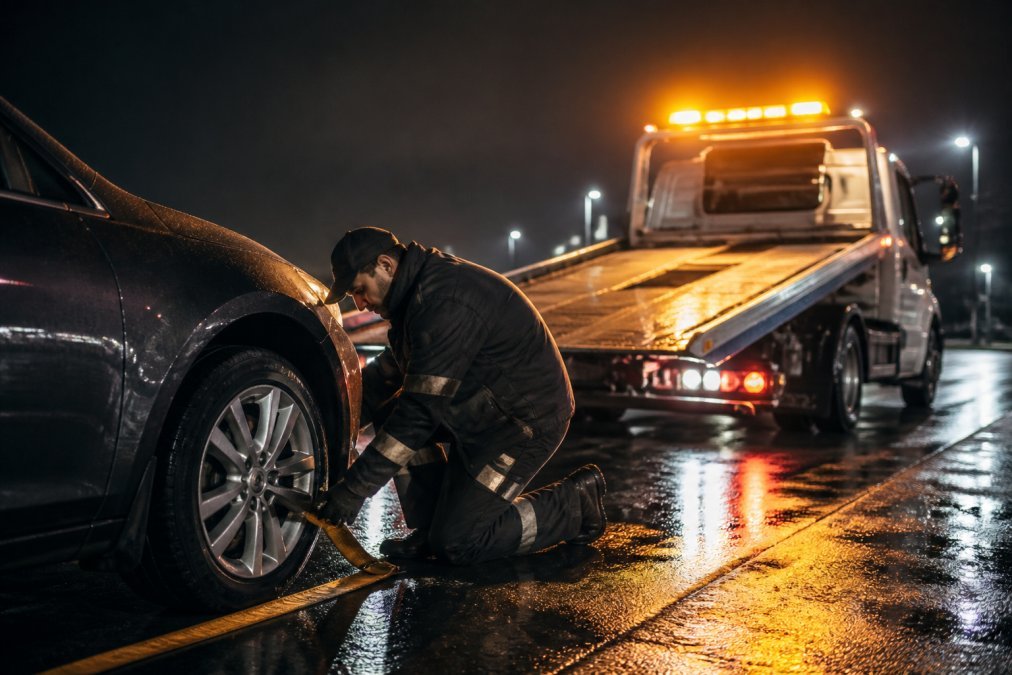
Flatbed towing loads an entire vehicle onto a flat, level platform with all four wheels completely off the ground. The vehicle sits securely on the deck, held in place by tie-down straps and safety chains. This method is sometimes called a rollback or flatbed carrier, and it’s the gold standard for protecting vehicles during transport.
How Flatbed Towing Works
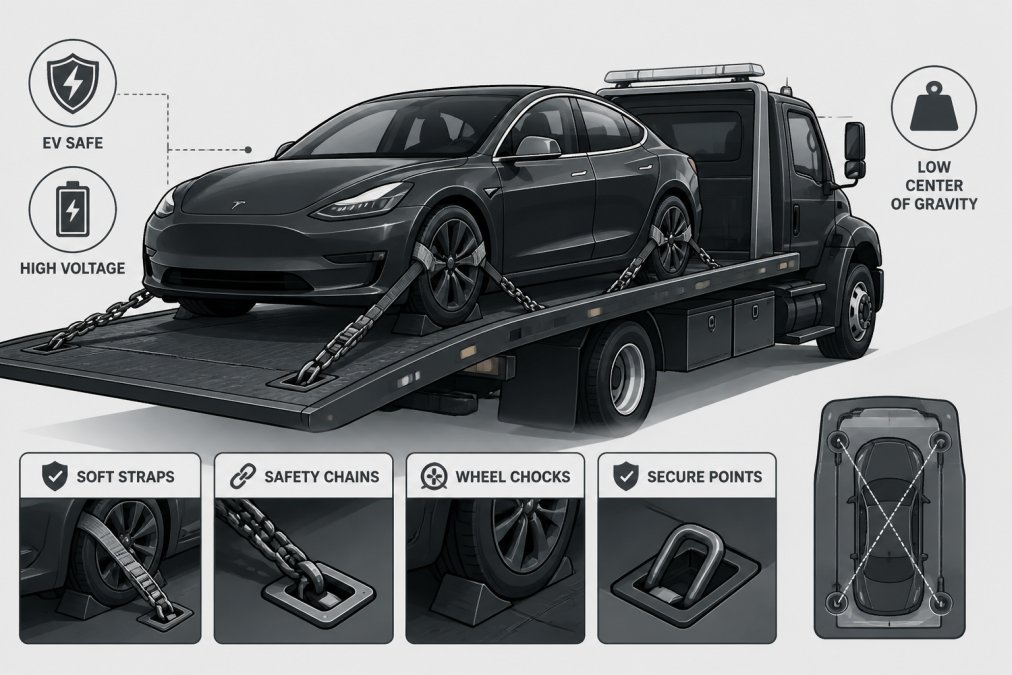
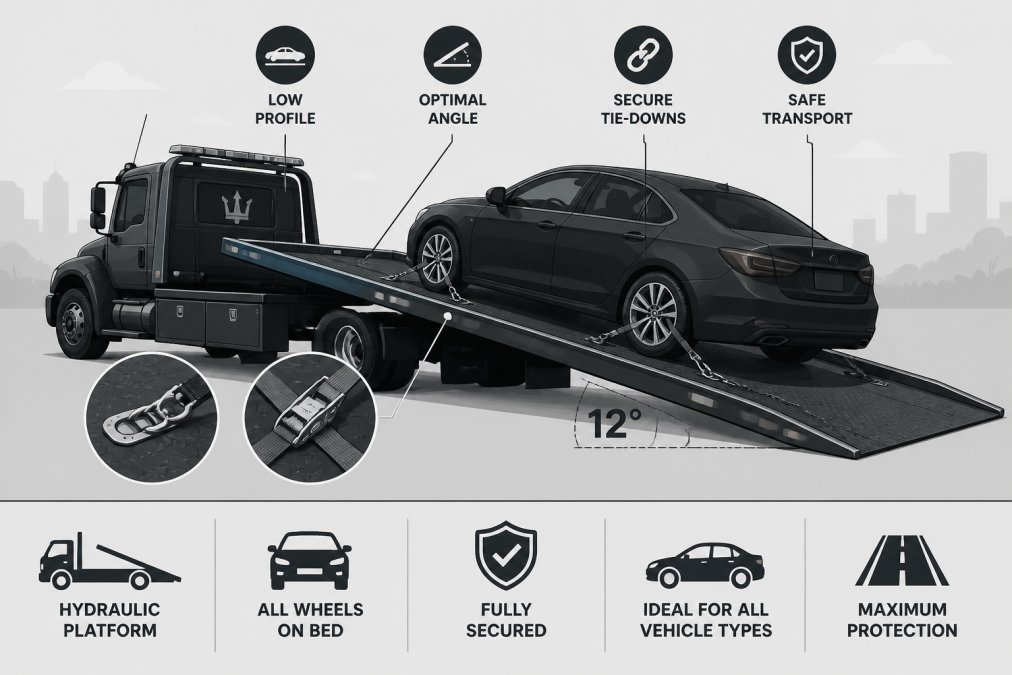
The flatbed tow truck arrives with a hydraulic platform that tilts backward at a shallow angle, typically 7.5 to 10 degrees. This low-profile design minimizes stress on your vehicle’s suspension and chassis as it’s being loaded. Once your vehicle is in position, the operator secures it using tie-down straps, safety chains, and wheel chocks. The straps attach to the vehicle’s frame or suspension points, never to bumpers.
The entire vehicle is now elevated and stable. There’s no weight on your drivetrain, no pressure on your suspension, and no risk of transmission damage. For a vehicle traveling from downtown Tulsa to a repair shop in Sapulpa, this is the safest option.
Best Vehicles for Flatbed Transport
Flatbed towing is the right choice for:
- All-wheel-drive vehicles (AWD) – These have active drivetrains that engage all four wheels. Lifting only two wheels puts dangerous stress on the drivetrain.
- Electric vehicles and Teslas – EVs have complex battery systems and regenerative braking. Wheel lift towing can damage these systems.
- Low-clearance vehicles – Sports cars, luxury sedans, and modified vehicles with lowered suspensions can’t clear the metal yoke of a wheel lift.
- Luxury and classic cars – High-value vehicles deserve the gentlest transport method.
- Vehicles with mechanical issues – If your transmission is damaged, your suspension is broken, or your wheels don’t roll freely, flatbed is the only safe option.
What Is Wheel Lift Towing?
Wheel lift towing uses a mechanical lift system that raises either the front or rear wheels of your vehicle off the ground, leaving the other two wheels in contact with the pavement. This method is sometimes called a wrecker or rotator tow. It’s been used in the towing industry for decades and works well for certain vehicles under certain conditions.
How Wheel Lift Towing Works
A wheel lift system uses hydraulic arms that slide under the non-drive wheels of your vehicle. For a front-wheel-drive car, the lift engages the rear wheels. For a rear-wheel-drive vehicle, it engages the front wheels. Your vehicle is now at an angle, typically 15 to 20 degrees, with two wheels suspended and two wheels still on the road.
This method works because it doesn’t engage the drivetrain. By lifting the non-drive wheels, the drive wheels remain free to roll without resistance. The concern is ground clearance and load angle, that steep angle puts stress on your vehicle’s suspension, especially on low-clearance cars.
Vehicle Types and Wheel Lift Compatibility
Wheel lift towing is appropriate for:
- Standard front-wheel-drive sedans – The most common vehicle type.
- Standard rear-wheel-drive vehicles – Lifting the front wheels keeps the rear wheels free to roll.
- Pickup trucks – Many trucks are rear-wheel drive and handle wheel lift towing well for shorter distances.
- Vehicles with adequate ground clearance – At least 4-5 inches of clearance can usually handle the load angle without damage.
Wheel lift is not appropriate for all-wheel-drive vehicles, electric vehicles, low-clearance cars, or vehicles with suspension damage.
Key Differences: Flatbed vs Wheel Lift Towing
Load Angle and Ground Clearance
Flatbed towing keeps your vehicle completely level, typically at a 7.5 to 10-degree angle during loading, then horizontal during transport. Wheel lift towing creates a steep angle, usually 15 to 20 degrees. For a low-clearance sports car or luxury sedan, this angle can cause the front or rear bumper to scrape and puts continuous stress on your suspension.
Drivetrain Protection and Suspension
Wheel lift towing leaves two wheels on the road. Those wheels must roll freely as the truck pulls. For an all-wheel-drive vehicle, this creates a problem. AWD systems have active drivetrains that engage all four wheels. When you tow an AWD car with only two wheels lifted, the other two wheels are forced to spin while the AWD system tries to engage them, creating internal stress in the transmission.
For an electric vehicle, wheel lift towing is even more dangerous. EVs use regenerative braking, where the motor helps slow the car by converting kinetic energy back into battery power. When you tow an EV with two wheels on the ground, those wheels are spinning freely, but the motor can’t engage properly. This can damage the motor, transmission, and battery management system.
Flatbed towing eliminates this problem. All four wheels are off the ground. There’s no forced spinning, no drivetrain engagement, no stress on the motor or transmission.
Maneuverability and Space Requirements
Wheel lift trucks are smaller and more maneuverable. They can fit into tight parking lots, narrow streets in older Tulsa neighborhoods, and residential areas where a flatbed can’t easily navigate. Flatbed trucks are larger and require more space to maneuver, angle the platform for loading, and back up safely. For roadside breakdowns on I-44 or Highway 75, space is usually available. For urban situations, wheel lift trucks have an advantage in logistics.
Damage-Free Towing: Why Method Matters
The towing method you choose directly impacts whether your vehicle arrives at the repair shop in the same condition it left home. Damage from improper towing isn’t always obvious, sometimes it’s a bent bumper or scraped undercarriage, sometimes it’s alignment issues that develop over weeks, sometimes it’s hidden drivetrain damage that shows up months later.
Flatbed towing is the damage-free method. Your vehicle isn’t dragged, isn’t at an angle, and isn’t forced to roll on wheels connected to a damaged drivetrain. It’s just resting on a platform. For vehicles with existing damage, a broken suspension, a non-functioning transmission, or wheels that don’t roll freely, flatbed is the only safe choice.
EV Towing: Special Considerations for Electric Vehicles
Electric vehicles are fundamentally different from gas-powered cars and require a different approach to towing. An electric vehicle has no transmission in the traditional sense. Instead, it has a single-speed reducer and a motor connected directly to the wheels through the drivetrain. When you tow an EV with two wheels on the ground, those wheels are forced to spin, and the motor is forced to engage, not how an EV is designed to operate.
Additionally, most EVs have regenerative braking. During towing, if the wheels are spinning freely on the road, the regenerative braking system can’t function properly. This can confuse the vehicle’s electronics and potentially damage the battery management system.
Why Flatbed Is the Safe Choice for Teslas and EVs
Flatbed towing is the only safe method for electric vehicles, including Teslas. When all four wheels are off the ground, the drivetrain isn’t forced to engage. The motor isn’t spinning. The regenerative braking system isn’t confused. Your EV is simply resting on a platform, inert and safe.
Tesla’s own documentation recommends flatbed towing for this reason. The company explicitly states that wheel lift towing can damage the drivetrain and is not recommended. Other EV manufacturers provide similar guidance. If you’re driving a Tesla in the Tulsa area and you need a tow, you need a company that understands EV requirements. Flatbed is the only safe option.
When to Choose Flatbed Towing
Choose flatbed towing in these situations:
- You’re driving an all-wheel-drive vehicle – AWD systems can’t tolerate wheel lift towing.
- You’re driving an electric vehicle or Tesla – EV drivetrains are damaged by wheel lift towing.
- Your vehicle has low ground clearance – Sports cars, luxury sedans, and lowered vehicles can’t handle the load angle of wheel lift towing.
- Your vehicle has suspension damage – Wheel lift towing will cause additional damage.
- You’re transporting a classic or luxury car – High-value vehicles deserve the gentlest transport method.
- You’re traveling a long distance – Over 50+ miles, flatbed towing is safer and more stable.
- You’re unsure about your vehicle’s drivetrain – When in doubt, flatbed is the safer choice.
Neptune Towing specializes in flatbed towing for all vehicle types, including damage-free transport for Teslas, luxury vehicles, and all-wheel-drive cars throughout the Tulsa area.
When to Choose Wheel Lift Towing
Wheel lift towing is appropriate in these situations:
- You’re driving a standard front-wheel-drive sedan – Wheel lift works reliably for FWD cars without existing damage.
- You’re driving a standard rear-wheel-drive vehicle – RWD cars handle wheel lift towing well for short distances.
- Your vehicle has adequate ground clearance – At least 4-5 inches of clearance means you can handle the load angle without bumper contact.
- You need to tow in a tight space – Wheel lift trucks are more maneuverable in parking lots and narrow streets.
- You’re towing a short distance – A few miles to a nearby repair shop is fine for wheel lift towing.
If you’re unsure whether your vehicle is appropriate for wheel lift towing, ask the tow truck operator before they hook up. A reputable company will explain the method and discuss your vehicle’s specific needs.
When you need a tow truck in Tulsa, Bixby, Broken Arrow, or the surrounding area, the towing method matters. Neptune Towing provides flatbed towing for damage-free vehicle transport, with special expertise in electric vehicles, all-wheel-drive cars, and luxury vehicles. Call Neptune Towing for emergency towing services in Tulsa at (539) 292-3074 for immediate assistance. As an owner-operated company, we treat your vehicle like our own and provide transparent communication every step of the way, no surprise fees, no impound lots, just honest service when you need help most.
Frequently Asked Questions
What is the main difference between flatbed and wheel lift towing?
Flatbed towing places your entire vehicle on a flat platform with all four wheels off the ground, while wheel lift towing uses a hydraulic lift to raise the front or rear wheels. Flatbed towing is generally safer for your vehicle because it eliminates stress on the drivetrain, suspension, and bumper. Wheel lift towing is faster to deploy and works well for standard vehicles in good mechanical condition, but it can cause transmission damage if your vehicle has all-wheel drive or mechanical issues.
Can all-wheel-drive vehicles be towed with a wheel lift?
All-wheel-drive vehicles should not be towed with a wheel lift because lifting only the front wheels leaves the rear wheels on the ground, forcing the drivetrain to rotate unevenly. This can cause serious transmission damage. Flatbed towing is the correct choice for AWD vehicles because all four wheels are secured and immobilized, preventing drivetrain strain. If you own an AWD vehicle in Tulsa or surrounding areas, always request flatbed towing or damage-free towing to protect your investment.
Why is flatbed towing required for electric vehicles like Teslas?
Electric vehicles like Teslas have regenerative braking systems and complex drivetrains that are easily damaged by wheel lift towing. When wheels rotate during towing, the EV's motor and battery systems can be harmed, resulting in thousands of dollars in repairs. Flatbed towing keeps all wheels stationary and off the ground, eliminating any risk of drivetrain or electrical damage. If you need EV towing in Tulsa, insist on flatbed service from a company experienced with damage-free towing for electric vehicles.
Is flatbed towing more expensive than wheel lift towing?
Flatbed towing typically costs more than wheel lift towing because it requires specialized equipment and takes longer to load and secure your vehicle properly. However, the extra cost is worth the protection, especially for luxury vehicles, classic cars, all-wheel-drive vehicles, and electric vehicles. Avoiding even one instance of transmission damage or suspension injury can save you thousands. For accurate pricing and a quote for your specific situation in Tulsa, contact Neptune Towing directly.
This article was written using GrandRanker