
Table of Contents
- Is Flatbed Towing Worth the Cost? The Real Answer
- Flatbed Towing vs Wheel-Lift: What’s the Difference?
- When Is Flatbed Towing Necessary?
- Towing AWD Vehicles: Why Flatbed Is the Smart Choice
- Cost of Flatbed Towing: Breaking Down the Fees
- Flatbed vs. Other Towing Methods: A Practical Comparison
- Insurance and Towing Coverage: What You Should Know
- Damage Risks: What Can Happen Without Flatbed Towing
Last Updated: July 3, 2026
Is Flatbed Towing Worth the Cost? The Real Answer
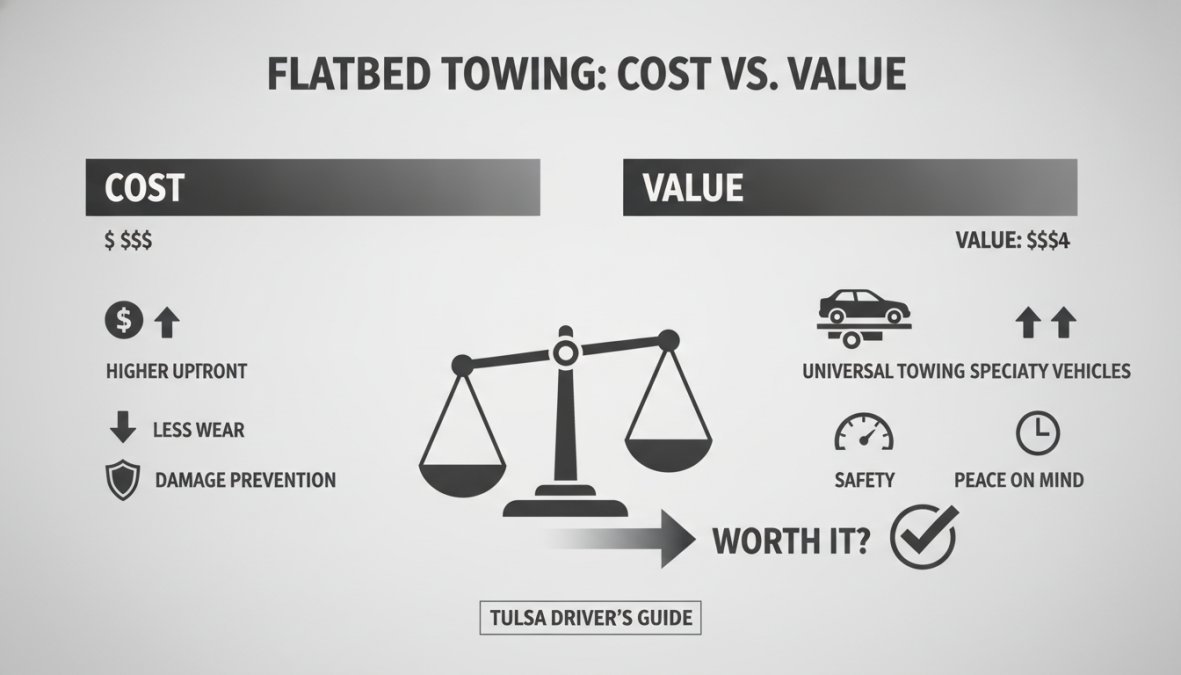
When your vehicle breaks down on I-44 near Tulsa, the question isn’t whether flatbed towing is worth the cost, it’s whether you can afford NOT to use it. Transmission damage, suspension problems, and drivetrain failure can cost thousands more than the difference between flatbed and wheel-lift towing. A single mistake can turn a breakdown into a financial disaster.
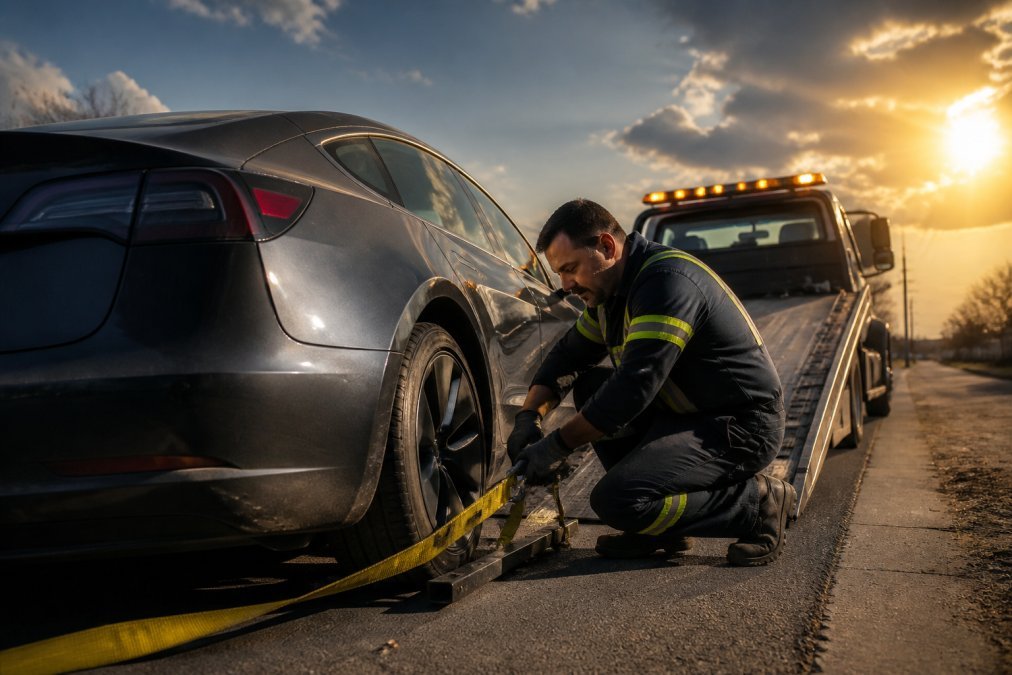
Flatbed towing eliminates the risk entirely. Your vehicle sits on a flat platform, all four wheels secured, zero contact with the road. For luxury vehicles, all-wheel drive cars, electric vehicles like Teslas, and specialty cars, flatbed is the only smart choice. For a standard sedan with no mechanical issues, standard towing might be fine.
The real cost isn’t what you pay the tow truck operator, it’s what you’ll pay the mechanic if something goes wrong during transport.
Flatbed towing costs more upfront but prevents damage that costs exponentially more to repair. The question isn’t the towing fee, it’s the repair bill you’re avoiding.
When the Extra Cost Protects Your Investment
Your vehicle is one of your biggest assets. When you need a tow truck in Tulsa, the decision about which towing method affects whether your vehicle arrives at the repair shop in the same condition it left your driveway.
A luxury vehicle, BMW, Mercedes, Audi, or Porsche, can have repair costs that dwarf a year’s worth of towing fees. A Tesla or other electric vehicle has complex battery systems and drivetrain configurations that don’t tolerate wheel-lift towing. For these vehicles, flatbed towing isn’t an upgrade. It’s insurance.
We’ve seen what happens when people try to save a few dollars on the tow and end up with transmission damage that costs $3,000 to $8,000 to repair. That math never works out.
When Standard Towing Is Genuinely Fine
Not every vehicle needs flatbed towing. A standard sedan with front-wheel drive and no mechanical issues? Wheel-lift towing works fine. A pickup truck that’s already seen heavy use? Standard towing is appropriate.
The deciding factors are vehicle type, drivetrain, and condition. If you drive a basic economy car with no known mechanical problems, flatbed towing is probably overkill. The key is knowing your vehicle and asking when you’re unsure.
Flatbed Towing vs Wheel-Lift: What’s the Difference?
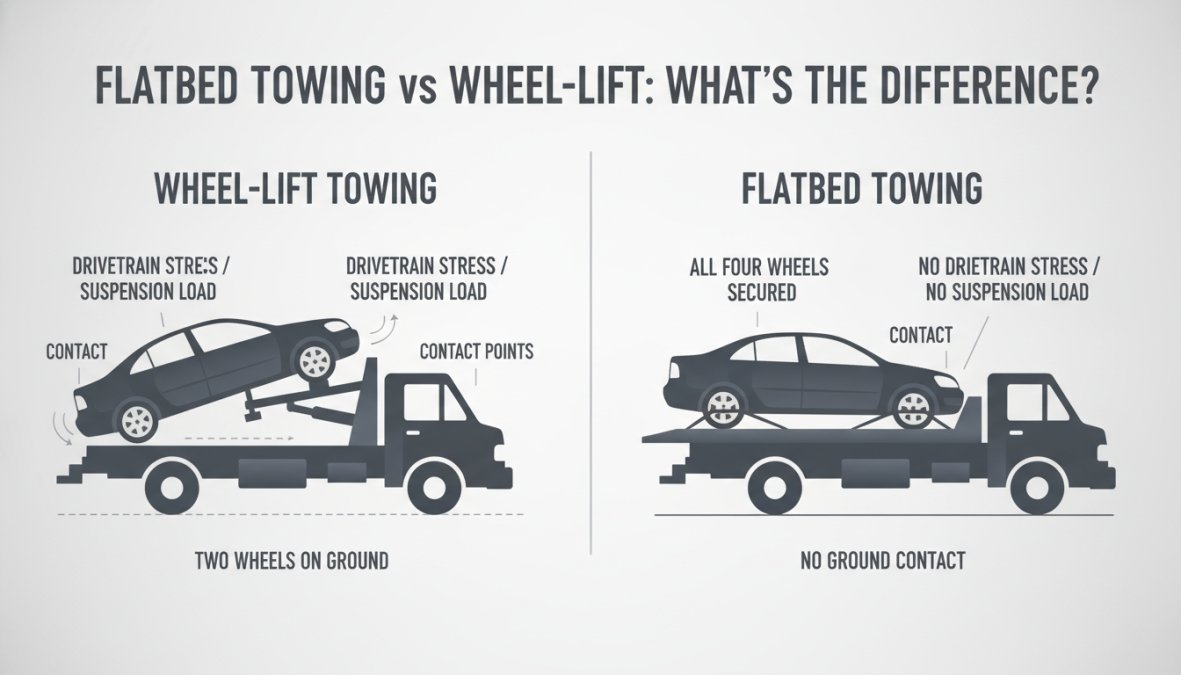
Wheel-lift towing uses a metal framework that slides under your vehicle’s front or rear wheels, lifts those wheels off the ground, and drags the vehicle on its remaining two wheels. It’s fast and works fine for many situations.
But wheel-lift towing puts stress on your drivetrain. When two wheels are dragging and two are suspended, your transmission is under load the entire time. For all-wheel drive or four-wheel drive vehicles, this stress is even greater because the drivetrain is locked and engaged.
Wheel-lift towing on AWD or 4WD vehicles can cause transmission damage even if the tow distance is short. The damage might not show up immediately but can manifest as shifting problems, grinding noises, or complete failure weeks later.
Flatbed towing is the opposite. Your entire vehicle sits on a flat platform. All four wheels are secured and lifted completely off the road. Nothing rolls. Nothing drags. Nothing is under stress.
How Wheel-Lift Towing Works and Its Limitations
Wheel-lift equipment slides under your vehicle and grabs either the front or rear wheels. A hydraulic arm lifts those wheels, and the vehicle is towed on its remaining wheels. It’s efficient and works for standard vehicles.
The limitations appear with specific vehicle types. For front-wheel drive sedans, wheel-lift is fine. Add all-wheel drive, and the situation changes. AWD vehicles have power going to all four wheels at all times. When two wheels are lifted and two are dragging, the drivetrain fights itself. The engine tries to turn wheels being forced along the pavement by the tow truck.
Four-wheel drive vehicles have it worse. A 4WD truck with the transfer case engaged is essentially locked. All four wheels are mechanically connected. Lifting two and dragging two creates enormous stress on the transmission and transfer case.
Why Flatbed Trailers Eliminate Transmission Risk
Flatbed towing solves the transmission problem completely. When all four wheels are off the ground and secured, there’s no drivetrain engagement. The vehicle isn’t rolling. The transmission isn’t under load. It’s like the vehicle is sitting in your driveway, except it’s on a moving platform.
This is why flatbed is the only acceptable method for towing AWD vehicles, 4WD trucks, luxury cars, and electric vehicles. The cost difference reflects the difference in risk. Flatbed equipment is more expensive to operate, uses more fuel, and requires more maintenance. But that cost buys you complete protection.
When Is Flatbed Towing Necessary?
If your vehicle has all-wheel drive, four-wheel drive, is a luxury or exotic car, is an electric vehicle, or is worth a significant amount of money, flatbed towing is the right choice. If your vehicle is a basic economy sedan with no mechanical issues, standard towing is probably fine. When in doubt, choose flatbed.
All-Wheel Drive and Four-Wheel Drive Vehicles
AWD and 4WD vehicles should not be towed on wheel-lift. This is where the decision becomes non-negotiable.
All-wheel drive systems distribute power to all four wheels. When two wheels are lifted and two are dragging, the system fights itself. The engine tries to power wheels being forced along the road by the tow truck, creating stress the transmission wasn’t designed to handle.
We’ve had countless conversations with drivers who tried to save money by using wheel-lift on their AWD or 4WD vehicle, only to end up with transmission problems weeks later. The repair bill was always far more than flatbed towing would have cost.
If you drive an AWD vehicle, flatbed towing is the only safe option.
Luxury, Exotic, and Specialty Vehicles
Luxury vehicles are engineered with precision. A BMW, Mercedes, Audi, or Porsche isn’t built to tolerate the stress of wheel-lift towing. Exotic cars have sophisticated suspensions and transmissions that are finely tuned. Wheel-lift towing can cause damage that might not be immediately obvious but will show up later as shifting problems or drivetrain noise.
Classic cars and specialty vehicles fall into the same category. If your vehicle is valuable, rare, or irreplaceable, flatbed towing is the only responsible choice. The cost is trivial compared to repairing damage to a luxury or exotic vehicle.
Electric Vehicles and Teslas
Electric vehicles require special consideration when towing. The drivetrain is completely different from a traditional gasoline engine, and the risks are different too.
Most EVs, including Teslas, should not be towed on wheel-lift. Wheel-lift towing can stress the drivetrain in ways that damage the motor or battery management system. Tesla’s own guidance recommends flatbed towing or towing with all four wheels off the ground. This isn’t a suggestion, it’s the manufacturer’s requirement.
The Transmission Damage Risk with Wheel-Lift
When you tow an AWD vehicle on wheel-lift, the front wheels are lifted and the rear wheels roll. The vehicle is being dragged forward. The AWD system is designed to distribute power to all four wheels. Even though the engine is off, the mechanical connection remains. The transmission tries to turn wheels being forced along the pavement, creating stress it wasn’t designed to handle.
Over time, sometimes immediately, sometimes weeks later, this stress causes damage. Transmission fluid gets hot. Internal components wear. Seals fail. Eventually, you get a transmission that doesn’t shift properly, makes grinding noises, or fails completely.
The repair cost for a damaged transmission is $3,000 to $8,000 or more. Flatbed towing would have cost a fraction of that.
If you drive an AWD vehicle and your engine won’t start, call for flatbed towing immediately. Don’t wait to see if standard towing “might work.” The risk isn’t worth it.
Cost of Flatbed Towing: Breaking Down the Fees
Flatbed towing costs more than wheel-lift towing. A typical flatbed tow involves a base rate for the service call, a hook-up fee for securing your vehicle, and mileage charges for distance traveled.
The base rate covers the tow truck operator’s time, fuel, and equipment maintenance. A flatbed truck is more expensive to operate than a wheel-lift truck. The hook-up fee covers the time and expertise required to properly secure your vehicle so it won’t move or be damaged during transport. Mileage charges are straightforward: you pay for the distance traveled.
For a short-distance tow in Tulsa, you’re looking at a reasonable fee. For long-distance towing, mileage charges add up, but you’re still buying complete protection for your vehicle.
Factors That Influence Your Total Bill
Distance matters. A short tow across Tulsa costs less than a long-distance tow to Sapulpa or Owasso.
Time of day matters. Emergency towing in the middle of the night might cost more than daytime towing.
Vehicle type matters. A luxury vehicle or exotic car might require extra care and attention.
Traffic and road conditions matter. If the tow needs to navigate heavy traffic or accident scene conditions, it might take longer.
Accessibility matters. If your vehicle is in a difficult location, stuck in a ditch, or wedged in a tight space, the tow might require special equipment.
Flatbed vs. Other Towing Methods: A Practical Comparison
| Towing Method | Best For | Risk Level | Cost |
|---|---|---|---|
| Flatbed | AWD, 4WD, luxury, EV, exotic vehicles | Minimal | Higher |
| Wheel-Lift | Standard sedans, economy cars | Moderate to High | Lower |
| Dolly Towing | Front-wheel drive vehicles | Low to Moderate | Moderate |
Flatbed towing is the safest option across the board. It eliminates risk. For high-value vehicles or vehicles with complex drivetrains, it’s the only responsible choice.
Safety Advantages and Damage Prevention
Flatbed towing is the safest towing method because there’s no risk of drivetrain damage, no stress on mechanical systems, and complete control during transport. When your vehicle is secured on a flatbed, it’s not rolling or under mechanical stress. This safety advantage is especially important for expensive vehicles.
Insurance and Towing Coverage: What You Should Know
Some insurance policies include towing coverage. Some roadside assistance plans offer towing services. Understanding what you have and what it covers is important.
Many insurance policies include a towing benefit that covers a certain amount of towing cost per incident. Roadside assistance plans typically cover a certain distance (say, 100 miles) per incident. If your tow exceeds that distance, you might pay the difference.
Before you need a tow truck, review your insurance policy and any roadside assistance plans. Understand what’s covered and what isn’t.
Damage Risks: What Can Happen Without Flatbed Towing
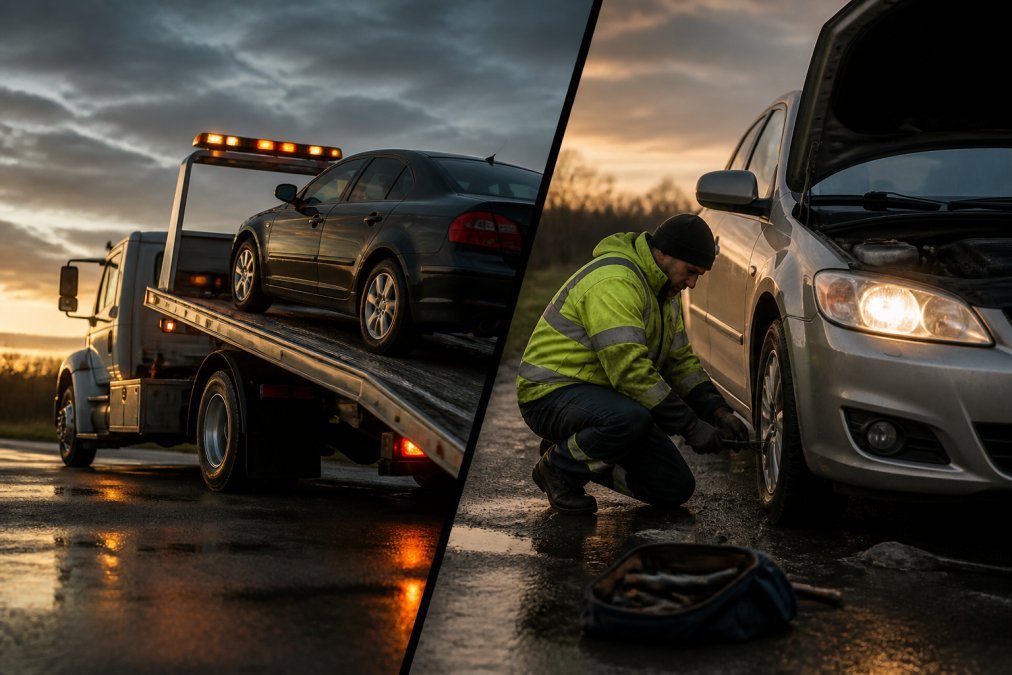
If you use wheel-lift towing on a vehicle that shouldn’t be towed that way, several things can go wrong.
Transmission damage is the most common problem. You might notice shifting problems, grinding noises, or complete transmission failure. Repair costs are significant.
Drivetrain damage affects the entire power transmission system. For AWD vehicles, this can be catastrophic.
Suspension and frame damage can occur if the vehicle isn’t secured properly or if the towing method stresses the suspension in ways it wasn’t designed to handle.
The cumulative cost of these damages often exceeds the cost of flatbed towing many times over.
When your vehicle breaks down in Tulsa or surrounding communities, you need a towing company you can trust. Neptune Towing is owner-operated and focused on getting your vehicle to safety without damage. We specialize in flatbed towing for AWD vehicles, luxury cars, electric vehicles, and specialty vehicles. We provide transparent pricing, damage-free transport, and honest communication about what your vehicle needs. Call Neptune Towing at (539) 292-3074 for emergency towing in Tulsa and surrounding areas.
Frequently Asked Questions
Is flatbed towing worth the cost for a standard sedan or truck?
For most standard sedans and pickup trucks without all-wheel drive, traditional wheel-lift towing is generally safe and less expensive. However, if your vehicle has any existing mechanical issues, a luxury interior, or you want absolute peace of mind, flatbed towing eliminates the risk entirely. The decision depends on your vehicle's value, condition, and your comfort level. When in doubt, asking a towing professional about your specific vehicle is the smartest move.
Why is towing AWD vehicles with flatbed necessary instead of wheel-lift?
All-wheel drive and four-wheel drive vehicles have complex drivetrains where power transfers to all four wheels. With wheel-lift towing, two wheels lift while two remain on the ground, forcing the vehicle to be dragged with only partial drivetrain engagement. This creates severe transmission and differential stress, potentially causing thousands in damage. Flatbed towing keeps all four wheels off the ground, eliminating this risk entirely and protecting your drivetrain.
What factors influence the cost of flatbed towing in Tulsa?
Flatbed towing costs depend on several factors: the base rate for dispatch, hook-up fees for securing your vehicle, mileage charges (especially for long-distance transport), time of day or day of week, vehicle size and weight, and distance to your destination. Short-haul tows within Tulsa typically cost less than long-distance recovery. Transparent towing companies provide a detailed quote before dispatch so you know exactly what to expect without sticker shock.
Can wheel-lift towing damage my car's transmission?
Yes, wheel-lift towing can damage transmission and drivetrain components, especially on all-wheel drive, four-wheel drive, and luxury vehicles with complex powertrains. When two wheels are lifted and two remain on the ground, the vehicle is essentially dragged, creating unnatural stress on the transmission. Flatbed towing prevents this by keeping all wheels off the ground, eliminating transmission risk entirely. For vehicles with existing mechanical issues, wheel-lift towing amplifies the danger significantly.
This article was written using GrandRanker